Mary and Max
"Sometimes perfect strangers make the best friends."
Overview
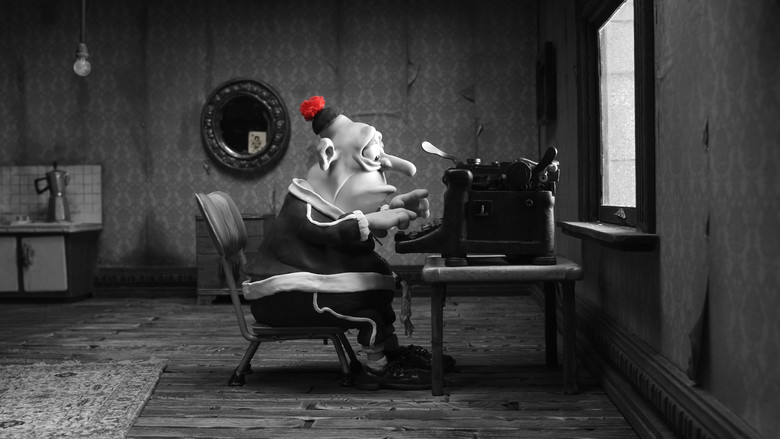
"Mary and Max" is a 2009 Australian stop-motion animated film that tells the story of a long-distance friendship between two very different people. Mary Daisy Dinkle is a lonely eight-year-old girl from Mount Waverley, Australia, with a birthmark the color of poo and neglectful parents. One day, she randomly picks a name out of a New York City phone book and writes a letter to Max Jerry Horowitz, a 44-year-old, morbidly obese Jewish man with Asperger's syndrome who lives in a chaotic New York apartment.
This simple act sparks a twenty-year correspondence that becomes the lifeline for both of them. Through their letters, they share their deepest thoughts, fears, and dreams, navigating life's challenges, including loneliness, mental illness, love, and loss. Their friendship is tested by misunderstandings and long periods of silence, but their profound connection ultimately endures, demonstrating the power of friendship to transcend distance and personal imperfections.
Core Meaning
The core meaning of "Mary and Max" revolves around the profound and redemptive power of friendship, especially for those who feel like outsiders. The film posits that true connection is not about proximity or perfection but about acceptance, understanding, and the willingness to share one's vulnerabilities. Director Adam Elliot, drawing from his own pen-pal relationship, wanted to convey that everyone, no matter how flawed or isolated, deserves friendship and that these connections are essential for navigating the often-cruel realities of life. The film carries a powerful message about accepting oneself and others, "warts and all," and finding solace in the knowledge that you are not alone in your imperfections.
Thematic DNA
Loneliness and Isolation
Both Mary and Max are profoundly lonely individuals. Mary is neglected by her parents and bullied at school, while Max's Asperger's syndrome makes it difficult for him to form relationships. Their correspondence becomes a vital antidote to their isolation, providing them with a sense of belonging and understanding they cannot find elsewhere. The film visually emphasizes their solitude through its color palette and composition.
Friendship and Acceptance
The central theme is the unlikely yet powerful friendship that develops between Mary and Max. Their relationship, built entirely through letters, transcends their vast differences in age, location, and life experience. It is a friendship founded on mutual acceptance of each other's flaws and eccentricities. The film celebrates the idea that true friends accept you for who you are, imperfections included, a sentiment Max explicitly states in a letter to Mary.
Mental Health and Neurodiversity
"Mary and Max" offers a candid and compassionate portrayal of mental illness and neurodiversity. Max's struggles with Asperger's syndrome, anxiety, and depression are depicted with honesty and sensitivity, avoiding stereotypes. The film explores the challenges of living with a mental condition and the societal misunderstandings that often accompany it. It also critiques the idea of a "cure," suggesting that acceptance is more important than conformity.
The Imperfection of Life
The film does not shy away from the darker aspects of life, tackling issues such as childhood neglect, addiction, alcoholism, suicide, and obesity. It presents a world that is often bleak and unfair, yet it finds beauty and humor in the midst of hardship. The overarching message is that life is inherently imperfect, and so are people, but this imperfection does not preclude the possibility of love and connection.
Character Analysis
Mary Daisy Dinkle
Bethany Whitmore (young), Toni Collette (adult)
Motivation
Mary's primary motivation is to find connection and overcome her profound loneliness. She seeks understanding and a friend who will accept her for who she is, flaws and all.
Character Arc
Mary begins as a lonely, insecure child desperate for a friend. Her friendship with Max helps build her confidence. As a young adult, she studies psychology, partially to understand Max, but her attempt to 'cure' him with her book causes a rift between them. After hitting rock bottom with depression and a failed marriage, she learns to accept life's imperfections and the true meaning of friendship. She ends the film as a mother, having found a measure of peace and understanding.
Max Jerry Horowitz
Philip Seymour Hoffman
Motivation
Max is motivated by a desire for order and predictability to manage his anxiety. However, a deeper, subconscious motivation is his yearning for companionship, which he finds through his correspondence with Mary.
Character Arc
Max starts as an isolated, 44-year-old man with severe anxiety and Asperger's, living a life of rigid routine. Mary's letters disrupt his life, initially causing him great stress but ultimately bringing him a deep and meaningful connection he has never experienced. Through their friendship, he learns to navigate some of his anxieties and even offers Mary wisdom from his unique perspective. He ultimately learns to accept his own imperfections and forgive Mary, realizing the value of their bond above all else.
The Narrator
Barry Humphries
Motivation
To tell the story of Mary and Max's unlikely friendship, providing context, insight, and a dryly comedic commentary on the events unfolding.
Character Arc
The Narrator provides a consistent, omniscient voice throughout the film, guiding the audience through the characters' lives with a blend of dark humor and poignant observation. His perspective does not change, but he is crucial in shaping the audience's understanding of the story's tone and emotional depth.
Damien Popodopoulos
Eric Bana
Motivation
Damien is motivated by a desire to conform to societal expectations, leading him to marry Mary. However, his true motivation is to find a loving, authentic relationship, which he eventually pursues.
Character Arc
Damien is initially Mary's childhood crush and later her husband. His arc is one of quiet unhappiness and hidden desires. He marries Mary but is ultimately unable to connect with her intimately, eventually leaving her for a male pen-pal of his own, revealing his homosexuality.
Symbols & Motifs
Letters and Typewriter
The letters and Max's typewriter symbolize the bridge of communication and the very foundation of their friendship. They are the physical manifestation of their emotional connection, allowing them to overcome the physical distance that separates them.
The entire narrative is structured around the letters exchanged between Mary and Max. The act of writing and receiving these letters is a central motif. When Max is angry with Mary, he removes the 'M' key from his typewriter, signifying a break in their communication. In the final scene, Mary discovers all of her letters carefully pinned to Max's ceiling, a testament to how much he cherished their correspondence.
Chocolate
Chocolate represents comfort, shared pleasure, and a simple source of happiness in the characters' often-difficult lives. It is a common ground that initially helps to bond them.
Mary sends Max a chocolate bar with her first letter. They frequently discuss their love for chocolate in their correspondence, and Max even invents a 'chocolate hot dog'. When Max wins the lottery, he buys a lifetime supply of chocolate.
The Noblets
The Noblets, a fictional cartoon show Mary and Max both love, symbolize a shared sense of childlike wonder and an escape from their harsh realities. They represent a simple, idealized world that contrasts with their own complex lives.
Mary and Max bond over their mutual affection for The Noblets. After winning the lottery, Max buys the entire collection of Noblet figurines. He later sends this collection to Mary as a gesture of forgiveness.
Mary's Birthmark
Mary's birthmark, which she is teased about, symbolizes her feelings of otherness and insecurity. It is a physical manifestation of her emotional pain and isolation.
The narrator describes Mary's birthmark as being 'the colour of poo'. She is bullied for it at school. As an adult, Mary has the birthmark surgically removed in an attempt to fit in and find happiness, though this does not solve her deeper issues.
Memorable Quotes
The reason I forgive you is because you are not perfect. You are imperfect. And so am I. All humans are imperfect.
— Max Jerry Horowitz
Context:
Max writes this in a letter to Mary after a long period of silence. He had been deeply hurt when Mary published a book about his Asperger's syndrome, seeing it as a betrayal. This quote marks his decision to forgive her and re-establish their friendship.
Meaning:
This quote encapsulates the film's central message about acceptance and the nature of true friendship. It signifies Max's profound realization that flaws are an inherent part of being human and that forgiveness and love are possible not in spite of these imperfections, but because of them.
He said I would have to accept myself, my warts and all, and that we don't get to choose our warts. They are part of us and we have to live with them. We can, however, choose our friends, and I am glad I have chosen you.
— Max Jerry Horowitz
Context:
Max writes this to Mary, relaying advice he received from his therapist, Dr. Bernard Hazelhof. It comes at a point where Max is grappling with his own identity and the nature of his bond with Mary, affirming the value he places on their friendship.
Meaning:
This quote, quoting his therapist, highlights the theme of self-acceptance and the conscious choice involved in friendship. It's a powerful statement about embracing one's own flaws while actively choosing to surround oneself with supportive and understanding people.
You are my best friend. You are my only friend.
— Max Jerry Horowitz
Context:
This line is part of a letter Max writes to Mary, expressing the profound impact she has had on his life. It is a moment of pure, unadorned emotional honesty that defines their relationship.
Meaning:
A simple yet incredibly powerful declaration that reveals the depth of Max's loneliness and the immense importance of his friendship with Mary. It underscores how this single, long-distance connection has become the central relationship in his life.
When I was young, I invented an invisible friend called Mr. Ravioli.
— Max Jerry Horowitz
Context:
Max shares this detail with Mary early in their correspondence, offering her a glimpse into his isolated life and his coping mechanisms. It sets the tone for the kind of deeply personal and unusual details they will share throughout their friendship.
Meaning:
This quote immediately establishes Max's lifelong struggle with loneliness and his imaginative, albeit solitary, inner world. It's a poignant and quirky detail that makes his character endearing and relatable despite his eccentricities.
Philosophical Questions
What is the nature of a 'real' friendship?
The film challenges conventional notions of friendship by presenting a deep, life-altering bond between two people who never meet in person. It forces the audience to consider whether physical presence is a prerequisite for a meaningful relationship. Mary and Max's connection, forged solely through words and shared vulnerability, suggests that the essence of friendship lies in mutual understanding, acceptance, and emotional support, regardless of the medium through which it is expressed.
Can we truly accept ourselves and others with all imperfections?
"Mary and Max" delves into the difficulty of self-acceptance in a world that often demands conformity. Both characters struggle with aspects of themselves they perceive as flaws—Mary's birthmark, Max's Asperger's and weight. The film explores whether it's possible to love oneself and others not in spite of imperfections, but because of them. Max's ultimate realization that 'all humans are imperfect' is the philosophical climax of the film, proposing that acceptance, rather than the pursuit of perfection, is the key to connection and inner peace.
Does a 'cure' for neurodiversity negate the identity of the individual?
When Mary writes a book on curing Asperger's with Max as her case study, Max is infuriated, feeling that she is trying to change the fundamental essence of who he is. This conflict raises a significant philosophical question about neurodiversity. The film strongly advocates for the perspective that conditions like Asperger's are not diseases to be cured but are integral parts of a person's identity. It challenges the medical model of disability and promotes a social model that emphasizes acceptance and accommodation over normalization.
Alternative Interpretations
While the film is largely interpreted as a story of platonic friendship, some viewers have explored the possibility of a deeper, more abstract love between the two characters, a soulmate connection that transcends conventional labels. The ending, in particular, can be viewed in different lights. The dominant interpretation is that it is a bittersweet testament to their enduring bond—Mary finds that Max died happy, surrounded by her letters, and their friendship gave his life meaning. An alternative, more tragic reading might focus on the ultimate failure of them to ever meet, highlighting the insurmountable barriers of their respective worlds and the profound sadness of a connection that could only ever exist at a distance. Another perspective could analyze the film as a commentary on the therapeutic nature of writing and storytelling. The act of composing letters allows both Mary and Max to process their trauma and construct their own identities, making their friendship a form of mutual, long-distance therapy.
Cultural Impact
Upon its release in 2009, "Mary and Max" was met with critical acclaim for its originality, emotional depth, and honest handling of complex themes, a departure from mainstream animated features. It demonstrated that stop-motion animation could be a powerful medium for adult-oriented storytelling, tackling subjects like mental illness, loneliness, and existential dread with a unique blend of dark humor and profound empathy. The film gained a significant cult following and is often cited as one of the best animated films of the 21st century and a landmark in Australian cinema. Its influence can be seen in subsequent animated films that explore more mature and somber themes. The film's sensitive and nuanced portrayal of Asperger's syndrome was particularly praised for raising awareness and fostering understanding of the condition in a way that was both authentic and respectful. It has become a touchstone for discussions on friendship in the modern age, questioning how we form connections in an increasingly fragmented world.
Audience Reception
Audiences have overwhelmingly praised "Mary and Max" for its emotional depth, originality, and unique visual style. Viewers frequently describe the film as profoundly moving, heartbreaking, and heartwarming, often in the same breath. The honest and compassionate handling of difficult subjects such as loneliness, depression, and Asperger's syndrome resonated deeply with many. The film's dark humor was also a highlight for audiences, who appreciated its ability to find levity in bleak situations. The main points of criticism, from a minority of viewers, centered on the film's relentlessly somber tone, with some finding it overly depressing or emotionally manipulative. A few controversial moments, such as the suicide attempt and accidental death, were jarring for some who may have expected a more conventional animated film. Overall, the verdict from audiences is that "Mary and Max" is a unique, powerful, and unforgettable cinematic experience—a bittersweet masterpiece that lingers long after viewing.
Interesting Facts
- The film is inspired by director Adam Elliot's own 20-year pen-pal relationship with a friend in New York who had Asperger's.
- The production took over five years to complete, utilizing 133 sets, 212 puppets, and 475 miniature props.
- A fully functioning miniature Underwood typewriter was built for the film, which took nine weeks to design and construct.
- Philip Seymour Hoffman, who voiced Max, and director Adam Elliot never met in person. Hoffman's voice was recorded remotely from New York.
- The film was the first animated feature to open the Sundance Film Festival in 2009.
- Director Adam Elliot refers to his unique style of animation as "clayography" – a combination of clay animation and biography.
- All the water scenes in the movie were created using lubricant.
Easter Eggs
Cameo by Harvie Krumpet
In the scene where Max goes to a store to buy a new 'M' key for his typewriter, Harvie Krumpet can be seen through the window. Harvie Krumpet is the titular character from Adam Elliot's 2003 Academy Award-winning animated short film.
⚠️ Spoiler Analysis
Click to reveal detailed analysis with spoilers
Frequently Asked Questions
Explore More About This Movie
Dive deeper into specific aspects of the movie with our detailed analysis pages
Comments (0)
No comments yet. Be the first to share your thoughts!