
Skip to content
Burning
A haunting psychological mystery wrapped in lingering twilight, where simmering class rage and existential dread ignite against the backdrop of a lonely borderland greenhouse fading into ash.
Burning

Burning

버닝

"The truth is all in your head."

17 May 2018 South Korea 148 min 7.4 (1,849)

Director: Lee Chang-dong

Cast: Yoo Ah-in, Steven Yeun, Jeon Jong-seo, Kim Soo-kyung, Choe Seung-ho

Drama Thriller Mystery Socioeconomic Class Stratification & Inequality Existential Ambiguity & The Elusive Nature of Truth Suppressed Male Rage & Toxic Jealousy Alienation & The Search for Meaning ("Great Hunger") Fiction, Perception, & The Creative Process
Budget: $7,280,000
Box Office: $6,591,038

Overview

Burning (2018), directed by Lee Chang-dong, is a slow-burning psychological thriller set in contemporary South Korea. The story centers on Lee Jong-su, an awkward, passive young creative writing graduate working odd delivery jobs in Seoul. While on a job, Jong-su runs into Shin Hae-mi, a spirited childhood neighbor from his rural hometown near the North Korean border. Before departing on a trip to Africa, Hae-mi asks Jong-su to look after her unseen apartment cat, "Boil". They share an intimate connection before she leaves, sparking a quiet romance in Jong-su’s mind.

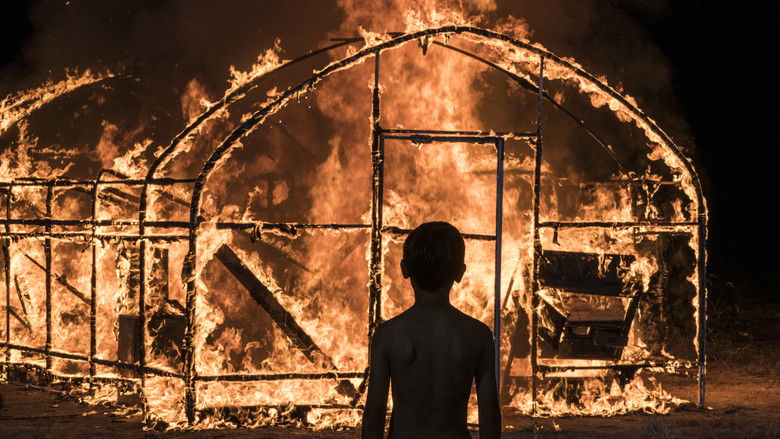
Hae-mi returns from her travels accompanied by Ben, a polished, wealthy, and enigmatic young man she met at the airport in Nairobi. Ben lives an enviable lifestyle in Seoul’s affluent Gangnam district, driving a Porsche and showing no clear sign of how he earns his fortune. An uneasy dynamic forms between the three: Jong-su feels alienated by Ben’s effortless wealth and closeness to Hae-mi. During a twilight visit to Jong-su’s neglected family farm in Paju, Ben casually reveals a secret hobby to Jong-su: every two months, he burns down abandoned plastic greenhouses.

Shortly after this meeting, Hae-mi vanishes without a trace. Her phone is disconnected, her apartment is left empty, and no one seems to know where she went. Suspicious of Ben's bizarre confession, Jong-su begins frantically searching the rural landscape for burnt greenhouses while quietly stalking Ben across Seoul. As clues mount without absolute proof, Jong-su's search transforms into an obsessive investigation where reality, class resentment, and paranoia converge.


Core Meaning

Director Lee Chang-dong uses the film to explore the pervasive, unnamable rage and helplessness felt by contemporary youth in an increasingly divided hyper-capitalist society. At its core, Burning argues that in a world where economic structures trap the lower class and truth itself becomes subjective or elusive, frustration builds silently until it erupts into destructive violence.

The film highlights the tragedy of existential longing: characters attempt to navigate between physical survival and the search for deeper meaning, but are met with silence, ambiguity, and systemic alienation.

Thematic DNA

Socioeconomic Class Stratification & Inequality 30%
Existential Ambiguity & The Elusive Nature of Truth 25%
Suppressed Male Rage & Toxic Jealousy 20%
Alienation & The Search for Meaning ("Great Hunger") 15%
Fiction, Perception, & The Creative Process 10%

Socioeconomic Class Stratification & Inequality

The sharp contrast between Jong-su and Ben highlights South Korea’s widening economic gap. Jong-su drives a rusty truck, works casual labor, and lives near the impoverished North Korean border, whereas Ben resides in Gangnam, drives a Porsche, and spends his time in high-end cafes. The film illustrates how wealth grants Ben ultimate freedom and casual detachment, while Jong-su is trapped by inherited debt and physical hardship.

Existential Ambiguity & The Elusive Nature of Truth

Burning continuously questions objective reality. Elements like Hae-mi's invisible cat, the pantomime tangerine, and the unverified childhood well force both Jong-su and the audience to navigate a narrative built on perception rather than verified facts.

Suppressed Male Rage & Toxic Jealousy

Jong-su carries inherited rage from his volatile father, who is on trial for assault. When combined with sexual jealousy, feelings of inadequacy toward Ben, and helplessness regarding Hae-mi, this quiet suppression transforms into fatal, violent action.

Alienation & The Search for Meaning ("Great Hunger")

Introduced through Hae-mi's Bushman philosophy, the film explores two types of hunger: physical necessity ("Little Hunger") and the search for purpose ("Great Hunger"). Hae-mi and Jong-su suffer from the void of Great Hunger, whereas Ben’s material abundance leaves him emotionally hollow and seeking unnatural thrills.

Fiction, Perception, & The Creative Process

As an aspiring writer who "finds the world a mystery," Jong-su tries to decipher his life as if writing a narrative. The film explores how individuals construct stories out of fragments of information to make sense of painful realities.

Character Analysis

Lee Jong-su

Yoo Ah-in

Archetype: Passive Antihero / Unfulfilled Writer Key Trait: Taciturn, observant, deeply insecure, and volatile underneath.

Motivation

Finding meaning in his life, uncovering Hae-mi's fate, and releasing his repressed rage.

Character Arc

Transitions from an awkward, silent observer trapped in passive economic powerlessness to an obsessed investigator and ultimate executioner.

Ben

Steven Yeun

Archetype: Enigmatic Antagonist / "Gatsby" Figure Key Trait: Effortlessly wealthy, emotionally detached, polite yet eerie.

Motivation

Escaping boredom and seeking existential stimulation ("hearing bass notes").

Character Arc

Maintains an unshakeable, suave facade of polite charm while quietly playing psychological mind games, remaining calm up to his sudden violent end.

All 4 characters and cast

Symbols & Motifs

Plastic Greenhouses / Barns

Meaning:

Symbolize discarded, vulnerable lower-class individuals (specifically young, isolated women like Hae-mi) whom society ignores and views as useless.

Context:

Ben claims to burn abandoned greenhouses every two months as a casual hobby, prompting Jong-su's frantic search.

The Pantomime Tangerine

Meaning:

Symbolizes belief and subjective reality. The key to pantomime is not believing the tangerine is there, but forgetting that it isn't.

Context:

Hae-mi demonstrates pantomime eating outside a Seoul store, explaining how perception shapes reality.

The Cat ("Boil") & Litter Box

Meaning:

Represents phantom existence and unprovable presence.

Context:

Jong-su feeds the unseen cat at Hae-mi's apartment, and later finds a cat responding to the name at Ben's home.

The Well

Meaning:

Symbolizes malleable memory and unresolved past trauma.

Context:

Hae-mi claims Jong-su saved her from a deep well as a child, but her family denies its existence while Jong-su's mother confirms it.

Ben's Yawning

Meaning:

Symbolizes emotional detachment, sociopathic boredom, and privileged cynicism.

Context:

Ben yawns while Hae-mi tells her personal stories and during gatherings with upper-class friends.

Fire / Burning

Meaning:

Represents cathartic destruction, consuming rage, and the complete erasure of existence.

Context:

Used in Ben's hidden hobby and Jong-su's final destructive act against Ben and his belongings.

Memorable Quotes

귤이 있다고 생각하는 게 아니라, 귤이 없다는 걸 잊어버리면 돼요.
— Shin Hae-mi

Context

Hae-mi says this while pantomiming eating a tangerine outside a Seoul store.

Meaning

Establishes the film's central philosophical theme regarding subjective reality and how belief replaces absence.

나한테 세상은 미스터리야.
— Lee Jong-su

Context

Jong-su explains to Ben why he hasn't been able to write his novel yet while visiting Ben's Gangnam apartment.

Meaning

Highlights Jong-su's creative paralysis and difficulty understanding modern life.

All 4 quotes

Philosophical Questions

How do we establish truth when evidence is incomplete?

The film tests how personal bias, jealousy, and social background shape what an individual accepts as reality.

What happens to individuals when society only addresses physical needs ("Little Hunger") while ignoring spiritual purpose ("Great Hunger")?

Through Hae-mi and Jong-su, the film suggests that a life lacking purpose leads to deep alienation, desperation, or destruction.

Is violent obsession an inevitable result of systemic social inequality?

It explores whether extreme economic divides distort empathy and lead to destructive conflicts between social classes.

Alternative Interpretations

1. Ben is a Literal Serial Killer (Crime Thriller Reading): In this interpretation, Ben lures isolated, lower-class women, murders them, and keeps trophies in his bathroom drawer. The "greenhouse" is a metaphor for vulnerable women. Ben murdered Hae-mi, took her cat Boiler, and kept her pink watch. Jong-su’s final violent act is an execution of justice based on his findings.

Full ending explanation

Cultural Impact

Released in 2018, Burning captured the socio-economic frustration of modern South Korean youth struggling with stagnant wages, high living costs, and debt—a phenomenon culturally summarized as "Hell Joseon".

Alongside Bong Joon-ho's Parasite (2019), Burning helped draw international attention to Korean cinema's critique of wealth disparity and class division. The film won the FIPRESCI International Critics' Prize at Cannes and became the first South Korean film to reach the final nine-film shortlist for Best Foreign Language Film at the 91st Academy Awards.

Audience Reception

Audiences and critics praised the film's hypnotic pacing, Hong Kyung-pyo's cinematography, and the quiet, tense performances of Steven Yeun, Yoo Ah-in, and Jeon Jong-seo. The film's willingness to trust viewer intelligence through subtle storytelling was widely celebrated.

Some viewers found the 148-minute runtime overly slow and criticized the lack of explicit narrative resolution. The film's open-ended conclusion continues to divide audiences between those who view it as a concrete murder mystery and those who see it as a subversion of the thriller genre.

Overall, it is regarded as an art-house masterpiece and one of the defining psychological thrillers of the 2010s.

Interesting Facts

  • The film is based on Haruki Murakami’s 1983 short story 'Barn Burning,' while incorporating thematic elements from William Faulkner’s 1939 short story of the same title.
  • Burning marked director Lee Chang-dong's return to feature filmmaking after an eight-year break following Poetry (2010).
  • This was Steven Yeun’s first major lead role in a South Korean project, speaking all his lines in Korean.
  • Jeon Jong-seo had no prior professional acting experience before being cast as Hae-mi out of more than 2,000 applicants.
  • At the 2018 Cannes Film Festival, Burning scored 3.8 out of 4 on the Screen International Cannes Critics' Poll, setting a record.
  • The famous dusk scene where Hae-mi dances shirtless was filmed over three days during natural twilight in Paju near the DMZ.

Easter Eggs

William Faulkner Reference

Jong-su mentions to Ben that he admires William Faulkner. Faulkner wrote the original 1939 story "Barn Burning," which deals with rural class conflict, fatherly anger, and burning property.

The Great Gatsby Metaphor

Jong-su explicitly compares Ben to F. Scott Fitzgerald’s Jay Gatsby, noting how Ben is young, mysteriously wealthy, and throws gatherings for people he barely seems to know.

DMZ Propaganda Broadcasts

In background shots at Jong-su’s rural Paju farm, North Korean propaganda radio can be heard playing across the border, creating a constant sense of tension.

The Makeup Cycle

Near the end of the film, Ben applies makeup to his new young girlfriend. This mirrors how he previously treated Hae-mi, suggesting a repeating pattern of targeting, grooming, and disposing of vulnerable young women.

Frequently Asked Questions

Explore More About This Movie

Dive deeper into specific aspects of the movie with our detailed analysis pages

Comments (0)

Leave a comment

No comments yet. Be the first to share your thoughts!

Similar Movies