Skip to content
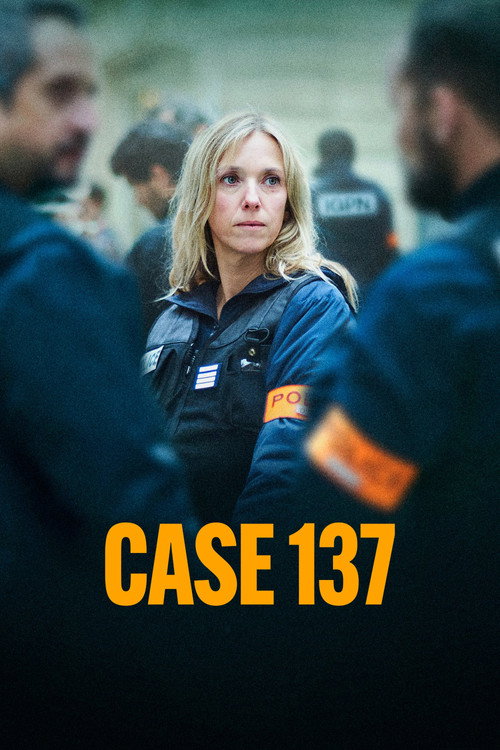
Case 137
A hushed, methodical police drama in which one investigator's search for the truth becomes a slow descent through a closed institution — a paper file that keeps turning back into a human face.
Case 137

Case 137

Dossier 137

19 November 2025 France 115 min 6.9 (280)

Director: Dominik Moll

Cast: Léa Drucker, Jonathan Turnbull, Mathilde Riu, Guslagie Malanda, Stanislas Merhar

Drama Crime Institutional self-investigation and its limits State violence and the Yellow Vests Truth, evidence and the unreliable image Class, province and the personal stake Loyalty, solidarity and the cost of doing the job right

Overview

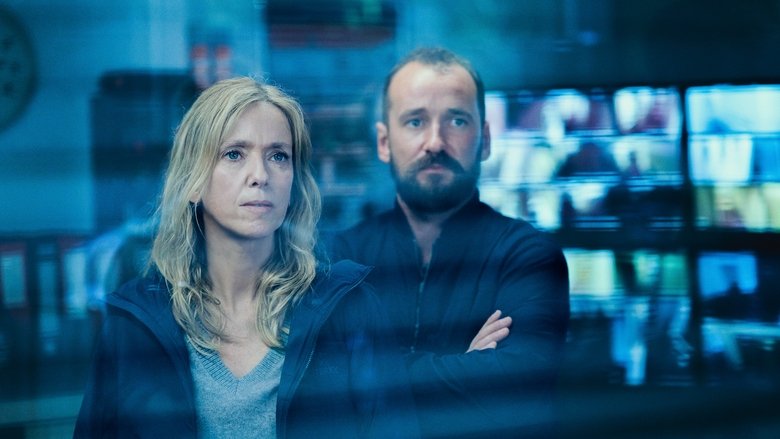
Case 137 (Dossier 137) is a French crime drama written and directed by Dominik Moll with his regular co-writer Gilles Marchand. It follows Stéphanie Bertrand (Léa Drucker), an officer of the IGPN — the French police force's internal affairs division — who is handed a file concerning a young man gravely injured during one of the chaotic Yellow Vest demonstrations in Paris. The teenager, Guillaume Girard, has suffered a fractured skull and life-altering injuries, and someone in uniform is responsible.

What follows is an unhurried procedural: interviews, statements, hours of shaky video, contradictory testimony, and the quiet resistance of colleagues who regard an internal investigator as a traitor in their own house. Stéphanie works the case with professional detachment until a detail pulls the file out of the abstract — the wounded young man comes from the town where she grew up, and his mother is someone from her own past.

Moll, who previously turned an unsolved femicide into a study of institutional helplessness in The Night of the 12th, applies the same sober method here. The film withholds and releases information at the pace of the investigation itself, keeping the viewer exactly as informed — and as frustrated — as the woman reading the file.
Core Meaning

Moll's subject is not a single act of violence but the machinery built to examine it. Case 137 asks what happens when a system is asked to judge itself, and answers that the failure is rarely dramatic — it is procedural, distributed, and almost polite. Nobody has to lie outrageously; it is enough that helmets have no numbers, that footage is inconclusive, that colleagues close ranks, that a prosecutor weighs consequences.

The film's often-quoted critical framing is that bad apples are born from a rotten tree: individual culpability matters, but the institution that makes accountability structurally difficult matters more. Against that, Moll places one woman's stubborn professionalism. Her tragedy is not that she is corrupt — she is not — but that integrity inside such a structure produces an investigator who satisfies no one: not the victims who want justice, not the colleagues who want loyalty, not the hierarchy that wants the file closed.

Beyond policing, the film interrogates our relationship with truth itself in an age of blurry phone video and competing narratives. Evidence exists; proof does not automatically follow. The message is quietly devastating: a democracy is measured less by the violence it occasionally commits than by its willingness to name it afterwards.

Thematic DNA

Institutional self-investigation and its limits 30%
State violence and the Yellow Vests 22%
Truth, evidence and the unreliable image 20%
Class, province and the personal stake 16%
Loyalty, solidarity and the cost of doing the job right 12%

Institutional self-investigation and its limits

The entire film is structured around the IGPN — the body charged with policing the police. Stéphanie's investigation runs into the routine obstacles of such work: anonymous riot gear, officers whose accounts converge a little too neatly, hierarchies calculating political cost. The obstruction is systemic rather than villainous, and that is precisely Moll's point: no conspiracy is required for accountability to fail.

State violence and the Yellow Vests

The case is set against the gilets jaunes protests of 2018–2020, a period that produced a documented wave of serious protester injuries in France. Guillaume Girard's fractured skull stands in for hundreds of real files. The film refuses both riot-porn spectacle and easy absolution: the demonstration is chaotic, frightening, and genuinely dangerous for everyone in the street — which is exactly what makes attributing responsibility afterwards so hard.

Truth, evidence and the unreliable image

Modern protest is the most filmed event in history, yet the footage rarely settles anything. Stéphanie works through video, testimony and reconstruction, and the film dramatises the gap between what happened and what can be proven. Moll uses the procedural form to show truth as something assembled, contested and finally arbitrated by people with interests.

Class, province and the personal stake

The case stops being abstract when Stéphanie recognises the victim's origins as her own — a town she left behind. The Yellow Vest movement was rooted in provincial, working-class France, and the film quietly maps that geography onto its heroine: the woman who got out is now sitting across from the family who didn't, holding their future in a folder.

Loyalty, solidarity and the cost of doing the job right

Stéphanie is a police officer investigating police officers, a woman holding her ground among largely male colleagues. Every professional virtue she displays — rigour, refusal to be swayed, refusal to pre-judge — earns her suspicion from one side and disappointment from the other. The film treats her exhaustion, not her courage, as the real subject.

Character Analysis

Stéphanie Bertrand

Léa Drucker

Archetype: The principled investigator / reluctant conscience of the institution Key Trait: Unshakeable professional rigour carrying a growing, private exhaustion

Motivation

To establish what actually happened and to be able to live with the answer. Her drive is less crusading than professional: an almost stubborn insistence that the truth is worth the effort even when the system has no use for it.

Character Arc

She begins as a rigorous IGPN professional who treats the file as a file — refusing to be swayed by her largely male colleagues, refusing equally to assume guilt. As the investigation advances and her personal connection to the victim's town surfaces, her detachment becomes untenable. She ends the film neither triumphant nor corrupted, but worn down: a woman who did the work properly and discovered that doing the work properly is not the same as obtaining justice.

Guillaume Girard

Côme Péronnet

Archetype: The victim / silent centre Key Trait: An ordinary young life turned into a case number

Motivation

Initially, simply to be present at a protest of his generation and his class; afterwards, to have what was done to him acknowledged by name.

Character Arc

A young man from the provinces caught in a chaotic Paris demonstration, left with a fractured skull and life-changing injuries. His trajectory is the inversion of a hero's arc — he does not develop, he is diminished, and the film's moral weight rests on that irreversibility.

All 3 characters and cast

Symbols & Motifs

The dossier itself

Meaning:

The numbered file is the film's central object: a human catastrophe converted into administrative form. A case number is how an institution makes a wound manageable — and how it can eventually be shelved.

Context:

Present from the title onward. The investigation is organised around building, filling and ultimately submitting the file; its physical accumulation charts both Stéphanie's diligence and the bureaucratic weight pressing on a single injured teenager.

Anonymous riot equipment

Meaning:

Helmets, visors and uniforms that erase individual identity are the literal image of diluted responsibility: where no one can be identified, no one can be held accountable.

Context:

Central to the difficulty of the investigation, in which establishing who struck whom, in what unit, at what moment, becomes the core problem of the case.

Screens and recorded footage

Meaning:

Video promises objectivity and delivers ambiguity. The recorded image symbolises a society that documents everything and settles nothing.

Context:

The procedural work of reviewing and cross-referencing recordings of the demonstration structures large parts of the investigation, with the audience placed in front of the same inconclusive material as the investigator.

The interview room

Meaning:

A neutral, bare space where competing versions of reality are recorded as equally valid statements — the bureaucratic theatre in which truth is negotiated rather than discovered.

Context:

Recurring throughout, as Stéphanie takes depositions from officers, witnesses and the victim's family; the repetition of the setting emphasises how little each new account changes the outcome.

The hometown

Meaning:

The provincial origin Stéphanie shares with the victim symbolises the class fracture beneath the Yellow Vest revolt and the compromise of every person who rises out of a place by joining the institutions that police it.

Context:

Introduced as the turning point that makes the case personal, transforming professional distance into something closer to guilt.

The injured skull

Meaning:

An injury to the head — to thought, to a young person's future — is the film's image of what disproportionate force actually costs: not an abstraction about policy but a life permanently altered.

Context:

Guillaume Girard's fractured skull and life-changing injuries are the fixed, irreversible fact against which all the film's procedure, argument and calculation are measured.

Philosophical Questions

Can an institution honestly judge itself?

The film's premise places the question at the centre: an officer investigating officers, with all the tools of the state at her disposal and every social pressure against her. Moll's answer is not a simple 'no' but something more troubling — the investigation is conducted in good faith and still cannot produce satisfaction, because the obstacles are built into the structure rather than added by bad actors.

What is the difference between truth and proof?

Stéphanie works through video, testimony and reconstruction, and the film continually shows evidence that suggests without establishing. It suggests that a society may collectively know what happened and still be unable to convert that knowledge into a judgement — and that institutions can shelter inside exactly that gap.

Is individual integrity meaningful inside a flawed system?

Stéphanie does everything correctly. The film's melancholy comes from watching correctness fail to be enough, and it leaves open whether her rigour is heroic, futile, or quietly complicit in legitimising a process she cannot change.

Who is responsible when responsibility is deliberately diffused?

Anonymous equipment, crowd chaos, chains of command and collective operations all distribute a violent act across many hands. The film asks whether the concept of guilt survives that dispersal, or whether modern institutional violence has outgrown a moral vocabulary built for individuals.

What do we owe the people we left behind?

The revelation that the victim comes from Stéphanie's hometown converts a professional duty into a personal debt. Through her, the film examines class mobility as a form of departure, and asks whether the person who rose can still recognise — and answer to — the world they came from.

Alternative Interpretations

1. The indictment reading. The most common view treats the film as a systemic critique: the 'bad apple' explanation is exposed as an alibi, and the real subject is the tree — the anonymity of riot gear, the reflexive solidarity of colleagues, the political calculation upstream of any verdict. Under this reading, the outcome of the investigation is almost beside the point; the process itself is the verdict.

Full ending explanation

Cultural Impact

Historical context. The film arrives from a specific French wound. The gilets jaunes movement of 2018–2020 produced an unprecedented public argument about police use of force, with numerous protesters seriously injured and the IGPN — popularly nicknamed 'the police of the police' — becoming a byword for investigations that rarely satisfy anyone. By fictionalising a single such file, Moll turned a national controversy into an intimate procedural.

Within Moll's work. Case 137 completes an informal trilogy of institutional studies written with Gilles Marchand. Where The Night of the 12th examined the helplessness of investigators before an unsolved femicide, this film turns the gaze inward, onto the police examining themselves. The continuity is deliberate and was widely noted by critics at Cannes.

Reception. Selected in competition for the Palme d'Or, it drew broadly respectful reviews. Deadline called it a sober police drama with a superb lead turn; ScreenRant praised Drucker's 'flawless performance' in an intense treatment of police brutality; French critics framed it as a 'brilliant social polar'. Dissent existed too — TheWrap judged it 'perfectly fine yet inessential', and more than one reviewer found the form conventional even while admiring the craft. Its institutional endorsement came at the 51st César Awards, where it collected eight nominations and won Best Actress for Léa Drucker.

Wider resonance. The film belongs to a growing European strand of policier that uses genre machinery for civic argument rather than thrills, and its questions — who watches the watchmen, and what does footage actually prove — travel far beyond France.

Audience Reception

Praised. Near-unanimous acclaim went to Léa Drucker, described as 'superb' and 'flawless' — a controlled, interiorised performance that earned her the César for Best Actress. Audiences and critics also admired the film's rigour: Moll and Marchand's experience with suspense gives the procedural an insistent rhythm, and the calculated release of information keeps viewers 'in lockstep with the investigators'. Many valued the refusal to caricature either police or protesters.

Criticised. The recurring reservation is conventionality. TheWrap found the film 'perfectly fine yet inessential', and several reviewers noted that what is most surprising about it is how standard it feels — a well-made procedural where a more formally daring or angrier film might have been expected given the subject. Viewers wanting catharsis or a clear villain tend to leave unsatisfied, which is arguably the design.

Contested. The film's even-handedness is its own controversy: one camp reads it as honesty about how messy a riot and its aftermath really are, the other as a political film that pulls its punches. Its deliberate pacing and the sheer volume of procedural detail also divide audiences.

Verdict. A sober, intelligent, superbly acted social thriller — widely respected rather than universally loved, and strong enough to take eight César nominations and a Palme d'Or competition slot on the strength of restraint rather than spectacle.

Interesting Facts

  • The screenplay was written by Dominik Moll with Gilles Marchand, their third consecutive genre-oriented collaboration after Only the Animals (2019) and The Night of the 12th (2022).
  • The film was shot between October and December 2024 in Paris and in France's Grand Est region.
  • It premiered in the main competition of the 2025 Cannes Film Festival on 15 May 2025, where it competed for the Palme d'Or.
  • The story is a fictionalised scenario built around the Yellow Vest (gilets jaunes) protests in Paris of 2018–2020 and the many documented instances of protester injuries during that period.
  • Its subject is the IGPN, the French national police's internal affairs body — described by the Cannes Film Festival as another 'grey area of democracy' after the unsolved femicide at the heart of The Night of the 12th.
  • Léa Drucker won the César for Best Actress for her performance; the film received eight nominations at the 51st César Awards.
  • It was released theatrically in France by Haut et Court on 19 November 2025.
  • Film Movement acquired the film for United States release, where it carries the English title Case 137.
  • Critics repeatedly singled out the film's 'calculated release of information', which keeps the audience in step with the investigators rather than ahead of them.
  • In an interview about the film, Moll stressed that 'little moments in a film help you to build a character' — a working principle visible in the movie's accumulation of small procedural detail rather than big dramatic beats.

Frequently Asked Questions

Explore More About This Movie

Dive deeper into specific aspects of the movie with our detailed analysis pages

Comments (0)

Leave a comment

No comments yet. Be the first to share your thoughts!

Similar Movies