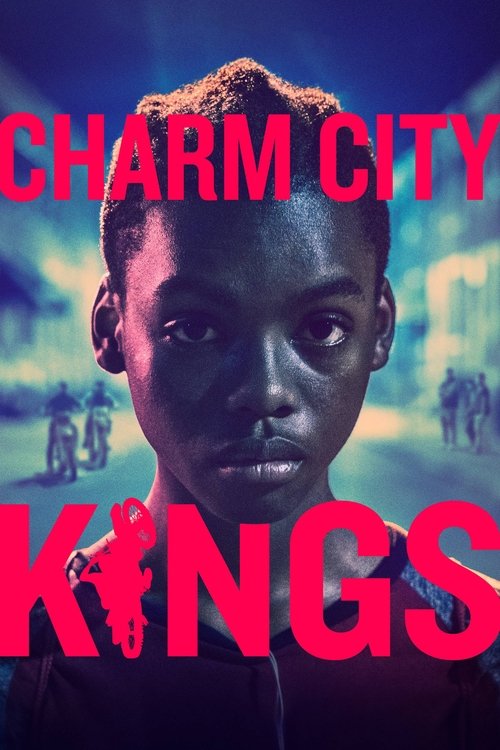
Charm City Kings
"Life happens at the crossroads."
Overview
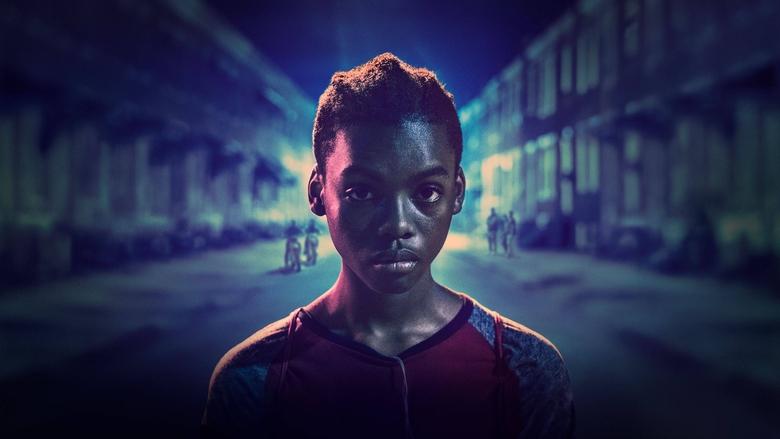
Charm City Kings follows Myron, a fourteen-year-old boy known as 'Mouse' who lives in West Baltimore. Obsessed with the local dirt bike culture, Mouse desperately wants to join the Midnight Clique, an infamous group of riders who dominate the city streets every Sunday during 'The Ride.' This fascination is deeply tied to the legacy of his deceased older brother, Stro, who was once the Clique's top rider before his tragic death.
As the summer heat intensifies, Mouse finds himself at a crossroads, caught between two powerful mentor figures. Detective Rivers, a police officer who has looked out for Mouse since childhood, attempts to guide him toward a career in veterinary medicine. Conversely, Blax, a legendary ex-con and mechanic for the Midnight Clique, takes Mouse under his wing at his garage. The film explores Mouse's struggle to navigate the allure of fast money and street respect while trying to honor his family's hopes for a better future.
Core Meaning
The core meaning of the film lies in the complexity of choice and the cyclical nature of systemic poverty. Director Ángel Manuel Soto illustrates that for many urban youths, the path to adulthood is not a simple binary of 'good' vs. 'bad' but a series of survival decisions influenced by environment and legacy. The film emphasizes that real freedom is not found in the adrenaline of a bike chase but in the autonomy to define one's own future. It serves as a critique of how society criminalizes Black youth and a testament to the transformative power of genuine mentorship and selfless sacrifice.
Thematic DNA
The Cycle of Violence and Legacy
The film examines how the ghosts of the past, specifically the death of Mouse's brother Stro, dictate the trajectory of the living. Mouse's desire to ride is both an act of mourning and an attempt to reclaim a lost connection, showing how trauma can trap individuals in dangerous patterns.
Mentorship and Masculinity
Mouse is caught between two versions of manhood: the stoic, law-abiding path of Detective Rivers and the gritty, street-wise redemption of Blax. The film deconstructs 'toxic masculinity' by showing the vulnerability behind the 'tough' exterior of the riders.
Freedom and Incarceration
Dirt bikes symbolize a literal and metaphorical escape from the confines of poverty and police surveillance. However, the film highlights the irony that the very activity that provides a sense of invincibility often leads to a loss of literal freedom through jail or death.
Economic Survival
The pressure to provide for his struggling mother drives Mouse toward the drug trade. The film portrays crime not as a character flaw but as a perceived economic necessity for those with limited options in a marginalized community.
Character Analysis
Myron 'Mouse'
Jahi Di'Allo Winston
Motivation
To honor his brother's legacy, gain respect from his peers, and help his mother financially.
Character Arc
Transitions from an impressionable boy obsessed with street status to a young man who accepts the weight of his choices and chooses a path of education and responsibility.
Bryan 'Blax' Tarver
Meek Mill
Motivation
To atone for his role in the death of Mouse's brother, Stro, by ensuring Mouse doesn't suffer the same fate.
Character Arc
Starts as a weary ex-con keeping his distance, then becomes a protector who ultimately sacrifices his own freedom to save Mouse from a life of crime.
Detective Rivers
William Catlett
Motivation
To prevent Mouse from becoming another statistic in the criminal justice system.
Character Arc
Remains a steady presence, though he struggles with the limitations of his badge in a community that distrusts the police.
Teri
Teyonah Parris
Motivation
To protect her remaining children from the violence that took her eldest son.
Character Arc
Moves from a state of constant fear and strictness to a place of reconciliation and pride in her son's growth.
Symbols & Motifs
The Dirt Bike
Symbolizes both freedom and a death trap. To the riders, it represents power and community; to the law, it is a vehicle of chaos.
Used throughout the film as the primary object of desire for Mouse and his friends, culminating in the high-energy 'Ride' sequences.
The Veterinary Hospital/Animals
Represents Mouse's innocence and his genuine passion that exists outside of street culture.
Mouse volunteers at a shelter and dreams of being a vet; his ability to care for animals (like Blax's dog) shows a side of him that isn't hardened by the streets.
The Midnight Clique Name
Represents the allure of legend and the desire for validation.
Mouse explains that the name comes from riders pulling their bikes back so they stand straight up like the hands of a clock at midnight.
Memorable Quotes
It ain't about flexing; it's about freedom.
— Blax
Context:
Blax explains the true spirit of riding to Mouse while they work in the garage.
Meaning:
Highlights the philosophical divide between doing things for show (clout) and doing them for personal liberation.
I don't see another young Black man go to jail.
— Blax
Context:
Said as he decides to take the fall for the robbery to protect Mouse's future.
Meaning:
A powerful statement on the systemic incarceration of Black youth and Blax's commitment to breaking the cycle.
People like us don't get no second chances.
— Blax
Context:
From a scene discussing the stakes of their environment and the lack of a safety net.
Meaning:
Reflects the grim reality of life in marginalized communities where one mistake can be permanent.
Philosophical Questions
What is the true cost of a second chance?
The film explores whether a second chance is ever truly 'free' or if it is always built on the sacrifices of mentors and the loss of peers.
Can an individual ever truly outrun their environment?
Through Mouse's struggle, the film asks if personal ambition and a 'good heart' are enough to overcome the gravity of systemic poverty and social pressure.
Alternative Interpretations
While many see the ending as a hopeful redemption, some critics interpret it as a bittersweet compromise. In this view, Mouse's success is 'bought' by the sacrifice of Blax and the literal death of his friend Sweartagawd, suggesting that for a Black boy in Baltimore to 'make it out,' someone else almost always has to pay a heavy price. Another interpretation focuses on Lamont as the 'shadow' protagonist; while Mouse gets a second chance, Lamont represents the reality of those who are left behind by the system, becoming a permanent member of the gang and illustrating that the cycle hasn't been broken for everyone.
Cultural Impact
Charm City Kings was received as a significant entry in the 'Black coming-of-age' genre, drawing comparisons to Boyz n the Hood and Moonlight. It premiered at the 2020 Sundance Film Festival, where the cast won a Special Jury Prize for Ensemble Acting. The film's release coincided with a heightened national conversation about policing and the criminalization of youth in Black communities. It was praised for humanizing a subculture (dirt bike riders) that is often vilified by local governments and media. Furthermore, it marked a successful transition for director Ángel Manuel Soto, who later directed the DC superhero film Blue Beetle, and solidified Jahi Di'Allo Winston as a rising star in cinema.
Audience Reception
Audience and critical reception was generally positive, with an 80%+ rating on Rotten Tomatoes. Praise was heavily centered on Jahi Di'Allo Winston's magnetic performance and Meek Mill's surprisingly nuanced acting. The cinematography and high-energy bike sequences were also major highlights. Criticism typically focused on the film's reliance on familiar coming-of-age tropes and a third act that some felt leaned too heavily into melodrama. Overall, viewers found it to be a raw, emotional, and visually striking portrait of Baltimore.
Interesting Facts
- The film is a fictionalized adaptation of the 2013 documentary '12 O'Clock Boys' by Lotfy Nathan.
- This was the acting debut of world-famous rapper Meek Mill, who is a well-known enthusiast of dirt bike culture in real life.
- The film was shot entirely on location in West Baltimore to maintain authentic textures and atmosphere.
- Real-life Baltimore bike legends like Lakeyria 'Wheelie Queen' Doughty and Chino were cast in the film to perform stunts and play members of the Midnight Clique.
- The story was co-written by Barry Jenkins, the Academy Award-winning director of 'Moonlight'.
- Jahi Di'Allo Winston did not actually perform the dangerous stunts; professional riders were used as doubles, though the actors were rigged for close-ups.
Easter Eggs
The Wire T-Shirt
Mouse wears a shirt featuring the names of characters from The Wire (Avon, Stringer, etc.), acknowledging the legacy of Baltimore's most famous television drama while the script itself references the show's impact.
The Karate Kid Reference
Lamont explicitly mentions The Karate Kid, comparing the mentorship style of the adults to 'Mr. Miyagi,' showing the characters' self-awareness of the tropes they are inhabiting.
⚠️ Spoiler Analysis
Click to reveal detailed analysis with spoilers
Frequently Asked Questions
Explore More About This Movie
Dive deeper into specific aspects of the movie with our detailed analysis pages
Comments (0)
No comments yet. Be the first to share your thoughts!