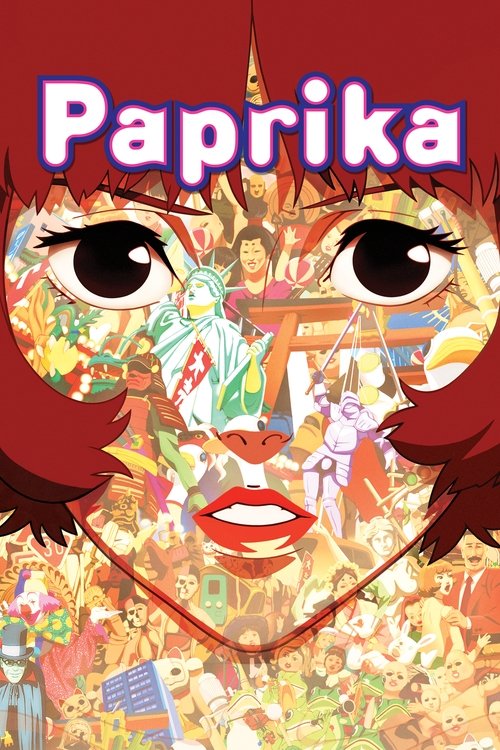
Paprika
パプリカ
"This is your brain on anime."
Overview
In the near future, a revolutionary device called the DC Mini allows psychotherapists to enter and record the dreams of their patients to treat deep-seated psychological traumas. Dr. Atsuko Chiba, a brilliant but stoic researcher, leads the project while secretly treating patients under the guise of her vibrant and playful alter-ego, Paprika, a "dream detective."
The stability of the world is threatened when several prototypes of the DC Mini are stolen by a "dream terrorist." Unlike the finished versions, these prototypes lack access restrictions, allowing the thief to invade the dreams of anybody, even while they are awake. As people begin to succumb to shared delusions and collective madness, reality itself starts to fray and blend with a bizarre, ever-growing parade of subconscious imagery.
Atsuko and her childlike genius colleague, Kosaku Tokita, must race against time to recover the devices. Alongside Detective Konakawa, who is haunted by a recurring cinematic nightmare, they journey deep into the heart of the collective unconscious to stop the perpetrator before the waking world is swallowed by the realm of sleep.
Core Meaning
The film explores the fragmentation of the human psyche in the digital age and the necessity of integrating one's repressed desires with their conscious reality. Director Satoshi Kon posits that dreams, like the internet or cinema, are essential vents for the human spirit, but warns against the total abandonment of reality for the sake of escapism. Ultimately, the film serves as a Jungian allegory for achieving "wholeness" by accepting all facets of the self, including those we find messy, irrational, or frightening.
Thematic DNA
Duality of Identity
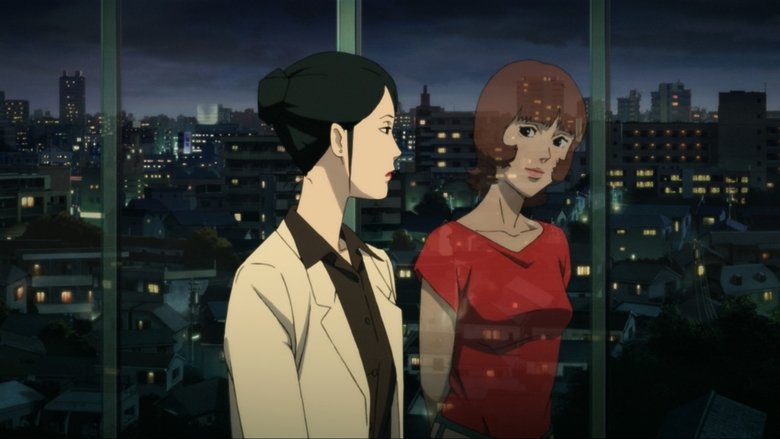
Revealed through the contrast between the cold, professional Dr. Atsuko Chiba and her uninhibited, magical alter-ego Paprika. The film suggests that these two halves must reconcile for the protagonist to become a complete person, mirroring how humans navigate their public personas versus their private, subconscious selves.
The Collective Unconscious
Represented by the Dream Parade, where individual delusions merge into a singular, chaotic mass. It critiques how mass media, consumerism, and technology can lead to a loss of individuality, creating a "contagious" madness that erodes the boundary between personal dreams and public reality.
Dreams as Cinema
The film frequently uses meta-cinematic language, particularly in Detective Konakawa's arc. By framing his trauma as a series of unfinished film genres, the movie explores the idea that we are the directors of our own subconscious narratives and that healing comes from "finishing the film."
Technology vs. Spirituality
The conflict between the DC Mini and the sacred nature of dreams. The villain, Chairman Inui, believes dreams are a holy sanctuary that science has defiled, highlighting the ethical dangers of using technology to quantify and control the human spirit.
Repression and Guilt
Seen through Detective Konakawa's recurring nightmare and Tokita's refusal to acknowledge the consequences of his inventions. The film shows that unresolved trauma will eventually manifest externally, demanding confrontation before it destroys the mind.
Character Analysis
Dr. Atsuko Chiba / Paprika
Megumi Hayashibara
Motivation
To recover the DC Mini and maintain the order of the waking world while suppressing her own emotional vulnerabilities.
Character Arc
Atsuko begins as a rigid, emotionless scientist who denies her feelings for Tokita. Through her adventures as Paprika, she learns to embrace her emotions and integrates her playful side, eventually becoming a unified being who can save reality.
Detective Toshimi Konakawa
Akio Otsuka
Motivation
To solve a lingering homicide case and stop the anxiety attacks that plague his sleep.
Character Arc
Initially hates movies and suffers from a recurring nightmare. By the end of the film, he confronts the guilt of abandoned youthful dreams and finds peace by accepting his love for cinema, effectively curing his neurosis.
Kosaku Tokita
Toru Furuya
Motivation
Pure scientific curiosity and the desire to expand the boundaries of human connection through dreams.
Character Arc
A brilliant inventor who lives like a child. He eventually realizes the danger of his unbridled creativity when his mind is consumed by his own creation, requiring Atsuko's love to pull him back.
Chairman Seijiro Inui
Tohru Emori
Motivation
To protect the "sacred sanctuary" of dreams by becoming its absolute ruler and destroying reality.
Character Arc
A wheelchair-bound man who despises modern technology. He seeks to use the DC Mini to merge with the dream world, becoming an all-powerful deity and gaining the mobility his physical body lacks.
Symbols & Motifs
The Dream Parade
Symbolizes cultural decay, consumerism, and collective madness. It is a visual representation of how disparate subconscious thoughts, when untethered from reality, become a destructive, non-sensical force that flattens individuality.
It appears throughout the film as a growing procession of inanimate objects (refrigerators, dolls, shrines) that invades various characters' dreams and eventually the real world.
Blue Butterflies
Symbols of transformation and the soul. They represent the ephemeral nature of the dream detective and the fragile beauty of the subconscious mind.
Often seen around Paprika or used to signal transitions between dream layers; Paprika is later seen pinned to a table like a butterfly specimen.
Elevators
Represent the levels of the subconscious and, according to Jungian theory, sexual or repressed desires.
Detective Konakawa frequently dreams of an elevator where each floor represents a different cinematic genre or a different stage of his repressed memory.
Mirrors and Reflections
Symbolize the split psyche and the barrier between the waking world and the dream world.
Atsuko and Paprika often communicate through reflections (windows, mirrors, puddles), emphasizing that they are two sides of the same soul inhabiting different planes.
Memorable Quotes
Don't you think dreams and the Internet are similar? They are both areas where the repressed conscious mind vents.
— Paprika
Context:
Spoken to Detective Konakawa early in the film to explain the nature of her work and the world they are entering.
Meaning:
Highlights the film's core comparison between biological and digital spaces as outlets for the parts of ourselves we hide from the world.
Science is nothing but a piece of trash before a profound dream.
— Chairman Seijiro Inui
Context:
The Chairman says this while justifying his attempt to take control of the dream world and destroy the DC Mini project.
Meaning:
Reveals the villain's philosophical justification: the belief that the logic of the waking world is inferior to the infinite potential of the subconscious.
It's truth that came from fiction. Always remember that.
— Konakawa's Friend
Context:
Spoken by the projection of Konakawa's dead friend within the detective's dream as he finds closure.
Meaning:
A definitive statement on Satoshi Kon's philosophy: that even though stories and dreams are made up, the emotions and insights they provide are more real than the physical world.
I swallow everything.
— Kosaku Tokita
Context:
Repeated as a mantra when Tokita's mind begins to wander and merge with the dream parade.
Meaning:
A metaphor for Tokita's character—he consumes knowledge and food without regard for the consequences, which eventually leads to his transformation into a literal consumer of dreams.
Philosophical Questions
Can technology ever truly 'know' the human subconscious?
The film explores whether quantifying the soul through a device like the DC Mini inherently destroys its mystery, as argued by the Chairman, or provides a necessary tool for healing.
Where does the 'Self' end and the 'Mask' begin?
Through the duality of Atsuko and Paprika, the film asks if our repressed desires (Paprika) are more 'real' than our conscious personas (Atsuko).
Is collective escapism a form of social suicide?
The parade represents a society so desperate for escape that it willingly abandons reality, raising questions about the dangers of mass media and digital disconnection.
Alternative Interpretations
One popular interpretation is that the film is a critique of Japanese society and its stagnation. The 'Dream Parade' consists of traditional symbols (shrines, dolls) and modern consumer goods, suggesting that the weight of the past and the hollow nature of the present are merging into a nightmare of lost identity. Another reading suggests the entire film is a metaphor for the act of filmmaking itself; the detective's journey to 'finish the film' reflects the director's own struggle to find truth through fiction. Some viewers also interpret the ending as ambiguous, questioning if the 'real world' Chiba returns to is truly reality or simply another layer of a perfected, shared dream.
Cultural Impact
Paprika is widely considered a masterpiece of adult animation and has had a profound influence on global cinema. Most famously, it is frequently cited as a primary inspiration for Christopher Nolan's Inception (2010), which shares the concept of dream-sharing technology and features several strikingly similar sequences, such as the hallway scene. It also shares a lineage with the works of Darren Aronofsky, who was a known admirer of Kon's work. Within Japan, it solidified the reputation of Studio Madhouse as a leader in experimental animation. Critically, it is praised for being one of the few films that captures the logic of dreams—not just as surreal imagery, but as a fluid, non-linear experience of the mind.
Audience Reception
The film received near-universal acclaim from critics, currently holding high scores on Rotten Tomatoes and Metacritic. Audiences were initially polarized by its nonlinear narrative and hallucinogenic logic, but it quickly achieved cult status. The most common praises focus on the unparalleled animation quality and Susumu Hirasawa's haunting score. Main points of criticism usually involve the 'logic gaps' in the third act and the abrupt romantic resolution between Atsuko and Tokita, which some felt lacked sufficient buildup. Overall, it is regarded as a visually overwhelming but intellectually rewarding experience.
Interesting Facts
- Paprika was the fourth and final feature film directed by Satoshi Kon before his death from pancreatic cancer in 2010.
- The film's score by Susumu Hirasawa was the first movie soundtrack to extensively use Vocaloid software (Lola).
- It is based on the 1993 novel of the same name by Yasutaka Tsutsui, which was long considered 'unfilmable' due to its surreal nature.
- The character design of Dr. Tokita was reportedly based on a combination of the author Yasutaka Tsutsui and game developer Gabe Newell.
- The film was a major competitor for the Golden Lion at the 63rd Venice International Film Festival.
Easter Eggs
Cameos of Satoshi Kon and Yasutaka Tsutsui
The director and the original author appear as two bartenders in the 'Radio Club' website scene, literally serving drinks to the characters in the digital/dream space.
Posters for Kon's Previous Films
In the final scene, when Detective Konakawa goes to the cinema, posters for Perfect Blue, Millennium Actress, and Tokyo Godfathers are visible on the wall.
Dreaming Kids Poster
The movie Konakawa goes to see at the end, Dreaming Kids, was a reference to The Dreaming Machine, the film Satoshi Kon was working on when he passed away.
Visual References to Classic Cinema
The opening sequence features homages to The Greatest Show on Earth, Tarzan, From Russia with Love, and Roman Holiday.
⚠️ Spoiler Analysis
Click to reveal detailed analysis with spoilers
Frequently Asked Questions
Explore More About This Movie
Dive deeper into specific aspects of the movie with our detailed analysis pages
Comments (0)
No comments yet. Be the first to share your thoughts!