Raya and the Last Dragon
An epic odyssey through a fractured realm, where rain brings life and trust acts as the only shield against a petrifying darkness, painting a vibrant tapestry of hope and reconciliation.
Raya and the Last Dragon

Raya and the Last Dragon

"A quest to save her world."

03 March 2021 United States of America 107 min ⭐ 7.8 (7,111)
Director: Don Hall Carlos López Estrada
Cast: Kelly Marie Tran, Awkwafina, Gemma Chan, Alan Tudyk, Izaac Wang
Animation Family Fantasy Action Adventure
The Necessity of Trust Shared Loss and Found Family Female Empowerment and Leadership Healing a Fractured Society
Budget: $100,000,000
Box Office: $130,423,032

Overview

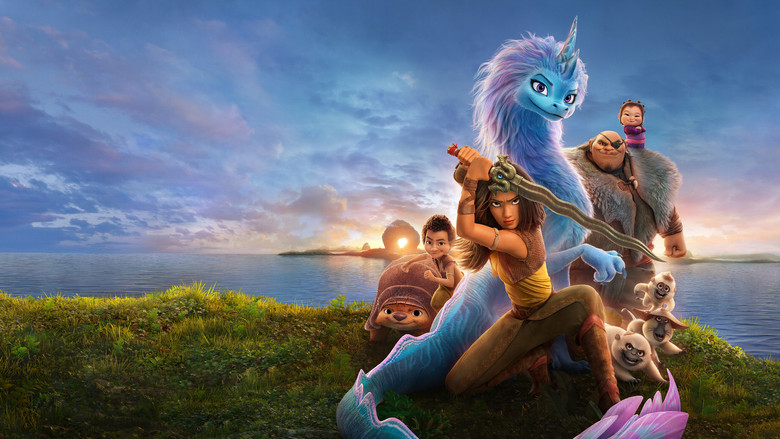
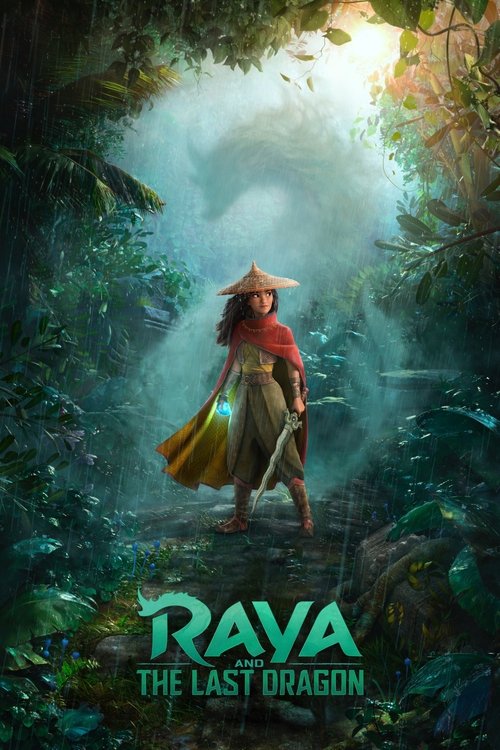
Set in the mystical land of Kumandra, Raya and the Last Dragon follows the journey of Raya, a warrior princess and guardian of the Dragon Gem. Five hundred years ago, dragons sacrificed themselves to save humanity from the Druun, mindless spirits that turn living beings into stone. After a tragic betrayal shatters the gem and unleashes the Druun once more, Kumandra is divided into five warring tribes: Heart, Fang, Tail, Spine, and Talon.

Raya spends six years searching for the legendary last dragon, Sisu, believed to be the world's final hope. When she finally summons the quirky and self-deprecating water dragon, they must travel across the five lands to retrieve the gem's scattered shards. Along the way, Raya recruits a ragtag crew of survivors, each representing a different tribe, as she faces her childhood rival, Namaari. The film blends high-stakes martial arts action with a deeply emotional quest to restore a broken world.
Core Meaning

The core meaning of the film is that unity cannot exist without the vulnerability of trust. The directors sought to demonstrate that while betrayal creates a cycle of fear and isolation, someone must "take the first step" to break that cycle. The film argues that even in a world ravaged by discord (symbolized by the Druun), the collective survival of humanity depends on our ability to see past tribalism and forgive former enemies to build a shared future.

Thematic DNA

The Necessity of Trust 35%
Shared Loss and Found Family 25%
Female Empowerment and Leadership 20%
Healing a Fractured Society 20%

The Necessity of Trust

The central conflict is not just between Raya and the Druun, but between Raya's cynicism and Sisu's radical optimism. The film explores how blind trust can be dangerous, yet no trust leads to a broken world. This is resolved only when the characters choose to trust despite the risk of further betrayal.

Shared Loss and Found Family

Each member of Raya's crew—Boun, Tong, and Noi—has lost their entire family to the Druun. This shared trauma unites them, proving that common grief can bridge the gap between rival tribes and create a new, diverse community.

Female Empowerment and Leadership

The film features a predominantly female-led cast of leaders and warriors. It subverts traditional tropes by focusing on the complex, competitive, yet ultimately restorative relationship between two women, Raya and Namaari, whose choices determine the fate of their civilization.

Healing a Fractured Society

The five tribes represent a society divided by resource hoarding and historical grievances. The restoration of Kumandra serves as a metaphor for overcoming modern political and social polarization through diplomacy and shared sacrifice.

Character Analysis

Raya

Kelly Marie Tran

Archetype: The Hero
Key Trait: Resourceful, disciplined, and fiercely protective.

Motivation

To find Sisu, reassemble the Dragon Gem, and restore her father, Chief Benja, from stone.

Character Arc

Initially a hopeful young guardian, she becomes a cynical, isolated loner after being betrayed. Her development involves letting go of her rage and learning that trust is a gift she must give first.

Sisu (Sisudatu)

Awkwafina

Archetype: The Mentor / Herald
Key Trait: Endlessly optimistic, clumsy, and humorous.

Motivation

To bring peace to Kumandra and remind humans that they are better together than apart.

Character Arc

Sisu remains largely static in her values but acts as the catalyst for everyone else's change. She discovers her own worth, realizing she wasn't the "best" dragon but was the one who trusted her siblings.

Namaari

Gemma Chan

Archetype: The Shadow / Rival
Key Trait: Skilled warrior, conflicted, and highly intelligent.

Motivation

To protect her people and secure Fang's legacy, often at the expense of other tribes.

Character Arc

She moves from a loyal daughter of Fang obsessed with her tribe's prosperity to a remorseful leader who realizes that her actions have nearly destroyed everyone.

Chief Benja

Daniel Dae Kim

Archetype: The Visionary Mentor
Key Trait: Wise, idealistic, and deeply loving.

Motivation

To see the five tribes live together in harmony as one nation again.

Character Arc

He serves as the moral compass of the film. Though he is petrified early on, his philosophy of a reunited Kumandra guides Raya's journey.

Symbols & Motifs

Water and Rain

Meaning:

Represents life, purification, and the dragons' presence. Water is the only natural element that repels the Druun.

Context:

Used throughout as a protective barrier; the film ends with a magical rainstorm that revives those turned to stone, symbolizing the return of peace and the dragons' magic.

The Dragon Gem

Meaning:

Symbolizes the collective power and unity of the dragons, and by extension, the potential unity of Kumandra.

Context:

When the gem is whole, it protects the world; when shattered into five pieces held by different tribes, its power fades, reflecting the consequences of human greed and discord.

The Druun

Meaning:

Amorphous, purple-and-black clouds representing human discord, hatred, and the destructive nature of social conflict.

Context:

They are described as a "plague born from human discord" and appear whenever the people of Kumandra turn on one another.

Tuk Tuk

Meaning:

A living bridge between nature and utility; a symbol of Raya's journey and her connection to her past.

Context:

As Raya's pet and steed (a hybrid of pill bug, pug, and armadillo), his name and function refer to the common three-wheeled vehicles in Southeast Asia.

Memorable Quotes

The world's broken. You can't trust anyone.

— Raya

Context:

Said to Sisu early in their journey when the dragon expresses shock at the state of the world.

Meaning:

Reflects Raya's cynical worldview after years of survival in a post-apocalyptic wasteland.

Maybe it's broken because you don't trust anyone.

— Sisu

Context:

Sisu's response to Raya's cynicism, highlighting the central philosophical debate of the film.

Meaning:

A fundamental thematic inversion, suggesting that trust is the cause of peace, not just a byproduct of it.

If you want to get someone's trust, you have to give a little trust first.

— Sisu

Context:

During their travels, as Sisu attempts to convince Raya to reach out to their enemies.

Meaning:

Emphasizes the reciprocal nature of human relationships and the necessity of vulnerability.

In a different world, maybe we could have been friends.

— Namaari

Context:

Said to Raya during one of their several confrontations throughout the film.

Meaning:

Shows the tragedy of a rivalry fueled by tribalism rather than personal malice.

Philosophical Questions

Is trust a prerequisite for peace, or a result of it?

The film argues that trust must come first, even when it feels impossible. It challenges the idea that we can wait for our enemies to prove themselves before we offer them an olive branch.

How do we move past inherited conflicts?

Raya and Namaari are fighting for a peace that was lost by their fathers' generation. The film explores the burden of historical grievances and the courage required for the youth to build something new.

Alternative Interpretations

Some viewers interpret the film as a political allegory for international relations, specifically the Association of Southeast Asian Nations (ASEAN) and the challenges of the 'ASEAN Way' of non-interference. Others view it through the lens of the COVID-19 pandemic, with the Druun representing the virus and the Dragon Gem representing a vaccine or solution that is hoarded by different nations rather than shared. A more controversial reading suggests the film promotes 'blind trust' in a way that could be seen as naive or dangerous in the face of repeated abuse or systemic betrayal, leading to heated debates among audience members about the morality of Sisu's advice.

Cultural Impact

The film was widely praised as Disney's first Southeast Asian-inspired feature, celebrating the diverse cultures of Thailand, Vietnam, Cambodia, Indonesia, and the Philippines. It sparked significant discussion regarding representation, particularly the casting of East Asian actors for Southeast Asian characters, which led to mixed reactions. However, it remains a landmark for Asian representation in Western animation. Its release during a period of global social polarization and the COVID-19 pandemic gave its themes of 'human discord' and 'trust' a profound, timely resonance. It also influenced pop culture through its unique martial arts choreography and the introduction of a more 'grounded' and action-focused Disney princess.

Audience Reception

Critics generally lauded the film for its stunning animation, fluid action sequences, and strong voice acting, earning it a high score on platforms like Rotten Tomatoes. Audiences were largely positive, though some found the 'trust' message to be overly simplistic or repetitive. The most notable criticism came from Southeast Asian communities regarding the lack of Southeast Asian voice actors in some lead roles, despite the film's cultural setting. However, the emotional payoff and the unique dragon design were widely cited as highlights.

Interesting Facts

  • Due to the COVID-19 pandemic, the film was primarily produced remotely, with over 450 cast and crew members working from their homes.
  • Kelly Marie Tran was cast after the original lead, Cassie Steele, was replaced following a shift in the character's personality and tone.
  • The filmmakers created the 'Southeast Asia Story Trust,' a team of consultants including anthropologists and linguists, to ensure cultural sensitivity.
  • Alan Tudyk, who plays the animal companion Tuk Tuk, has voiced a character in every Walt Disney Animation Studios film since Wreck-It Ralph (2012).
  • Raya’s fighting style is a blend of various Southeast Asian martial arts, including Filipino Arnis (Eskrima) and Indonesian Pencak Silat.
  • The giant dragon-shaped river that connects the five lands was inspired by the Mekong River.

Easter Eggs

Hei Hei from Moana

The dim-witted rooster makes a brief cameo in a marketplace scene in Talon, also voiced by Alan Tudyk.

Bruni from Frozen II

A small lizard in the desert has movement and behavior patterns modeled exactly after the fire spirit Bruni.

Dante from Coco

A dog that closely resembles Miguel's pet Xoloitzcuintli from the Pixar film appears in the background of Talon.

⚠️ Spoiler Analysis

Click to reveal detailed analysis with spoilers

Frequently Asked Questions

Explore More About This Movie

Dive deeper into specific aspects of the movie with our detailed analysis pages

Comments (0)

Leave a comment

No comments yet. Be the first to share your thoughts!