Children of Heaven
بچههای آسمان
"A Little Secret... Their Biggest Adventure!"
Overview
"Children of Heaven" tells the touching story of nine-year-old Ali and his younger sister Zahra, who live in a poor neighborhood in Tehran. After Ali loses Zahra's only pair of shoes, the two siblings decide to keep it a secret from their financially struggling parents. They devise a plan to share Ali's worn-out sneakers: Zahra wears them to her morning classes and then runs to meet Ali so he can wear them for his afternoon school session.
This arrangement leads to a series of challenges and adventures for the children. Ali is often late for school, risking trouble with the principal, while Zahra must navigate her school day in oversized boys' shoes. Their simple, shared goal of keeping the secret and managing their daily lives reveals their incredible resilience, integrity, and deep love for one another. The film beautifully captures the world from a child's perspective, where a small problem like a lost pair of shoes becomes a significant emotional journey.
The story culminates in a city-wide running race that Ali enters, hoping to win the third-place prize: a new pair of sneakers for Zahra. The race becomes a powerful and emotional climax, testing Ali's determination and showcasing the depth of his love for his sister.
Core Meaning
"Children of Heaven" is a powerful and moving exploration of childhood innocence, familial love, and resilience in the face of poverty. Director Majid Majidi aims to convey that even in the most challenging circumstances, human dignity, empathy, and the bonds of family can triumph. The film highlights the idea that small, everyday struggles can carry immense emotional weight and that the simplest acts of love and sacrifice are often the most profound. It's a story that emphasizes the moral strength of children, who, despite their difficult environment, demonstrate remarkable integrity and compassion. Ultimately, the film carries a message of hope and the enduring power of the human spirit.
Thematic DNA
Poverty and Social Class
The film delicately portrays the daily struggles of a family living in poverty without being overly melodramatic. The lost shoes are not just a minor inconvenience but a significant financial problem for a family already behind on rent. This theme is further explored when Ali and his father travel to the affluent northern part of Tehran to find gardening work, highlighting the stark contrast between the lives of the rich and the poor.
Sibling Love and Sacrifice
The core of the film is the loving relationship between Ali and Zahra. Their shared secret and the intricate shoe-sharing arrangement demonstrate their deep bond and willingness to sacrifice for one another. Ali's determination in the race is fueled entirely by his desire to win new shoes for his sister. Their collaboration and mutual support in the face of their predicament is a testament to their unwavering love.
Childhood Innocence and Resilience
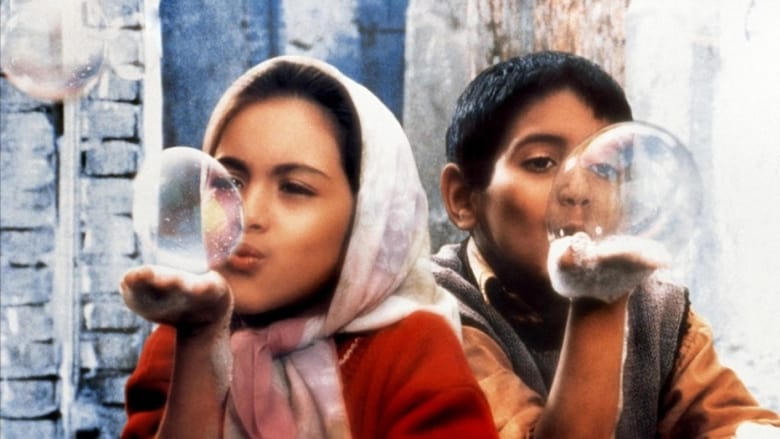
The film is told from the perspective of children, capturing their unique view of the world where small problems feel monumental. Despite their hardships, Ali and Zahra maintain their innocence and find moments of joy, such as blowing bubbles. Their resilience is shown in how they adapt to their difficult situation with creativity and determination, facing their challenges with a maturity beyond their years.
Integrity and Morality
A key moment that highlights this theme is when Zahra and Ali discover that another girl from a poor family is wearing the lost shoes. They see that her father is blind and choose not to confront her, understanding that her need is as great as theirs. This act of empathy and moral integrity, even at a personal cost, is a central message of the film.
Character Analysis
Ali
Amir Farrokh Hashemian
Motivation
Ali's primary motivation is to rectify his mistake of losing his sister's shoes and to protect her from disappointment and their parents from further financial strain. His love and sense of responsibility for Zahra drive all of his actions, from the daily shoe-sharing routine to his desperate attempt to win a new pair for her in the race.
Character Arc
Ali begins as a young boy burdened by a mistake that he fears will bring trouble to his family. Throughout the film, he takes on a significant amount of responsibility, not only for his initial error but also for finding a solution. His journey is one of growing determination and self-sacrifice, culminating in his participation in the race. He learns to navigate difficult situations with integrity and unwavering love for his sister, demonstrating maturity beyond his years.
Zahra
Bahare Seddiqi
Motivation
Zahra's main motivation is to support her brother and prevent their parents from finding out about the lost shoes. She is also driven by a simple childhood desire to have her own pair of shoes to wear to school. Her motivations are rooted in love for her family and a desire for a sense of normalcy.
Character Arc
Zahra starts as a disappointed and worried younger sister but quickly becomes an active and resilient partner in Ali's plan. She endures the discomfort of wearing ill-fitting shoes and the fear of being discovered. Her arc shows her developing a quiet strength and a deep sense of empathy, particularly when she discovers who has her shoes. She is the emotional anchor of the story, and her quiet suffering and understanding are deeply affecting.
Father
Reza Naji
Motivation
The father is motivated by his duty to provide for his family. He is constantly seeking work and trying to manage their debts. His actions are driven by a desire to give his children a better life, even if he often falls short due to circumstances beyond his control.
Character Arc
The father is portrayed as a hardworking but financially strained man who is often stressed and short-tempered due to his inability to provide adequately for his family. While he can be stern, his love for his children is evident. His journey to the affluent part of the city with Ali shows his desperation and hope for a better life. A glimmer of success in his gardening work offers a brief moment of optimism, though it is short-lived.
Symbols & Motifs
Shoes
The shoes in "Children of Heaven" are a multifaceted symbol. On a literal level, they represent a basic necessity that the family struggles to afford, highlighting their poverty. Metaphorically, they symbolize dignity, hope, and the children's shared struggle and bond. The quest for a new pair of shoes drives the narrative and represents their desire for a small piece of normalcy and happiness in their difficult lives. They also symbolize protection and safety provided by their father.
The entire plot revolves around Zahra's lost pink shoes and the subsequent sharing of Ali's sneakers. The state of their footwear, worn and passed between them, is a constant visual reminder of their circumstances. The climax of the film centers on Ali's attempt to win a new pair of shoes in a race.
Running
Running is a recurring motif that symbolizes the children's constant struggle and perseverance. It represents their race against time to exchange the shoes and get to school, as well as their efforts to overcome the obstacles presented by their poverty. In the final race, running becomes a symbol of Ali's determination and love for his sister, a physical manifestation of his desperate hope.
Both Ali and Zahra are frequently shown running through the streets of Tehran to exchange the shoes between their school shifts. This daily act of running builds up to the final, pivotal footrace that Ali participates in, where his running ability is put to the ultimate test.
Goldfish
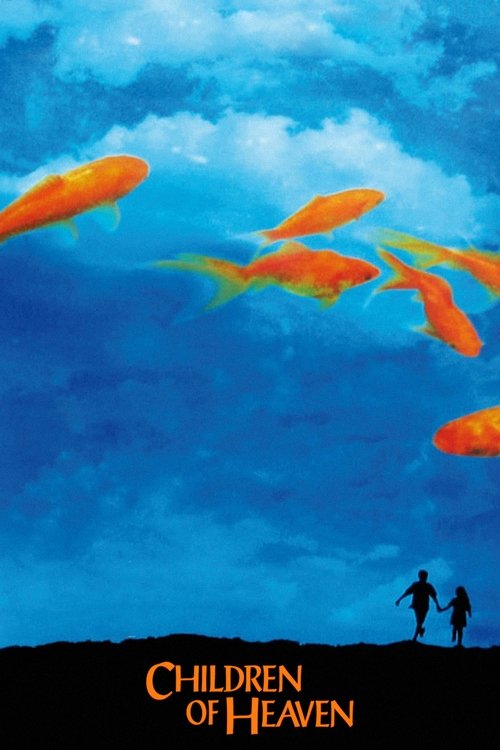
The goldfish in the pond at their home symbolize the children's innocence, hope, and the small moments of beauty and tranquility they find amidst their struggles. The vibrant fish swimming freely in the water offer a visual contrast to the children's constrained lives. Dipping their feet in the water with the fish provides them with a sense of comfort and escapism.
In the film's final shot, after the disappointment of the race, Ali is seen dejectedly dipping his blistered feet into the small pool in their courtyard, with the goldfish swimming around them. This imagery provides a moment of quiet reflection and a bittersweet sense of peace.
Philosophical Questions
What is the nature of true wealth and poverty?
The film explores the idea that poverty is not just a lack of material possessions but can also be a state of mind. While Ali's family is financially poor, they are rich in love, integrity, and resilience. The children's relationship and their moral choices suggest that true wealth lies in human connection and character. The film prompts the viewer to consider what it truly means to be rich or poor, and whether material wealth is the ultimate measure of a good life.
How do small, everyday actions define our character?
"Children of Heaven" focuses on the small, seemingly insignificant events in the lives of two children. However, it is through these small actions – sharing shoes, keeping a secret for a loved one, showing empathy to a stranger – that their true character is revealed. The film suggests that morality and integrity are not defined by grand gestures, but by the countless small choices we make every day. It raises the question of how our own daily actions reflect our core values.
Can innocence and morality survive in the face of hardship?
Despite their difficult circumstances, Ali and Zahra maintain a strong sense of right and wrong. Their decision not to reclaim the shoes from the blind man's daughter is a powerful example of their innate morality triumphing over their personal needs. The film explores whether innocence is a product of circumstance or an inherent human quality, suggesting that even in the most challenging environments, the capacity for goodness can endure.
Alternative Interpretations
While "Children of Heaven" is largely seen as a straightforward and heartwarming story, some interpretations delve deeper into its social and political subtext. One perspective is that the film is a subtle critique of the socio-economic conditions in Iran, where poverty forces children to take on adult responsibilities and make difficult moral choices. The stark contrast between the poor southern neighborhoods and the wealthy northern suburbs of Tehran can be seen as a commentary on social inequality.
Another interpretation focuses on the ending. The fact that Ali doesn't win the shoes for Zahra, despite winning the race, can be viewed as a poignant statement on the nature of life and disappointment. It suggests that even with immense effort and good intentions, things don't always work out as planned. However, the father's purchase of new shoes, unknown to the children at that moment, can be seen as a sign of hope and the idea that redemption and happiness can come from unexpected places. Some viewers also see a religious or spiritual dimension to the film, where the children's resilience and moral choices reflect Islamic values of patience, sacrifice, and empathy.
Cultural Impact
"Children of Heaven" was a landmark film for Iranian cinema, earning the country's first-ever Academy Award nomination for Best Foreign Language Film in 1998. This brought significant international attention to Iranian filmmaking, which was already experiencing a "New Wave." The film's success demonstrated that a simple, humanistic story could resonate with audiences globally, transcending cultural and linguistic barriers. Critics and audiences worldwide praised the film for its heartfelt story, authentic performances, and its ability to find universal themes within a specific cultural context. It challenged Western perceptions of Iran by presenting a story focused on family, love, and everyday struggles. The film's use of child protagonists to explore complex social issues, a common trait in Iranian cinema to navigate censorship, was masterfully executed and celebrated. "Children of Heaven" has had a lasting impact, inspiring remakes in other countries and solidifying Majid Majidi's reputation as a leading director of world cinema.
Audience Reception
"Children of Heaven" was overwhelmingly praised by audiences worldwide for its emotional depth, heartwarming story, and the incredible performances of its child actors. Viewers were particularly moved by the depiction of the loving bond between Ali and Zahra and found the film to be a powerful and universal story of family, resilience, and hope. Many praised its simplicity and purity, contrasting it with the cynicism often found in Western films. The film's ability to evoke strong emotions without being overly sentimental was a common point of acclaim. While there is little in the way of criticism, some viewers may have found the pacing to be slow at times, which is characteristic of some Iranian cinema. Overall, the audience reception has been overwhelmingly positive, with many considering it a masterpiece of world cinema.
Interesting Facts
- The film was nominated for an Academy Award for Best Foreign Language Film in 1998, a first for an Iranian film.
- The film's budget was approximately $180,000.
- Director Majid Majidi worked extensively with the child actors, often using improvisation to capture their natural and authentic performances.
- The race scene reportedly took several days and over 50 takes to film and involved real schoolchildren.
- The film has inspired several remakes, including a Singaporean film titled "Homerun" (2003) and an Indian film titled "Bumm Bumm Bole" (2010).
- The actors who played Ali and Zahra, Amir Farrokh Hashemian and Bahare Seddiqi, were not professional actors.
- The film was produced by Iran's Institute for the Intellectual Development of Children and Young Adults.
⚠️ Spoiler Analysis
Click to reveal detailed analysis with spoilers
Frequently Asked Questions
Explore More About This Movie
Dive deeper into specific aspects of the movie with our detailed analysis pages
Comments (0)
No comments yet. Be the first to share your thoughts!