Dallas Buyers Club
"Dare to live."
Overview
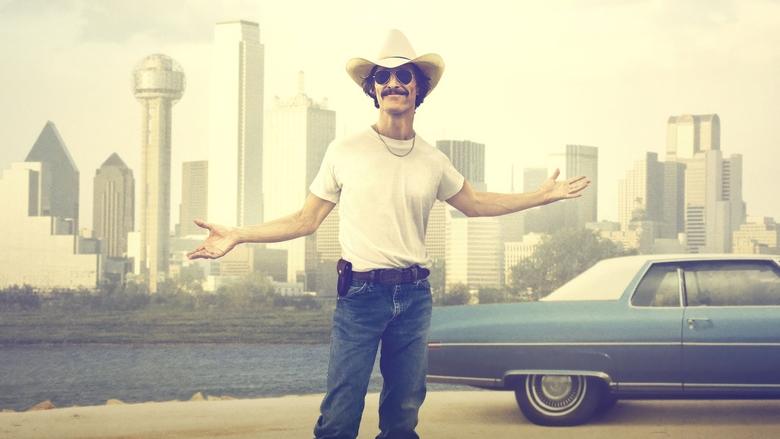
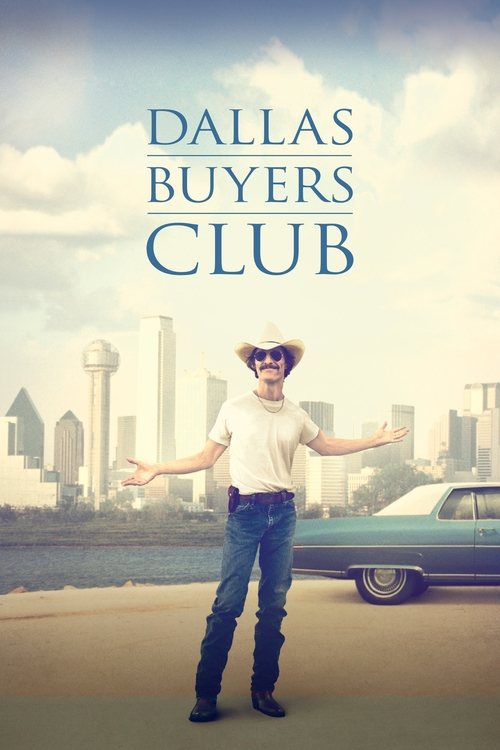
"Dallas Buyers Club" tells the true story of Ron Woodroof (Matthew McConaughey), a homophobic Dallas electrician and rodeo cowboy whose life is upended in 1985 when he is diagnosed with HIV/AIDS and given 30 days to live. Initially refusing to accept the diagnosis, he is ostracized by his friends and family who assume he contracted the disease through homosexual activity.
Frustrated with the lack of viable medical options and the toxic effects of the only FDA-approved drug, AZT, Woodroof begins researching alternative treatments. His quest leads him to smuggle unapproved, but effective, drugs from Mexico and other countries. To distribute these treatments and circumvent the law, he establishes the "Dallas Buyers Club." Members pay a monthly fee to gain access to his smuggled drug cocktails.
In this endeavor, he forms an unlikely business partnership with Rayon (Jared Leto), a transgender woman also living with AIDS. Together, they navigate the challenges of their enterprise, facing constant opposition from the FDA and the pharmaceutical industry, while Woodroof himself undergoes a profound personal transformation, shedding his deep-seated prejudices.
Core Meaning
The core meaning of "Dallas Buyers Club" revolves around the themes of survival, anti-establishment rebellion, and the humanization that occurs in the face of mortality. Director Jean-Marc Vallée sought to tell a story about an individual's fierce will to live, forcing him to challenge a rigid, bureaucratic, and profit-driven medical system. The film is a powerful critique of the FDA and pharmaceutical companies during the AIDS crisis, portraying them as prioritizing procedure and profit over compassion and patient well-being. Ultimately, the film's message is one of empowerment, illustrating how one man's selfish fight for his own life evolved into a compassionate crusade that provided hope and extended the lives of many others, forcing him to confront his own bigotry and find humanity in an unexpected friendship.
Thematic DNA
Anti-Establishment and Critique of the Medical System
The central conflict of the film is Ron Woodroof's battle against the Food and Drug Administration (FDA) and pharmaceutical companies. The film portrays the medical establishment as slow, bureaucratic, and beholden to the interests of big pharma. The only approved drug, AZT, is depicted as highly toxic in the doses being administered in trials. Woodroof's creation of the Buyers Club is a direct act of defiance, creating a black market for alternative, unapproved treatments that he believes are more effective and less harmful. This theme questions the ethics of a system where potentially life-saving treatments are withheld due to regulation and financial interests.
Transformation and Overcoming Prejudice
Ron Woodroof begins the film as a deeply homophobic and self-interested man. His AIDS diagnosis forces him into a world he despises, populated by the gay and transgender individuals he once ridiculed. His business partnership and eventual friendship with Rayon, a transgender woman, is the catalyst for his profound transformation. Through their shared struggle, Ron sheds his bigotry, culminating in a scene where he physically defends Rayon from a former, homophobic friend. His journey illustrates how shared humanity and a common enemy can dissolve deep-seated prejudice.
The Will to Survive
Given a 30-day death sentence, Ron's initial motivation is purely selfish: to save his own life by any means necessary. This primal urge to survive drives him to educate himself, travel the world for alternative medicines, and challenge the law. The film explores the lengths to which a person will go when faced with their own mortality. This theme is encapsulated in his defiant belief that nothing could kill him in 30 days, a determination that ultimately extends his life by seven years.
Stigma of HIV/AIDS in the 1980s
The film vividly portrays the social atmosphere of the mid-1980s, when HIV/AIDS was deeply misunderstood and heavily stigmatized as a "gay disease." After his diagnosis, Ron is immediately ostracized by his friends and community. The movie captures the fear, ignorance, and hostility faced by those with the illness, highlighting how the social alienation was often as devastating as the physical disease itself.
Character Analysis
Ron Woodroof
Matthew McConaughey
Motivation
Ron's primary motivation is survival. He is given a 30-day death sentence and refuses to accept it. This fuels his relentless search for effective treatments, his willingness to break the law, and his fight against the FDA. Over time, this motivation expands to include a sense of justice and a genuine desire to help others in his position, though he never fully loses his abrasive, entrepreneurial edge.
Character Arc
Ron begins as a homophobic, racist, and hedonistic electrician. His HIV diagnosis acts as a brutal catalyst for change. Initially driven by a selfish desire to survive, he is forced to ally himself with the very community he despises. Through his business partnership and eventual friendship with Rayon, he sheds his prejudices and develops empathy. He transforms from a self-serving hustler into a reluctant activist and a lifeline for hundreds of people, fighting not just for his own life but for the rights of all AIDS patients.
Rayon
Jared Leto
Motivation
Rayon is motivated by a need for community, acceptance, and survival. She connects Ron to the gay community, providing the clientele that makes the Buyers Club viable. She craves connection and friendship, which she finds in her unlikely partnership with Ron. Her most selfless act comes when she sells her life insurance policy to keep the club afloat, demonstrating her commitment to their shared cause.
Character Arc
Rayon, a fictional composite character representing transgender AIDS patients of the era, is introduced as a drug-addicted but resilient and compassionate individual. She serves as the film's emotional core and the primary catalyst for Ron's transformation. Her arc is tragic; while she helps build the Buyers Club and teaches Ron empathy, she struggles with her own drug addiction and declining health. Her eventual death is a devastating blow to Ron, solidifying his commitment to the cause and marking the completion of his emotional journey.
Dr. Eve Saks
Jennifer Garner
Motivation
Dr. Saks is motivated by a genuine desire to help her patients. Her primary conflict is between her professional obligations and her personal ethics. She is bound by hospital policy and FDA regulations, but her observations of Ron's improving health and the suffering of her other patients compel her to question the system she works for. Her motivation becomes to do what is morally right, even at great personal and professional risk.
Character Arc
Dr. Saks is a fictional character who initially represents the medical establishment that Ron opposes. At first, she follows the rules, treating Ron with clinical detachment and defending the AZT trials. However, as she witnesses the devastating effects of AZT and the apparent success of Ron's alternative treatments, her conscience is pricked. She evolves from a rule-following doctor into a quiet ally, leaking information to Ron and eventually standing up to her superiors, refusing to be a complicit part of a harmful system.
Symbols & Motifs
Rodeo / Bull Riding
The rodeo, specifically the image of bull riding, symbolizes Ron's fight for life. The bull represents death and the disease, a powerful and seemingly unbeatable force. Ron, the cowboy, is trying to hang on for just a few more seconds, mirroring his daily struggle to survive against the odds.
The film opens with Ron at a rodeo, watching a rider get trampled, establishing the high stakes of his reckless lifestyle. The film closes with a shot of Ron on a bucking bull in a daydream, no longer just a spectator but a full participant in the fight. This final image signifies that although he eventually succumbs to the disease, he dies on his own terms, fighting until the very end.
The Cowboy Hat
Ron Woodroof's cowboy hat is a symbol of his identity, his rebellious "maverick spirit," and his Texan machismo. It represents the rugged individualism and anti-authoritarian attitude that defines his character. Even as his body wastes away, the hat remains, a defiant emblem of his spirit.
Ron wears the hat throughout the film, from his days as a hard-living electrician to his final moments. It's a constant part of his persona, whether he's smuggling drugs disguised as a priest or confronting FDA officials. The hat visually reinforces his outsider status and his refusal to be broken by the system or the disease.
Butterflies
In a quiet moment, Ron enters a room filled with butterflies at a Mexican clinic. The butterflies symbolize transformation, fragility, and the beauty of life. This moment represents a spiritual and emotional turning point for Ron, a brief period of peace and hope amidst his chaotic struggle.
This scene occurs during one of Ron's trips to Mexico to acquire drugs. Weak and desperate, he stumbles into the butterfly enclosure. The gentle, beautiful creatures contrast sharply with the harsh, clinical reality of his disease and his gritty fight, offering a moment of transcendence and foreshadowing his own internal metamorphosis.
Memorable Quotes
Let me give y'all a little news flash. There ain't nothin' out there can kill fuckin' Ron Woodroof in 30 days.
— Ron Woodroof
Context:
Ron says this to his friends at a bar shortly after receiving his diagnosis. They are shunning him out of fear and prejudice, and his defiant proclamation is his way of asserting his identity and refusing to be seen as a victim.
Meaning:
This line, spoken early in the film after his diagnosis, perfectly encapsulates Ron's defiant, indomitable spirit. It establishes his core character trait: a refusal to accept his fate and a determination to fight back against impossible odds. It's a statement of pure will that sets the tone for his entire journey.
Sometimes I feel like I'm fighting for a life I ain't got time to live.
— Ron Woodroof
Context:
Ron says this to Dr. Eve Saks during a moment of quiet reflection, expressing the weariness that lies beneath his combative exterior as he deals with the endless bureaucracy, travel, and stress of running the club and managing his illness.
Meaning:
This quote reveals the deep emotional and physical toll of Ron's constant struggle. While he projects an image of toughness, this line offers a rare glimpse into his vulnerability and exhaustion. It speaks to the cruel irony of his situation: all his energy is consumed by the fight to stay alive, leaving little room for actually living.
Oh, I'm the drug dealer? No, you're the fuckin' drug dealer. I mean, goddamn, people are dyin'. And y'all are up there afraid that we're gonna find an alternative without you.
— Ron Woodroof
Context:
Ron shouts this at Richard Barkley, an FDA official, during a raid on the Dallas Buyers Club. He is being accused of being a common drug dealer, and he passionately throws the accusation back, defending his actions as morally necessary in a corrupt system.
Meaning:
This is a powerful accusation leveled at the FDA, representing the core argument of the film. Ron reframes the narrative, casting the regulatory body and the pharmaceutical industry—not himself—as the villains who profit from and control life-saving medicine. It's the moment his personal fight becomes a public, political statement.
God sure was dressin' the wrong doll when he blessed you with a set of balls.
— Ron Woodroof
Context:
Ron says this to Rayon later in their friendship, after she has proven her mettle and loyalty as his business partner. The comment marks a shift from his earlier outright hostility to a form of acceptance and camaraderie, albeit expressed in his own rough-hewn language.
Meaning:
Delivered with a mix of his old crude humor and newfound affection, this quote signifies a major turning point in Ron's relationship with Rayon. While on the surface it's a crass joke, it's also his unique way of acknowledging Rayon's courage and strength, showing that he has come to respect and care for her deeply.
Philosophical Questions
When is it justifiable to break the law for the greater good?
The film places Ron Woodroof's illegal drug smuggling in direct opposition to the FDA's legal regulations. It consistently frames Ron's actions as morally right and the government's as lethally bureaucratic. The film asks the audience to consider at what point an individual's right to life-saving treatment supersedes federal law. It explores the conflict between medical ethics and legal procedure, suggesting that in life-or-death situations, a rigid adherence to the law can be profoundly immoral.
What is the balance between individual autonomy and state control in healthcare?
"Dallas Buyers Club" is a fierce argument for a patient's right to choose their own treatment. Ron's entire journey is a fight for the autonomy to medicate himself as he sees fit, rather than being forced into a single, state-sanctioned clinical trial for a drug he believes is poison. The film poses the question of who should have the final say in a person's medical care: the individual suffering from the disease or the government agencies tasked with protecting public health? It champions a maverick spirit of self-reliance against a paternalistic system.
Can true compassion and altruism arise from selfish motivations?
Ron's initial motivations are entirely self-serving: he wants to make money and, above all, to not die. However, his enterprise inadvertently creates a community and a lifeline for hundreds of people. The film charts his gradual transformation from a pure capitalist to someone who genuinely cares for his clients, particularly Rayon. It explores the philosophical idea that heroic and altruistic outcomes can sometimes spring from deeply selfish origins, blurring the lines between egoism and community service.
Alternative Interpretations
One significant alternative interpretation revolves around the character of Ron Woodroof and the "white savior" narrative. Some critics argue that the film, by focusing on a straight, white, cisgender man as the hero of this particular AIDS story, sidelines the experiences of the LGBTQ+ community, who were at the forefront of AIDS activism. The real-life Buyers Club movement was largely driven by gay activists, and the film's focus on an outsider who swoops in to save the day can be seen as a distortion of that history.
Furthermore, the portrayal of Rayon has been subject to different readings. While many saw the character as the film's compassionate heart, some critics found the depiction stereotypical and argued that Rayon, as a fictional creation, exists primarily to facilitate the redemption of the straight protagonist. Her tragic death fits into a common trope where a marginalized character dies to further the emotional development of the hero. This perspective suggests that despite its progressive themes, the film adheres to a conventional Hollywood narrative structure that privileges the straight, male experience over the queer and trans characters who are ostensibly central to the story.
Cultural Impact
"Dallas Buyers Club" had a significant cultural impact upon its release in 2013. It brought a mainstream audience back to the early days of the AIDS crisis in the 1980s, powerfully reminding viewers of the fear, stigma, and desperation that defined the era. The film sparked renewed conversations about the history of the HIV/AIDS epidemic and the role of the FDA and pharmaceutical companies in drug accessibility.
The movie was a critical success, receiving six Academy Award nominations and winning three, including Best Actor for Matthew McConaughey and Best Supporting Actor for Jared Leto. These transformative performances were widely praised and are often cited as career-defining roles that cemented the "McConaissance."
However, the film also faced criticism. The casting of a cisgender man, Jared Leto, as a transgender woman sparked debate about representation in Hollywood. Additionally, some historians and activists who knew the real Ron Woodroof contested the film's portrayal of him as initially homophobic, with some friends claiming he was not. The film's depiction of certain drugs, particularly its negative portrayal of AZT, was also questioned by some medical experts who noted that in lower doses, AZT was a vital early treatment. Despite these controversies, the film's powerful narrative of an individual fighting a broken system resonated deeply with audiences and critics alike, securing its place as an important biographical drama.
Audience Reception
Audience reception for "Dallas Buyers Club" was overwhelmingly positive. Viewers widely praised the powerful and transformative performances of Matthew McConaughey and Jared Leto, frequently citing them as the film's greatest strength and worthy of their Oscar wins. The story itself was found to be gripping, inspiring, and emotionally impactful, shedding light on a critical period of the AIDS crisis. Many viewers connected with the anti-establishment themes and Ron Woodroof's defiant fight against bureaucracy.
Points of criticism from audiences were relatively minor but sometimes mentioned that the plot could feel slow or muddled in the middle section. Some viewers also found the character of Dr. Eve Saks, and her potential romantic subplot with Ron, to be underdeveloped or unnecessary. Despite these few critiques, the general consensus among audiences was that it was a powerful, well-acted, and important biographical film.
Interesting Facts
- Matthew McConaughey lost nearly 50 pounds for the role of Ron Woodroof, a dramatic physical transformation that garnered significant attention.
- Jared Leto also lost a significant amount of weight (around 30-40 pounds) and reportedly stayed in character as Rayon for the entire duration of the shoot.
- The film had a remarkably long development period, with the script having been written nearly 20 years before the movie was finally made.
- The film's budget was very low, at only $5 million, and it was shot in just 25 days.
- Director Jean-Marc Vallée famously used natural light and handheld cameras to give the film a raw, authentic feel.
- Both Matthew McConaughey (Best Actor) and Jared Leto (Best Supporting Actor) won Academy Awards for their performances, a rare achievement for a single film.
- The characters of Rayon and Dr. Eve Saks are fictional composite characters, created by the screenwriters based on interviews with transgender AIDS patients, activists, and doctors from that era.
⚠️ Spoiler Analysis
Click to reveal detailed analysis with spoilers
Frequently Asked Questions
Explore More About This Movie
Dive deeper into specific aspects of the movie with our detailed analysis pages
Comments (0)
No comments yet. Be the first to share your thoughts!