We Are the Nobles
Nosotros los nobles
Overview
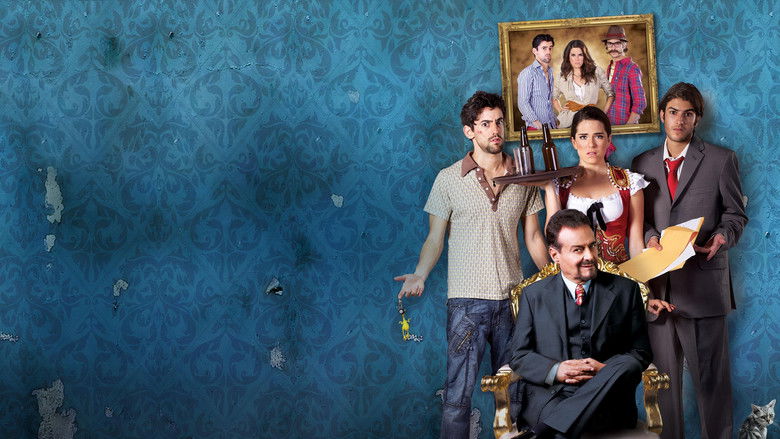
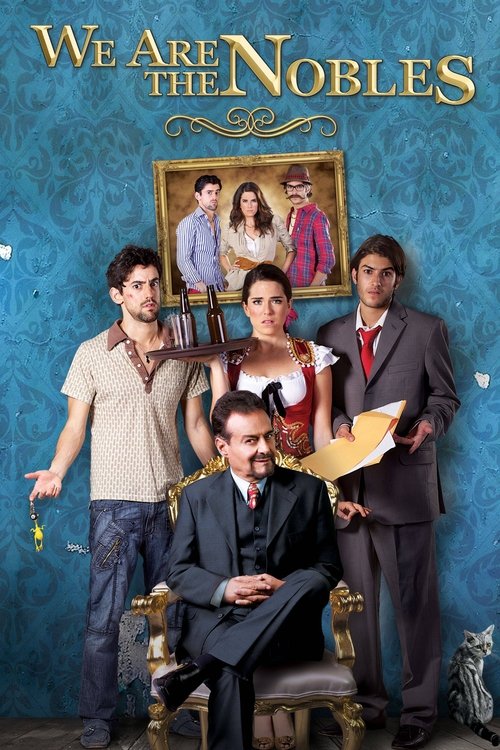
"We Are the Nobles" (originally "Nosotros los Nobles") is a 2013 Mexican comedy film that tells the story of Germán Noble, a wealthy and workaholic business magnate who becomes fed up with his three spoiled adult children. His daughter Bárbara "Barbie" Noble is an entitled princess planning to marry a dubious older man, Peter, for his money. His son Javier "Javi" Noble squanders money on frivolous, half-baked business ideas and partying, while the youngest, Carlos "Charlie" Noble, is a hipster who has just been expelled from university.
After a health scare provoked by his children's excesses, Germán decides to teach them a lesson. He orchestrates a fake bankruptcy, claiming the government has frozen all their assets and that they are fugitives from the law. Forced to flee their mansion, they move into their grandfather's dilapidated house in a poor Mexico City neighborhood. For the first time in their lives, the Noble siblings must do the unthinkable: get jobs. Javi becomes a bus driver, Barbie a waitress in a cantina, and Charlie a bank teller, leading to a series of comedic and humbling experiences that challenge their perceptions of wealth, class, and family.

Core Meaning
The core meaning of "We Are the Nobles" revolves around the idea that true value and character are forged through hard work, empathy, and genuine human connection, rather than inherited wealth or social status. Director Gary Alazraki uses comedy to critique the superficiality and disconnection of Mexico's elite class, suggesting that a life of unearned privilege leads to a hollow existence. The film's message is that by stripping away material possessions, individuals can discover their inner worth, appreciate the dignity of labor, and rebuild broken family relationships. It's a call for humility and a recognition that personal growth is more valuable than any fortune. Ultimately, the film argues that the father, Germán, also has a lesson to learn: his own obsession with work created the very children he despairs over, and he must learn to be a father rather than just a provider.
Thematic DNA
Social Class and Inequality
The film's central theme is the stark contrast between Mexico's wealthy elite and the working class (la prole). It satirizes the cluelessness and entitlement of the rich, represented by the Noble siblings, who are initially disgusted by their new, impoverished surroundings. Their forced entry into the workforce—driving a public bus, waitressing in a cantina—exposes them to the daily struggles and realities of the majority of Mexicans. The film humorously highlights the cultural disconnect and stereotypes associated with both classes, using the comedy to make a pointed commentary on Mexico's significant wealth gap and social stratification.
The Value of Hard Work
Before their fall from grace, none of the Noble children have ever held a real job. Their journey is one of discovering the dignity, difficulty, and satisfaction that comes from earning a living. Javi learns the ropes of being a bus driver, Barbie endures the chaos of a busy cantina, and Charlie faces the pressures of a bank job. Through these experiences, they develop a work ethic and a sense of self-worth that was absent in their previous lives of leisure. The film champions the idea that work is not just a means to an end, but a crucial component of character-building and personal fulfillment.
Family and Redemption
At its heart, the film is about a dysfunctional family reconnecting. Germán's extreme plan is a desperate attempt to salvage his children from their own entitlement, but it also forces him to confront his own failings as an absentee father. As the siblings learn to rely on each other and their father in their new circumstances, they begin to heal their fractured relationships. The story culminates in their reconciliation, where they acknowledge that the deception, though painful, was necessary for them to grow as individuals and reunite as a family.
Superficiality vs. Authenticity
The Nobles' initial lives are defined by superficial concerns: brand names, social status, and extravagant parties. Barbie's fiancé, Peter, is the epitome of this superficiality, interested only in her family's money. By losing everything, the siblings are forced to engage with the world and people in a more authentic way. Barbie develops a genuine connection with Lucho, a working-class man, and all three siblings form real friendships based on mutual respect rather than social standing. The film suggests that true happiness and connection are found when one sheds the pretenses of wealth and embraces authenticity.
Character Analysis
Germán Noble
Gonzalo Vega
Motivation
To strip his children of their entitlement and force them to learn the value of work and family before they completely ruin their lives.
Character Arc
Germán begins as a workaholic business magnate, disconnected from the spoiled children his wealth has created. Motivated by a health scare and despair, he engineers a drastic deception to teach them a lesson. Through the process, he realizes his own culpability in their behavior—that he chose to be a CEO over being a father. His arc is one of redemption, as he learns that reconnecting with his family requires honesty and forgiveness, leading to a heartfelt reconciliation.
Javier "Javi" Noble
Luis Gerardo Méndez
Motivation
Initially, his motivation is simply survival and a desire to reclaim his luxurious lifestyle. This evolves into a genuine ambition to build something of his own and earn respect through hard work.
Character Arc
Javi starts as the quintessential "junior"—an entitled, arrogant party boy who comes up with absurd and impossible business ideas that his friends enable. Forced into the working world as a bus driver, he undergoes a profound transformation. He moves from utter incompetence to taking genuine pride in his work. He sheds his superficial friendships and develops a real work ethic, ultimately using his creativity to start a legitimate business, demonstrating significant maturity and a newfound sense of purpose.
Bárbara "Barbie" Noble
Karla Souza
Motivation
Her initial motivation is to escape her new reality and marry her rich fiancé. This transforms into a desire for authentic connection and self-respect after she realizes the emptiness of her old life.
Character Arc
Barbie begins as the ultimate "fresa"—a spoiled, class-conscious princess who treats everyone with disdain and is about to marry a gold digger. Her journey is the most dramatic, as she is thrust into a waitress job where she is subjected to harassment and the indignities she once inflicted on others. This experience humbles her, breaking down her prejudices. She learns empathy, falls for a working-class man (Lucho), and discovers her own strength and capacity for genuine love, completely shedding her former materialistic self.
Carlos "Charlie" Noble
Juan Pablo Gil
Motivation
He is motivated by a desire to find his own path, distinct from his family's corporate world, but lacks the discipline to do so until he is forced to work. He seeks harmony and genuine connection.
Character Arc
Charlie is the youngest, a pseudo-bohemian hipster who has been kicked out of college. He is less abrasive than his siblings but equally lost and directionless. His job as a bank teller forces him into a structured environment for the first time. He confronts uncomfortable situations, including a sexual relationship with his boss, which leads to an awkward but important conversation with his father. His arc involves finding a balance between his ideals and the practicalities of life, ultimately maturing and finding a healthier romantic relationship.
Symbols & Motifs
The Grandfather's Dilapidated House
The rundown house symbolizes the family's forgotten roots and the solid, humble foundation upon which their fortune was originally built. It represents a return to basics and the potential for renewal. Its disrepair mirrors the family's own broken state.
After Germán fakes the bankruptcy, the family is forced to move into this house. Initially, they are appalled by its condition. However, as they work and begin to fix it up, the house transforms alongside them. By the end, the restored house symbolizes the rebuilt, stronger, and more authentic family unit.
The Public Bus (Pesero)
The pesero, or public minibus, that Javi learns to drive symbolizes his immersion into the world of the common citizen. It's a direct link to the working class (la prole) and a vehicle for his personal transformation. It represents a departure from the luxury SUVs and black cards of his past.
Javi gets a job driving a public bus with the help of Lucho. His initial attempts are clumsy and comical, highlighting his ignorance of everyday life. However, he eventually takes pride in his work, even starting his own bus repair business, showing how he has embraced this symbol of the working class as his own.
The Stray Cat
The stray cat that appears in the old house symbolizes the siblings' evolving capacity for empathy and kindness. Initially an object of disgust, the cat comes to represent those in need who were previously invisible to the Nobles.
When the family first moves into the dilapidated house, Bárbara is horrified by the stray cat. She shuns it as a symbol of the poverty she now faces. As she grows through her humbling experiences at work and in love, she begins to care for the cat, feeding and petting it. Her eventual acceptance and affection for the animal mirror her own character development from selfish to compassionate.
Memorable Quotes
¿Me puedes explicar por qué nos están quitando todo como si estuviéramos en Venezuela?
— Bárbara "Barbie" Noble
Context:
Said by Barbie in a state of panic and disbelief as authorities (who are actually actors hired by her father) are seizing all of the family's assets from their mansion.
Meaning:
This quote perfectly encapsulates Barbie's clueless and sheltered worldview. Her immediate comparison of their situation to a country facing major political and economic crisis for comedic effect highlights her profound ignorance and the film's satirical take on the bubble in which Mexico's elite live.
Esto parece Tailandia.
— Bárbara "Barbie" Noble
Context:
This is one of Barbie's frequent complaints after moving into the dilapidated family home in a poor neighborhood, expressing her horror at the modest living conditions.
Meaning:
Similar to her "Venezuela" comment, this line is another example of Barbie's absurd and offensive comparisons, used to express her disgust with her new, humble surroundings. It underscores the theme of class prejudice and the character's initial inability to see the humanity in a less privileged environment.
Papá, ¿qué es un microbús?
— Javi Noble
Context:
Javi asks his father this question after Germán informs the siblings that they will have to get jobs, and the possibility of working on public transport is mentioned. The line highlights his complete lack of real-world knowledge.
Meaning:
This question from Javi reveals the staggering extent of his disconnection from the daily reality of most Mexicans, for whom public transportation like the microbús is a fundamental part of life. It's a comedic moment that starkly illustrates the gap between the rich and the poor.
Philosophical Questions
Is deception justifiable if it leads to moral improvement?
The entire plot is built on Germán Noble's elaborate lie. The film asks whether his manipulative scheme is an acceptable 'tough love' approach to save his children from their own vapid existences. While the outcome is positive—the siblings mature and become better people—the foundation is one of deceit. The children's feelings of anger and betrayal upon discovering the truth are valid, forcing the audience to weigh the morality of the means against the virtue of the ends.
What is the relationship between wealth, character, and happiness?
"We Are the Nobles" directly challenges the notion that wealth equates to a good life. It portrays the Noble siblings as miserable and directionless despite their immense privilege. The film argues that character, resilience, and genuine relationships—all things they discover only after losing their money—are the true sources of happiness and fulfillment. It explores whether wealth is inherently corrupting or if it simply magnifies a lack of parental guidance and personal discipline.
Can the gap between social classes ever be truly bridged?
The film humorously explores the massive cultural and experiential gap between Mexico's rich and poor. Through the Nobles' journey, it suggests that empathy and understanding are possible once prejudices are stripped away by shared experience. Barbie's genuine romance with Lucho serves as a primary example. However, the film ends with the family's wealth restored, leaving open the question of whether their newfound humility will persist or if the fundamental divides of class will inevitably reassert themselves.
Alternative Interpretations
While the film is largely seen as a straightforward feel-good comedy, some critics have offered alternative readings. One interpretation is that the film, despite its critique of the wealthy, ultimately reinforces the status quo. Germán Noble, a powerful patriarch, uses deceit and manipulation to enforce his worldview upon his children. The film ends with his forgiveness and the family's happy reunion, arguably validating his extreme methods and paternalistic control rather than truly challenging the power structures at play.
Another perspective suggests that the film's portrayal of the working class, while sympathetic, relies heavily on stereotypes. Characters like Lucho are depicted as inherently noble and virtuous, which can be seen as a simplistic and somewhat patronizing view. A more cynical interpretation argues that the film allows middle-class audiences to laugh at the super-rich without addressing the systemic issues that create such vast inequality, offering a temporary emotional release rather than a true social critique. Some critics noted that the film is ultimately a "Hollywood movie in Spanish," using familiar formulas that prioritize entertainment over a deeper, more complex social analysis.
Cultural Impact
"We Are the Nobles" arrived at a significant moment in Mexican cinema, shattering box office records and proving that a locally-produced commercial comedy could compete with Hollywood blockbusters. Released in 2013, it grossed over $26 million in Mexico, becoming the nation's highest-grossing film at the time. Its success resonated deeply with Mexican audiences because it humorously yet pointedly addressed the country's vast social and economic divide. The film's caricature of the clueless, entitled elite—known colloquially as "fresas" or "juniors"—and its celebration of working-class values struck a chord in a nation where class tensions are a part of daily life.
Critics received the film as a well-crafted, effective comedy that, while not revolutionary, was praised for its solid performances, witty script, and honest entertainment value. It demonstrated that Mexican cinema could be commercially successful without relying solely on the dark, gritty dramas that often dominated the festival circuit. The character of Javi Noble, in particular, became a pop culture phenomenon, with his absurd business ideas and mannerisms entering the popular lexicon. The film's success, alongside "Instructions Not Included" in the same year, signaled a revival of mainstream Mexican cinema and encouraged investment in more commercial genres, influencing a new wave of comedies in the years that followed.
Audience Reception
Audiences in Mexico embraced "We Are the Nobles" with enormous enthusiasm, making it a cultural phenomenon and a box office smash. Viewers praised its humor, which was rooted in relatable Mexican social stereotypes of the wealthy "fresas" and the hardworking "prole." The performances of the main cast, particularly Luis Gerardo Méndez as Javi Noble, were widely lauded for their comedic timing and for making the initially unlikable characters endearing by the end. Many viewers found the film to be a refreshing, feel-good story that was both funny and emotionally satisfying. The primary point of criticism from some viewers and critics was that the film's plot was predictable and its social commentary, while present, was not particularly deep, opting for a safe, formulaic narrative over a more biting satire. However, the overwhelming verdict was positive, with audiences celebrating it as a highly entertaining film that reflected a part of their own culture on screen.
Interesting Facts
- The film is a modern remake of Luis Buñuel's 1949 Mexican film "The Great Madcap" (El Gran Calavera).
- "We Are the Nobles" became the highest-grossing Mexican film of all time upon its release, a record it held for several months before being surpassed by "Instructions Not Included" later the same year.
- Director Gary Alazraki's father, Carlos Alazraki, a renowned publicist in Mexico, makes a cameo appearance as the dean of Charlie's university.
- The filmmakers employed a savvy social media campaign where the main characters had their own Twitter accounts (@Javi_Noble, @Barbie_Noble, @Cha_Noble) and interacted with the public, building buzz for the film.
- The story was so successful that rights for local remakes were acquired by several countries, including the United States, Spain, and Peru.
- Actor Gonzalo Vega, who plays the patriarch Germán Noble, returned to acting for this film after a serious illness. This was his last film role before his death in 2016.
⚠️ Spoiler Analysis
Click to reveal detailed analysis with spoilers
Frequently Asked Questions
Explore More About This Movie
Dive deeper into specific aspects of the movie with our detailed analysis pages
Comments (0)
No comments yet. Be the first to share your thoughts!