
Skip to content
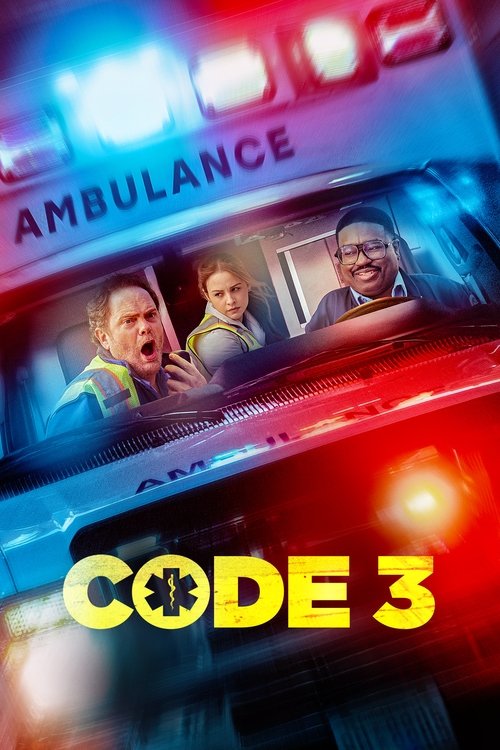
Code 3
A bruised urban road movie where the pulsing red flare of emergency sirens pierces nocturnal smog, capturing the visceral exhaustion, pitch-black humor, and fragile grace of saving lives when your own soul is running on empty.
Code 3

Code 3

"The best medical care minimum wage can provide."

12 September 2025 United States of America 100 min 7.1 (316)

Director: Christopher Leone

Cast: Rainn Wilson, Lil Rel Howery, Aimee Carrero, Yvette Nicole Brown, Rob Riggle

Drama Action Comedy Burnout, Moral Injury, and Compassion Fatigue Institutional Neglect and the Broken Healthcare Apparatus Gallows Humor and Camaraderie as Survival Mechanisms Mentorship and the Cycle of Renewal
Budget: $10,000,000
Box Office: $35,190

Overview

Code 3 (2025), directed by Christopher Leone and co-written with former emergency medical technician Patrick Pianezza, is an authentic dark comedy-drama set over the course of a relentless 24-hour shift in Los Angeles. The film centers on Randy Gray (Rainn Wilson), a weary, deeply disillusioned paramedic who has reached the end of his rope after 18 years on the front lines of emergency medical services. Exhausted by low pay, administrative indifference, and accumulated trauma, Randy has secretly interviewed for a corporate desk job at a medical insurance company.

When Randy arrives at dispatch assuming he bombed the interview, his supervisor Shanice (Yvette Nicole Brown) tasks him and his patient, long-suffering partner Mike (Lil Rel Howery) with taking on a green trainee ride-along, Jessica (Aimee Carrero). Soon after the shift begins, Randy learns he got the corporate position—but company policy dictates he must survive one final 24-hour tour of duty to train his replacement.

What follows is an episodic, adrenaline-charged odyssey through the streets of Los Angeles. As the crew races between drug overdoses, nursing home cover-ups, combative bystanders, and life-or-death resuscitations, Randy attempts to maintain emotional detachment while Jessica confronts the unvarnished reality of the job. The film strikes an uncompromising balance between absurd situational comedy and harrowing medical reality, examining what it costs human beings to stand between strangers and mortality.


Core Meaning

The central thesis of Code 3 is that emergency responders are the unsung, exploited shock absorbers of a broken healthcare system, sustained not by institutional support or fair compensation, but by an irrational, profound calling to human service. Leone and Pianezza expose the dissonance between healthcare as a corporate business and medicine as an act of raw human empathy. The film contends that while cynicism and gallows humor are necessary shields against compassion fatigue, true purpose cannot be found in comfortable corporate compliance. Instead, redemption lies in showing up to be "someone’s best friend on their worst day," acknowledging shared human vulnerability even when the system fails everyone involved.

Thematic DNA

Burnout, Moral Injury, and Compassion Fatigue 35%
Institutional Neglect and the Broken Healthcare Apparatus 25%
Gallows Humor and Camaraderie as Survival Mechanisms 20%
Mentorship and the Cycle of Renewal 20%

Burnout, Moral Injury, and Compassion Fatigue

The film deconstructs the physical and mental erosion experienced by first responders. Randy’s irritability, callous exterior, and desperate attempt to flee into corporate insurance illustrate how chronic exposure to human tragedy—compounded by lack of institutional psychological care—leads to acute moral injury.

Institutional Neglect and the Broken Healthcare Apparatus

The narrative continuously pits frontline caregivers against systemic failure: understaffed hospitals, predatory private insurance, dismissive physicians (exemplified by Rob Riggle’s Dr. Serano), and nursing home negligence. The film underscores that paramedics bear the brunt of social problems they are not equipped or compensated to fix.

Gallows Humor and Camaraderie as Survival Mechanisms

Through the banter between Randy and Mike, the film demonstrates that twisted, morbid comedy is not cruelty, but an essential psychological safety valve. It allows responders to process horrific situations without collapsing under the weight of grief.

Mentorship and the Cycle of Renewal

The intergenerational dynamic between the jaded veteran Randy and the wide-eyed rookie Jessica highlights how idealism is tempered into resilient professionalism. Jessica’s presence forces Randy to remember why he chose the profession, while Randy prepares Jessica to survive its devastating demands.

Character Analysis

Randy Gray

Rainn Wilson

Archetype: The Burnt-Out Veteran / Cynical Mentor Key Trait: Caustic gallows humor masking deep empathetic grief

Motivation

To survive his final shift without losing any more pieces of himself.

Character Arc

Begins bitter, isolated, and determined to escape into the soul-deadening safety of a desk job; across 24 hours of chaos and shared vulnerability, he rediscovers his identity and purpose, accepting that his soul belongs on the street.

Mike

Lil Rel Howery

Archetype: The Loyal Partner / Emotional Anchor Key Trait: Unflappable warmth and razor-sharp emotional intelligence

Motivation

To keep his partner intact and ensure both make it home at the end of the shift.

Character Arc

Acts as the steady buffer between Randy's cynicism and the hostile world; reveals profound emotional depth and street-level diplomacy when de-escalating dangerous situations.

All 5 characters and cast

Symbols & Motifs

The On-Screen Ticking Wage Counter

Meaning:

Serves as a stark symbol of societal devaluation, visually contrasting financial unimportance with the priceless value of human lives saved.

Context:

Throughout the film, an on-screen digital counter runs in real-time, displaying Randy’s meager hourly wage accumulating by literal pennies against the monumental, life-and-death crises he resolves.

The Ambulance ("The Rig")

Meaning:

The vehicle functions dualistically as both an insulated sanctuary and a mobile purgatory.

Context:

Inside the rig, the crew shares intimacy, coffee, and laughter; once the side doors open, they step directly into violence, trauma, and bodily fluids.

"Code 3" (Lights and Sirens)

Meaning:

Beyond an emergency driving status, it symbolizes the adrenaline surge that keeps paramedics hooked despite exhaustion—a siren call that blurs the boundary between terror and purpose.

Context:

Active emergency driving status throughout high-stakes calls across Los Angeles.

The Insurance Desk Job Offer

Meaning:

Representing the lure of corporate safety, clean carpets, and detachment, it symbolizes moral compromise—trading the visceral grit of human salvation for comfortable complicity in billing rejections.

Context:

Appears through Randy's interview, the acceptance phone call, and the sterile corporate badge he holds at the end of his shift.

The Defibrillator / CPR Rhythm

Meaning:

Represents the tenuous barrier separating living souls from biological oblivion, dictated by manual human labor.

Context:

A visceral motif recurring during cardiac arrest scenes, including the desperate pediatric resuscitation attempt.

Memorable Quotes

Paramedics have to be your best friend on your worst day.
— Randy

Context

Spoken directly to the camera in the film's opening fourth-wall-breaking monologue.

Meaning

Establishes the fundamental ethos of EMS workers and sets the tragicomic tone for the entire narrative.

The system is still broken, but what am I supposed to do, quit trying? I'm no hero, but… the truth is… I only feel alive when you're about to die.
— Randy

Context

Randy's culminating monologue delivered at the conclusion of his 24-hour shift.

Meaning

Randy acknowledges his adrenaline addiction and the inescapable vocation that binds him to the ambulance rather than comfortable corporate safety.

All 5 quotes

Philosophical Questions

Can Empathy Survive Without Gallows Humor?

The film explores whether emotional callousness in high-trauma fields is a character defect or an indispensable psychological armor required to stay functional.

What Is the Moral Cost of Working Inside a Broken System?

By treating patients who are discharged into the same neglectful conditions that harmed them, paramedics grapple with the existential dread of being "Sisyphus with a siren".

Is Purpose Worth Self-Destruction?

Randy's realization that he only feels alive when someone else is dying questions whether fulfilling a critical social duty justifies destroying one's personal mental and physical health.

Alternative Interpretations

The Vocational Calling vs. Self-Destructive Martyrdom: One prevalent interpretation views Randy’s ultimate rejection of the safe corporate insurance job as a triumph of human purpose—he embraces his true identity as a healer who thrives on the edge of life and death. A darker, more critical reading suggests Randy is an adrenaline-addicted victim of institutional entrapment, unable to function in ordinary civilian life because decades of untreated trauma have rendered normalcy alien and unbearable.

Full ending explanation

Cultural Impact

Produced in the aftermath of heightened public awareness around healthcare worker burnout following the pandemic, Code 3 taps into widespread disillusionment with American medical privatization. Paramedics historically occupy an ambiguous cultural space: romanticized in procedural television, yet systematically underpaid, denied collective bargaining parity with police or firefighters, and suffering disproportionate rates of PTSD.

Emergency medical service organizations and publications (such as Inside EMS) lauded the film as arguably the most accurate cinematic portrayal of their profession ever made. Critics highlighted Rainn Wilson's nuanced dramatic turn and Lil Rel Howery's grounded, empathetic performance as major highlights.

Audience Reception

Upon its release on September 12, 2025, Code 3 achieved a 78% "Fresh" critical score on Rotten Tomatoes and an overwhelming 96% audience rating.

Reviewers and audiences universally praised the authentic procedural accuracy, the chemistry between Rainn Wilson and Lil Rel Howery, and the film's willingness to tackle heavy social realities without sliding into melodrama. Wilson’s ability to navigate from acidic sarcasm to heartbreak was widely cited as one of his best dramatic turns. Minor critical pushback noted that the tonal shifts between broad physical comedy and visceral trauma occasionally clash, making early transitions feel disjointed. Furthermore, a tense confrontation involving police drawing weapons on a Black psychiatric patient sparked discussions over its raw, uncomfortable depiction of systemic policing failures.

Interesting Facts

  • Co-writer Patrick Pianezza drew directly from over a decade of real-world experience working as an EMT and paramedic in California and South Carolina, originating from a short story he wrote during his undergraduate studies.
  • To prepare for the film's gritty reality, Rainn Wilson, Lil Rel Howery, and Aimee Carrero conducted authentic shifts with first responders at LA County Station 14 in South Central Los Angeles, witnessing cardiac arrests, overdoses, and trauma firsthand.
  • Director Christopher Leone and Patrick Pianezza spent nearly 10 years collaborating, revising, and fine-tuning the screenplay before Rainn Wilson read the script and boarded the project as star and executive producer.
  • The film was produced by Justin Baldoni's Wayfarer Studios alongside Circle of Confusion and Concourse Media, shot entirely on location in Los Angeles.
  • Patrick Pianezza served as the on-set medical technical consultant, ensuring that drug dosages, IV insertions, chest compressions, and radio codes adhered strictly to real EMS protocols.
  • Following its September 12, 2025 theatrical debut through Aura Entertainment, Code 3 debuted on Hulu on January 9, 2026, where it surged to the #1 spot on streaming charts in the United States.

Easter Eggs

Xolo Maridueña Cameo

In the opening sequence, Cobra Kai and Blue Beetle star Xolo Maridueña plays an initial rookie ride-along whose spirit is instantly broken by a horrific, chaotic overdose call, abruptly quitting before Jessica arrives.

The "CPR" Reference

Reviewers widely noted the meta-humor of Rainn Wilson performing intense, accurate chest compressions, directly playing against his famous scene in The Office ("Stress Relief") where Dwight Schrute mutilates a CPR training dummy.

Bringing Out the Dead Homage

Christopher Leone's visual pacing and Randy's internal moral monologue echo Martin Scorsese's 1999 paramedic cult classic Bringing Out the Dead, with several nocturnal lighting cues serving as direct visual nods.

Frequently Asked Questions

Explore More About This Movie

Dive deeper into specific aspects of the movie with our detailed analysis pages

Comments (0)

Leave a comment

No comments yet. Be the first to share your thoughts!

Similar Movies