Skip to content
Secretly, Greatly
An uneasy collision of pastel slum whimsy and bone-crushing espionage tragedy, where lethal wolves masquerade as docile fools under a sky that slowly gathers storm clouds of inevitable betrayal.
Secretly, Greatly

Secretly, Greatly

은밀하게 위대하게

"Playing the fool for the Dear Leader."

05 June 2013 South Korea 124 min 7.0 (218)

Director: Jang Cheol-soo

Cast: Kim Soo-hyun, Park Ki-woong, Lee Hyun-woo, Son Hyun-joo, Park Hye-sook

Drama Action Comedy Imposed Identity vs. Genuine Selfhood Exploitative Indoctrination vs. State Betrayal Found Family and Maternal Love The Tragic Absurdity of the Korean Division

Overview

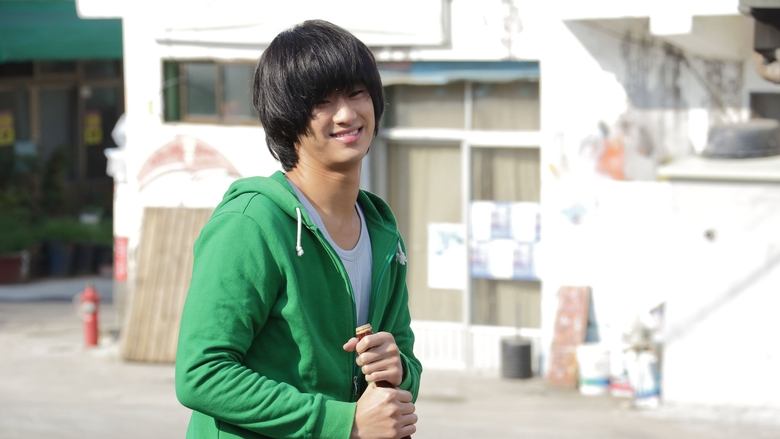
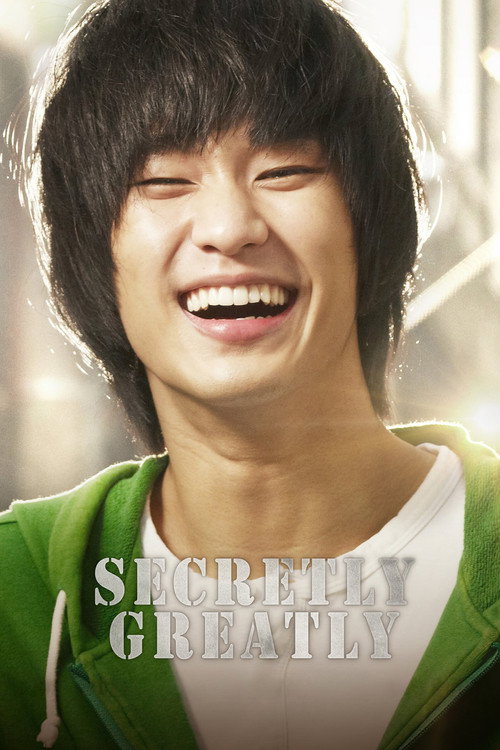
Secretly, Greatly (2013), directed by Jang Cheol-soo and adapted from the 2010 Daum webtoon Covertness by Hun, centers on elite North Korean Special Forces Unit 5446. Lieutenant Won Ryu-hwan (Kim Soo-hyun), a prodigy proficient in five languages and capable of reading tactical situations with computer-like precision, is dispatched to a hillside shantytown in Seoul. His covert cover identity is Bang Dong-gu: a mentally disabled, runny-nosed village simpleton clad in an oversized green tracksuit who is instructed to fall down stairs twice a day, wet himself in public, and run errands for a kindly convenience-store matriarch.

Ryu-hwan bides his time for two years, absorbing neighborhood gossip while enduring mock abuse from local school kids and forming domestic bonds with his eccentric neighbors. His solitary vigilance is punctured when two other 5446 operatives infiltrate the exact same hillside community under equally absurd civilian covers: Lee Hae-rang (Park Ki-woong), the swaggering, orange-haired illegitimate son of a top North Korean general posing as an inept aspiring rocker, and Ri Hae-jin (Lee Hyun-woo), the youngest recruit in the unit's history, posing as an ordinary high schooler.

As the three operatives acclimatize to their bizarre domestic lives and form a fragile brotherhood, political winds shift in Pyongyang. To smooth over inter-Korean rapprochement and eliminate rogue military factions, high command issues a sudden, unsparing order: all sleeper agents of Unit 5446 must take their own lives immediately to protect state honor. The narrative pivots from situational neighborhood slapstick to a high-stakes standoff where survival instincts, personal affection, and national indoctrination collide.
Core Meaning

Director Jang Cheol-soo interrogates how political ideologies weaponize human innocence and enforce unnatural divisions between people of the same heritage. The central premise exposes the tragedy of young men molded into lethal state instruments who discover that ordinary, unglamorous domestic warmth is infinitely more sacred than nationalistic grandeur.

By contrasting the grand, covert duty (Secretly, Greatly) preached by Pyongyang with the quiet, mundane dignity of community life—sharing meals, saving modest wages, worrying over health—the film argues that state apparatuses consume their children while the simplest acts of interpersonal kindness constitute genuine humanity.

Thematic DNA

Imposed Identity vs. Genuine Selfhood 35%
Exploitative Indoctrination vs. State Betrayal 25%
Found Family and Maternal Love 20%
The Tragic Absurdity of the Korean Division 20%

Imposed Identity vs. Genuine Selfhood

Ryu-hwan begins by viewing "Dong-gu" as an humiliating costume he must wear to prove his elite endurance. Over time, the fabricated life becomes real: his role as a surrogate son and neighborhood guardian eclipses his conditioning as a DPRK lieutenant. His tragedy is not being discovered as a spy, but realizing he truly desires to remain the idiot boy of the convenience store.

Exploitative Indoctrination vs. State Betrayal

Unit 5446 soldiers are indoctrinated into believing their suicides will immortalize them as heroes of the revolution. The film deconstructs this myth when it reveals that the command hierarchy regards them merely as disposable liabilities that must be scrubbed away to serve diplomatic expediency.

Found Family and Maternal Love

Ryu-hwan endures harsh training and South Korean isolation solely to safeguard his biological mother in the North. Concurrently, his South Korean landlady Soon-im treats him as her real younger son, providing unconditional maternal shelter that outshines the biological bond exploited by his commanders.

The Tragic Absurdity of the Korean Division

The film frames the North-South stalemate not as a theoretical clash of doctrines, but as a visceral wall dividing everyday people who share identical language, food, and longings. The agents' disguises place them in a South Korean shantytown where residents struggle with debt, broken dreams, and everyday heartaches, proving that hardship and humanity transcend the 38th parallel.

Character Analysis

Won Ryu-hwan / Bang Dong-gu

Kim Soo-hyun

Archetype: Reluctant Hero / Tragic Sleeper Agent Key Trait: Hyper-observant intellect cloaked behind a goofy, vacant smile.

Motivation

Protecting his mother in North Korea; later, preserving his newfound neighborhood family.

Character Arc

Evolves from a cold, elite killing machine tolerating a humiliating disguise to a young man yearning for the ordinary life he was forced to mimic.

Lee Hae-rang / Kim Min-su

Park Ki-woong

Archetype: The Cynical Trickster / Loyal Rogue Key Trait: Flamboyant bravado masking razor-sharp survival combat skills.

Motivation

Defying his corrupt high-ranking father and living an unscripted, spontaneous life.

Character Arc

Hides deep existential sorrow behind a rock-star rocker persona; ultimately chooses a self-sacrificing end on his own terms.

All 5 characters and cast

Symbols & Motifs

The Green Tracksuit

Meaning:

Functions as both a tactical camouflage for the assassin and a cloak of childish innocence. When discarded along with his mop of hair for a clean black suit, Ryu-hwan steps away from peace and back onto death row.

Context:

Worn perpetually by Ryu-hwan throughout his daily masquerade as the simpleton Bang Dong-gu in the hillside village.

The Bank Passbook (통장)

Meaning:

Symbolizes unconditional, uncoerced maternal protection, shattering Ryu-hwan's belief that he was living among ideological adversaries.

Context:

Given to Ryu-hwan by Soon-im, recording modest wages saved in his name under the account label "Second Son / Marriage Fund."

The Rooftop Lookout

Meaning:

Begins as a tactical vantage point for espionage and surveillance, but evolves into a space of emotional intimacy and forbidden desires.

Context:

The elevated perch overlooking the sloped rooftops of the village where Ryu-hwan monitors the neighborhood and later shares drinks with Hae-rang and Hae-jin.

The Guitar and Rock Auditions

Meaning:

Represents the chaotic, expressive individual freedom of the South that Hae-rang's high-ranking pedigree in the North systematically suppressed, while mocking the rigidity of his military discipline.

Context:

Used by Lee Hae-rang during his loud, inept musical strumming and repeatedly failed music auditions.

Fish / Food at Soon-im’s Table

Meaning:

Signifies communal survival and mutual care, underscoring Ryu-hwan's gradual transformation from a disciplined operative into a pampered family member.

Context:

Meals shared around the floor table in Soon-im's home, where Dong-gu stealthily snatches extra portions of pork or anchovies.

Memorable Quotes

난 들개로 태어나 괴물로 길러졌다.
— Won Ryu-hwan

Context

Delivered during an interior monologue by Won Ryu-hwan.

Meaning

Encapsulates the brutal dehumanization of Unit 5446 training, contrasting his lethal conditioning with his absurd everyday masquerade as Dong-gu.

다음 생엔 평범한 나라에서, 평범한 집안에 태어나, 그냥 평범하게 살다 가고 싶어.
— Won Ryu-hwan

Context

Shared with Hae-rang and Hae-jin while sitting together on the rooftop lookout.

Meaning

Marks the emotional climax of their rooftop camaraderie, revealing that their ultimate ambition is not military glory or political victory, but unremarkable domestic peace.

All 5 quotes

Philosophical Questions

Can humanity ever be completely eradicated by ideological conditioning?

The film systematically strips away the soldiers' military conditioning through everyday civilian interactions, suggesting human empathy and the need for belonging are innate, whereas political hatred is artificial.

What constitutes a motherland?

Explores whether the homeland is defined by state flags and military command hierarchies, or by the soil, communities, and people who feed, house, and offer unconditional love.

Is an unremarkable, ordinary life superior to a glorious historical purpose?

The narrative subverts romantic nationalism by elevating the unglamorous daily routine of sweeping alleys, running errands, and sharing domestic dinners over state-sponsored martyrdom.

Alternative Interpretations

The Tragic Defeat Interpretation (Dominant Reading): Ryu-hwan, Hae-rang, and Hae-jin all perish during the final confrontation on the unfinished apartment rooftop. Hae-rang detonates his suicide grenade with Kim Tae-won, and Ryu-hwan absorbs gunfire as he plunges over the parapet with Hae-jin, cementing the reality that pawns in political proxy wars cannot escape their fates.

Full ending explanation

Cultural Impact

Released in 2013 during lingering inter-Korean tensions following the 2010 ROKS Cheonan sinking and Yeonpyeong bombardment, the film humanized North Korean foot soldiers by depicting them as victims of systemic geopolitical machinations rather than one-dimensional ideological villains.

Furthermore, Secretly, Greatly proved to Chungmuro that youth-targeted webtoons could outperform standard Hollywood blockbusters at the domestic box office, paving the way for future webtoon blockbuster adaptations such as Along with the Gods.

Audience Reception

Audience reception was marked by massive domestic commercial enthusiasm, driven especially by young demographics who turned out for the lead cast, leading to unprecedented box-office records.

Critical reception was more divided: reviewers widely praised Kim Soo-hyun's dynamic physical performance, sharp comedic timing, and the emotional resonance of the neighborhood ensemble, but criticized the severe tonal whiplash between the lighthearted slapstick first half and the violent, melodramatic third-act showdown. Some commentators also considered the execution of the agents' families back in North Korea excessively nihilistic and melodramatic.

Interesting Facts

  • The movie directly adapts Hun’s webtoon Covertness, which garnered over 40 million views on Daum.
  • Director Jang Cheol-soo was previously an assistant director to arthouse auteur Kim Ki-duk on Spring, Summer, Fall, Winter... and Spring (2003) and Samaritan Girl (2004).
  • Kim Soo-hyun performed the vast majority of his physical comedy and combat stunts himself, including tumbling down steep concrete staircases multiple times without a stunt double.
  • Kim Soo-hyun, Park Ki-woong, and Lee Hyun-woo underwent five months of intensive training in Russian Systema, Krav Maga, and close-quarters taekwondo.
  • The film broke the record for the highest single-day domestic opening in South Korean history at the time (498,282 admissions) and logged 919,035 admissions on Memorial Day alone.
  • It became the fastest film in South Korean cinema history to cross one, two, three, and four million ticket sales at the time of its release, ultimately surpassing 6.96 million admissions.
  • Kim Soo-hyun won Best New Actor at both the 50th Grand Bell Awards and the 50th Baeksang Arts Awards for his performance.

Easter Eggs

Crash Landing on You (2020) Cameo

Kim Soo-hyun makes a meta-cameo in Episode 10 of Crash Landing on You, reprising his exact character in the green tracksuit and bowl-cut hair to give advice to rookie North Korean operatives in Seoul.

Park Eun-bin’s Early Casting

Before her international breakthrough in Extraordinary Attorney Woo, Park Eun-bin portrayed Yoon Yoo-ran, the quiet neighborhood office worker Ryu-hwan secretly pines for.

Choi Woo-shik’s Supporting Appearance

Prior to his fame in Parasite, Choi Woo-shik appeared as Yoo-jun, the hot-headed high school brother of Yoo-ran who regularly smacks Dong-gu.

Homage to Kim Ki-duk

Director Jang Cheol-soo channels mentor Kim Ki-duk's motif of visceral brutality set against natural and industrial textures during the rainy construction-site climax.

Hidden Photograph Inscription

Behind the framed neighborhood grocery store photograph, Dong-gu wrote "Mom, don't get sick," beneath which Soon-im later scribbled "When will you come back?", proving she never stopped waiting for his return.

Frequently Asked Questions

Explore More About This Movie

Dive deeper into specific aspects of the movie with our detailed analysis pages

Comments (0)

Leave a comment

No comments yet. Be the first to share your thoughts!

Similar Movies