Skip to content
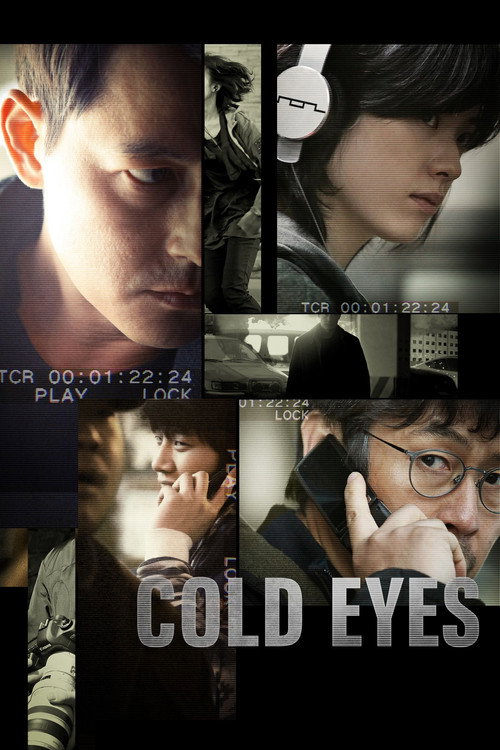
Cold Eyes
A tense, razor-sharp urban surveillance thriller pulsating with quiet dread and breathless precision, capturing a neon-and-concrete game of human chess across Seoul's sprawling labyrinth of watching eyes.
Cold Eyes

Cold Eyes

감시자들

"Remember everything about the untraceable target."

03 July 2013 South Korea 119 min 7.5 (386)

Director: Kim Byung-seo, Cho Ui-seok

Cast: Sul Kyung-gu, Jung Woo-sung, Han Hyo-joo, Kim Byeong-ok, Jin Kyung

Crime Action Thriller Observation vs. Action (The Burden of Non-Intervention) The Mechanics of the Modern Panopticon Mentorship, Legacy, and Professional Intuition Order vs. Mathematical Anarchy The Solitude of Invisibility
Box Office: $37,795,598

Overview

Cold Eyes follows the covert operations of the Seoul Metropolitan Police Agency's Special Crime Intelligence Surveillance Team. Commanded by the seasoned and intuitive Chief Detective Hwang Sang-jun, the squad operates purely in the shadows: their strict mandate is to watch, memorize, and trace criminal suspects without directly engaging or making arrests, passing target locations to tactical squads.

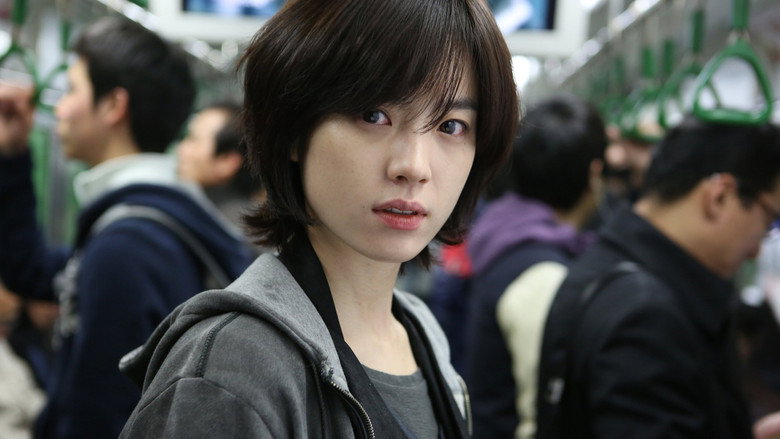
The unit recruits a gifted rookie, Ha Yoon-joo, who possesses photographic memory, uncanny observational prowess, and deep spatial concentration. Almost immediately upon her induction, the department faces a ruthless opponent: an enigmatic mastermind known only as James, who orchestrates high-stakes corporate and bank heists with mathematical precision while overseeing operations from city rooftops.

As James executes high-profile crimes without leaving a trace on surveillance grids, Detective Hwang’s team launches an exhaustive citywide dragnet. Relying on human intuition, tactical CCTV mapping, and undercover street tracking, the team engages in an escalating cat-and-mouse hunt across Seoul’s labyrinthine infrastructure, where a single glance or second of lost focus can prove fatal.
Core Meaning

The core thesis of Cold Eyes explores the friction between mechanical omniscience and the irreplaceable human element. Surveillance is presented not merely as a matter of modern technology and camera networks, but as an art of psychological endurance, memory, and spatial intuition.

The film underscores that in an increasingly digitized and monitored metropolis, the decisive edge belongs to human observation and individual sacrifice. It also examines the psychological toll of voyeurism—the duty to observe atrocities without emotional interference or immediate moral intervention.

Thematic DNA

Observation vs. Action (The Burden of Non-Intervention) 30%
The Mechanics of the Modern Panopticon 25%
Mentorship, Legacy, and Professional Intuition 20%
Order vs. Mathematical Anarchy 15%
The Solitude of Invisibility 10%

Observation vs. Action (The Burden of Non-Intervention)

Operatives must watch crimes and violence unfold without stepping in, as blowing cover compromises the larger operation. Yoon-joo struggles intensely with this dilemma before understanding the systemic necessity of detachment.

The Mechanics of the Modern Panopticon

The film deconstructs how surveillance systems operate in a hyper-connected metropolis. CCTV blind spots, human blinders, and crowded urban hubs require active deduction to transform raw visual feeds into actionable intelligence.

Mentorship, Legacy, and Professional Intuition

The dynamic between Chief Hwang and rookie Yoon-joo emphasizes the passing of street-level police craftsmanship, as Yoon-joo matures from raw memory into trusting gut feeling, camouflage, and teamwork.

Order vs. Mathematical Anarchy

The clash between the police grid and James represents a duel between collective systemic order and solitary criminal genius, turning the confrontation into a cerebral battle of timing.

The Solitude of Invisibility

Both the surveillance detectives and James live lives of self-erasure. To succeed, they must blend seamlessly into the crowd, forfeiting personal identity and ordinary social lives.

Character Analysis

Ha Yoon-joo ("Piglet" / "꽃돼지")

Han Hyo-joo

Archetype: The Gifted Prodigy / Heroine Key Trait: Photographic memory and acute spatial awareness.

Motivation

Driven to achieve justice and fully realize her extraordinary observation abilities.

Character Arc

Evolves from an impulsive, emotionally reactive rookie into a cool-headed, master surveillance operative who trusts her team and instincts.

Chief Hwang Sang-jun ("Falcon" / "Shadow")

Sul Kyung-gu

Archetype: The Veteran Mentor Key Trait: Animalistic street intuition and relentless persistence.

Motivation

To uphold the law, capture elusive targets, and protect his squad members at all costs.

Character Arc

A cynical, battle-hardened commander who balances his fierce protective instincts toward his team with institutional duty and sacrifice.

All 5 characters and cast

Symbols & Motifs

Animal Codenames / Wooden Figurines

Meaning:

Symbolizes Seoul as a strategic chessboard governed by predatory instincts, animalistic traits, and coordinated pack hunting.

Context:

Used for team call signs (such as 'Falcon/Shadow', 'Piglet', and 'Squirrel') and physically arranged by Chief Hwang as wooden animal pieces on his desktop map.

Fountain Pen and Sudoku

Meaning:

Symbolizes a methodical mind, strict temporal discipline, and ruthless efficiency.

Context:

James constantly solves puzzles, tracks time, and uses a weighted metal fountain pen both as a precision instrument and a lethal close-quarters weapon.

Rooftops vs. Subways (Vertical Space)

Meaning:

Contrasts god-like detachment and omniscient control with loss of control and ground-level entrapment.

Context:

James initially commands his heists through monoculars from elevated rooftops, but is eventually dragged down into subterranean subway tunnels and railway tracks for the final confrontation.

Rain and Umbrellas

Meaning:

Represents environmental visual obstruction that neutralizes electronic surveillance and tests raw human instinct.

Context:

Appears during key surveillance sequences and street pursuits, blurring electronic clarity and forcing close-quarters tracking.

Finger-Tapping Habit

Meaning:

Serves as a cognitive anchor and mnemonic indexing trigger for rapid memory retrieval.

Context:

Yoon-joo taps her fingers rhythmically against her thigh whenever she catalogues or plays back complex visual snapshots in her mind.

Memorable Quotes

감시는 모든 것을 보고, 모든 것을 기억하되, 절대 개입하지 않는 것이다.
— Chief Hwang Sang-jun

Context

Spoken to Ha Yoon-joo during her initial briefing and test evaluation.

Meaning

Establishes the core philosophical and procedural doctrine of the surveillance unit, defining the moral burden of non-intervention.

우리는 그림자야. 그림자는 빛을 만나면 사라져.
— Chief Hwang Sang-jun

Context

Delivered while instructing the surveillance team on the necessity of staying invisible.

Meaning

Underscores the fundamental requirement of complete anonymity, reminding agents that being recognized renders them useless.

All 4 quotes

Philosophical Questions

Is total surveillance justifiable in the pursuit of public safety?

The narrative explores the boundary between municipal protection and privacy when state surveillance mechanisms possess the ability to track anyone across a metropolitan grid.

Can duty override fundamental human empathy?

Explored through Yoon-joo's internal torment when forced to watch innocent citizens and colleagues in mortal danger without breaking cover or intervening.

Is human intuition superior to automated algorithms?

The story demonstrates that extensive camera networks remain ineffective without human deductive reasoning, spatial memory, and instinctive leaps.

Alternative Interpretations

The Procedural Panopticon vs. Civil Rights: The film can be viewed as an inquiry into the unchecked reach of state surveillance. Although the squad members are protagonists, their indiscriminate monitoring of civilians raises questions regarding the erosion of public anonymity.

Full ending explanation

Cultural Impact

Premiering during the competitive summer of 2013 alongside major hits like Snowpiercer and The Terror Live, Cold Eyes established that Korean cinema could effectively adapt foreign intellectual property into a localized, critically acclaimed blockbuster.

The film engaged public interest in municipal surveillance and privacy debates by depicting Seoul's dense real-time CCTV infrastructure. It achieved international recognition with gala screenings at the Toronto International Film Festival (TIFF) and the Busan International Film Festival (BIFF), receiving global acclaim for its tight pacing and disciplined spatial tension.

Audience Reception

Cold Eyes received widespread acclaim from audiences and critics for its relentless pacing, meticulous editing by Shin Min-kyung, and the strong ensemble cast dynamic. Jung Woo-sung's chilling villainous turn and Han Hyo-joo's restrained, sharp performance were singled out for praise.

Minor criticisms noted that the underworld broker lacked detailed character motivation and that the third-act subway shootout shifted away from intellectual stakeout tension toward conventional action tropes. Overall, it remains celebrated as one of the sleekest South Korean thrillers of the 2010s.

Interesting Facts

  • Cold Eyes is an official South Korean remake of the 2007 Hong Kong crime thriller Eye in the Sky, directed by Yau Nai-hoi.
  • This marked Jung Woo-sung's very first performance portraying an unapologetic, cold-blooded villain in his career.
  • The film served as the feature film acting debut for Lee Jun-ho of the K-pop group 2PM.
  • Co-director Kim Byung-seo also served as the film's lead cinematographer alongside Yeo Kyung-bo.
  • Produced on a modest budget of $4.5 million, the film garnered over 5.5 million domestic admissions and grossed approximately $37.8 million worldwide.
  • Han Hyo-joo won Best Actress at both the 34th Blue Dragon Film Awards and the 22nd Buil Film Awards for her performance.
  • Over 80% of the film was shot on location across real public areas in Seoul, including actual subway lines, alleys, and the Gangnam district.

Easter Eggs

Simon Yam's Airport Cameo

Hong Kong actor Simon Yam, who played the lead surveillance commander Chief Wong ('Dog Head') in the original 2007 film Eye in the Sky, appears as an international target in the final scene.

Michael Mann Visual Homage

The tactical execution of the bank heists and the stark urban spatial geometry directly pay tribute to Michael Mann's 1995 crime classic Heat.

The 'Piglet' (꽃돼지) Moniker

Yoon-joo's codename directly mirrors the rookie codename 'Piggy' given to Kate Tsui's character in the 2007 Hong Kong original.

Frequently Asked Questions

Explore More About This Movie

Dive deeper into specific aspects of the movie with our detailed analysis pages

Comments (0)

Leave a comment

No comments yet. Be the first to share your thoughts!

Similar Movies