Skip to content
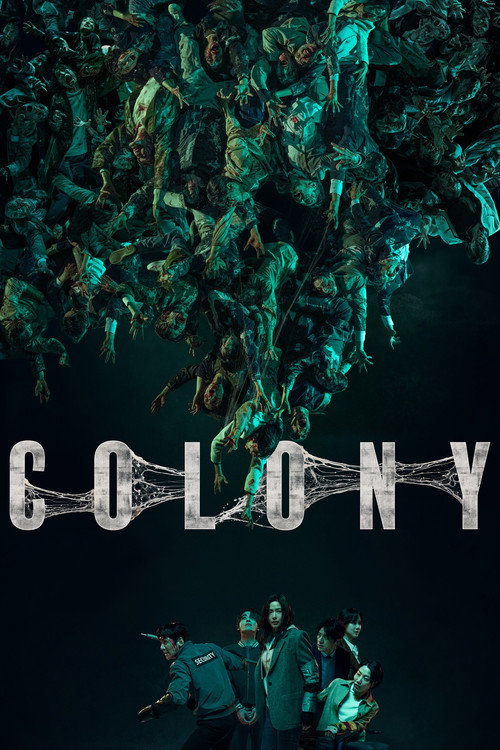
Colony
In a suffocating maze of concrete and glass, mutating collective panic transforms claustrophobic biological horror into a chilling duel between human individuality and a cold, hyper-evolving hive mind.
Colony

Colony

군체

"Survive the hive."

21 May 2026 South Korea 123 min 7.9 (188)

Director: Yeon Sang-ho

Cast: Gianna Jun, Koo Kyo-hwan, Ji Chang-wook, Kim Shin-rock, Shin Hyun-been

Action Science Fiction Horror Collective Intelligence vs. Individual Agency Imperfection of Communication Biotechnology and Corporate Ethics Institutional Alienation and Quarantine Adaptation and Evolutionary Mechanics

Overview

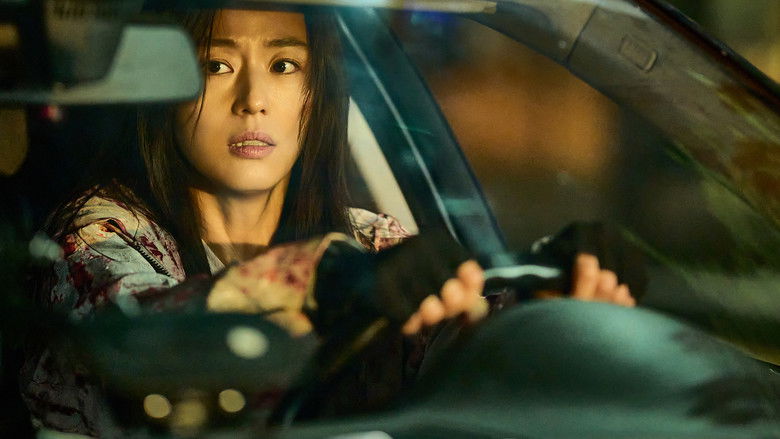
Set inside the high-rise Dongwoo-ri (Nest) Building in Seoul, Colony opens during a high-stakes corporate presentation hosted by Chains Bio. The company showcases groundbreaking cell-regeneration research derived from a mutated slime mold organism. Unemployed biotechnology professor Kwon Se-jeong (Jun Ji-hyun) attends after receiving an invitation from her ex-husband, Han Gyu-seong (Go Soo). However, the event is violently interrupted by disgruntled former scientist Seo Young-cheol (Koo Kyo-hwan), who releases a modified biological weapon into the complex.

As the virus spreads rapidly through bites and airborne mucus, government authorities immediately seal off the entire building to contain the biothreat, leaving uninfected attendees trapped inside. Security guard Choi Hyun-seok (Ji Chang-wook) uses his knowledge of the structure to guide survivors, including his visiting sister, Hyun-hee (Kim Shin-rok).

The survivors soon discover a terrifying truth: the infected do not behave like traditional mindless monsters. Connected through biological slime, the horde shares information instantaneously and evolves in real time. To survive, Se-jeong must use her scientific expertise to analyze the collective behavior of the infected and outsmart an entity that learns from their every move.
Core Meaning

Director Yeon Sang-ho utilizes Colony to interrogate the dangers of modern hyper-conformity, algorithmic consensus, and the loss of individual agency. Inspired by anxieties surrounding artificial intelligence and digital echo chambers, the film frames the hive mind as an entity that promises perfection and complete unity at the cost of personal identity and human empathy.

The film asserts that true humanity lies not in forced, hyper-optimized consensus, but in individual diversity, moral choice, and the imperfect, messy nature of human communication.

Thematic DNA

Collective Intelligence vs. Individual Agency 30%
Imperfection of Communication 25%
Biotechnology and Corporate Ethics 20%
Institutional Alienation and Quarantine 15%
Adaptation and Evolutionary Mechanics 10%

Collective Intelligence vs. Individual Agency

Explores how the hive mind updates like an interconnected network, suppressing individual thought, contrasted against human survivors who rely on personal agency and moral choice.

Imperfection of Communication

Highlights how human misunderstandings and emotional barriers create friction, yet ultimately form the foundation of empathy and genuine connection.

Biotechnology and Corporate Ethics

Depicts the dangers of corporate greed, where Chains Bio recklessly exploits dangerous organisms for profit without contemplating catastrophic consequences.

Institutional Alienation and Quarantine

Shows state authorities abandoning citizens inside a sealed building, treating human beings as disposable collateral damage.

Adaptation and Evolutionary Mechanics

Revealed through Se-jeong using scientific observation to identify structural vulnerabilities in the horde's biological communication system.

Character Analysis

Kwon Se-jeong

Jun Ji-hyun / Gianna Jun

Archetype: Pragmatic Survivor / Academic Hero Key Trait: Analytical intellect and grounded resilience

Motivation

Personal survival and safeguarding fellow uninfected humans.

Character Arc

Begins as an ostracized, unemployed professor lacking confidence; evolves into a decisive survivor who uses scientific logic to lead others.

Seo Young-cheol

Koo Kyo-hwan

Archetype: Visionary Anti-villain / Bio-terrorist Key Trait: Fanatical conviction and eerie composure

Motivation

Forcing total communication and eradicating individual human flaws.

Character Arc

Driven by deep resentment, he initiates the infection to create a 'new humanity,' operating as the network node until his creation spirals out of his control.

All 5 characters and cast

Symbols & Motifs

Slime Mold / Mucus

Meaning:

Symbolizes the network that strips away individual identity to forge a single super-organism.

Context:

Acts as the physical medium for biological Wi-Fi across the infected.

Sealed High-Rise Building (Dongwoo-ri / Nest)

Meaning:

Represents a sterile modern incubator and modern urban isolation.

Context:

Serves as a vertical labyrinth where human adaptability is tested when authorities seal off the complex.

Army Ant "Death Spiral"

Meaning:

Symbolizes the fatal flaw of hyper-rational collective processing—when a feedback loop forces a system into self-destruction.

Context:

Used as a biological phenomenon observed by Se-jeong to devise a strategy against the hive mind.

Syringe / Vaccine

Meaning:

Represents human arrogance and the misguided belief that complex biological forces can be easily controlled or weaponized.

Context:

Associated with Chains Bio's research and Young-cheol's control serum.

Trance / Frozen Stance

Meaning:

Symbolizes data synchronization and total reliance on collective network processing.

Context:

Occurs when individual infected bodies freeze to upload tactical information across the network.

Memorable Quotes

어디로 가야 되는지 알려줘요.
— Infected Individual / Hive Mind Echo

Context

Uttered by an infected individual seeking direction from the collective entity.

Meaning

Symbolizes the complete loss of individual purpose and reliance on collective commands.

소통의 불완전함이야말로 인간의 본질이다.
— Kwon Se-jeong (Jun Ji-hyun)

Context

Spoken during a confrontation regarding Young-cheol's vision.

Meaning

Emphasizes that human flaws and misunderstandings are essential to empathy.

All 3 quotes

Philosophical Questions

Is complete social harmony desirable if it requires the total erasure of individual identity?

Explored through the depiction of the hive mind offering absolute unity and perfection at the cost of personal self and empathy.

Does hyper-rational collective intelligence eliminate human suffering, or does it merely destroy empathy?

Explored via Seo Young-cheol's fanatical attempt to eradicate human flaws, which ultimately leads to horror and destructive conformity.

Are miscommunication and emotional imperfection defects to be solved, or are they essential components of humanity?

Explored through Kwon Se-jeong's defense of human flaws as the essential foundation of genuine empathy and connection.

Alternative Interpretations

Technological / AI Allegory: The hive mind represents algorithmic data processing—where individual nuances are absorbed into a 'majority consensus,' suppressing outlier voices.

Full ending explanation

Cultural Impact

Created in 2025–2026 amid global debates regarding generative AI, algorithmic polarization, and forced digital connectivity. Critics commended the film's cerebral reinterpretation of zombie mechanics and strong cast performances, though some reviewers noted the third-act shift toward intellectual puzzle-solving over pure physical action. It became a major box-office hit in South Korea, drawing over 5.6 million admissions (~$48.1M–$51.9M gross) and leading distributor Showbox to top market share rankings in 2026.

Audience Reception

Audience praise focused on the fresh 'hive mind / networked zombie' concept, chilling performance by Koo Kyo-hwan, Ji Chang-wook's grounded action, and claustrophobic atmospheric tension. Main points of criticism included rapid pacing in the second act, limited character backstories, and a climax focused heavily on biological strategy rather than explosive combat. Overall, it was regarded as Yeon Sang-ho's most intriguing theatrical feature since Train to Busan, successfully injecting sci-fi paranoia into the K-zombie genre.

Interesting Facts

  • Premiered in the Midnight Screenings section of the 79th Cannes Film Festival on May 15, 2026, receiving a 7-minute standing ovation.
  • Marked superstar Jun Ji-hyun's long-awaited return to the big screen 11 years after Assassination (2015).
  • Jun Ji-hyun chose simple attire (jeans and a white T-shirt) and intentionally avoided stylized action, keeping her performance as a biotechnology professor grounded.
  • Produced for ₩17–20 billion (~$12–13 million), the film lowered its break-even point from 5 million down to 3 million admissions after pre-selling rights to 124 countries prior to Cannes.
  • Director Yeon Sang-ho confirmed that a sequel novel written over six months will serve as the narrative blueprint for an upcoming video game co-produced with Smilegate.
  • Yeon Sang-ho cited his love for classic anime titles—including Gundam, Neon Genesis Evangelion, and Chainsaw Man—as stylistic and thematic inspirations.
  • Filmed across South Korea, including the KOTITI Testing & Research Institute in Gwacheon and the Grand Ballroom at JW Marriott Dongdaemun Square.

Easter Eggs

Reference to Invasion of the Body Snatchers (1978)

Yeon Sang-ho explicitly stated that the strange collective gestures and vocalizations of the infected were directly modeled after Philip Kaufman's sci-fi horror masterpiece.

Spatial Trilogy Connection

Completes Yeon's exploration of zombie spatial dynamics—moving from linear horizontal motion (Train to Busan) and open wasteland (Peninsula) to a vertical closed maze (Colony).

Smilegate Tech Branding

Fictional user interfaces and logos for Chains Bio subtlely incorporate design motifs from co-production house Smilegate Entertainment.

Frequently Asked Questions

Explore More About This Movie

Dive deeper into specific aspects of the movie with our detailed analysis pages

Comments (0)

Leave a comment

No comments yet. Be the first to share your thoughts!

Similar Movies