Skip to content
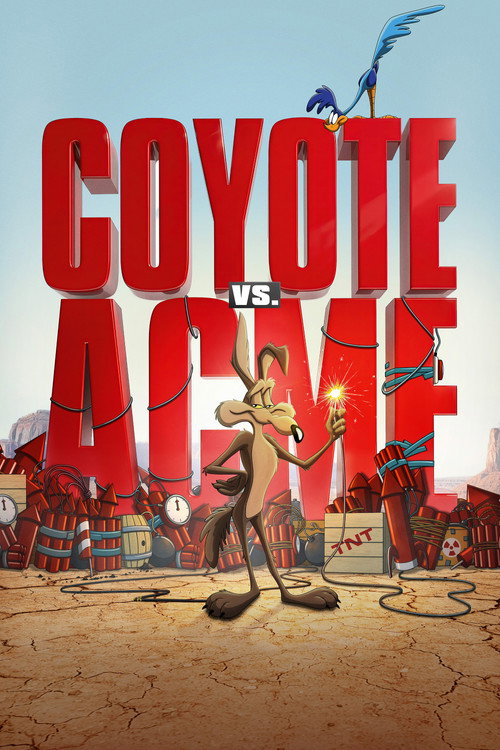
Coyote vs. Acme
A battered cartoon underdog finally lawyers up: slapstick anarchy meets courtroom heart in a film about the little guy refusing to stay flattened under the anvil of corporate power.
Coyote vs. Acme

Coyote vs. Acme

"The movie ACME doesn't want you to see."

20 August 2026 United States of America 103 min 7.7 (238)

Director: Dave Green

Cast: Will Forte, Lana Condor, John Cena, Tone Bell, Martha Kelly

Family Comedy Adventure Perseverance and the Nobility of the Underdog Corporate Power and Accountability Friendship Across an Impossible Divide Family, Legacy and Second Chances Cruelty as Entertainment
Budget: $72,000,000
Box Office: $44,274,089

Overview

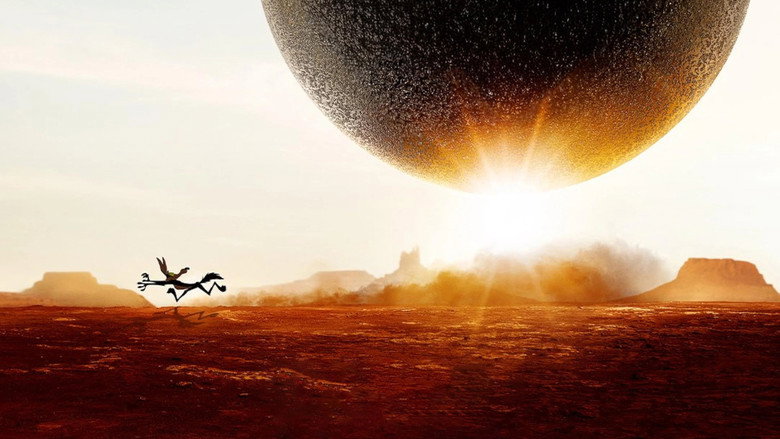
After decades of being blown to bits by faulty bombs, demolished by dynamite, mangled by magnets and dropped off every cliff in the American Southwest, Wile E. Coyote decides he has had enough. Every one of those catastrophes came out of the same box, stamped with the same three letters, and the Coyote wants his day in court. He finds it in Kevin Avery (Will Forte), a burnt-out billboard accident lawyer whose career has shrunk to the size of his advertising budget and whose relationship with his family is running on fumes.

Standing between them and justice is Buddy Crane (John Cena), Kevin's former colleague turned slick lead counsel for ACME, Inc., the profit-obsessed conglomerate behind every exploding anvil and rocket-powered rollerskate. Crane is everything the system rewards: polished, ruthless and utterly untroubled by the trail of craters his client leaves behind. Kevin, aided by his niece Paige (Lana Condor) and the skeleton crew of his tiny firm, has almost nothing except a client who cannot speak, a mountain of receipts, and a stubbornness he had forgotten he owned.

Directed by Dave Green as a live-action/animation hybrid and drawn from Ian Frazier's New Yorker humor piece "Coyote v. Acme," the film runs the classic Looney Tunes physics through a legal procedural. The result is a family comedy that plays the gags straight and the emotions straighter — a nostalgic, unexpectedly heartfelt crowd-pleaser about persistence, about the people who quit and the ones who cannot.
Core Meaning

At its heart, Coyote vs. Acme is about the dignity of not giving up — and about who profits when you do. The Coyote has spent a lifetime being defined by failure, an eternal punchline whose entire cultural identity is losing. The film's central move is to reframe that doggedness not as stupidity but as integrity: he keeps getting up, and that refusal is the one thing ACME's business model cannot price in.

Against that stands Kevin Avery, a man who did the sensible thing and gave up — took the easy road, shrank his ambitions, let a system built to valorize men like Buddy Crane tell him what he was worth. The film argues that the truly damaging failure is not the anvil that lands on you but the moment you decide you deserved it. Kevin does not save the Coyote; the Coyote reminds Kevin how to chase something.

Wrapped around that is a pointed anti-corporate thesis: an institution that manufactures harm, externalizes the cost onto the bodies of the powerless, and then out-lawyers anyone who objects. The film insists that accountability is worth pursuing even when the verdict goes the wrong way — that losing loudly can be its own kind of win.

Thematic DNA

Perseverance and the Nobility of the Underdog 30%
Corporate Power and Accountability 25%
Friendship Across an Impossible Divide 20%
Family, Legacy and Second Chances 15%
Cruelty as Entertainment 10%

Perseverance and the Nobility of the Underdog

The film's most explicit theme, embodied in a character whose entire ninety-year history is defeat. The Coyote's case is absurd on paper and doomed in practice, yet he pursues it with the same undiminished appetite he brings to every rocket sled. Kevin Avery's arc is the mirror image: a lawyer who stopped trying, who finds in his silent client the inspiration to chase his own dreams again. The movie's thesis is that persistence is not the absence of failure but the willingness to be defined by something other than it.

Corporate Power and Accountability

ACME, Inc. is a profit-obsessed conglomerate whose products maim by design and whose legal department exists to ensure nobody collects. Critics singled out the film's timely message about runaway corporate power — the way scale itself becomes a defense, and how a company can be simultaneously beloved, ubiquitous and unaccountable. The courtroom setting literalizes the imbalance: one exhausted attorney and a wordless client versus an institution that can simply outspend the truth.

Friendship Across an Impossible Divide

Kevin and the Coyote cannot converse in any conventional sense, which forces the friendship to be built out of attention rather than dialogue — of one party finally looking at someone the world treats as a disposable gag. It is complemented by the soured friendship with Buddy Crane, the road not taken made flesh, and by Kevin's rebuilding of trust with his niece Paige.

Family, Legacy and Second Chances

Kevin's professional collapse is inseparable from his personal one; Paige is both his conscience and the person he most needs to prove himself to. The film keeps insisting that the case is never only about the case — that reclaiming your work is how this particular man reclaims his family.

Cruelty as Entertainment

By giving the Coyote standing to sue, the film quietly interrogates the audience's own decades of laughing at his injuries, alongside its anti-animal-testing streak. The joke is reframed as a case file, and the running gag becomes evidence.

Character Analysis

Kevin Avery

Will Forte

Archetype: Reluctant hero / fallen idealist Key Trait: Self-deprecating everyman awkwardness masking buried conviction

Motivation

Initially professional survival and a shot at relevance; ultimately proving — to Paige, to Crane, and to himself — that he is not the man his career suggests.

Character Arc

Begins as a billboard accident lawyer and himself a casualty of a system designed to reward men like Buddy Crane. Having given up and taken the easy road, he takes the Coyote's case for the wrong reasons and gradually rediscovers, through his client's refusal to stop chasing, the conviction he abandoned. He does not become a great lawyer so much as an unembarrassed one.

Wile E. Coyote

Animated Looney Tunes character

Archetype: Silent underdog / holy fool Key Trait: Unkillable, wordless persistence

Motivation

Restitution for a lifetime of injuries, and beneath that, recognition: to be treated as someone who was wronged rather than as a joke that landed.

Character Arc

Moves from perpetual victim of ACME's catalog to plaintiff — from an object things happen to into an agent who demands an accounting. Wordless throughout, he expresses everything through pantomime and unquenchable appetite, and his function is less to win than to reactivate the humans around him.

All 4 characters and cast

Symbols & Motifs

The ACME Box

Meaning:

The banal brown package as an instrument of institutional harm — bureaucratized violence in a mail-order carton. Its cheerful uniformity is precisely the point: mass-produced catastrophe, shipped with a smile and a disclaimer.

Context:

The visual through-line of the entire film, appearing as gag, as trauma and finally as legal exhibit. Every crate the Coyote ever opened becomes discovery material.

The Cliff Edge

Meaning:

The classic Looney Tunes law that you only fall once you look down — a metaphor for self-belief as the thing that holds you up. Kevin's whole problem is that he looked down years ago.

Context:

The signature Coyote gag is repurposed as the film's emotional grammar, tying cartoon physics directly to the theme of nerve and persistence.

The Anvil

Meaning:

Inevitable, impersonal, crushing weight — the force that flattens the small and moves on. It stands for everything the powerful drop on the powerless without ever noticing.

Context:

The film's most-quoted piece of iconography, deployed both for slapstick and, in the legal argument, as shorthand for damages nobody ever paid.

The Billboard

Meaning:

Kevin's roadside accident-lawyer advertisement is a monument to diminished ambition — a man reduced to a phone number and a smile, selling himself in the cheapest available space.

Context:

Introduced as a joke about how far Kevin has fallen, it becomes the marker against which his recovered self-respect is measured.

The Roadrunner's Absence

Meaning:

The thing chased forever and never caught: desire as identity. The film's insight is that the Coyote's dignity lives in the chase, not the capture.

Context:

Hovers over the story as the Coyote's defining and unfulfilled pursuit, reframed by the lawsuit as a life spent wanting something enough to be destroyed for it.

The Courtroom

Meaning:

The arena where cartoon logic collides with adult rules — a space that promises the powerless a level playing field and mostly does not deliver one.

Context:

The film's structural spine, staging the collision between hand-drawn anarchy and the immovable procedure of institutional power.

Philosophical Questions

Is persistence in the face of certain failure wisdom or delusion?

The Coyote is cinema's purest case study: ninety years of unbroken defeat and undiminished appetite. The film refuses the easy verdict of 'idiot,' instead treating his refusal to stop as a form of integrity, and contrasting it with Kevin — the rational man who calculated the odds, quit, and was hollowed out by the correct decision.

Can justice exist when one side can simply afford more of it?

The courtroom is presented as a neutral arena and revealed as anything but. Buddy Crane does not need better facts, only better resources, and the film's willingness to lose the case is its most honest philosophical move: the system does not automatically correct itself, and change arrives only through the pressure the loss creates.

When does laughing at someone's suffering become complicity?

By granting the Coyote legal standing, the film converts decades of audience delight into a record of injuries. It gently implicates the viewer — every gag we enjoyed is now an exhibit — while stopping short of scolding, letting the anti-animal-testing thread carry the sharper edge.

Is a person defined by what they achieve or by what they keep pursuing?

Neither protagonist gets what they set out for: the Coyote never catches the Road Runner and the case is lost. The film locates worth in the chasing itself, arguing that identity is made of appetite and direction rather than trophies.

What is owed to those a system harms as a byproduct of its profits?

ACME's catastrophes are not malice but externalized cost — damage that never appears on the balance sheet because it lands on someone with no lawyer. The lawsuit's real question is whether harm becomes acceptable simply because it is diffuse, routine and profitable.

Alternative Interpretations

The ending as genuine victory or as consolation prize. The Coyote and Kevin lose the titular case, but the effort opens the door to ACME's eventual defeat and changes how the world sees the company. One reading takes this as the film's most mature idea: that structural change comes from accumulated pressure rather than a single verdict, and that losing publicly can be more useful than winning quietly. The opposing reading — voiced by critics who felt the film ties too neat a bow — is that the movie immediately replaces its heartfelt, complicated conclusion with a simple, clichéd resolution that delivers an unearned triumph and undercuts the honesty of the loss.

Full ending explanation

Cultural Impact

Coyote vs. Acme became a landmark in film culture before anyone outside test screenings had seen a frame of it. When Warner Bros. Discovery shelved the finished movie in November 2023 for an estimated $30 million tax write-off, it crystallized a fear that had been building through the streaming era: that completed art could simply be made to disappear for accounting reasons. Coming after similar disappearances at the same studio, the decision provoked an unusually broad backlash — from talent including Will Forte, from the animation community, and from fans who emailed, organized and picketed.

That pressure worked. Warner Bros. reversed course, opened the rights to bidders, and in 2025 Ketchup Entertainment paid roughly $50 million for North American distribution, releasing the film on August 28, 2026. Its marketing turned the ordeal into text, with a teaser openly needling the studio over the write-off under the guise of "ACME Corp. meddling" — an unusually meta act of self-aware promotion.

The result is a film whose off-screen story rhymes almost too neatly with its on-screen one: an underdog flattened by a conglomerate, refusing to stay flattened. Critics received it warmly, with reviews calling it a clever, nostalgic and unexpectedly heartfelt crowd-pleaser and an underdog triumph, and NPR highlighting its timely message about runaway corporate power. Its roughly $44 million theatrical gross — exceeding the write-off taken against it — was widely reported as an indictment of the original decision, and the phrase "Coyote vs. Acme" now functions as shorthand in industry discourse for films buried by their own studios.

Audience Reception

Broadly warm, with a heavy thumb on the scale from the film's own backstory. Critics and audiences alike described it as hilarious, nostalgic and unexpectedly heartfelt — a genuine crowd-pleaser and, in the framing many reviewers reached for, an underdog triumph. The most consistent praise went to the central pairing: Will Forte striking exactly the right tone as a man ground down by a system built to reward people like his former ally, and John Cena leaning into his alpha-male presence as ACME's counsel, their comic energies balancing each other. The live-action/animation hybrid, the density of Looney Tunes Easter eggs and cameos, and the film's willingness to give the Coyote real emotional weight were all singled out.

Criticisms clustered around the resolution. Several reviewers felt the film ties too neat a bow, swapping a heartfelt conclusion for a simple, clichéd ending that reads as an unearned victory. Others noted the thinness of the female roles — Lana Condor's Paige is key to the story but the only major female character — and a certain formulaic safety in the family-comedy scaffolding around the sharper anti-corporate material.

The controversy is inseparable from the reception. Watching it in 2026 meant watching a movie about a conglomerate crushing the powerless, made by people whose movie had been crushed by a conglomerate, in a theater it reached only because the public objected. Its roughly $44 million gross — more than the write-off taken against it — was received less as a box office result than as a verdict. Overall verdict: not a masterpiece, but a smart, funny, big-hearted family film that comfortably vindicated the campaign to save it.

Interesting Facts

  • The film is based on the classic Looney Tunes characters and on Ian Frazier's 1990 New Yorker humor piece 'Coyote v. Acme,' which framed the Coyote's grievances as an actual legal complaint.
  • Directed by Dave Green as a live-action/animation hybrid, the film cost roughly $70 million to produce and was originally developed at Warner Bros. as an HBO Max streaming original.
  • In November 2023, Warner Bros. Discovery shelved the completed film entirely and took an estimated $30 million tax write-off — despite the movie having tested 14 points above the family-film norm.
  • Will Forte publicly said at the time that the finished film was likely never coming out, and joined the wave of talent speaking out against the decision.
  • Immediate public backlash — including fans protesting, writing emails and standing outside with signs — pushed Warner Bros. to reverse the cancellation and allow other distributors to bid for the rights.
  • Ketchup Entertainment acquired North American distribution rights in 2025 in a deal reported at around $50 million, and released the film theatrically on August 28, 2026.
  • Footage debuted at San Diego Comic-Con in 2025, and the marketing leaned into the film's own backstory — the teaser openly took aim at the studio's tax write-off, framed as 'ACME Corp. meddling.'
  • The end credits include a dedication in fine print thanking everyone who protested, emailed and campaigned to get the movie seen.
  • Despite three years on the shelf, the film opened as a box office hit, grossing around $44 million — more than the write-off Warner Bros. had claimed against it.

Easter Eggs

The law firm is named Avery, Jones & Maltese.

A tribute to the original Looney Tunes creators — Tex Avery, Chuck Jones and Michael Maltese. Jones and Maltese in particular created and defined the Road Runner/Coyote shorts, making the firm's letterhead a credit roll for the men who invented the plaintiff.

Cameos from Bugs Bunny, Daffy Duck, the Tasmanian Devil and Tweety Bird.

The wider Looney Tunes roster turns up around the margins of the story, situating the Coyote's lawsuit inside a fully populated cartoon world rather than an isolated gag — and giving longtime fans the pleasure of spotting who else lives in ACME's blast radius.

The fine-print dedication buried in the end credits.

Thanking the fans who protested and campaigned for the film's release, it turns the movie's own rescue-from-the-vault story into a final, real-world echo of its underdog theme — the audience effectively became a character in the plot.

Ian Frazier's New Yorker piece as the film's legal spine.

The premise is lifted from a 1990 literary humor essay written as a formal complaint against ACME, so the movie is a rare case of a studio family comedy adapting a New Yorker Shouts & Murmurs column.

Frequently Asked Questions

Explore More About This Movie

Dive deeper into specific aspects of the movie with our detailed analysis pages

Comments (0)

Leave a comment

No comments yet. Be the first to share your thoughts!

Similar Movies