Skip to content
Dark Nuns
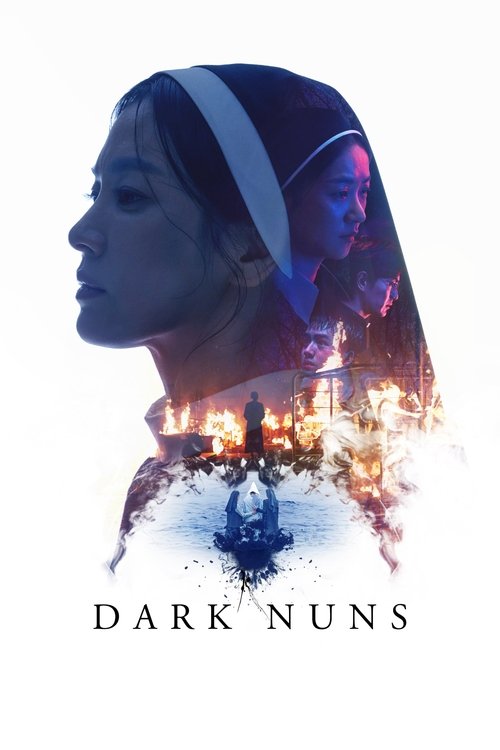
Cloaked in shadows and ecclesiastical dread, this chilling occult thriller ignites when two defiant nuns shatter holy dogma, braving abyssal evil to rescue an innocent soul consumed by darkness.
Dark Nuns

Dark Nuns

검은 수녀들

"We're ready to face the forbidden dark."

24 January 2025 South Korea 115 min 6.2 (100)

Director: Kwon Hyeok-jae

Cast: Song Hye-kyo, Jeon Yeo-been, Lee Jin-uk, Moon Woo-jin, Huh Joon-ho

Drama Thriller Mystery Horror Subversion of Institutional Canon and Female Agency Rational Dogmatism vs. Empathetic Action Faith and Purification Through Sin The Burden and Protection of Innocence
Box Office: $12,140,335

Overview

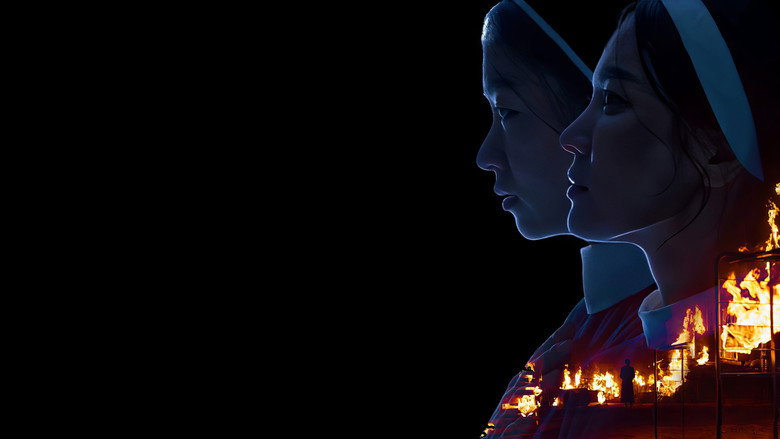
Serving as a female-led spiritual companion and expansion to the 2015 Korean box-office hit The Priests, Dark Nuns follows Sister Yunia (Song Hye-kyo), an obstinate and fiercely determined Catholic nun who discovers that a young boy named Hee-joon (Moon Woo-jin) has become the vessel for an immensely powerful and malicious demonic force. As the boy deteriorates under agonizing supernatural afflictions, the established ecclesiastical hierarchy proves rigid, hesitant, and ill-equipped to intervene in time.

When church authorities forbid unauthorized rituals, Sister Yunia refuses to abandon the child to his fate. She forms an uneasy alliance with Sister Mikaela (Jeon Yeo-been), a younger nun driven by keen curiosity and growing empathy, despite the escalating danger surrounding them. Their rogue mission is further complicated by Father Paolo (Lee Jin-uk), a devout psychiatrist priest convinced the boy suffers from extreme psychological illness requiring medical intervention, and Father Andrea (Huh Joon-ho), an elder exorcist attempting to navigate strict canonical rites.

As medical treatments crumble and demonic fury consumes the sanctuary, the two nuns cross traditional clerical boundaries. Navigating forbidden rites and high-stakes spiritual warfare, they face profound personal terror to reclaim the boy's humanity before the malevolent presence fully engulfs him.


Core Meaning

At its heart, Dark Nuns is an exploration of compassion transcending dogma. Director Kwon Hyeok-jae contrasts rigid ecclesiastical institutions, masculine clerical authority, and clinical rationalism against the raw, visceral empathy of women willing to commit spiritual rebellion for the sake of saving a vulnerable life. The film posits that true faith is defined not by bureaucratic protocol, titles, or adherence to institutional canon, but by the radical willingness to endure damnation and sacrifice oneself to preserve the innocent.

Thematic DNA

Subversion of Institutional Canon and Female Agency 30%
Rational Dogmatism vs. Empathetic Action 25%
Faith and Purification Through Sin 25%
The Burden and Protection of Innocence 20%

Subversion of Institutional Canon and Female Agency

In Catholic canon, solemn exorcisms are reserved strictly for ordained male priests. The narrative directly challenges this patriarchal hierarchy by placing Sister Yunia and Sister Mikaela at the frontline of spiritual combat, demonstrating that salvation arises from proactive defiance rather than passive obedience.

Rational Dogmatism vs. Empathetic Action

The ideological clash between Father Paolo's insistence on modern psychiatry and the institutional caution of senior clergy highlights the systemic paralysis when institutions face urgent suffering. The nuns' swift, risky intervention underscores that academic analysis and doctrinal caution often delay critical humanitarian mercy.

Faith and Purification Through Sin

Sister Yunia embodies a paradoxical path to holiness: an unconventional, smoking, rule-breaking nun who is ready to defy her vows and face ecclesiastical excommunication if it means saving Hee-joon. Her journey asserts that true devotion requires breaking the rules of men to fulfill divine mercy.

The Burden and Protection of Innocence

The possession of the young boy Hee-joon illustrates how the innocent often bear the devastating weight of malevolent forces beyond their understanding, framing the nuns' struggle as an urgent moral duty of guardianship.

Character Analysis

Sister Yunia (Kang Seong-ae)

Song Hye-kyo

Archetype: Defiant Protector / Antiheroic Hero Key Trait: Steadfast, pragmatic defiance

Motivation

Driven by unwavering determination to prevent a helpless child from succumbing to horrific demonic torment, regardless of church reprimands.

Character Arc

Evolves from an ostracized, hard-edged nun operating on the fringes of the religious order into a resolute spiritual protector who embraces personal sacrifice to save a boy deemed lost.

Sister Mikaela

Jeon Yeo-been

Archetype: Loyal Companion / The Seeker Key Trait: Inquisitive loyalty and quiet courage

Motivation

Seeks to understand the boundary between divine duty and human empathy, compelled by Yunia's radical dedication.

Character Arc

Transitions from an observant, hesitant sister bound by curiosity into a steadfast, active partner who willingly risks her soul alongside Yunia.

All 5 characters and cast

Symbols & Motifs

Jerry Cans of Holy Water

Meaning:

Symbolizes pragmatic, desperate spiritual warfare stripped of ceremonial elegance, representing the raw necessity and utilitarian grit required to combat unyielding evil.

Context:

Sister Yunia and Sister Mikaela haul massive industrial plastic containers of holy water to their makeshift ritual spaces, abandoning ornate church vessels for utilitarian volume.

Cigarettes and Lingering Smoke

Meaning:

A symbol of Yunia's rejection of conventional, passive feminine piety and her inner torment, serving as an earthly coping mechanism amidst otherworldly terrors.

Context:

Sister Yunia frequently smokes in solitude and moments of extreme tension, subverting traditional representations of demure monastic life.

The Habit and Veil

Meaning:

Represents both the traditional clerical confinement imposed on women within the Church and, conversely, armor of solidarity and shared identity between Yunia and Mikaela.

Context:

As the conflict intensifies, their garments become stained and disheveled, illustrating their descent from cloistered sanctuary into chaotic spiritual warfare.

Philosophical Questions

Can an act deemed sinful or unauthorized by religious doctrine be fundamentally holy?

The narrative directly tests this paradox through Sister Yunia's insubordination, demonstrating that rigid dogma can inadvertently hinder mercy, making moral transgression an act of supreme righteousness.

Where does the boundary between psychological illness and metaphysical evil lie?

Explored through Father Paolo's scientific diagnoses versus the nuns' occult experiences, examining the limitations of modern materialism when confronting inexplicable suffering.

How It Ends

Alternative Interpretations

While primary readings highlight supernatural horror and feminist empowerment, psychological interpretations view Hee-joon's possession as an allegory for severe trauma and neurosis, where Father Paolo's clinical detachment fails because healing trauma demands profound empathetic immersion rather than antiseptic therapy. Another perspective reads the film as an institutional critique of post-colonial religious structures in South Korea, examining how rigid European ecclesiastical hierarchies clash with primal, urgent human survival instincts.

Full ending explanation

Cultural Impact

Dark Nuns represents an important evolution in the rapidly expanding K-Occult subgenre popularized by films like The Priests (2015), The Wailing (2016), and Exhuma (2024). Traditionally, Korean and Western exorcism narratives cast female characters almost exclusively as passive victims, hysterical targets of demonic infestation, or secondary observers in domestic spaces. By centering two autonomous women who wield the rituals of deliverance against both supernatural evils and institutional barriers, the film recontextualizes modern Korean horror within a framework of female solidarity and agency.

Audience Reception

Upon its theatrical debut in January 2025, Dark Nuns generated significant buzz, fueled by the compelling star power and intense performances of Song Hye-kyo and Jeon Yeo-been. Critics and horror enthusiasts applauded the subversion of classic exorcism tropes, particularly the grounded, gritty depiction of nuns handling raw spiritual warfare. However, some audience reviews pointed out pacing inconsistencies in the middle act and felt the narrative relied on familiar jump scares and horror conventions established by its predecessor, The Priests.

Interesting Facts

  • The film serves as an official spin-off and thematic sequel to Jang Jae-hyun's 2015 blockbuster 'The Priests', shifting the focus from male exorcists to female Catholic sisters.
  • Dark Nuns marks Song Hye-kyo's much-anticipated return to the Korean big screen after an extended absence, following her critically acclaimed performance in the Netflix drama series 'The Glory'.
  • Director Kwon Hyeok-jae collaborated closely with production company Zip Cinema, the exact studio behind the original hit 'The Priests'.
  • The production required Jeon Yeo-been and Song Hye-kyo to rehearse complex Latin and foreign prayer litanies alongside physical performance sequences to depict intense exorcism rites.
  • Cinematographer Choi Chan-min and music director Kim Tae-seong reunited on this project to recreate the ominous, claustrophobic atmosphere established in modern Korean occult cinema.

Easter Eggs

Lineage to 'The Priests' (2015) and Father Choi's Universe

The film deliberately mirrors the structure of Jang Jae-hyun's The Priests, featuring direct narrative references and nods to the ecclesiastical crisis surrounding demonic entities first encountered by Father Kim (Kim Yoon-seok) and Deacon Choi (Gang Dong-won).

Frequently Asked Questions

Explore More About This Movie

Dive deeper into specific aspects of the movie with our detailed analysis pages

Comments (0)

Leave a comment

No comments yet. Be the first to share your thoughts!

Similar Movies