Skip to content
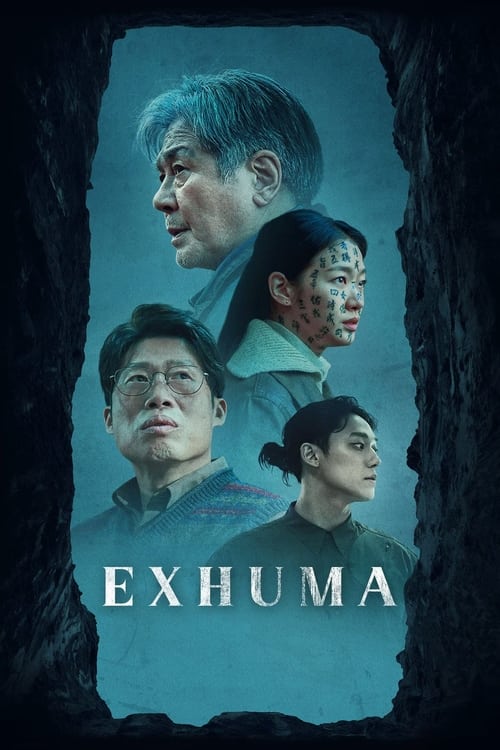
Exhuma
Enshrouded in damp, suffocating soil, this eerie occult thriller weaves dread and visceral shamanic chants into a haunting visual symphony, unearthing the bleeding scars of buried national trauma.
Exhuma

Exhuma

파묘

"The vicious emerges."

22 February 2024 South Korea 134 min 7.7 (760)

Director: Jang Jae-hyun

Cast: Choi Min-sik, Kim Go-eun, Yoo Hai-jin, Lee Do-hyun, Kim Jae-chul

Thriller Mystery Horror Colonial Trauma and Historical Reckoning Spiritual Heritage and Shamanic Cosmology Familial Legacy and Ancestral Sins Sacred Connection to the Soil and Future Generations
Box Office: $97,974,828

Overview

Exhuma (2024), directed by master of Korean occult cinema Jang Jae-hyun, is a supernatural mystery thriller that begins in Los Angeles, California. Two stylish young shamans, Lee Hwa-rim and her tattooed apprentice Yoon Bong-gil, are hired by an enormously wealthy Korean-American family suffering from a mysterious, hereditary supernatural affliction that threatens the life of their newborn child. Recognizing the affliction as 'Grave’s Call'—a vengeful spirit reaching out from beyond—Hwa-rim determines that the ancestral grave located in South Korea must be exhumed and relocated immediately to break the curse.

To execute the dangerous exhumation, Hwa-rim and Bong-gil team up with two seasoned veterans: Kim Sang-deok, an elite geomancer (feng shui master) who reads the energy of the earth, and Ko Yeong-geun, a pragmatic mortician. The team travels to a remote, nameless grave nestled on a secluded mountain top near the North Korean border. Upon inspecting the site, Sang-deok instantly senses an unnerving, malevolent aura—identifying the location as a cursed, foul plot of land where no body should ever rest. Despite his deep misgivings, a high-stakes shamanic sacrifice ritual is organized to appease the spirits while workers dig up the coffin.

Once the casket is freed from the earth, a series of catastrophic events unfolds. The excavation exposes a web of long-buried secrets, revealing that the ancestral curse was merely the outer shell of a far darker, deeper evil lurking beneath the surface of the Korean peninsula. What begins as a lucrative ghost-cleansing contract quickly evolves into a high-stakes fight for survival and spiritual preservation.

Core Meaning

At its core, Exhuma is an allegory about excavating historical trauma and confronting the unhealed wounds of national history. Director Jang Jae-hyun uses the literal act of pamyo (exhuming and destroying a tomb) as a metaphor for unearthing the lingering remnants of Japanese colonial rule (1910–1945) that continue to poison the identity, land, and collective psyche of Korea.

The film conveys that true healing—both personal and national—cannot occur while shameful sins, collaborator betrayals, and foreign spiritual desecrations remain buried, hidden, and ignored. The director asserts that every generation inherits the responsibility to confront and excise the evil planted in its soil so that future descendants can walk on clean, unburdened earth.

Thematic DNA

Colonial Trauma and Historical Reckoning 35%
Spiritual Heritage and Shamanic Cosmology 25%
Familial Legacy and Ancestral Sins 20%
Sacred Connection to the Soil and Future Generations 20%

Colonial Trauma and Historical Reckoning

The film uses occult horror to explore the devastating impact of the Japanese occupation. Revealed through the secondary coffin and the entity trapped beneath the earth, the plot reflects how historical atrocities do not disappear over time; if left unattended, they continue to rot and harm living generations.

Spiritual Heritage and Shamanic Cosmology

Korean folk religion (Musok), shamanic rituals (gut), feng shui (pungsu-jiri), and the Daoist doctrine of the Five Elements (Wu Xing) drive the narrative. The characters succeed not through brute force, but by respecting ancient spiritual laws, cosmic order, and ancestral rituals.

Familial Legacy and Ancestral Sins

Exposed through the wealthy Park family, the story examines the moral bankruptcy of wealth built on national betrayal. The grandfather’s pro-Japanese collaborator past (chinilpa) brings a generational curse upon his offspring, proving that ill-gotten fortune carries a spiritual price paid by descendants.

Sacred Connection to the Soil and Future Generations

Kim Sang-deok’s driving motivation centers on protecting the land. Soil is not merely dirt; it represents the living vessel of national identity and the inheritance of future generations. Healing the land requires physically and spiritually digging up buried curses.

Character Analysis

Kim Sang-deok

Choi Min-sik

Archetype: The Wise Mentor / Earth Guardian Key Trait: Deep wisdom of Feng Shui and unwavering moral grit.

Motivation

Protect his family and cleanse the land for future generations.

Character Arc

Begins as a mercenary geomancer driven by money for his daughter's wedding; evolves into a courageous patriot willing to sacrifice his life to heal the nation's soil.

Lee Hwa-rim

Kim Go-eun

Archetype: The Modern Hero / Spiritual Medium Key Trait: Fearless intensity during rituals and deep empathy for spirits.

Motivation

Protect her client, safeguard her apprentice Bong-gil, and complete rituals safely.

Character Arc

A confident, high-earning millennial shaman who must confront an ancient, terrifying force that pushes her spiritual powers to their absolute limits.

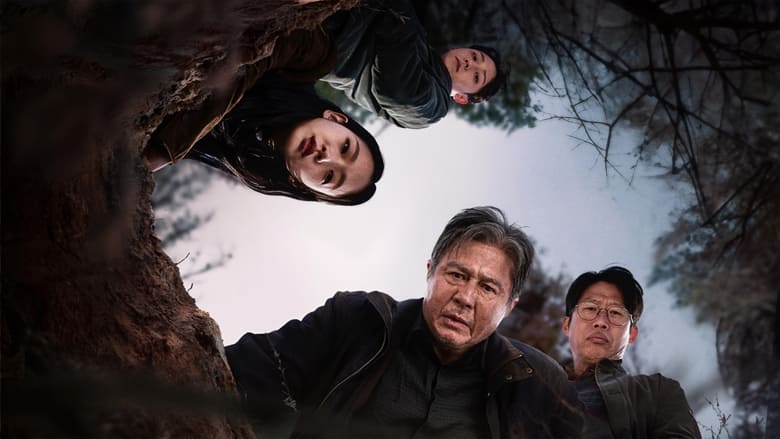
All 4 characters and cast

Symbols & Motifs

The Vertical Coffin & The Iron Stake

Meaning:

The literal and figurative severing of the Korean nation’s energetic spine (Baekdu-daegan).

Context:

Buried vertically beneath the grandfather's grave lies a massive casket wrapped in barbed wire, containing a Japanese Daimyo turned into a living 'iron stake'.

The Fox / 'Gisune'

Meaning:

Deceit, foreign invasion, and imperial Japanese spiritual warfare.

Context:

'Gisune' (from the Japanese word for fox, Kitsune) is the alias of Murayama Junji, an imperial Japanese monk who planted cursed stakes across Korea.

The Human-Headed Snake (Nure-onna)

Meaning:

A tragic, ill-omened guardian snake and herald of doom.

Context:

Discovered by a gravedigger inside the opened grave site. Killing it unleashes rain and triggers the tragic release of the ancestral spirit.

Wet Wood vs. Burning Metal (Five Elements / Wu Xing)

Meaning:

Cosmic harmony, flexibility, and elemental counteraction.

Context:

The Samurai spirit represents Fire and Metal. In the final climax, Sang-deok uses a blood-soaked, water-drenched wooden pole to conquer the burning iron entity based on elemental laws (Water extinguishes Fire; Wood cuts Metal).

Tattoos of Sacred Scriptures (Ta Eul Bo Shin Gyeong)

Meaning:

Spiritual armor and protection against demonic possession.

Context:

Bong-gil and Hwa-rim tattoo sacred Buddhist/Shamanic Hanja incantations onto their skin to prevent spirit invasion.

Tasting Soil

Meaning:

Intimate connection to the earth, discernment of truth, and spiritual authority.

Context:

Sang-deok repeatedly tastes dirt from prospective grave sites to sense whether the land holds life-giving vitality or deadly malice.

Memorable Quotes

여우가 범의 허리를 끊었다.
— Kim Sang-deok

Context

Spoken by Kim Sang-deok explaining the core historical trauma behind the secondary burial.

Meaning

The central thematic quote of the film. The Korean peninsula is traditionally shaped like a tiger; the 'fox' refers to the Japanese monk Gisune who buried a cursed Samurai spirit at the 38th parallel to sever the nation's spiritual energy.

땅이야, 땅. 우리 손주들이 밟고 살아가야 할 땅이라고!
— Kim Sang-deok

Context

Spoken when deciding to stand and fight the monster rather than escaping.

Meaning

Sang-deok’s impassioned plea explaining why they cannot flee from the buried Japanese Daimyo monster. It highlights ancestral responsibility and land preservation.

All 5 quotes

Philosophical Questions

How do the unresolved transgressions of ancestors affect the spiritual and physical well-being of living descendants?

The film explores this by showing how the wealthy Park family's accumulated luxury could not shield them from the spiritual retribution of their grandfather's betrayals.

What is a nation's duty to its land beyond commercial exploitation?

Explored through Sang-deok, who argues that land is not merely real estate to be bought or sold, but a sacred living body that nurtures generations.

Can historical wounds ever truly heal without active, painful excavation?

The movie suggests that burying tragic history underground only causes it to fester into evil; true peace requires digging it up and confronting it.

Alternative Interpretations

Critics and audiences debate the film's structural transition. Act 1 plays out as an intimate psychological ghost horror focusing on ancestral curses, while Act 2 pivots into a creature feature representing physical national history. Some view this as a brilliant thematic progression from personal sins to national trauma, while others see it as two distinct movies welded together.

Full ending explanation

Cultural Impact

Exhuma directly addresses the 'Iron Stake Theory' (쇠말뚝 설)—a popular Korean urban legend alleging that during the colonial era, Japanese imperial geomancers drove iron spikes into high-altitude mountain ranges to cut off Korea’s spiritual energy grid and suppress the birth of future leaders.

The movie presents a blend of indigenous Korean Shamanism (Musok), Feng Shui (Pungsu-jiri), and Daoist elemental cosmology. Shamanism is depicted not as backward superstition, but as an active, respected spiritual technology for healing and boundary defense.

Exhuma became a massive cultural phenomenon in South Korea, becoming the first occult film in Korean cinema history to surpass 10 million admissions. It sparked nationwide conversations on history, ancestral rites, and feng shui, achieving substantial international box office success across Asia.

Audience Reception

Audience reception praised the exceptional, magnetic performances by Kim Go-eun (especially the hypnotic Daesalgut ritual) and Choi Min-sik, as well as the rich, authentic immersion in Korean folk rituals and feng shui lore without relying on cheap jump scares. Viewers also celebrated the brilliant layerings of historical subtext, easter eggs, and patriotic symbolism.

Main criticisms and controversies centered on the tone shift in Act 2, where a significant portion of Western and some domestic viewers felt alienated when the film shifted from an atmospheric ghost mystery into a literal physical monster battle. Minor criticism was also directed toward the visual effects of the floating fireball (Oni flame).

Overall, the film was widely celebrated as a landmark Korean horror masterpiece that successfully elevated occult cinema by grounding it in national history and authentic spiritual practices.

Interesting Facts

  • Director Jang Jae-hyun spent years researching for the film, personally observing over 15 real grave exhumations and participating in rituals to capture authentic detail.
  • Professional Korean shamans served as on-set advisors. Kim Go-eun intensely practiced real shamanic chants, drum rhythms, and the Daesalgut ritual dance for weeks to perform it convincingly in single long takes.
  • To make the 8-foot-tall Japanese Daimyo (Oni) monster feel terrifyingly real, the director hired 7-foot-4 basketball player Kim Byung-oh and veteran actor Kim Min-jun to physically wear full suit prosthetic makeup rather than relying primarily on CGI.
  • Despite a legendary 35+ year acting career (including Oldboy), Exhuma was Choi Min-sik’s very first supernatural horror film.
  • The film marked actor Lee Do-hyun's big-screen cinematic debut, filmed shortly before he enlisted for mandatory military service.

Easter Eggs

Character Names as Independence Activists

The main characters are named after prominent Korean anti-colonial independence fighters: Kim Sang-deok (committee leader investigating pro-Japanese collaborators), Lee Hwa-rim (female resistance fighter in the Heroic Corps), Yoon Bong-gil (martyr who bombed Japanese military figures in Shanghai), and Ko Yeong-geun (activist who executed a pro-Japanese traitor).

Patriotic Car License Plates

The vehicle license plates feature significant historical dates: Hwa-rim's SUV (19 Mu 0301) references March 1st (1919) Independence Movement; Yeong-geun’s car (49 Pa 0815) references August 15th (1945) National Liberation Day; the Hearse (1945) represents the year Korea was liberated from Japanese rule.

The 100-Won Coin

When Sang-deok tosses a 100-won coin into the exhumed pit as payment to the earth, the coin features the face of Admiral Yi Sun-sin, Korea's legendary naval hero who famously defeated Japanese invasions during the Imjin War.

Homage to I Saw the Devil

Right after Hwa-rim mentions sensing 'something terrifyingly evil,' the camera cuts sharply to Choi Min-sik’s face—a subtle nod to his iconic serial killer role in I Saw the Devil.

Frequently Asked Questions

Explore More About This Movie

Dive deeper into specific aspects of the movie with our detailed analysis pages

Comments (0)

Leave a comment

No comments yet. Be the first to share your thoughts!

Similar Movies