Skip to content
Dead Man's Wire
A claustrophobic, darkly comic fuse burning through 1970s American disillusionment, capturing pure anti-establishment fury as a man tethers his mortal grievance directly to the neck of high finance with a cold copper wire.
Dead Man's Wire

Dead Man's Wire

"His revolution was televised."

09 January 2026 United States of America 106 min 6.5 (205)

Director: Gus Van Sant

Cast: Bill Skarsgård, Dacre Montgomery, Cary Elwes, Myha'la, Kelly Lynch

Drama Crime Thriller Predatory Capitalism and Class Resentment Media Sensationalism and Televised Spectacle Systemic Injustice and Moral Desperation Human Connection Under Existential Terror The Fragility of the American Dream
Budget: $13,000,000
Box Office: $2,248,569

Overview

Set against the backdrop of a freezing Indianapolis winter in February 1977, Dead Man’s Wire dramatizes the real-life standoff initiated by 44-year-old aspiring entrepreneur Tony Kiritsis. Convinced that the Meridian Mortgage Company and its wealthy owners have deliberately conspired to default his loan and swindle him out of a prime 17-acre parcel of land intended for a community shopping center, Tony reaches a breaking point.

Arming himself with a modified 12-gauge shotgun and an elaborate wire rig, he enters the mortgage company's office to confront the leadership. Finding the owner in Florida, Tony instead takes the founder’s son and loan broker, Richard "Dick" Hall, hostage. Affixing a "dead man’s wire" from the shotgun's trigger directly to Hall’s neck—ensuring that any sudden movement, stumble, or sniper bullet will trigger a fatal shot—Tony parades Hall into the open streets and retreats to his apartment.

What follows is a tense, 63-hour media spectacle. As Tony makes demands for a $5 million settlement and a public apology via local radio and television broadcasts, law enforcement scrambles to defuse an impossible siege while the American public begins to view the volatile captor as an unlikely folk hero.

Core Meaning

Director Gus Van Sant uses the 1977 hostage crisis to explore the friction between systemic corporate exploitation and working-class desperation. The film dissects how corporate banking systems can legally dispossess an individual while disguising financial predation as standard business protocol.

Simultaneously, the film critiques the commodification of violence and grievance by mass media. By broadcasting Tony's live, unvarnished rage directly into American living rooms, the media transforms real mortal danger into primetime entertainment, exposing a cynical cultural appetite that elevates unstable outlaws into champions of the disenfranchised.

Thematic DNA

Predatory Capitalism and Class Resentment 35%
Media Sensationalism and Televised Spectacle 25%
Systemic Injustice and Moral Desperation 20%
Human Connection Under Existential Terror 10%
The Fragility of the American Dream 10%

Predatory Capitalism and Class Resentment

The driving engine of the plot. Tony embodies the individual crushed by corporate finance, directing raw grievance toward financial elites who extract wealth from working people without personal risk.

Media Sensationalism and Televised Spectacle

The 63-hour standoff unfolds as a precursor to modern 24/7 news cycles. The press and broadcast networks act as active participants in the circus, exploiting Tony's manic energy for ratings.

Systemic Injustice and Moral Desperation

Explores what happens when a citizen feels all legal avenues of redress are rigged, illustrating how perceived institutional betrayal drives an otherwise ordinary man to extreme, extralegal measures.

Human Connection Under Existential Terror

The claustrophobic interaction between Tony and Dick Hall reveals complex layers of hostage psychology, transitioning from raw panic to mutual exhaustion and tragic intimacy.

The Fragility of the American Dream

Tony’s desperate bid to develop land for independent local merchants highlights how the promise of self-made upward mobility can rapidly collapse into ruin.

Character Analysis

Tony Kiritsis

Bill Skarsgård

Archetype: Antihero / Tragic Folk Rebel Key Trait: Manic, unrelenting, theatrical.

Motivation

Demand financial restitution and a public apology for fraudulent foreclosure.

Character Arc

Stays locked in unyielding defiance from start to finish, riding a wave of media adulation to an institutional end.

Richard "Dick" Hall

Dacre Montgomery

Archetype: The Hostage / Stoic Everyman Pawn Key Trait: Composed, empathetic, vulnerable.

Motivation

Survive the physical and psychological ordeal to return home to his family.

Character Arc

Moves from sheer terror to a stoic endurance of life under constant threat of instantaneous decapitation.

All 5 characters and cast

Symbols & Motifs

The Dead Man’s Wire Rig

Meaning:

Symbolizes mutually assured destruction and the unbreakable, toxic bond between the exploited debtor and the financial institution.

Context:

The central apparatus linking the modified shotgun trigger directly to Richard Hall's neck throughout the hostage crisis.

The Suburban Bathtub

Meaning:

Represents dehumanization and the suspension of normal human dignity in moments of extreme crisis.

Context:

The cramped bathroom where Hall is kept hostage and confined during the 63-hour apartment siege.

The Land Development Blueprints

Meaning:

Represents the lost dream of self-determination and community-focused enterprise crushed by corporate bureaucracy.

Context:

Tony’s architectural sketches and commercial development plans for the 17-acre parcel of land.

The Radio Microphone & Soul Broadcasts

Meaning:

Serves as a motif of communal dialogue, bridging Tony's private rage with the broader collective consciousness of the city.

Context:

Utilized during late-night broadcasts hosted by local soul DJ Fred Temple to communicate with the public.

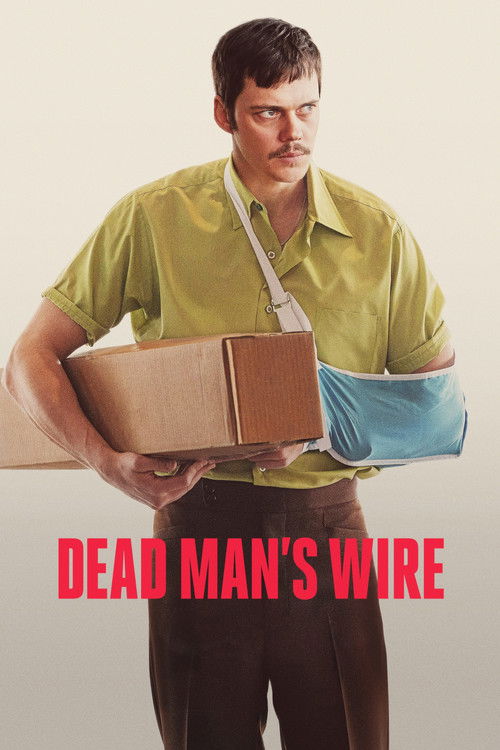
The Cardboard Box

Meaning:

Underlines the unsettling ease with which everyday domesticity can conceal deadly violence.

Context:

The mundane box Tony uses to transport the modified shotgun into the Meridian Mortgage office building.

Memorable Quotes

This here, Dick, is a dead man's wire if you faint, stumble or try to run. Look, this will blow your head off.
— Tony Kiritsis

Context

Tony introduces the shotgun wire mechanism to Dick Hall inside the Meridian Mortgage office.

Meaning

Establishes the lethal mechanism of mutually assured destruction, sealing their immediate fates together.

I'm just getting started.
— Tony Kiritsis

Context

Spoken when Dick Hall attempts to plead that Tony has already made his point and should walk away before they are spotted leaving the building.

Meaning

Demonstrates Tony's unrelenting defiance and determination to escalate his confrontation into a public spectacle.

All 3 quotes

Philosophical Questions

When systemic institutional abuses are legally protected, at what point does extralegal rebellion become normalized by society?

Explored through Tony's extreme retaliation against corporate dispossession and the broad public sympathy he garners as an anti-establishment folk hero.

Does live broadcast media illuminate truth or merely turn human tragedy into commercial spectacle?

Examined via the media circus surrounding the 63-hour standoff and Tony's unvarnished broadcasts turning mortal danger into ratings-driven public entertainment.

Can empathy exist between captor and hostage without erasing the moral culpability of violence?

Investigated through the evolving psychological dynamic and tragic intimacy between Tony Kiritsis and Richard Hall during their claustrophobic confinement.

Alternative Interpretations

The Marxist Class Warfare Interpretation: Tony is viewed as a grotesque embodiment of the working class rising up against financial extractivism, taking back agency the only way available to him.

Full ending explanation

Cultural Impact

Set in 1977, the narrative taps into the malaise of late-1970s America, marked by post-Watergate cynicism, stagflation, predatory urban lending practices, and the burgeoning power of live local television.

Audience Reception

Premiering at Venice and TIFF, the film received positive reviews, holding a 91% Rotten Tomatoes rating. Critics and audiences praised Bill Skarsgård’s magnetic, unhinged energy, Dacre Montgomery’s grounded, empathetic vulnerability, the authentic 1970s visual texture, and its dark comedic bite.

Minor critiques and points of criticism noted that Tony Kiritsis remains static in his mania throughout the runtime, which can occasionally stall dramatic momentum during the standoff's middle act. The overall consensus defines the film as a propulsive, sharp, and darkly humorous true-crime thriller that captures 1970s indie grit while speaking directly to contemporary economic anxieties.

Interesting Facts

  • Screenwriter Austin Kolodney developed the script alongside Alan Berry and Mark Enochs, who directed the 2018 documentary Dead Man's Line covering the same historical event.
  • The movie marks Gus Van Sant’s return to feature film directing after an eight-year hiatus following 2018’s Don’t Worry, He Won’t Get Far on Foot.
  • The film world-premiered out of competition at the 82nd Venice International Film Festival on September 2, 2025, before receiving a wide theatrical release in January 2026 via Row K Entertainment.
  • Bill Skarsgård and Gus Van Sant heavily referenced 1970s gritty urban thrillers, particularly Sidney Lumet’s Dog Day Afternoon and Network, for the film's pacing and atmosphere.
  • The film features a musical score composed by long-time Van Sant collaborator Danny Elfman, editing by Saar Klein, and cinematography by Arnaud Potier.
  • During production, Skarsgård and the creative team observed striking real-world resonances between the historical 1970s economic discontent and contemporary anti-corporate tensions in the United States.

Easter Eggs

Al Pacino Casting Reference

Casting Al Pacino as the corporate father M.L. Hall functions as a deliberate metacinematic nod to Dog Day Afternoon (1975), in which Pacino played real-life bank hostage-taker Sonny Wortzik.

Musical Juxtaposition

The pre-heist montage is set to Eumir Deodato’s 1973 funk-disco rendition of Richard Strauss’s Also sprach Zarathustra, setting a heightened, surreal tone for Tony's grand entrance.

Van Sant Ensemble Cameos

The supporting cast includes Kelly Lynch and John Robinson, long-time collaborators who have appeared in previous Gus Van Sant projects.

Frequently Asked Questions

Explore More About This Movie

Dive deeper into specific aspects of the movie with our detailed analysis pages

Comments (0)

Leave a comment

No comments yet. Be the first to share your thoughts!

Similar Movies