Skip to content
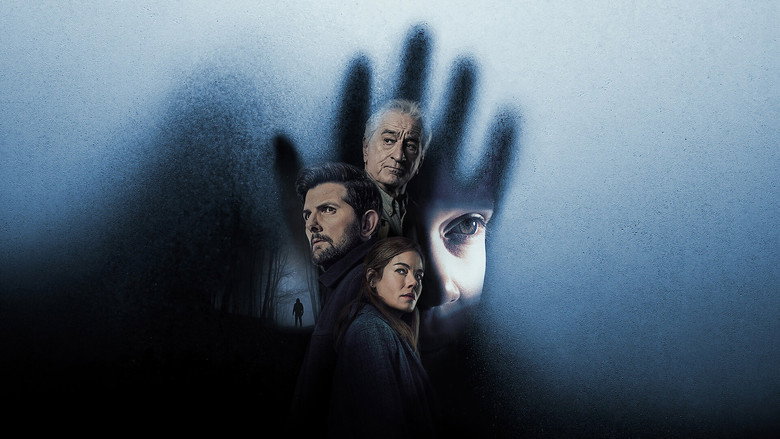
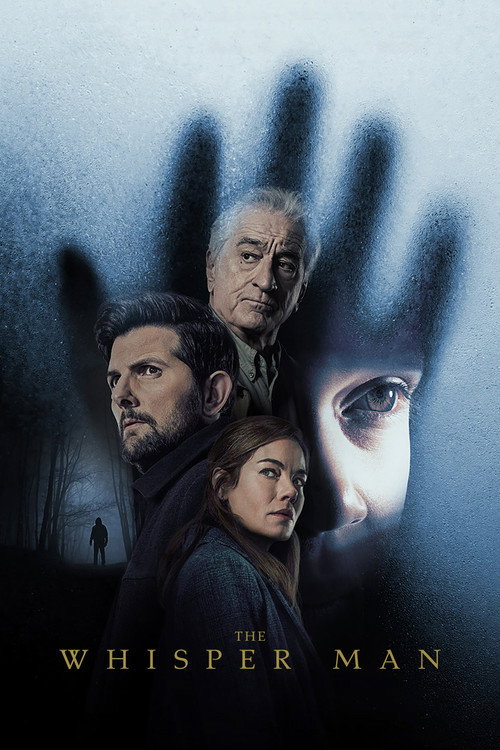
The Whisper Man
A nocturnal psychological thriller wrapped in chilly blue-gray shadows, where generational trauma manifests as a sinister bedtime nursery rhyme tapping at the glass of broken homes.
The Whisper Man

The Whisper Man

"If you leave the door half open, soon you'll hear the whispers spoken."

27 August 2026 United States of America 114 min 6.3 (208)

Director: James Ashcroft

Cast: Adam Scott, Robert De Niro, Michelle Monaghan, Acston Luca Porto, Michael Keaton

Drama Crime Thriller Paternal Legacy and Generational Estrangement Grief, Solitude, and Child Vulnerability Cycles of Violence and Inherited Evil Guilt, Obsession, and the Burden of Memory

Overview

The Whisper Man is a 2026 psychological crime thriller directed by New Zealand filmmaker James Ashcroft, adapted from Alex North's 2019 bestselling novel by screenwriters Ben Jacoby and Chase Palmer. Produced by AGBO for Netflix with a $50 million budget, the film follows Tom Kennedy (Adam Scott), a recently widowed crime novelist struggling to connect with his eccentric eight-year-old son, Jake (Acston Luca Porto). Seeking a fresh start following the tragic death of Jake's mother, father and son relocate to a cavernous old townhouse in the quiet suburban town of Garretton.

Their hope for renewal quickly descends into a nightmare when the town is rocked by child abductions bearing the exact signature of Frank Carter (Michael Keaton)—a notorious serial killer dubbed "The Whisper Man" who lured young boys to their deaths by whispering through their windows and doors. Carter was arrested and imprisoned decades earlier, but Detective Amanda Beck (Michelle Monaghan) realizes an active copycat or accomplice is operating in Garretton.

When young Jake begins hearing voices at his window and mysteriously vanishes into the rainy night, Tom is forced to confront both his deepest parental anxieties and his painful past. Desperate for answers, Tom enlists his estranged father, Pete Willis (Robert De Niro)—the retired detective inspector who caught Frank Carter twenty-five years ago but was left permanently haunted and broken by the cases he could not solve.

Core Meaning

The central thesis of The Whisper Man is that suppressed generational trauma, unresolved grief, and emotional estrangement between fathers and sons create psychological voids through which predatory darkness can enter. Director James Ashcroft frames the horror not merely as an external physical threat from a serial predator, but as an inherited spiritual fracture.

The film conveys that isolation—both emotional and communicative—makes vulnerable individuals targets for manipulation and harm. To protect the future generation, fathers must dismantle emotional walls, confront their past guilt and failures, and achieve reconciliation, highlighting the tragic gray areas of cycles of violence and inherited suffering.

Thematic DNA

Paternal Legacy and Generational Estrangement 35%
Grief, Solitude, and Child Vulnerability 25%
Cycles of Violence and Inherited Evil 20%
Guilt, Obsession, and the Burden of Memory 20%

Paternal Legacy and Generational Estrangement

The narrative explores three generations of fathers and sons: Pete Willis, Tom Kennedy, and young Jake. Pete's historical obsession with the Carter case destroyed his relationship with Tom, while Tom struggles with being an emotionally present father to Jake. This dynamic is mirrored in the killer's toxic, predatory mentorship, highlighting how fatherhood can nurture or destroy.

Grief, Solitude, and Child Vulnerability

The film explores how profound loss leaves children emotionally exposed. Jake's struggle with losing his mother creates an inner loneliness that predatory forces exploit, establishing the vulnerability of the neglected child as the hunting ground for the predator.

Cycles of Violence and Inherited Evil

Evil does not disappear when a criminal is locked in a cage; it radiates outward, shaping protégés and creating generational ripples of trauma. The film questions whether trauma is an inescapable heirloom passed from one generation to the next.

Guilt, Obsession, and the Burden of Memory

Pete's inability to locate the final victim of Frank Carter twenty-five years earlier drove him to alcoholism and ruined his family. The unresolved past remains a living presence until restitution and closure are sought.

Character Analysis

Tom Kennedy

Adam Scott

Archetype: Troubled Father / Reluctant Hero Key Trait: Vulnerability masking an instinct for protective resolve

Motivation

To protect his son Jake, process his grief, and reconcile his identity as a protector.

Character Arc

Begins as an emotionally overwhelmed, disconnected widower and evolves into a fiercely resolute father willing to confront his estranged past and risk his life.

Peter "Pete" Willis

Robert De Niro

Archetype: Haunting Mentor / Regretful Veteran Key Trait: Weary, stoic obsession softened by late-stage grandfatherly love

Motivation

To atone for past family neglect, find closure for the unsolved cases of his past, and save his grandson.

Character Arc

Moves from a weary, isolated, guilt-ridden recluse to active redemption, using his investigative acumen to break the generational curse.

All 5 characters and cast

Symbols & Motifs

The Nursery Rhyme

Meaning:

Embodies suburban dread, folkloric memory, and parental fear of vulnerability, symbolizing how loneliness invites predation.

Context:

Used as an auditory motif heralding the predator's presence, chanted in local folklore and recited by Frank Carter and his protégé.

Cassette Audio Tapes

Meaning:

Symbolize stolen innocence, distorted confessionals, and the calculated weaponization of an intimate whisper.

Context:

Featured as recordings of interviews between the killer and his captive child victims.

Unlatched Windows and Open Mail Slots

Meaning:

Symbolize how emotional gaps in family units permit external evil to intrude into domestic sanctuaries.

Context:

Represented through physical thresholds where latex-gloved fingers or murmured voices slip through the cracks of homes.

The Imaginary Friend / Spectral Girl

Meaning:

Manifests both a child's psychological processing of maternal death and an intuitive defense mechanism.

Context:

Appears through Jake's private conversations with a phantom entity in the old townhouse.

Fingernail Clippings

Meaning:

Represents absolute predatory control, systematic dehumanization, and clinical erasure of evidence.

Context:

Enacted as the killer's ritual of trimming victims' nails so they leave no defensive scratches.

Memorable Quotes

If you leave a door half open, soon you'll hear the whispers spoken. If your window's left unlatched, you'll hear him tapping at the glass. If you're lonely, sad, and blue, the Whisper Man will come for you.
— Folklore / Frank Carter and protégé

Context

Recited in local playground folklore and spoken by Carter and his accomplice.

Meaning

Sets the psychological and supernatural-adjacent dread of the entire narrative, detailing how loneliness invites predation.

The moment that Jake goes missing, the one person who can help is a man I haven't spoken to in twenty-five years.
— Tom Kennedy

Context

Reflected during Tom's realization that he must reach out to his estranged father following Jake's disappearance.

Meaning

Encapsulates Tom's desperate surrender of pride and the painful necessity of confronting family wounds to save his child.

All 4 quotes

Philosophical Questions

Is the instinct for violence inherited biologically, socially cultivated, or spiritually caught?

Explored through Francis Jr.'s grooming under Frank Carter, questioning whether malevolent behavior is an inevitable hereditary consequence or a product of predatory manipulation.

Can parental love atone for decades of abandonment and emotional absenteeism?

Examined via Pete Willis's desperate attempt to redeem his past neglect of Tom by assisting in the rescue of his grandson Jake.

Where does the boundary lie between healthy mourning and an obsession that destroys the living?

Investigated through Pete's lingering obsession with Carter's unsolved cases and Tom's paralyzed state of grief following his wife's passing.

Why are human beings drawn to the macabre and true crime, and at what point does documentation become exploitation?

Reflected through the characters of Tom as a crime novelist and the macabre artifact collector portrayed by Hamish Linklater.

Alternative Interpretations

The narrative invites several distinct analytical readings:

Full ending explanation

Cultural Impact

Released on Netflix on August 28, 2026, The Whisper Man arrived during an era marked by strong audience fascination with true-crime adaptations, suburban gothic thrillers, and generational trauma narratives.

The film reflects broader cultural conversations surrounding the emotional burdens inherited by sons, while exploring the societal appetite for crime procedurals and dark folkloric mythologies.

Audience Reception

The Whisper Man received mixed to moderately positive reviews from critics and audiences.

Praise was centered on the commanding performances of Robert De Niro, Adam Scott, and Michelle Monaghan, along with Michael Keaton's chilling cameo presence. Peter Deming's shadowy cinematography and Colin Stetson's droning score were widely lauded for creating authentic dread. However, several critics noted that the film adheres closely to conventional 1990s serial killer tropes and felt somewhat formulaic compared to Ashcroft's raw indie debut.

Interesting Facts

  • The film marks the sixth major production partnership between Netflix and Joe and Anthony Russo's production company AGBO.
  • Principal photography took place across suburban and wooded locations in New Jersey between April and June 2025.
  • Novelist Alex North publicly praised the screen adaptation, stating: "I have finally seen it on the screen, and I love it, so I'm extremely happy".
  • Director James Ashcroft previously made an international splash with his brutal New Zealand indie thriller Coming Home in the Dark (Sundance 2021) and The Rule of Jenny Pen.
  • The technical ensemble features cinematographer Peter Deming (Mulholland Drive, Twin Peaks: The Return), Oscar-nominated editor Christopher Tellefsen (Capote, Moneyball), and composer Colin Stetson (Hereditary).
  • The film serves as a notable screen reunion for Robert De Niro and Michael Keaton, who previously appeared together in Quentin Tarantino's Jackie Brown (1997).

Easter Eggs

Prison interrogation framing

Pete Willis visiting Frank Carter in prison is an overt visual and narrative homage to Clarice Starling and Hannibal Lecter in Jonathan Demme's The Silence of the Lambs (1991) as well as Will Graham and Hannibal in Michael Mann's Manhunter.

Crime novelist protagonist

Adam Scott's character being a crime author reflects Alex North's real-world experiences balancing fatherhood while conceptualizing dark crime fiction.

Microtonal wind and bass score

Colin Stetson's score utilizes microtonal saxophones and heavy bass vibrations reminiscent of his work on Hereditary and The Menu, reinforcing the auditory motif of whispering wind.

True crime memorabilia collector

Hamish Linklater portrays an eccentric collector of true crime artifacts, serving as a direct nod to real-world "murderabilia" subcultures.

Frequently Asked Questions

Explore More About This Movie

Dive deeper into specific aspects of the movie with our detailed analysis pages

Comments (0)

Leave a comment

No comments yet. Be the first to share your thoughts!

Similar Movies