Descendants 3
"You didn't think this was the end of the story, did you?"
Overview
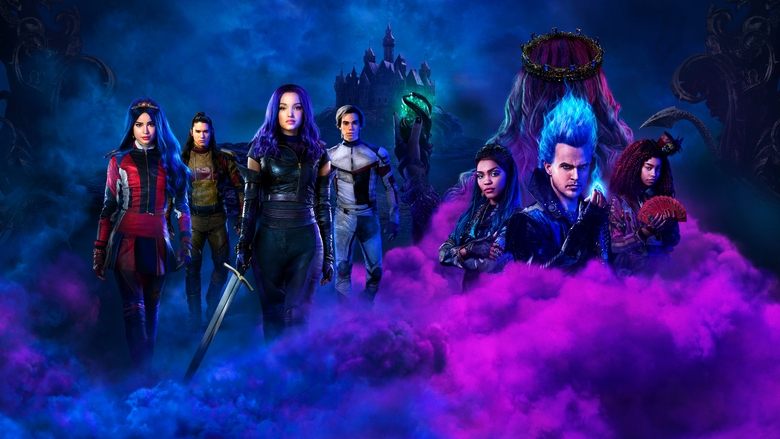
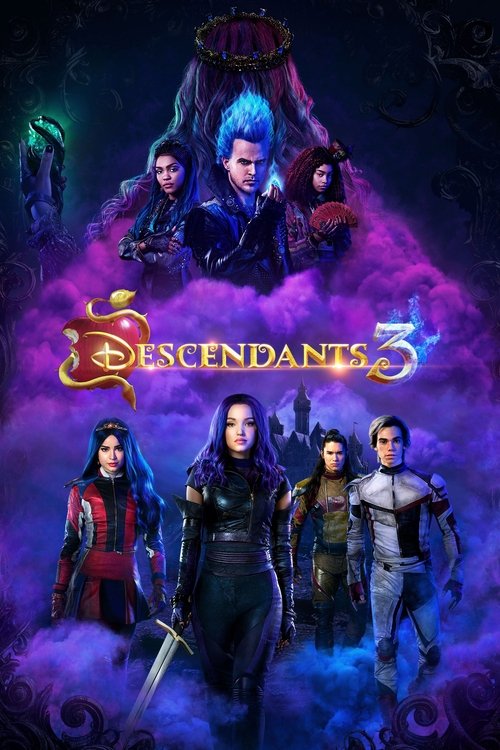
In the vibrant kingdom of Auradon, King Ben and Mal prepare to welcome a new generation of Villain Kids (VKs) from the Isle of the Lost. The celebration is cut short when a dark force threatens the magical borders, forcing Mal to grapple with the heavy responsibilities of her future crown. To protect the kingdom she has grown to love, she makes a drastic decision to close the barrier permanently, unaware of the devastating consequences it will unleash.
As an unexpected evil awakens within the very heart of Auradon, Mal and her closest friends—Evie, Carlos, and Jay—must return to their roots to find the one artifact capable of saving their home. Their journey forces them into an uneasy alliance with old enemies, challenging everything they thought they knew about heroism, villainy, and the true meaning of family. The film culminates in an epic battle that blurs the lines between good and evil, demanding that the characters confront their own inner darkness.
Core Meaning
The core message of Descendants 3 is that morality is not defined by one's birthplace or lineage, but by personal choices and actions. The film boldly deconstructs the binary concepts of "good" and "evil," illustrating that even those raised in privilege can succumb to resentment and darkness, while those born in the shadows are capable of immense heroism and grace. Director Kenny Ortega emphasizes the power of empathy, unity, and tearing down the literal and metaphorical walls that divide society. Ultimately, the film teaches that true peace can only be achieved through radical forgiveness and by embracing the complexity of the human spirit.
Thematic DNA
Deconstruction of Good vs. Evil
The film subverts traditional fairy tale morality by turning Audrey, the "perfect" princess, into the primary antagonist, while the descendants of iconic villains become Auradon's saviors. This illustrates that good and evil are not inherent traits, but conscious choices.
Unity and Tearing Down Walls
Mal's initial impulse to permanently close the barrier out of fear is ultimately recognized as a mistake. The climax centers on the realization that segregation creates more pain, leading to the physical and symbolic destruction of the barrier to merge the two societies.
Identity and Self-Acceptance
Characters like Mal and Evie struggle with reconciling their villainous roots with their new lives in Auradon. Mal's confrontation with her father, Hades, and her acceptance of both her Isle and Auradon identities represent the journey of embracing one's whole self.
Forgiveness and Redemption
The narrative emphasizes second chances, not just for the VKs, but also for antagonists like Uma and Audrey. The heroes learn to forgive past grievances to form necessary alliances, proving that grace is stronger than vengeance.
Character Analysis
Mal
Dove Cameron
Motivation
To protect the people she loves and secure the safety of Auradon, even if it means making painful sacrifices.
Character Arc
Mal starts the film burdened by the fear of failing as Auradon's future Queen, leading her to make the flawed decision to seal the barrier. Through her journey, she learns to embrace her dual nature, realizing she must be the Queen of both Auradon and the Isle.
Evie
Sofia Carson
Motivation
To give other Villain Kids the same second chance she was given and to protect her chosen family.
Character Arc
Evie evolves from a girl obsessed with status and true love to a successful entrepreneur and a fiercely compassionate advocate for the children left behind on the Isle. She serves as the moral compass of the group.
Audrey
Sarah Jeffery
Motivation
To reclaim the throne and the life she believes was unfairly taken from her by Mal.
Character Arc
Driven by jealousy and a sense of stolen destiny, Audrey abandons her "perfect princess" persona to become a dark, vengeful sorceress. Her defeat leads to a humbling realization and eventual redemption.
Carlos
Cameron Boyce
Motivation
To support his friends and maintain the peaceful life he has built in Auradon.
Character Arc
Carlos continues to grow into a confident and caring young man, solidifying his relationship with Jane and acting as a steady, grounding presence for Ben and the other VKs during times of crisis.
Uma
China Anne McClain
Motivation
To ensure that the forgotten kids of the Isle are given justice and an equal voice.
Character Arc
Uma begins still harboring resentment toward Mal, but as they are forced to work together, she learns the value of teamwork. She shifts from a bitter rival to a crucial ally in saving Auradon.
Symbols & Motifs
The Magical Barrier / The Bridge
The magical barrier represents prejudice, systemic segregation, and fear of the unknown. When it is transformed into a bridge, it symbolizes unity, acceptance, and the healing of a fractured society.
Central to the plot, the barrier separates the Isle of the Lost from Auradon. Its opening and closing drive the conflict, culminating in its permanent removal in the final sequence.
Hades' Ember
The ember symbolizes raw power and the legacy of the Isle. It also represents the complicated bond between Mal and her father, showing that even "dark" magic can be used for healing and salvation.
Mal must retrieve the ember to break Audrey's curse. It is the only force strong enough to counter Maleficent's scepter, and it ultimately revives Audrey, proving its dual nature.
Maleficent's Scepter and the Queen's Crown
These items represent the corrupting influence of absolute power and the physical manifestation of Audrey's feelings of entitlement, jealousy, and betrayal.
Audrey steals them from the museum to exact her revenge on Auradon, visually and magically transforming from a classic princess into the "Queen of Mean."
Memorable Quotes
We are all capable of good and bad, no matter which side of the barrier we come from.
— Mal
Context:
Spoken by Mal during the climax as she explains to Ben and the kingdom why she cannot be Queen of Auradon without also being Queen of the Isle.
Meaning:
This quote captures the central thesis of the entire franchise: morality is a choice, not a birthright or predetermined by one's heritage.
I'm so tired of pretending. Where's my happy ending?
— Audrey
Context:
Sung during Audrey's musical number "Queen of Mean" after she decides to embrace her dark side and steal the crown.
Meaning:
It highlights Audrey's profound disillusionment and the toxic pressure of trying to be the "perfect princess" while feeling cast aside.
She may be an evil lunatic, but at least she stuck around.
— Mal
Context:
Mal says this to Hades during their emotional confrontation in his lair on the Isle of the Lost.
Meaning:
Reveals Mal's deep abandonment issues regarding her father while showing a complex, twisted appreciation for her mother's presence.
You never know where the bad is gonna come from... and you never know where the heroes are gonna come from either.
— Mal
Context:
Mal says this to the people of Auradon when defending her realization that the barrier must be brought down forever.
Meaning:
Reinforces the theme that expectations based on lineage, appearance, or birthplace are often flawed and dangerous.
Philosophical Questions
Are individuals bound by the legacy of their parents, or can they forge their own moral path?
The film consistently challenges the concept of determinism. Through characters like Mal and Evie, it argues that a person's moral compass is forged through conscious choices rather than inherited traits or birthplace.
Does the isolation of a group to protect society ultimately create the very evil it seeks to prevent?
The existence of the Isle of the Lost serves as a metaphor for the carceral state and systemic segregation. The film questions whether building literal walls to keep the "bad" out only fosters deeper resentment and suffering.
How should society define and measure justice and redemption?
Hades explicitly points out the hypocrisy of Auradon's justice system when Audrey is instantly forgiven for her catastrophic crimes because she is a "hero," while villains are banished indefinitely. This forces the audience to ponder the biases inherent in societal forgiveness.
Alternative Interpretations
While the film presents Mal's decision to destroy the barrier as a triumph of unity, some audiences and critics interpret the ending as a somewhat naive resolution to complex systemic issues. An alternative reading suggests that the integration of the Isle and Auradon glosses over the deep-seated trauma and rehabilitation needed for the villains and their children, romanticizing the ease with which two highly segregated societies can merge.
Another interpretation focuses on Audrey's arc. While the narrative frames her as a villain who went too far out of jealousy, a more sympathetic reading views her as a victim of Auradon's toxic expectations. From this perspective, Audrey's descent into darkness is an inevitable psychological breakdown caused by a society that demands perfection and unceremoniously discarded her when Ben chose Mal. Her story becomes a critique of the rigid, unforgiving nature of "heroic" royal culture.
Cultural Impact
Descendants 3 served as the emotional culmination of a highly successful Disney Channel franchise that revitalized the Disney Villain IP for a new generation. The film's release in August 2019 was heavily overshadowed by the tragic and sudden death of star Cameron Boyce a month prior. This real-life tragedy transformed the movie's premiere into a massive, collective mourning event for its young audience, giving the film's themes of family, forgiveness, and legacy a profound, bittersweet resonance.
Culturally, the film cemented the franchise's legacy of challenging black-and-white morality, encouraging a nuanced understanding of "good" and "evil" among its younger demographic. By making the "perfect" princess the villain and the marginalized "Villain Kids" the heroes, it offered a progressive commentary on privilege, systemic prejudice, and the importance of tearing down societal barriers. The soundtrack continued the franchise's dominance on the Billboard charts, and the movie's message of inclusivity left a lasting impact on Disney's approach to modern storytelling.
Audience Reception
Audience reception for Descendants 3 was overwhelmingly positive, particularly among the franchise's dedicated fanbase. Viewers highly praised the film's spectacular musical numbers, vibrant costume design, and the satisfying conclusion to the arcs of the main characters. The emotional weight of the film was significantly amplified by the passing of Cameron Boyce, and audiences deeply appreciated the heartfelt tribute to him at the movie's conclusion.
However, the film was not without its criticisms. Some viewers felt that the pacing was occasionally rushed, particularly the suddenness of Mal's decision to close the barrier and the rapid resolution of Audrey's villainous arc. Additionally, older audiences noted that the handling of Hades as Mal's father felt slightly underutilized compared to the build-up. Despite these minor critiques, the overall verdict was that Descendants 3 delivered a powerful, message-driven, and fitting finale to the beloved trilogy.
Interesting Facts
- This was Cameron Boyce's final appearance in a Disney film before his tragic death in July 2019, just a month before the movie premiered.
- The film was dedicated to the memory of Cameron Boyce, with a special tribute broadcast at the end of its premiere on the Disney Channel.
- Director Kenny Ortega is a legendary choreographer and director who also helmed the 'High School Musical' trilogy and 'Hocus Pocus'.
- Cameron Boyce had to have multiple body doubles and a dance double on the sets of the franchise due to strict child labor laws and intense choreography.
- Unlike the first film where Cameron Boyce actually bleached his hair for the role of Carlos, for the sequels he wore a wig or had temporary coloring applied.
- The character Hades is revealed to be Mal's father, a plot twist that was heavily teased at the end of the second film.
- Audrey's transformation into the villain marks a rare instance in the franchise where a character from Auradon with 'good' heritage becomes the primary antagonist.
Easter Eggs
Famous Disney Villains symbols during 'Break This Down'
At the end of the final musical number, 'Break This Down,' signs featuring symbols of iconic Disney Villains are visible. These include references to the Evil Queen, Captain Hook, Cruella De Vil, Ursula, Jafar, Scar, and Dr. Facilier, paying homage to the animated classics that inspired the franchise.
Audrey's multi-colored hair
When Audrey embraces her dark side, her hair features bright pink and blue highlights. This is a subtle visual nod to her grandmother's fairies, Flora and Merryweather, who famously fought over whether Aurora's dress should be pink or blue in the original animated Sleeping Beauty.
Harry Hook's fluffy shirt
In the third movie, Harry Hook wears a puffy, ruffled shirt that closely resembles the iconic costume worn by his father, Captain Hook, in the original animated Peter Pan.
⚠️ Spoiler Analysis
Click to reveal detailed analysis with spoilers
Frequently Asked Questions
Explore More About This Movie
Dive deeper into specific aspects of the movie with our detailed analysis pages
Comments (0)
No comments yet. Be the first to share your thoughts!