Descendants of the Sun
A sweeping military romance where the heat of the battlefield mirrors the intensity of a forbidden love. Amidst dust, bullets, and moral dilemmas, a soldier who kills to protect and a doctor who fights to save lives find a common heartbeat under the blinding Uruk sun.
Descendants of the Sun

Descendants of the Sun

태양의 후예

"A fateful encounter lighting breakup but… destiny never give up."

24 February 2016 — 14 April 2016 South Korea 1 season 16 episode Ended ⭐ 8.4 (779)
Cast: Song Hye-kyo, Song Joong-ki, Kim Ji-won, Jin Goo, Onew
Drama Action & Adventure
Love vs. Ideology (The Soldier and the Doctor) Patriotism and Humanism Sacrifice and Duty Disaster and Resilience

Overview

Descendants of the Sun follows the tumultuous romance between Captain Yoo Si-jin (Song Joong-ki), the leader of a Special Forces unit, and Doctor Kang Mo-yeon (Song Hye-kyo), a principled cardiothoracic surgeon. Their initial spark in Seoul is quickly extinguished by their opposing philosophies: he takes lives to protect the state, while she saves lives at all costs. Fate intervenes when they are reunited in the fictional war-torn country of Uruk, where Si-jin is deployed on a peacekeeping mission and Mo-yeon leads a medical volunteer team.

As they navigate active minefields, natural disasters, and viral epidemics together, their bond deepens beyond physical attraction into a profound mutual respect. The series balances their developing relationship with the secondary romance of Sergeant Major Seo Dae-young and Army Surgeon Yoon Myeong-joo, whose love is tested by military rank and family disapproval. Together, the group faces life-or-death situations that force them to reconcile their duties with their humanity.

The narrative crescendos with high-stakes covert operations, a kidnapping by a former comrade-turned-villain, and a heartbreaking separation where the soldiers are presumed dead. Ultimately, the series concludes with emotional reunions and a reaffirmation of their commitment to both their partners and their respective callings, ending on a lighthearted note that suggests their adventurous lives will continue.
Core Meaning

At its heart, Descendants of the Sun explores the universal value of human life transcending borders, ideologies, and professions. It posits that true patriotism is not just about blind loyalty to a nation, but about the broader humanistic duty to protect peace and save lives, whether through the barrel of a gun or a scalpel. The series harmonizes the conflicting duties of a soldier and a doctor, suggesting that love and humanity are the ultimate forces that bridge the gap between 'killing to protect' and 'saving to heal'.

Thematic DNA

Love vs. Ideology (The Soldier and the Doctor) 35%
Patriotism and Humanism 30%
Sacrifice and Duty 20%
Disaster and Resilience 15%

Love vs. Ideology (The Soldier and the Doctor)

The central conflict drives the narrative: can two people with fundamentally opposing worldviews coexist? Si-jin obeys orders to keep the peace, often requiring lethal force, while Mo-yeon is sworn to the Hippocratic Oath. The series develops this by placing them in extreme situations (like the earthquake) where both roles are essential, eventually leading them to understand that they are fighting for the same goal: the preservation of life and peace.

Patriotism and Humanism

The show redefines patriotism not as political nationalism but as a commitment to humanity. Si-jin frequently disobeys direct orders to do what is morally right (e.g., the Arab VIP surgery standoff), illustrating that protecting the individual is the highest form of serving the state. This theme evolves from blind obedience to a more nuanced, conscience-driven duty.

Sacrifice and Duty

Every character sacrifices personal happiness for the greater good. The soldiers face death daily, while the doctors work in hazardous conditions. The secondary couple, Dae-young and Myeong-joo, specifically highlights the sacrifice of personal pride and rank for love, showing that duty to one's heart is as important as duty to the uniform.

Disaster and Resilience

The Uruk earthquake serves as a crucible that strips away social status and pretenses. It reveals the true character of everyone involved, from the selfish power plant manager to the selfless young doctors. This theme emphasizes human resilience and the capacity for solidarity in the face of overwhelming tragedy.

Character Analysis

Yoo Si-jin (Big Boss)

Song Joong-ki

Archetype: The Knight / Charming Protector
Key Trait: Witty resilience

Motivation

To protect "children, beauties, and the elderly" and defend the peace of the land.

Character Arc

Starts as a mysterious, somewhat playful soldier who hides his trauma behind humor. Through his love for Mo-yeon, he learns to share the burden of his job rather than shielding her completely. He evolves from a soldier who follows orders to a leader who prioritizes moral justice above command, ultimately surviving 'death' to return to his love.

Kang Mo-yeon

Song Hye-kyo

Archetype: The Skeptic / Healer
Key Trait: Principled candor

Motivation

To save lives regardless of who the patient is, and to find a love that respects her values.

Character Arc

Begins as a pragmatic, career-driven surgeon disillusioned by hospital politics. Her time in Uruk transforms her from a doctor seeking profit/status back into a true healer. She struggles to accept Si-jin's dangerous life but eventually chooses to love him courageously, accepting the uncertainty that comes with being a soldier's partner.

Seo Dae-young (Wolf)

Jin Goo

Archetype: The Stoic Loyalist
Key Trait: Silent devotion

Motivation

Loyalty to his commander and protecting Myeong-joo, even if it means pushing her away.

Character Arc

Defined by his rigid adherence to military hierarchy and his suppression of feelings for Myeong-joo due to her father's disapproval. His arc is about breaking free from the shackles of rank to claim his love. He proves that his worth as a man and soldier exceeds his rank, eventually earning the General's respect.

Yoon Myeong-joo

Kim Ji-won

Archetype: The Assertive Lover
Key Trait: Tenacious love

Motivation

To bridge the gap of rank and be with the man she loves.

Character Arc

A soldier and doctor who chases love fearlessly. Unlike the other characters who hesitate, she is relentless. Her journey involves softening her father's heart and proving that her love for Dae-young is not a weakness but a strength. She endures a near-death experience (virus) which solidifies her bond with Dae-young.

Symbols & Motifs

The Sun

Meaning:

Symbolizes selfless heroism and the source of light/warmth for others. Just as the sun shines on everyone equally, the doctors and soldiers strive to protect all people without discrimination.

Context:

Used in the title and visual imagery. The characters are the 'descendants' of this ideal, carrying the torch of humanity in dark places.

White Stone / Pebble from shipwreck

Meaning:

Represents a promise to return. Local legend says if you take a stone from the beach, you will return there.

Context:

Si-jin gives Mo-yeon the stone at the shipwreck beach in Uruk. It becomes a recurring motif of their separation and eventual reunion, symbolizing their inevitable gravitation back to each other.

Military Dog Tags

Meaning:

Symbolizes identity, duty, and the risk of death.

Context:

Si-jin leaves his dog tags with Mo-yeon before dangerous missions. It's a tangible piece of his life that he entrusts to her, signifying that his life is in her hands.

Candles

Meaning:

Symbolize hope and intimacy amidst darkness.

Context:

Mo-yeon places candles around her apartment when Si-jin visits; later, candles are used during emotional conversations in the barracks during blackouts, creating a sanctuary of light in a war zone.

Shoes

Meaning:

Symbolize care and the journey taken together.

Context:

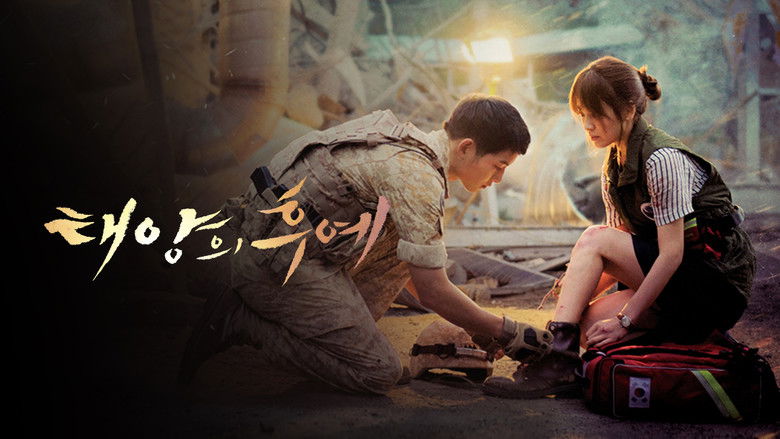
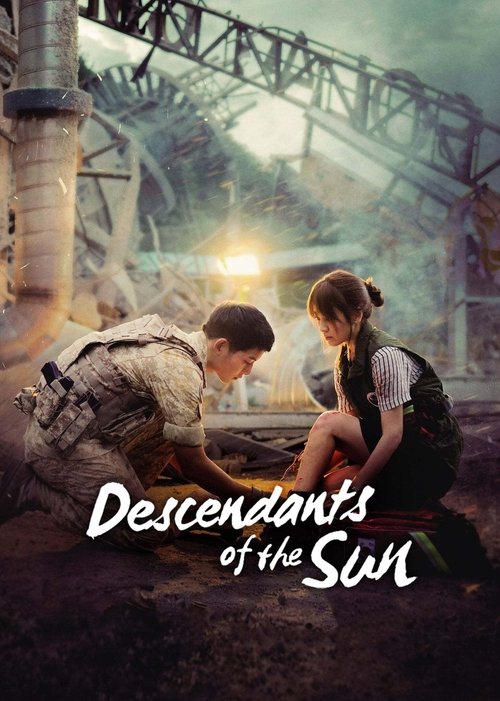
In a poignant scene after the earthquake, Si-jin ties Mo-yeon's shoelaces, acknowledging her hard work and silently promising to support her path.

Memorable Quotes

Protecting beauties, elders, and children is my rule.

— Yoo Si-jin

Context:

Ep. 1 & throughout: Si-jin explains why he fights, using this line to charm Mo-yeon while stating his core philosophy.

Meaning:

Encapsulates Si-jin's personal code of honor. It layers his lethal job with a chivalrous, almost romantic justification, softening his killer image for Mo-yeon.

I hope you don’t think my kiss is bad. I did it after thinking a thousand times.

— Yoo Si-jin

Context:

Ep. 5: After their first kiss (the 'Wine Kiss'), showing his anxiety about her reaction.

Meaning:

A confession of sincerity and hesitation. It reveals that his confident exterior hides a man who is deeply careful and respectful about his feelings for her.

Doctors save lives effectively. I kill to protect lives.

— Yoo Si-jin

Context:

Ep. 2: During their breakup scene in the cafe, where they realize their values are too different.

Meaning:

The core conflict of the series. It starkly contrasts their two worlds, acknowledging the grim reality that peace sometimes requires violence.

Should I apologize... or should I confess?

— Yoo Si-jin

Context:

Ep. 5: The day before he is set to return to Korea, asking Mo-yeon how she wants to define their relationship.

Meaning:

The ultimate romantic ultimatum. He gives her the agency to decide the nature of their relationship—whether the kiss was a mistake or the start of something real.

War is easy while peace is always an issue. Perhaps that's why dictators always live long.

— Yoo Si-jin

Context:

Ep. 3: Discussing the complex political situation in Uruk.

Meaning:

A cynical yet realistic observation on global politics, showcasing the show's underlying political commentary.

Episode Highlights

We Bump into Each Other While Passing By

S1E2

Si-jin and Mo-yeon break up due to ideological differences ('Life vs. Death'). Months later, they coincidentally reunite on the tarmac in Uruk.

Significance:

Sets the stage for the main conflict and establishes the 'fated' nature of their relationship. The visual of the scarf blowing in the wind is iconic.

I Shouldn't Have Received His Apology

S1E6

A massive earthquake hits Uruk. Si-jin returns to lead the rescue. The team faces a choice: save a worker with a high chance of survival or the manager.

Significance:

Pivotal turning point where the romance takes a backseat to humanism. Mo-yeon understands the weight of Si-jin's decisions, and the cast bonds through trauma.

Then Save Him

S1E4

The Arab League Chairman is dying. Si-jin defies direct orders to let Mo-yeon operate, drawing his gun on his own allies to buy her time.

Significance:

Defining moment of 'Humanism over Politics'. Si-jin risks his entire career and life for Mo-yeon's medical principles.

I Will Find a Way to Drink

S1E4

The famous 'Wine Kiss'. Si-jin offers wine to Mo-yeon (he can't drink while on duty) and kisses her.

Significance:

A major romantic milestone that cements their attraction despite the chaos around them.

Who on Earth Stole It?

S1E11

The M3 Virus (fictional Ebola-like virus) outbreak. Myeong-joo is infected while performing surgery. Dae-young breaks quarantine to hold her.

Significance:

Raises the stakes to biological warfare. Highlights the secondary couple's tragic devotion.

This Is Unbelievable

S1E16

The finale. Si-jin returns from being presumed dead for a year. The couples reunite. The team attends a wedding in Canada, interrupted by a volcano report.

Significance:

Provides closure and a happy ending while maintaining the show's spirit of 'duty calls', ending with the team rushing into action.

Philosophical Questions

Can peace be maintained without violence?

The series constantly juxtaposes Mo-yeon's absolute pacifism (saving all lives) with Si-jin's relative pacifism (killing one to save many). It asks if the 'greater good' justifies the moral stain of killing, ultimately suggesting that someone must bear that burden so others can live in peace.

Is love possible between two people with opposing life values?

It explores whether shared chemistry is enough to overcome a fundamental clash in worldview. The show argues that love requires compromise and respect for the other's convictions, rather than one person changing for the other.

Alternative Interpretations

The 'Fantasy' Critique: Critics often analyze the show not as a realistic military drama but as a patriotic fantasy. The ease with which characters travel, the lack of realistic military protocol (e.g., insubordination being romanticized), and the 'immortal' nature of Yoo Si-jin suggest the show functions more as a modern fairy tale or superhero story than a grit-drama.

The Ending as a Cycle: The final scene, where the team rushes to help during a volcano eruption at a wedding, is often interpreted as a meta-commentary breaking the fourth wall. It signifies that for these characters, crisis is normalcy. There is no 'happily ever after' in the traditional sense of settling down; their happiness lies in finding purpose together within the chaos.

Cultural Impact

Descendants of the Sun was a colossal driver of the Hallyu (Korean Wave) resurgence in 2016. Domestically, it achieved peak ratings of 38.8%, a figure nearly impossible in the modern streaming era. Internationally, it was the first K-drama to be aired simultaneously in Korea and China, garnering billions of views on iQiyi. The show's influence was so vast that it reportedly boosted the Korean economy by over 1 trillion won through tourism, product exports (like the lipstick used by Song Hye-kyo), and automotive sales.

Culturally, it sparked discussions on patriotism and military service across Asia. In Thailand, the Prime Minister urged citizens to watch it. The series also set a new standard for pre-produced dramas, proving that the model could be financially successful. The 'Song-Song Couple' phenomenon transcended the screen, becoming one of the most talked-about celebrity news topics of the decade.

Audience Reception

Universal Acclaim & Hype: The series was an instant blockbuster, beloved for its fast-paced plot, high production values, and the electric chemistry of the leads. The witty dialogue ('Kim Eun-sook style') was widely quoted.

Criticism: While fans loved it, critics pointed out the weak plot in the second half, excessive product placement (PPL), and unrealistic medical/military scenarios (e.g., performing surgery in dust storms, surviving multiple gunshot wounds with quick recovery). The 'immortality' of the male lead became a running joke.

Verdict: Despite plot holes, it remains a classic gateway K-drama, praised for its emotional resonance and iconic romantic moments.

Interesting Facts

  • The drama was 100% pre-produced, a rarity in K-dramas at the time (which usually film while airing), allowing for higher production quality.
  • The lead actors, Song Joong-ki and Song Hye-kyo, fell in love during filming and married in real life in 2017 (known as the 'Song-Song Couple'), though they divorced in 2019.
  • Much of the Uruk scenes were filmed in Zakynthos, Greece, specifically at the famous Navagio Beach (Shipwreck Beach).
  • Song Joong-ki injured his arm and knee while filming an action scene, requiring him to wear a cast for the remainder of the shoot (often hidden by camera angles).
  • The series was originally written as a disaster medical drama without a soldier male lead; writer Kim Eun-sook added the military element later.
  • It was a massive cultural phenomenon, credited with boosting the Korean economy and tourism, and even praised by the South Korean President for promoting patriotism.
  • China issued a public security warning about the drama, claiming it was dangerous because women might fall in love with the characters and suffer 'lovesickness'.

Easter Eggs

Cameo by Yoo Ah-in

Famous actor Yoo Ah-in appears as a strict bank teller in Episode 13 who denies Mo-yeon a loan. He is a close friend of Song Hye-kyo in real life.

Lee Kwang-soo Cameo

In Episode 1, Song Joong-ki's best friend Lee Kwang-soo appears as a part-time worker at a shooting arcade.

Red Velvet Performance

The K-pop group Red Velvet performs for the soldiers in the final episode. The scene humorously shows the usually stoic Captain Yoo and Sergeant Seo fanboying wildly, highlighting the immense popularity of K-pop in the military.

Call Signs 'Big Boss' and 'Wolf'

Si-jin's call sign 'Big Boss' and Dae-young's 'Wolf' became iconic cultural references, often used in variety shows and parodies.

⚠️ Spoiler Analysis

Click to reveal detailed analysis with spoilers

Frequently Asked Questions

Explore More About This Movie

Dive deeper into specific aspects of the movie with our detailed analysis pages

Comments (0)

Leave a comment

No comments yet. Be the first to share your thoughts!