Regular Show: The Movie
A sci-fi comedy odyssey where slacker best friends confront a time-shattering mistake, their friendship fracturing and reforming amidst a maelstrom of 80s nostalgia and absurdist chaos.
Regular Show: The Movie

Regular Show: The Movie

"Save the universe from yourselves or you're fired."

01 September 2015 United States of America 69 min ⭐ 7.9 (406)
Director: J.G. Quintel
Cast: J.G. Quintel, William Salyers, Sam Marin, Mark Hamill, Minty Lewis
Animation Family Fantasy Action Comedy Adventure Science Fiction TV Movie
The Fragility and Strength of Friendship Confronting the Past and Accountability Fear of Change and Growing Up Redemption
Budget: $3,000,000

Overview

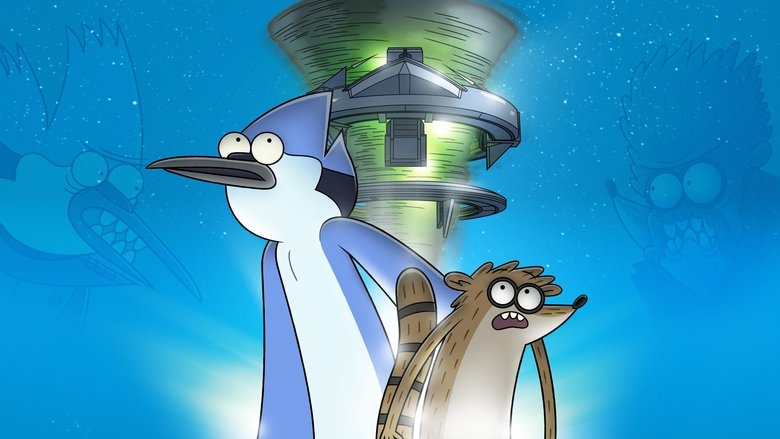
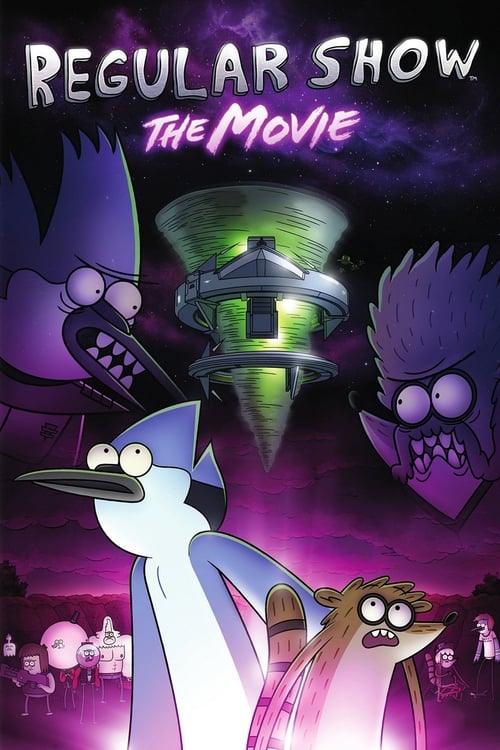
In "Regular Show: The Movie," best friends Mordecai, a blue jay, and Rigby, a raccoon, are faced with a universe-threatening crisis they inadvertently created. A mysterious spaceship crash-lands in their park, carrying a battle-hardened future version of Rigby. He reveals that in high school, he and Mordecai built a time machine that resulted in a "Time-nado," a vortex now being weaponized by their vengeful former volleyball coach, Mr. Ross.

To save existence, the duo and their park colleagues—Benson, Pops, Skips, Muscle Man, and Hi-Five Ghost—must travel back in time to their high school days to destroy the time machine before it can be completed. However, their mission is complicated by their past selves, old high school rivalries, and a darker, cybernetic version of Mordecai from the future who is hell-bent on stopping them.

The journey forces Rigby to confront a long-held secret that threatens to permanently shatter his friendship with Mordecai. The film escalates from a typical slacker adventure into an epic battle for the future, testing the bonds of friendship and forcing the irresponsible duo to finally face the consequences of their actions.
Core Meaning

The core meaning of "Regular Show: The Movie" revolves around the themes of friendship, accountability, and the fear of change. The director, J.G. Quintel, explores the idea that even the strongest friendships can be tested by dishonesty and the reluctance to grow up. The film posits that true friendship requires not just shared fun, but also honesty and the willingness to forgive past wrongs.

Ultimately, the movie's message is that while avoiding responsibility can have catastrophic consequences, it's never too late to own up to your mistakes and fight for the relationships that matter most. It’s a story about realizing that growing up doesn't have to mean growing apart, and that the value of friendship outweighs personal pride and fear.

Thematic DNA

The Fragility and Strength of Friendship 40%
Confronting the Past and Accountability 30%
Fear of Change and Growing Up 20%
Redemption 10%

The Fragility and Strength of Friendship

The central theme is the friendship between Mordecai and Rigby, which is pushed to its breaking point. The entire plot is set in motion by Rigby's fear of losing his best friend, leading him to lie about Mordecai's college acceptance. The film explores how this single act of selfish preservation festers over time, creating a dark future where they are bitter enemies. Their journey to repair the timeline is synonymous with their journey to repair their bond, culminating in forgiveness and a more mature understanding of their friendship.

Confronting the Past and Accountability

The time-travel narrative is a literal vehicle for the characters to confront their past mistakes. Rigby must face the lie he told years ago, a secret that has cosmic ramifications. The film emphasizes that you cannot run from your past and that true growth comes from taking responsibility for your actions. Future Rigby's warning to his present self to "tell the truth" underscores this theme, highlighting that honesty, no matter how painful, is necessary to prevent a disastrous future.

Fear of Change and Growing Up

The movie delves into the anxieties associated with transitioning into adulthood. Rigby's decision to sabotage Mordecai's college plans stems from his fear that their lives will change and he will be left behind. This theme is relatable to many young adults who face the uncertainty of the future and the potential for friendships to drift apart. The film ultimately suggests that while change is inevitable, it doesn't have to be destructive, and that friendships can evolve and endure if both parties are willing to put in the effort.

Redemption

Redemption is a key element, not only for Rigby but also for Future Mordecai. Having become a bitter and cybernetically enhanced villain, Future Mordecai ultimately sacrifices himself to save his present-day counterpart, regretting the path of anger and isolation he chose. This act demonstrates that even those who have gone down the darkest paths can find redemption. Rigby also finds redemption by finally confessing his secret and working to make things right.

Character Analysis

Mordecai

J.G. Quintel

Archetype: The Protagonist/Everyman
Key Trait: Laid-back but with a moral compass

Motivation

Initially, Mordecai is motivated by the desire to save the universe and not get fired by Benson. However, his primary motivation becomes understanding why his future self is evil and, after the big reveal, grappling with Rigby's betrayal. Ultimately, his motivation shifts to saving his friendship with Rigby.

Character Arc

Mordecai begins the film as the more responsible, yet still slacking, of the duo. His arc is one of disillusionment and forgiveness. When he discovers Rigby's betrayal, his trust is shattered, leading to a temporary end of their friendship. Through his encounter with his bitter future self and a heartfelt apology from Rigby, Mordecai learns to forgive and understands that their friendship is more important than a past opportunity. He matures by accepting Rigby's flaws and reaffirming their bond.

Rigby

William Salyers

Archetype: The Lancer/The Catalyst
Key Trait: Impulsive and insecure, but deeply loyal

Motivation

Rigby's main motivation is to save the universe and, more importantly, his friendship with Mordecai. He is driven by the warning from his future self and the immense guilt he carries. His actions are aimed at preventing the dark future he witnessed and earning back Mordecai's trust.

Character Arc

Rigby's arc is the emotional core of the film. He starts as his usual impulsive and irresponsible self, but is burdened by the secret of his past deception. His journey is one of guilt, confession, and redemption. He is forced to confront the severe consequences of his actions and must find the courage to tell Mordecai the truth, even at the risk of losing him forever. By the end, Rigby takes responsibility for his mistake and understands the true meaning of friendship.

Mr. Ross (Lord Ross)

Jason Mantzoukas

Archetype: The Vengeful Villain
Key Trait: Obsessive and vengeful

Motivation

Mr. Ross is solely motivated by revenge. He wants to punish Mordecai and Rigby for costing him the state volleyball championship and his job. This desire for vengeance consumes him, leading him to want to destroy the entire timeline as the ultimate act of retribution.

Character Arc

Mr. Ross is a fairly static character whose arc is one of escalating vengeance. He begins as a disgraced high school volleyball coach who blames Mordecai and Rigby for ruining his life and getting him arrested. In the future, he becomes the tyrannical Lord Ross, obsessed with using the Time-nado to erase the timeline. His arc is resolved not through his own growth, but by the heroes changing the past to prevent his turn to villainy in the first place.

Future Mordecai

J.G. Quintel

Archetype: The Fallen Hero
Key Trait: Bitter and regretful

Motivation

Initially, Future Mordecai is motivated by a deep-seated grudge against Rigby. He believes Rigby ruined his life and is determined to ensure the timeline where their friendship ends remains intact. His motivation shifts to regret and a desire for his past self to make a different choice.

Character Arc

Future Mordecai's arc is a tragic one of redemption. Embittered by Rigby's past betrayal, he has become a cold, cybernetic warrior allied with Lord Ross. He initially works against his past self, but seeing the events unfold again and witnessing the potential for forgiveness, he has a change of heart. He sacrifices himself to save his younger self, admitting his regret over letting their friendship die.

Symbols & Motifs

The Time-nado

Meaning:

The Time-nado is a physical manifestation of the chaos and destruction caused by Rigby's lie. It represents how a single act of deceit can spiral out of control, creating a vortex of negative consequences that affects not just the individuals involved, but the entire universe. It symbolizes the destructive power of unresolved issues and the far-reaching impact of a broken friendship.

Context:

The Time-nado is the central threat of the movie, created by Mordecai and Rigby's high school time machine experiment. Mr. Ross harnesses its power, but its origins are directly tied to the fracture in Mordecai and Rigby's friendship. Destroying the Time-nado is not just about saving the universe, but about healing the rift between the two friends.

Future Mordecai and Rigby

Meaning:

The future versions of Mordecai and Rigby symbolize the potential dark paths that the characters could take if their friendship is permanently broken. Future Mordecai represents bitterness, isolation, and regret, while Future Rigby embodies a desperate and tragic attempt to right past wrongs. They serve as a cautionary tale about what the main characters could become if they fail to reconcile.

Context:

They appear at the beginning of the film in a futuristic battle against each other. Future Rigby travels to the past to warn his younger self, while Future Mordecai acts as an antagonist for a significant portion of the movie. Their eventual fates serve as a powerful motivation for their present-day selves to choose a different path.

College University Rejection/Acceptance Letter

Meaning:

The letters symbolize the crossroads of life and the fear of diverging paths. For Mordecai, the acceptance letter represents a future of new opportunities and personal growth. For Rigby, Mordecai's acceptance and his own rejection represent the terrifying prospect of being left behind. The forged rejection letter is a physical symbol of Rigby's lie and his attempt to halt the natural progression of their lives.

Context:

The truth about the letters is the central secret that Rigby must reveal. The climax of the film's emotional conflict occurs when Rigby is forced to confess that he created a fake rejection letter for Mordecai to prevent him from going to college.

Memorable Quotes

YOU'RE THE REASON I'M STUCK IN THIS DEAD END JOB!!!

— Mordecai

Context:

Mordecai screams this at Rigby immediately after Rigby confesses to creating the fake college rejection letter. This outburst leads to Mordecai declaring that Rigby is not his friend and Rigby fleeing in the timeship.

Meaning:

This quote is the culmination of Mordecai's anger and sense of betrayal upon learning about Rigby's deception. It encapsulates years of unspoken resentment and the feeling that his potential was stifled by his friend's actions. It's a raw and powerful moment that marks the lowest point in their friendship.

I take work at a lame job at a park with my best friend, any day.

— Mordecai

Context:

Mordecai says this to Rigby in the future after they have reconciled and are working together to stop Lord Ross. It is his way of telling Rigby that he has forgiven him and values their friendship above all else.

Meaning:

This line signifies Mordecai's forgiveness and his realization of what truly matters to him. He acknowledges that while his life may not have gone as planned, the friendship he shares with Rigby is more valuable than any alternate future he might have had. It's the moment their fractured bond is healed.

You have to tell the truth. Even if it means losing Mordecai.

— Future Rigby

Context:

The mortally wounded Future Rigby delivers this warning to his present-day self shortly after crash-landing in the park. This foreshadows the big reveal and becomes Rigby's guiding, albeit difficult, mission throughout the movie.

Meaning:

This is a crucial piece of advice that sets the emotional stakes for the entire film. It highlights the central conflict Rigby faces: the choice between maintaining a friendship built on a lie or risking it all for the truth. It underscores the theme of accountability and the necessity of facing one's past.

Philosophical Questions

To what extent are we defined by our past mistakes?

The film deeply explores this question through Rigby's character. His single lie in high school snowballs into a universe-threatening event, suggesting that our past actions can have unforeseen and massive consequences. However, the film ultimately argues that we are not irrevocably defined by our mistakes. Through his confession, apology, and actions to right his wrongs, Rigby demonstrates that one can overcome past failings. The redemption of Future Mordecai further supports this, showing that even a life of bitterness can end in a moment of selfless redemption.

Is it better to preserve a comfortable present or embrace an uncertain future?

This question is at the heart of Rigby's initial conflict. He chooses to preserve the comfortable present of his friendship with Mordecai by lying, thereby avoiding the uncertain future of being separated by college. The film's entire plot serves as an argument against this choice, illustrating that artificially preserving the present can lead to a stagnant and ultimately destructive future. The narrative champions the idea that embracing the future, with all its uncertainties and potential for change, is essential for growth, both for individuals and their relationships.

What is the true value of friendship?

"Regular Show: The Movie" posits that the true value of friendship lies not just in shared experiences and fun, but in honesty, forgiveness, and mutual support during times of change. Future Mordecai's dying words, where he regrets his successful career because it cost him his friendship, highlight this theme. He realizes too late that his bond with Rigby was more valuable than any personal achievement. The film concludes that a "lame job" with a best friend is preferable to a lonely and bitter existence, emphasizing that meaningful relationships are the cornerstone of a happy life.

Alternative Interpretations

One of the most prominent alternative interpretations of "Regular Show: The Movie" is viewing the entire narrative as a metaphor for the anxieties of entering adulthood. In this reading, the "Time-nado" isn't just a sci-fi plot device but a symbol of the overwhelming and chaotic feelings associated with major life changes. Rigby's fear of Mordecai going to college is a stand-in for the real-world fear of friendships changing and being left behind as peers move on to different stages of life.

The dark future, with a bitter, cybernetic Mordecai and a desperate Rigby, can be interpreted as a symbolic representation of what can happen when people lose touch with their friends and their youthful optimism. It's a cautionary tale about the dangers of letting regret and resentment define one's adult life. The film's resolution, where they fix the timeline, can be seen as a metaphor for the conscious choice to maintain friendships and stay true to oneself despite the pressures of growing up.

Cultural Impact

"Regular Show: The Movie" primarily impacted the existing fanbase of the television series, serving as a highly anticipated feature-length extension of the show's universe. For fans, it provided a deeper, more emotional exploration of the central friendship between Mordecai and Rigby, something the shorter, more episodic format of the show couldn't delve into as deeply. The movie was well-received by this audience for staying true to the show's signature blend of surreal humor, 80s nostalgia, and relatable slacker characters.

While it didn't have a wide-reaching cultural impact on the level of a major theatrical animated release, its limited theatrical run and subsequent television premiere were significant for Cartoon Network at the time. It demonstrated the viability of creating more mature, emotionally complex narratives within the framework of their established comedies. The film's themes of growing up and the anxieties of young adulthood resonated with its millennial audience, who had grown up with the characters.

Critically, the film was seen as a successful and entertaining expansion of the series, praised for its humor and heart, though it was also noted that it largely appealed to those already familiar with the show. Its nomination for a Best Animated Feature Oscar, while a long shot, brought a degree of prestige and recognition to the franchise outside of its usual television sphere.

Audience Reception

The audience reception for "Regular Show: The Movie" was overwhelmingly positive, particularly among fans of the series. Viewers praised the film for retaining the show's unique humor, surreal action sequences, and loveable characters while also delivering a more emotionally resonant and high-stakes story. Many fans appreciated the deeper dive into Mordecai and Rigby's friendship, with the emotional climax and Mordecai's eventual forgiveness of Rigby being frequently cited as a highlight.

The main points of praise focused on the successful expansion of the show's formula to a feature length, the engaging time-travel plot, and the satisfying character development for the two leads. The film was often described by viewers as feeling like an epic, extended episode that did justice to the source material. There was very little criticism from the target audience, though some casual viewers noted that the plot could be chaotic and that a prior familiarity with the characters enhanced the viewing experience. Overall, the consensus among fans is that it is a well-crafted and emotionally satisfying film that serves as a high point for the franchise.

Interesting Facts

  • The movie is considered canon and takes place between the season seven episodes "Dumptown U.S.A." and "The Parkie Awards".
  • Production of the film affected the sixth season of Regular Show, which had a reduced episode count as a result.
  • A normal 11-minute episode of the show took about nine months to complete, while the movie took two and a half years.
  • The film was given a limited theatrical release, making it the third film based on a Cartoon Network series to be released in theaters.
  • The movie was nominated for a Best Animated Feature Oscar, though it did not win.
  • The character of Mr. Ross was inspired by supervising producer Sean Szeles' own high school volleyball coach.
  • J.G. Quintel has stated that the core idea for the movie was to explore a situation where Mordecai and Rigby's seemingly unbreakable friendship was in real danger.

Easter Eggs

References to "Back to the Future"

The film contains numerous homages to the classic time-travel movie "Back to the Future." The entire plot of going back in time to fix a mistake made in the past mirrors the premise of the 1985 film. The use of a time-traveling vehicle and the potential to erase oneself from existence are also direct nods.

Wes Anderson High School

The high school that Mordecai and Rigby attended is named "West Anderson High." This is a reference to the film director Wes Anderson. J.G. Quintel has mentioned in interviews that Anderson's film "Rushmore" is one of his favorites.

Techmo's Appearance

Techmo, a recurring character from the series who is a friend of Skips, makes a surprise appearance during the final battle to help Mordecai and Rigby. His inclusion is a fun callback for long-time fans of the show.

Father Time Cameo

Father Time, another character from the series, has a brief but important cameo. Rigby encounters him when he attempts to fly into the sun. This appearance serves as a nod to a previous episode where Mordecai accidentally "killed" him.

⚠️ Spoiler Analysis

Click to reveal detailed analysis with spoilers

Frequently Asked Questions

Explore More About This Movie

Dive deeper into specific aspects of the movie with our detailed analysis pages

Comments (0)

Leave a comment

No comments yet. Be the first to share your thoughts!