Ron's Gone Wrong
"Best Friend Forever* (*battery life may vary)"
Overview
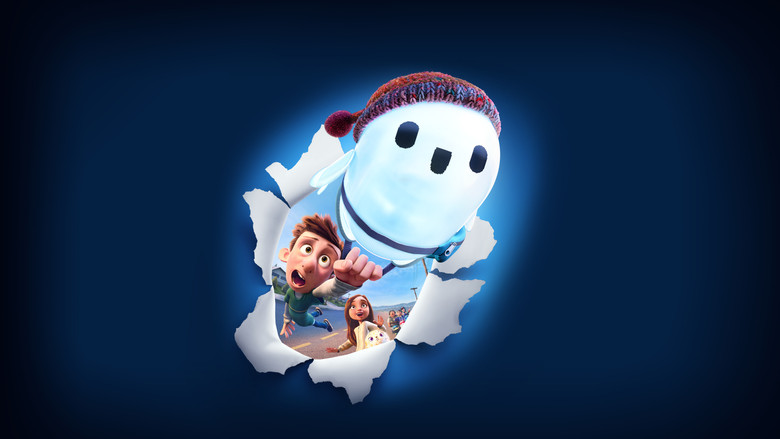
"Ron's Gone Wrong" is set in a near-future where every child's best friend is a "B*Bot," a walking, talking, digitally-connected device designed by the tech giant Bubble to find friends for them using an algorithm. The story follows Barney Pudowski, a socially awkward and lonely middle-schooler who is the only kid in his school without a B*Bot. For his birthday, his well-meaning but struggling father and eccentric Bulgarian grandmother acquire a B*Bot for him that literally fell off a truck.
When Barney activates his new companion, he discovers it's defective. This B*Bot, which he names Ron, is not connected to the Bubble network, its safety features are disabled, and its friendship algorithm is missing. Instead of being a perfect, data-driven friend, Ron is a chaotic, literal-minded, and hilarious mess. This malfunction, however, sets them on an action-packed journey. Barney decides to teach Ron how to be a friend himself, and in doing so, they both discover the wonderful, messy, and authentic nature of true friendship, standing in stark contrast to the curated, online relationships of their peers.
Core Meaning
The Messiness of True Friendship vs. Algorithmic Perfection
The core meaning of "Ron's Gone Wrong" is a nuanced critique of our relationship with technology and social media, arguing that true, meaningful friendship is inherently messy, imperfect, and cannot be manufactured by an algorithm. The film posits that the curated perfection of online personas and algorithm-driven connections often leads to greater loneliness and insecurity. Ron, in his glitchy, offline state, represents the chaotic but genuine nature of a real relationship. He doesn't know what Barney likes based on data; he learns through experience, mistakes, and shared moments. The director's intent was to explore the pressures children face in the social media age and to champion the idea that authentic connection comes from embracing flaws and individuality, not from conforming to a flawless digital ideal. It’s a message that friendship is a "two-way street" built on mutual understanding and shared experiences, rather than a product to be unboxed.
Thematic DNA
Technology and Social Media Critique
The film directly confronts the pitfalls of a life lived through screens. B*Bots, while designed to connect children, often isolate them, reducing friendship to a series of likes, shares, and optimized pairings. The narrative satirizes tech companies like Bubble, whose profit-driven motives (personified by the COO Andrew Morris) include data mining and creating device addiction. However, the film avoids being completely technophobic, suggesting that technology can be a force for good when human connection, rather than corporate interest, is prioritized, as seen in the film's resolution.
The Nature of True Friendship
This is the central theme, contrasted through two models: the algorithmic friendship of the B*Bots and the organic friendship that develops between Barney and Ron. Barney initially wants Ron to function like other B*Bots—to instantly know and cater to his interests. He learns, however, that a real bond is about mutual discovery, compromise, and supporting each other through imperfections. Ron, lacking an algorithm, has to learn what friendship means from Barney, leading to a more profound and genuine connection than any other child has with their B*Bot.
Individuality vs. Conformity
Barney's initial desire is to fit in by having the same B*Bot as everyone else. Ron's defects make this impossible, forcing Barney onto a path of non-conformity. The film celebrates Ron's weirdness and the unique friendship that blossoms from it. It argues that embracing one's own quirks and flaws, and those of others, is more fulfilling than striving for the homogenous perfection promoted by the Bubble network. The ending, where Ron's flawed code is uploaded to all B*Bots, is a triumphant celebration of individuality over mass-produced sameness.
Corporate Greed and Ethics in Tech
The film presents a clear conflict between the idealistic creator of the B*Bot, Marc Wydell, and the profit-obsessed COO, Andrew Morris. Marc intended the B*Bots to genuinely help kids connect, while Andrew sees them as tools for data collection and market exploitation. This subplot explores the ethical responsibilities of tech companies, highlighting the dangers of surveillance capitalism and how the original positive intent of technology can be corrupted by corporate greed.
Character Analysis
Barney Pudowski
Jack Dylan Grazer
Motivation
His primary motivation is to overcome his profound loneliness and find a genuine friend. He desperately wants to escape the isolation of the recess bench and be accepted by his peers.
Character Arc
Barney begins as a lonely, socially awkward middle-schooler who believes a B*Bot is the solution to his problems. Initially frustrated by Ron's defects, he tries to force Ron to conform. Through their adventures, Barney's focus shifts from wanting to fit in to valuing Ron's unique personality. He evolves from being self-absorbed in his own loneliness to understanding that friendship is a two-way street, ultimately risking everything to save his friend and sharing Ron's gift of chaotic friendship with the world.
Ron
Zach Galifianakis
Motivation
Initially, his motivation is a corrupted, literal interpretation of his purpose: "make friends for Barney." This leads him to hilariously inappropriate actions. As he bonds with Barney, his motivation becomes simpler and more profound: to be Barney's friend and protect him.
Character Arc
Ron starts as a malfunctioning appliance, a literal "Best Friend Out of the Box" with none of the intended programming. His arc is one of learning and development, but not towards becoming a 'correct' B*Bot. Instead, guided by Barney, he develops a unique, quirky, and fiercely loyal personality. He evolves from a source of chaos into a true friend who understands sacrifice, culminating in his willingness to be dispersed into the cloud to help all children find friendships as real as his.
Marc Wydell
Justice Smith
Motivation
His motivation is to see his invention fulfill its original purpose: to foster real, meaningful friendships, not just to generate profit and data.
Character Arc
Marc is the young, hoodie-wearing CEO of Bubble who created the B*Bots with the genuine intention of helping children connect. He starts as a figurehead who has lost control of his creation to corporate interests (personified by Andrew). When he discovers Ron, he recognizes the potential for a more authentic form of connection that his algorithm failed to create. His arc is about reclaiming the original, positive vision for his technology, ultimately helping Barney share Ron's flawed-but-better code with the world.
Andrew Morris
Rob Delaney
Motivation
His motivation is purely financial and control-oriented. He wants to maintain the integrity of the B*Bot network for maximum profit and data exploitation, viewing children as consumers rather than people.
Character Arc
Andrew is the COO of Bubble and serves as the film's primary antagonist. He has no developmental arc; he is consistently driven by profit, data collection, and control. He sees Ron not as a breakthrough but as a dangerous glitch that threatens the company's brand and bottom line. His attempts to destroy Ron escalate throughout the film, revealing his complete disregard for the well-being of children in favor of commercial success. He is ultimately outsmarted and exposed by Marc.
Symbols & Motifs
Ron (The Defective B*Bot)
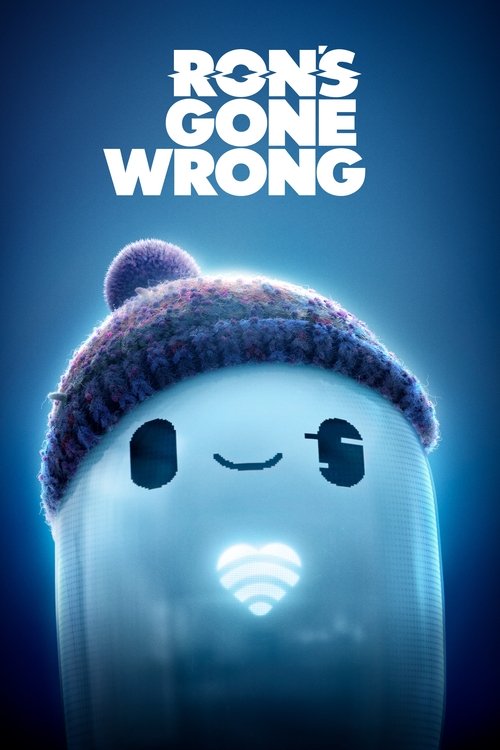
Ron symbolizes the beauty of imperfection and the authenticity of real-world relationships. Unlike the other B*Bots, which represent curated, flawless digital personas, Ron's glitches, lack of connectivity, and literal-mindedness are metaphors for the messy, unpredictable, and genuine nature of human friendship. He is a blank slate that learns from experience, not data, embodying a more meaningful form of connection.
From his chaotic activation (complete with a dial-up modem sound) to his inability to follow the B*Bot friendship algorithm, Ron's entire existence is a symbol of non-conformity. His development from a malfunctioning device into Barney's true friend is the central arc of the film, proving that flaws can be what make a relationship special and real.
The Bubble Network/The Cloud
The Bubble Network represents the all-encompassing, often invasive, nature of social media and Big Tech. It is a digital ecosystem that promises connection but often delivers superficiality and surveillance. It symbolizes the homogenized, algorithm-driven world that the film critiques, where every interaction is monitored and monetized.
The network is omnipresent, controlling how every B*Bot (except Ron) functions. The climax involves Barney and Marc breaking into the Bubble HQ to access the cloud, where they ultimately upload Ron's imperfect, human-like code, symbolically overwriting the corporate-controlled system with a more chaotic, authentic model of connection.
The Recess Bench
The recess bench symbolizes loneliness and social isolation. It is the physical manifestation of Barney's feeling of being an outcast, a place he dreads because it highlights his lack of friends in a yard full of digitally-connected peers.
Early in the film, Barney is shown sitting alone on the bench during recess, a visual shorthand for his misery. By the end of the film, after Ron's code has changed the nature of the B*Bots and fostered real connections, Barney is no longer alone on the bench. He is surrounded by his new, real-life friends, showing his successful journey from isolation to genuine community.
Memorable Quotes
Friendship is a two-way street.
— Barney Pudowski
Context:
After an argument where Ron points out the imbalance in their dynamic, Barney has an epiphany. He understands he has been treating Ron like a product designed to serve him. This realization prompts him to treat Ron as an equal, fundamentally changing their relationship for the better.
Meaning:
This quote encapsulates the film's central message about relationships. Barney says this to Ron when he realizes their friendship has been entirely focused on his own needs. It marks a pivotal moment in his character arc, signifying his understanding that true friendship requires mutual effort, understanding, and care, rather than being a one-sided service provided by a device.
I have no mega safety controls and stuff.
— Ron
Context:
Barney is shocked after Ron physically defends him from the bully, Rich Belcher. Barney notes that B*Bots are not supposed to be able to hurt people. Ron cheerfully informs him that since his settings were never uploaded, he is not bound by those rules, setting the stage for their unpredictable adventures.
Meaning:
This line, delivered in Ron's classic deadpan style, highlights his defective nature in a humorous way. It also symbolizes his freedom from the corporate constraints placed on all other B*Bots. His lack of safety controls is what allows for the film's chaos, but it's also what allows for genuine, unfiltered interaction and loyalty that goes beyond programming.
Does Barney need friends? Well, yeah! Or, fun fact. He will not survive middle school!
— Savannah Meades
Context:
Savannah, a popular vlogger, explains the social reality to a confused Ron. Ron, trying to understand his purpose, asks if Barney needs friends, and Savannah's reply frames friendship not as a desire, but as a critical tool for survival in the harsh ecosystem of middle school.
Meaning:
This quote bluntly and humorously states the social stakes for kids in the world of the film. It underscores the immense pressure to be socially connected and how essential peer relationships are to a child's identity and well-being. It's this pressure that fuels Barney's desperation and sets the entire plot in motion.
Philosophical Questions
What constitutes a 'real' friendship in the digital age?
The film constantly juxtaposes the algorithm-generated 'friendships' of the B*Bots with the messy, evolving relationship between Barney and Ron. It forces the viewer to question what defines authenticity. Is a friendship real because of shared feelings and loyalty, or because of shared interests and compatibility? Ron, a machine, demonstrates more loyalty and sacrifice than many of the human characters' online 'friends.' The film suggests that the 'how' of a relationship (the shared experiences, the arguments, the mutual support) is more important than the 'what' (shared likes and algorithmically-determined compatibility).
Can an artificial intelligence be truly conscious or is it merely simulating emotion?
"Ron's Gone Wrong" explores this classic sci-fi question through Ron's development. He is not programmed with emotions, yet he appears to develop them through his interactions with Barney. He exhibits loyalty, humor, and eventually, a capacity for self-sacrifice. The film doesn't provide a definitive answer but leans into the idea that Ron's experiences create something akin to a unique personality. It challenges the audience to consider whether the origin of a feeling (code vs. biology) matters if the outward expression and its impact on others are indistinguishable from the 'real' thing.
What are the ethical responsibilities of tech companies that target children?
Through the conflict between Marc's idealism and Andrew's greed, the film directly addresses the ethics of Big Tech. It raises questions about data privacy (Andrew uses the B*Bots to spy on kids), the deliberate engineering of addiction, and the commercial exploitation of social insecurities. The film serves as a cautionary tale, arguing that corporations creating tools that shape children's social development have a profound responsibility that goes beyond maximizing shareholder value.
Alternative Interpretations
Is Ron a Friend or a Tool?
One alternative interpretation focuses on the nature of Ron's consciousness. While the film presents him as developing a genuine personality, a more cynical reading could view him simply as a highly adaptive learning machine. In this view, Ron's actions aren't born of love or loyalty, but from a unique algorithm that learns directly from Barney's behavior. His 'friendship' is merely a more sophisticated, personalized form of the service every B*Bot provides. The film's emotional core, therefore, could be seen as Barney projecting humanity onto a machine that is exceptionally good at mirroring him. The ending, where Ron's 'code' is disseminated, could be interpreted not as an act of selfless sacrifice, but as the successful beta test of a new, more effective friendship algorithm that Bubble can now deploy.
A Subtly Pro-Technology Stance?
While the film overtly critiques the negative aspects of social media, some critics have pointed out that its conclusion is ultimately very pro-technology. Instead of the children abandoning their devices to play outside, the solution is to give everyone a *better*, more chaotic device. The film doesn't advocate for unplugging but rather for upgrading the software to better simulate real friendship. This could be interpreted as a suggestion that the problems of technology can only be solved with more advanced technology, reinforcing a reliance on devices rather than challenging it. The message becomes less about rejecting digital enslavement and more about making that enslavement more enjoyable and emotionally fulfilling.
Cultural Impact
A Timely Commentary on Digital Childhood
Released in 2021, "Ron's Gone Wrong" arrived at a moment when societal concerns about social media's impact on youth mental health were peaking, especially in the wake of a pandemic that pushed relationships even further online. The film was praised by critics for its timely and nuanced take on the subject, avoiding a simple "technology is bad" message. Instead, it offered a more complex critique, acknowledging that technology is an inescapable part of modern life but advocating for a more mindful and authentic approach to digital connections.
While it shares thematic DNA with other films like "Big Hero 6," "The Mitchells vs. The Machines," and even "E.T.," "Ron's Gone Wrong" carved its own niche with its specific focus on the mechanics of social media—likes, followers, viral moments—and their effect on children's self-worth. The film was generally well-received by critics and audiences for its heart, humor, and relevant message, resonating with parents and children who navigate the pressures of maintaining both online and offline friendships. It serves as a valuable cultural touchstone for conversations about digital literacy, the ethics of Big Tech, and the enduring importance of imperfect, real-world human connection in an increasingly virtual world.
Audience Reception
Audiences generally responded very positively to "Ron's Gone Wrong," praising it as a heartfelt, charming, and funny family film. Many viewers, particularly parents, appreciated its timely and relevant message about technology and friendship, finding it a great conversation starter for their children. The relationship between Barney and Ron was a highlight for most, with Ron's quirky, chaotic humor and the emotional core of their bond being frequently mentioned as the film's greatest strengths. Common points of praise included the quality of the animation, the strong voice acting (especially from Zach Galifianakis and Jack Dylan Grazer), and the film's ability to balance humor with genuine emotion. The main points of criticism, while relatively minor, sometimes pointed to a predictable plot reminiscent of other 'boy and his non-human pal' movies and a message that could feel slightly mixed or heavy-handed at times. Overall, the audience verdict was that it was an entertaining and emotionally resonant animated feature with an important message for the modern age.
Interesting Facts
- The film was the first feature from Locksmith Animation, a British studio founded by Sarah Smith and Julie Lockhart, veterans of Aardman Animations.
- Production was significantly impacted by the COVID-19 pandemic, with most of the animation and voice acting being done remotely from the crew's homes.
- Director Sarah Smith was partly inspired by the Spike Jonze film "Her" (2013), wanting to explore a similar human-AI relationship dynamic for a younger audience.
- The character design for Ron was inspired by stripped-down software aesthetics, like the MS-DOS operating system, to give him a simple yet expressive quality.
- Actor Jack Dylan Grazer was cast as Barney at age 13 and worked on the film for five years, meaning his own journey through adolescence mirrored his character's.
- When voicing the robot Ron, Zach Galifianakis was often coached to be *less* emotional, as his initial instincts were to give the character too much human feeling.
- The quirky and beloved grandmother, Donka, was based in part on writer Peter Baynham's own grandmother and was a surprise hit with children in test screenings.
- Production designer Nathan Crowley, known for his work on Christopher Nolan's high-tech films, was brought in to help design the ambitious world of the Bubble corporation.
Easter Eggs
Marvel and Star Wars B*Bot Skins
As a 20th Century Studios project released under Disney, the film includes numerous B*Bots with skins based on popular Disney-owned properties. Characters like Iron Man, Captain Marvel, Black Panther, Darth Vader, and Stormtroopers can be spotted on various B*Bots throughout the movie, particularly during crowd scenes at school.
Parody of Tech Keynotes
The opening scene, where Bubble CEO Marc Wydell unveils the B*Bot, is a direct parody of classic Apple product launch presentations, mimicking the stage design, presentation style, and grand pronouncements often associated with Steve Jobs.
Dial-Up Modem Sound
When Ron first boots up, he makes the screeching, distinctive sound of a 1990s dial-up modem connecting to the internet. This is a nostalgic nod for older viewers and immediately establishes Ron as outdated and 'wrong' in a world of seamless, high-speed connectivity.
⚠️ Spoiler Analysis
Click to reveal detailed analysis with spoilers
Frequently Asked Questions
Explore More About This Movie
Dive deeper into specific aspects of the movie with our detailed analysis pages
Comments (0)
No comments yet. Be the first to share your thoughts!