Skip to content
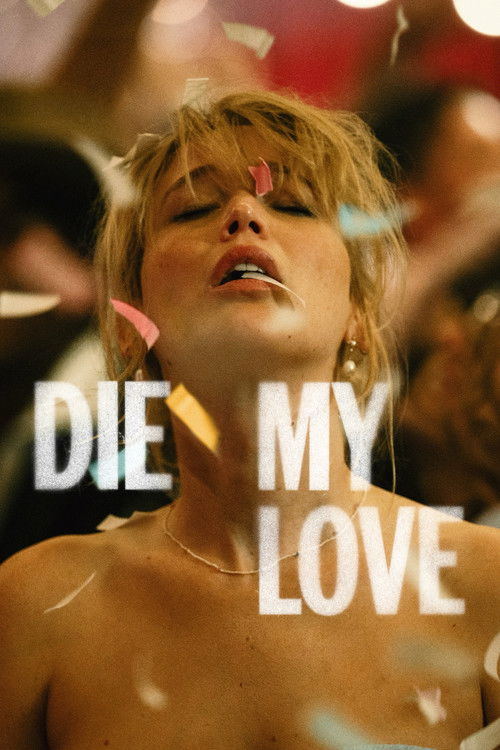
Die My Love
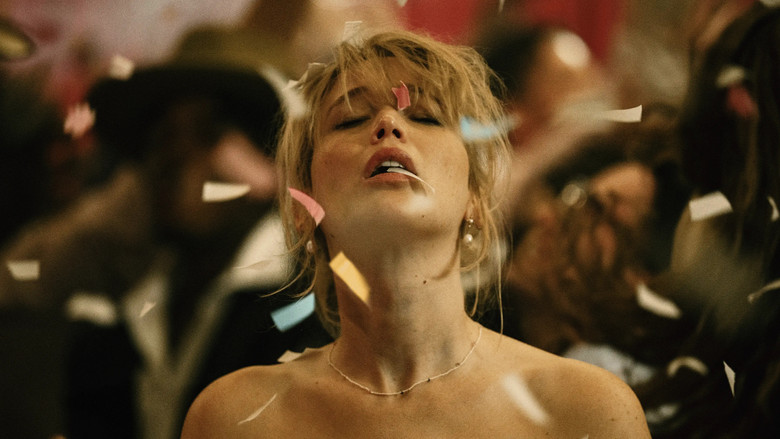
A suffocating, sun-bleached domestic nightmare where feral desire and postpartum isolation collide, unraveling a woman’s sanity into an incandescent wildfire of untamed female rage and yearning.
Die My Love

Die My Love

"Everything. Is. Fine."

06 October 2025 United States of America 119 min 6.1 (623)

Director: Lynne Ramsay

Cast: Jennifer Lawrence, Robert Pattinson, Sissy Spacek, LaKeith Stanfield, Nick Nolte

Drama The Erosion of Intimacy and Marital Fracture The De-Sanctification and Alienation of Motherhood Creative Paralysis and the Stifled Voice Feral Femininity vs. Domestic Domestication Inherited Madness and Isolation
Box Office: $11,745,933

Overview

Die My Love is an intense psychological drama directed by Scottish auteur Lynne Ramsay (Ratcatcher, We Need to Talk About Kevin, You Were Never Really Here). Adapted from Argentine author Ariana Harwicz’s acclaimed novel, the film chronicles the turbulent descent of Grace (Jennifer Lawrence), an aspiring writer who relocates from the sensory buzz of New York City to a secluded, decaying rural home in Montana alongside her partner, Jackson (Robert Pattinson). Initially bonded by an all-consuming, intensely carnal passion, the couple’s dynamic fractures violently following the birth of their infant son.

Marooned in the remote countryside with Jackson frequently distant and preoccupied, Grace encounters the oppressive weight of motherhood, a paralyzing creative block, and severe postpartum depression that swiftly curdles into manic psychosis. Rather than finding solace in her surroundings, she is hemmed in by familial dysfunction, including Jackson’s sleepwalking mother Pam (Sissy Spacek) and dementia-stricken father Harry (Nick Nolte).

Grace’s emotional dislocation ignites feral impulses and vivid, psychosexual delusions, including an obsessive fixation on an enigmatic local motorcyclist named Karl (LaKeith Stanfield). As the domestic space turns into a pressure cooker of unexpressed rage, boredom, and unmet physical longing, Grace’s erratic behavior escalates, pushing her marriage and her grip on reality toward total conflagration.

Core Meaning

Lynne Ramsay explicitly rejects tidy, clinical classifications of the story, arguing that describing the film merely as an "issue-based" look at postpartum depression is a fundamental misunderstanding: "This whole postpartum thing is just bullshit. It’s not about that. It’s about a relationship breaking down, it’s about love breaking down, and sex breaking down after having a baby. And it’s also about a creative block."

The film’s central thematic engine is the violence of domestic confinement and the social hypocrisy surrounding motherhood. Ramsay investigates how traditional domestic arrangements can act as a cage for primal feminine autonomy, sexuality, and creative ambition. Society tolerates the sadness of new mothers only when it is quiet, docile, and tearful; when it expresses itself as feral, aggressive, bored, or violently hypersexual, society deems it monstrous. Die My Love argues that motherhood does not erase individual sexual and creative identity—it forces it into a pressure valve that can detonate both the self and romantic partnership.

Thematic DNA

The Erosion of Intimacy and Marital Fracture 30%
The De-Sanctification and Alienation of Motherhood 25%
Creative Paralysis and the Stifled Voice 20%
Feral Femininity vs. Domestic Domestication 15%
Inherited Madness and Isolation 10%

The Erosion of Intimacy and Marital Fracture

The film contrasts Grace and Jackson’s former voracious, joyful carnality with the silent, resentful gulf that appears after parenthood. Jackson’s emotional and physical withdrawal turns the bedroom into a site of abandonment, showing how romantic devotion transforms into resentment and toxic alienation.

The De-Sanctification and Alienation of Motherhood

Ramsay strips motherhood of sentimental reverence. Grace does not feel immediate divine fulfillment; instead, she experiences her infant as an anchor severing her from her autonomy, body, and former life. Her alienation exposes how society polices maternal behavior and demands total self-erasure.

Creative Paralysis and the Stifled Voice

Moving to Montana was intended to give Grace space to write "The Great American Novel". Instead, the domestic routine reduces her intellectual drive to silence. Her manic outbursts, hallucinatory monologues, and bodily movements become the distorted outlet for an artistic voice that has been choked off by circumstance.

Feral Femininity vs. Domestic Domestication

Grace rejects the "good mother" performance, physically embodying an untamed, animalistic persona. Ramsay explores the tension between civilization (rearing a child, preserving a clean house, maintaining polite conversation at neighborhood birthday parties) and raw animal instinct (crawling in the grass, prowling, howling).

Inherited Madness and Isolation

Set in a rural home haunted by Jackson’s uncle’s suicide, Grace’s decline mirrors the decay of Jackson’s family. Pam’s nocturnal sleepwalking and Harry’s dementia-fueled rages establish rural isolation as a hereditary prison from which no one emerges undamaged.

Character Analysis

Grace

Jennifer Lawrence

Archetype: The Tragic Antiheroine / Rebel Key Trait: Unvarnished, feral impulsiveness and biting wit

Motivation

To regain sexual vitality, artistic purpose, and bodily autonomy.

Character Arc

Transforms from an energetic, passionately committed artist into a feral, manic figure driven to the absolute edge of sanity.

Jackson

Robert Pattinson

Archetype: The Reluctant Anchor / Estranged Partner Key Trait: Loose-limbed passive avoidance; exhaustion

Motivation

To maintain stability, family routine, and his own identity amid chaos.

Character Arc

Moves from an ardent, sexually devoted lover into an emotionally distant, overwhelmed husband retreating into farm work and music.

All 5 characters and cast

Symbols & Motifs

The Butcher Knife in the Grass

Meaning:

The knife embodies both an unmentionable intrusive impulse and a defensive weapon against the domestic entrapment closing around Grace.

Context:

Used early in the film when Grace crawls through the tall weeds clutching a kitchen butcher knife while staring across the lawn toward her baby.

Wild Horses

Meaning:

They embody Grace’s unbridled vitality and physical freedom, standing in stark contrast to domestic captivity.

Context:

Observed by Grace as untamed horses gallop past the boundaries of their property, contrasting with the fences and wooden rooms she cannot escape.

The Cat / Feline Movement

Meaning:

Visualizes a transition from a socialized woman to a predatory, wild creature that rejects civilized restraint.

Context:

Initiated when Grace suggests "We should get a cat" upon inspecting the house, and carried out throughout her breakdown as she drops to all fours, creeping, sniffing, and scratching like an agile predator.

The Decaying Farmhouse and Peeling Wallpaper

Meaning:

Serves as an external manifestation of the couple's crumbling bond and the psychological deterioration taking place inside.

Context:

Represented through the old house inhabited by the couple, marked by three layers of clashing, retro floral wallpaper and an ongoing rat infestation.

Wildfire and Burning Timber

Meaning:

Symbolizes both Grace's consumed inner psyche and a cleansing, destructive force that incinerates domestic illusions.

Context:

Acts as a recurring visual bookend, stretching from early scenes of smoldering passion to the climax where Grace confronts an approaching forest fire.

The Motorcycle / Karl

Meaning:

Operates as an acoustic and visual emblem of illicit desire, escapism, and Grace's yearning for dangerous vitality outside marriage.

Context:

Manifested through the roar of Karl’s motorcycle breaking the silence of the Montana wilderness.

Memorable Quotes

We should get a cat.
— Grace

Context

Spoken as Grace and Jackson inspect their dilapidated new Montana home with its rat infestation.

Meaning

Foreshadows Grace’s own animalistic, feline metamorphosis as she takes on the predatory, prowling role herself.

People don’t talk about how hard being a parent can be. / That’s all anyone ever talks about.
— Polite Mother / Grace

Context

Delivered by Grace at a sterile neighborhood children’s birthday party after handing her baby to a total stranger and downing wine.

Meaning

Skewers mainstream, performative conversations about parental struggle, contrasting them with Grace’s unmentionable psychological reality.

All 3 quotes

Philosophical Questions

Can romantic and sexual passion survive domestic institutionality?

The film questions whether extreme, animalistic love can withstand the mundane realities of domesticity, caretaking, and routine.

Is maternal instinct universally inherent or culturally enforced?

By exploring Grace’s disgust and ambivalence toward the maternal role, the film asks how much of "motherhood" is natural instinct versus an enforced social construct.

Where are the boundaries of acceptable female anger?

Ramsay asks why society accepts male rage and isolation in art, yet treats maternal anger and feral unpredictability as unnatural insanity.

What happens to the artistic intellect when forced into total silence?

Grace's inability to write turns her creative drive inward, transforming artistic energy into self-destruction.

Alternative Interpretations

Critics and audiences have read the film through multiple lenses:

Full ending explanation

Cultural Impact

Die My Love arrived during an era marked by a cultural reassessment of the maternal experience—often grouped informally by critics alongside works like Nightbitch and The Lost Daughter. However, where other contemporary projects lean into genre satire or quiet contemplation, Ramsay’s film delivers a raw, sensory shock.

Premiering in competition for the Palme d'Or at the 2025 Cannes Film Festival and distributed worldwide by Mubi, the film was hailed as an uncompromising piece of cinema, earning Jennifer Lawrence a Golden Globe nomination for Best Actress. The film challenged sanitized cinematic portrayals of postpartum mental illness, sparking intense discussions about female desire, domestic confinement, and artistic stagnation.

Audience Reception

Holding an 89% score on Rotten Tomatoes and an 81 on Metacritic, the film stands as a critical success—admired as an uncompromising, challenging domestic psychodrama.

  • Praise: Critics and festival audiences lavished universal acclaim on Jennifer Lawrence’s ferocious, feral performance, with numerous reviews calling it a career-best work. Seamus McGarvey’s tactile cinematography and Ramsay’s sensory soundscape received widespread acclaim.
  • Criticisms: Some critics and general viewers found the film relentlessly punishing, noting the narrative lacks a conventional character arc and operates as a single, grueling downward spiral that can feel exhausting over 119 minutes.
  • Controversies: Ramsay’s provocative Cannes comments dismissing the "postpartum depression" label as "bullshit" caused debate among critics who felt the director was rejecting the evident clinical reality portrayed on screen.

Interesting Facts

  • Die My Love marks Lynne Ramsay’s first feature film since 2017’s You Were Never Really Here, ending an eight-year absence from feature directing.
  • Ramsay initially hesitated to make the film because she feared revisiting the dark maternal territory of We Need to Talk About Kevin, but Jennifer Lawrence pursued her relentlessly through Excellent Cadaver.
  • Martin Scorsese served as an executive producer on the film through his production banner Sikelia Productions alongside Black Label Media.
  • During the film's closing credits, Lynne Ramsay herself sings an acoustic, tender vocal cover of Joy Division's iconic 1980 post-punk track "Love Will Tear Us Apart", arranged with composer George Vjestica.
  • After premiering in main competition at the 2025 Cannes Film Festival, the film sparked the festival's largest acquisition battle, with Mubi acquiring distribution rights for a reported $24 million.
  • Lawrence filmed the project shortly after giving birth to her first child, noting how terrifying and heartbreaking it was to navigate the boundary between her own maternal experience and Grace’s unraveling.
  • The original novella by Ariana Harwicz was set in the isolated French countryside; Ramsay and co-writers Enda Walsh and Alice Birch relocated the action to the expansive, desolate plains and mountains of Montana.

Easter Eggs

Joy Division’s "Love Will Tear Us Apart"

Ramsay’s choice to sing the closing song pays tribute to Ian Curtis’s anthem of marital estrangement and suicidal depression, re-contextualizing the punk track as a maternal and romantic eulogy.

John Prine & Iris DeMent Homage

The couple’s performance of "In Spite of Ourselves" serves as a direct musical nod to raw American folk storytelling regarding unglamorous, ribald, and affectionate domestic partnerships.

Cinematic Echoes of Repulsion & A Woman Under the Influence

Visual and thematic homages to Roman Polanski’s Repulsion (manifested in the peeling wallpaper and sensory horror of the house) and John Cassavetes' A Woman Under the Influence (reflected in Lawrence's erratic, uninhibited social behavior at the birthday gathering).

Sissy Spacek Casting Resonance

Casting Sissy Spacek (Badlands, Carrie, 3 Women) as Jackson’s eccentric mother anchors the film in the lineage of 1970s American rural psychological cinema.

Frequently Asked Questions

Explore More About This Movie

Dive deeper into specific aspects of the movie with our detailed analysis pages

Comments (0)

Leave a comment

No comments yet. Be the first to share your thoughts!

Similar Movies