Skip to content
Digger
A savage, apocalyptic satire pulsing with frantic dread, where an unhinged oil baron digs through fractured Arctic ice while civilization burns in the glare of theatrical spotlights.
Digger

Digger

"A man. A plan. A meltdown."

28 September 2026 United States of America 129 min 7.5 (236)

Director: Alejandro G. Iñárritu

Cast: Tom Cruise, Riz Ahmed, John Goodman, Sandra Hüller, Michael Stuhlbarg

Drama Comedy Corporate Hubris and Ecological Destruction Political Grotesque and Deflection of Blame Performative Absolution and Spectacle The Alienation of the Modern Ego
Budget: $180,000,000
Box Office: $20,000,000

Overview

Directed by Alejandro G. Iñárritu, Digger follows Digger Rockwell (Tom Cruise), an eccentric and ultra-wealthy oil tycoon who considers himself one of the most powerful and untouchable men on Earth. When Rockwell's hyper-aggressive exploratory drilling deep beneath the Greenland ice sheet triggers catastrophic geological instability, he inadvertently unleashes an unprecedented global ecological emergency.

Rather than taking responsibility for the planetary crisis, Rockwell frantically mounts a massive public relations and political counter-offensive to protect his empire. Convening an emergency summit with a declining American head of state, President Compson (John Goodman), his cynical Vice President (Michael Stuhlbarg), and chief scientist Ganesh (Riz Ahmed), the corporate titan schemes to reframe his colossal catastrophe as humanity's greatest triumph and cast himself as the planet's indispensable savior.


Core Meaning

At its heart, Digger is a scathing critique of elite hubris, moral absolution, and the commodification of global destruction. Iñárritu argues that humanity's ecological collapse is not merely driven by environmental exploitation, but enabled by a culture of perpetual performance, narcissism, and entertainment. By framing existential disaster through spectacle, the film exposes how modern power structures prioritize vanity, blame deflection, and public adulation over substantive accountability and collective survival.

Thematic DNA

Corporate Hubris and Ecological Destruction 30%
Political Grotesque and Deflection of Blame 25%
Performative Absolution and Spectacle 25%
The Alienation of the Modern Ego 20%

Corporate Hubris and Ecological Destruction

The film explores how unchecked industrial greed and resource extraction commodify the natural world, demonstrated through Rockwell's uncompromising mantra to keep drilling even when planetary systems collapse.

Political Grotesque and Deflection of Blame

Through the dysfunctional dynamics between Rockwell, President Compson, and international leaders, the story exposes the instinct of governing institutions to conceal truth, evade accountability, and manage perception rather than solve catastrophic crises.

Performative Absolution and Spectacle

The narrative interrogates modern society's obsession with turning tragedy into entertainment and hero-worship, examining how bad actors package self-serving survival tactics as heroic benevolence for public consumption.

The Alienation of the Modern Ego

Both Rockwell's larger-than-life persona and the underlying anxieties of those orbiting his power showcase an extreme dissociation from human empathy, driven by megalomania and the frantic pursuit of relevance.

Character Analysis

Digger Rockwell / Curtis Markson

Tom Cruise

Archetype: Antihero Key Trait: Manic charisma and pathological megalomania

Motivation

To retain absolute dominion, prove his indispensability to humanity, and cement his legacy as a savior rather than a pariah.

Character Arc

Begins as an untouchable, manic industrialist determined to bend the world to his will, only for his persona to fracture under the crushing weight of vanity, artifice, and real-world devastation.

Ganesh

Riz Ahmed

Archetype: Herald Key Trait: Intellectual desperation and moral ambivalence

Motivation

To deliver scientific warnings about impending planetary ruin and navigate corrupt power structures.

Character Arc

Transitions from an uneasy corporate scientist attempting to communicate empirical reality to a horrified witness swallowed by political theater.

All 4 characters and cast

Symbols & Motifs

The Shovel

Meaning:

Symbolizes both primal human labor and an obsessive instrument of self-destruction and unyielding greed.

Context:

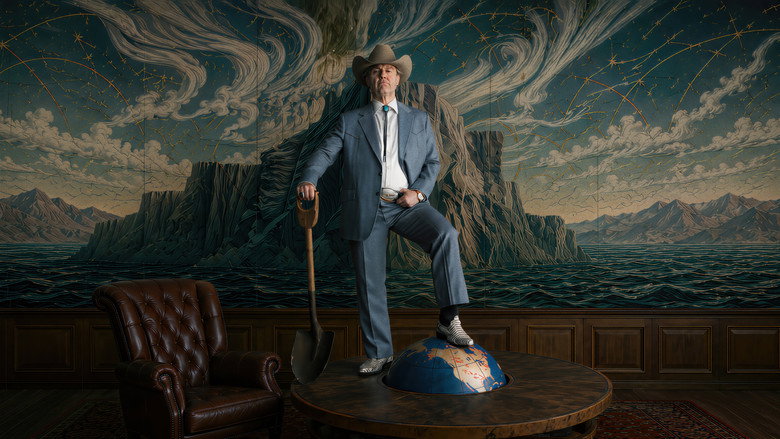
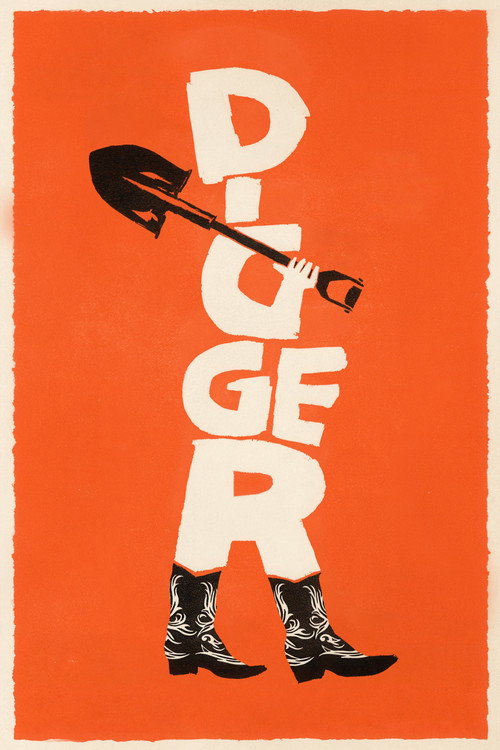
Featured prominently in Rockwell's iconography and early teasers, serving as an emblem of his obstinate determination to dig regardless of the collateral damage.

The Greenland Glacier

Meaning:

Represents the fragile threshold of Earth's natural equilibrium and the point of no return for human exploitation.

Context:

The rupture and shifting of the glacier serves as the inciting incident that destabilizes the world's climate system.

Gas Masks

Meaning:

Represent the grim inevitability of unmitigated catastrophe and the physical barrier separating human delusion from harsh reality.

Context:

Donned by spectators at the revelation of toxic atmospheric warnings as they transition out of artifice into a ruined environment.

Philosophical Questions

Can art and satire effect genuine change, or do they merely sanitize catastrophic reality?

The film examines whether packaging historical atrocities and environmental ruin into entertaining performance absolves audiences from confronting the reality of their ongoing complicity.

Does human vanity inevitably triumph over collective survival instinct?

Through Rockwell's relentless impulse to manage his image instead of stopping catastrophic drilling, the narrative asks if civilization's fatal flaw is its addiction to mythmaking.

How It Ends

Alternative Interpretations

While some critics read Digger strictly as an indictment of the fossil fuel industry and late-stage capitalism, others interpret it primarily as a meta-cinematic critique of Hollywood satire itself. In this view, the film attacks the comfortable complacency of audiences who consume performative political commentary to achieve moral catharsis while remaining completely detached from real existential crises.

Full ending explanation

Cultural Impact

Arriving in autumn 2026 amid ongoing real-world environmental and industrial anxieties, Digger marked a historic collision between high-auteur cinema and mainstream Hollywood star power. Despite being positioned as an awards contender and Tom Cruise's grand return to satirical drama, the film's polarizing reception and disastrous box-office debut made it a major lightning rod in industry discussions regarding the viability of original, big-budget auteur films within modern studio frameworks.

Audience Reception

Audience and critical reception was intensely polarized upon release in October 2026. Reviewers praised Emmanuel Lubezki's visual craft and Tom Cruise's fearless commitment to a bizarre, transformative role, but strongly criticized the film's abrasive pacing, convoluted narrative structure, and heavy-handed satirical cynicism. This led to a lackluster 'C+' CinemaScore and an opening-weekend box office underperformance.

Interesting Facts

  • Alejandro G. Iñárritu first conceived the core premise of the project after completing production on The Revenant in 2015.
  • The production was filmed on vintage VistaVision 35mm cameras with horizontal film loading by cinematographer Emmanuel Lubezki to achieve hyper-detailed widescreen textures.
  • The film represents Tom Cruise's first collaboration with an acclaimed auteur director since Michael Mann's Collateral in 2004.
  • Principal photography took place between November 2024 and May 2025 across studio facilities and locations in the United Kingdom.
  • The project was the final film released by Warner Bros. under the studio leadership of Michael De Luca and Pam Abdy.

Easter Eggs

Dr. Strangelove Echoes

The claustrophobic summit meetings of world leaders debating apocalyptic fallout pay direct tonal homage to Stanley Kubrick's 1964 cold-war satire Dr. Strangelove.

Roy Andersson Visual Vignettes

Specific deadpan, meticulously staged group compositions reference the deadpan existential comedies of Swedish director Roy Andersson.

Frequently Asked Questions

Explore More About This Movie

Dive deeper into specific aspects of the movie with our detailed analysis pages

Comments (0)

Leave a comment

No comments yet. Be the first to share your thoughts!

Similar Movies