Skip to content
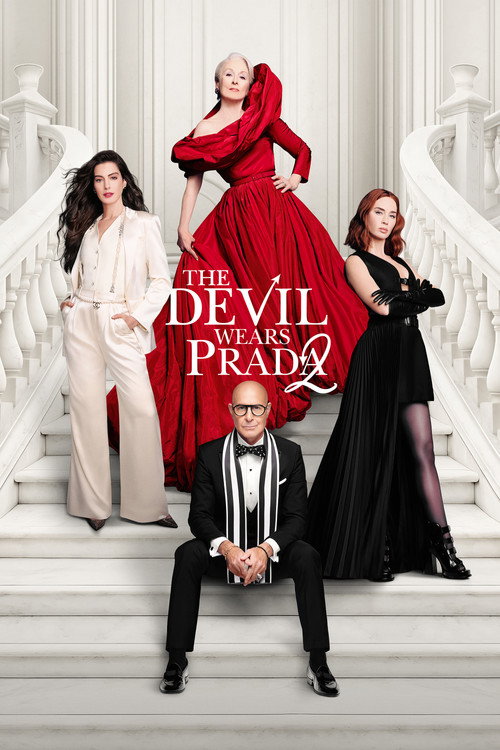
The Devil Wears Prada 2
A glamorous, biting satirical drama where the ghosts of past ambitions collide with a decaying print media empire. Amidst shattered cerulean dreams, two generations of women fight to keep their couture-clad legacy from unraveling in the algorithmic age.
The Devil Wears Prada 2

The Devil Wears Prada 2

"Icons reign forever."

29 April 2026 United States of America 119 min 7.1 (1,392)

Director: David Frankel

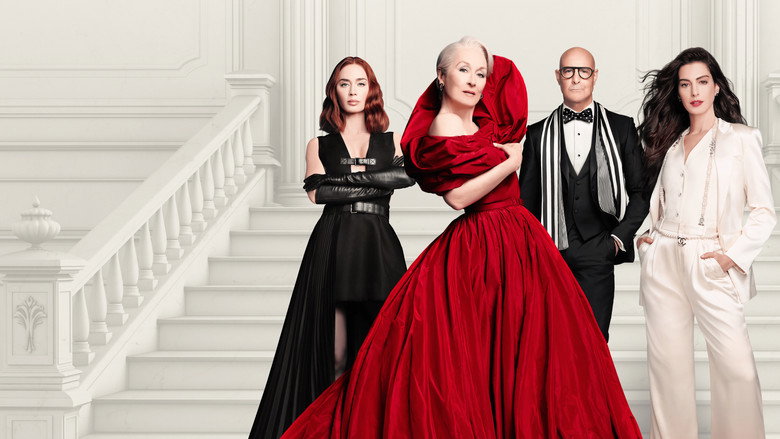
Cast: Meryl Streep, Anne Hathaway, Emily Blunt, Stanley Tucci, Kenneth Branagh

Drama Comedy The Decay of Print Media Female Ambition and Legacy The Myth of Hustle Culture Art vs. Algorithms
Budget: $100,000,000
Box Office: $678,373,258

Overview

Set twenty years after the events of the original film, The Devil Wears Prada 2 opens with Andy Sachs as an award-winning investigative reporter who unexpectedly loses her job. Simultaneously, the once-invincible Runway magazine, helmed by the legendary Miranda Priestly, is facing severe financial distress and a PR crisis under the new ownership of finance executives looking to gut the publication.

Desperate for journalistic credibility to rehabilitate the magazine's reputation, Miranda brings Andy back as Features Editor. Meanwhile, Emily Charlton has ascended to the top of the luxury fashion world as a senior executive at Dior. When Emily's new tech-billionaire boyfriend, Benji Barnes, proposes buying Runway, a high-stakes power struggle erupts.

As traditional artistry clashes with corporate greed, the film explores the changing landscape of media, shifting power dynamics, and the personal sacrifices required to survive in an industry on the brink of collapse.
Core Meaning

The film deconstructs the broken promises of millennial hustle culture and the fragile ecosystem of modern fashion media. Director David Frankel highlights how corporate greed and technological shortcuts threaten creative legacy, ultimately asking what happens when the institutions we sacrificed our youth to build begin to crumble.

Thematic DNA

The Decay of Print Media 35%
Female Ambition and Legacy 25%
The Myth of Hustle Culture 20%
Art vs. Algorithms 20%

The Decay of Print Media

This theme highlights the transition from print's golden age to a struggling digital era, emphasizing the vulnerability of legacy institutions against modern financial pressures.

Female Ambition and Legacy

Through Miranda's fight to retain control and Emily's ascent to power at Dior, the film examines the steep personal costs of female ambition, questioning whether breaking the glass ceiling is worth it if the building is collapsing.

The Myth of Hustle Culture

The sequel critiques the original's core message. Andy realizes that treating a toxic entry-level job as a stepping stone didn't guarantee long-term security, highlighting broken promises made to millennials.

Art vs. Algorithms

Benji Barnes's hostile takeover attempt introduces the existential threat of AI replacing human creativity and curation in fashion, pitting tech-bro efficiency against Miranda's rigorous artistic standards.

Character Analysis

Miranda Priestly

Meryl Streep

Archetype: Antihero / Mentor Key Trait: Intimidatingly brilliant

Motivation

To protect her legacy and the artistic integrity of Runway from corporate dismantlement.

Character Arc

Miranda must navigate the loss of her absolute power as financial backers attempt to usurp her. She reluctantly partners with Andy to maintain her empire, showing a slightly more vulnerable but equally ruthless side.

Andrea "Andy" Sachs

Anne Hathaway

Archetype: Hero Key Trait: Principled yet conflicted

Motivation

To rehabilitate Runway's journalistic credibility and prove that her career choices were not made in vain.

Character Arc

Andy evolves from an idealistic journalist into a seasoned professional. Returning to Runway, she is forced to confront her own savior complex and realize she is just as entrenched in the fashion ecosystem as Miranda.

Emily Charlton

Emily Blunt

Archetype: Rival Key Trait: Ruthlessly ambitious

Motivation

To achieve the ultimate validation she was denied by Miranda and assert her dominance over the fashion world.

Character Arc

Now a powerful executive at Dior, Emily uses her newfound leverage to exact revenge on Miranda. However, her alliance with a tech bro ultimately forces her to re-evaluate her loyalties.

Nigel Kipling

Stanley Tucci

Archetype: Mentor / Ally Key Trait: Fiercely loyal

Motivation

To sustain the beauty and art of fashion while finally achieving personal career fulfillment.

Character Arc

After years of lingering in Miranda's shadow, Nigel finally receives the recognition he deserves, working alongside Andy to save the magazine and securing his own executive position.

Benji Barnes

Justin Theroux

Archetype: Antagonist Key Trait: Opportunistic

Motivation

To acquire Elias-Clarke, replace its creative workforce with AI, and turn Runway into a purely data-driven asset.

Character Arc

Benji enters as a charming tech billionaire dating Emily, but is revealed to be a corporate vulture intent on gutting Runway until he is outsmarted by his ex-wife.

Symbols & Motifs

White Roses

Meaning:

They serve as symbols of purity and the exclusionary nature of the fashion world.

Context:

White roses, snapdragons, and orchids are prominently featured in both the Dior store and the Runway office, visually reminding the audience of elite barriers.

The Cerulean Sweater

Meaning:

A callback to Andy's initial ignorance, now representing her matured understanding of the fashion ecosystem.

Context:

Andy is seen wearing a new cerulean sweater near the end of the film, indicating she has fully accepted the complexity of the world she once dismissed.

Milan Fashion Week

Meaning:

It symbolizes the dazzling facade that the industry uses to hide its fragile financial core.

Context:

The film's visual tone shifts from dreary New York reality to bright, unapologetic glamour during the Milan sequences, distracting characters from impending doom.

Memorable Quotes

Journalism still fucking matters!
— Andy Sachs

Context

Andy says this during an outburst in the film's opening sequence at a journalism awards dinner right around the time she loses her job.

Meaning

A passionate defense of her life's work, establishing her core values before she is thrust back into the superficial elements of the fashion world.

Well, look what TJ Maxx dragged in.
— Nigel Kipling

Context

Spoken by Nigel the moment Andy returns to the Runway offices to accept her new role.

Meaning

A humorous, biting callback acknowledging Andy's return to the high-fashion world while gently mocking her practical wardrobe choices.

All I have to do is bide my time until you fail, and you will.
— Miranda Priestly

Context

Miranda delivers this line disdainfully when Andy is forced upon her as the new Features Editor to fix a sweatshop PR scandal.

Meaning

A stark reminder that Miranda's toxic leadership style remains intact, highlighting the immense pressure Andy faces in her new role.

Philosophical Questions

Does human artistry still have a place in an algorithmic era?

The film explores this by contrasting the meticulous, lived-in expertise of Miranda and Nigel with Benji Barnes's desire to gut the magazine and replace its creative workforce with AI-driven content.

What is the true cost of ambition when the institutions we strive to lead are crumbling?

Andy and Emily both dedicated their youth to climbing the ladder of print media, only to discover in their middle age that the very industry they conquered is financially fragile and facing extinction.

Alternative Interpretations

While the surface narrative positions Andy as the journalistic savior of Runway, a popular alternative interpretation suggests she is just as entrenched in the toxic system as Miranda. Her 'white knight' complex is ultimately called out by Miranda, implying that Andy hasn't evolved past seeking validation from her former abuser. Additionally, some viewers argue that Emily is the true victim of the story. Her hostile takeover attempt with Benji can be viewed not as a villainous betrayal, but as a justified reclamation of power after years of being exploited and passed over by Miranda in favor of Andy.

Cultural Impact

Arriving twenty years after the generation-defining original, The Devil Wears Prada 2 landed in a cultural moment where millennial 'hustle culture' had largely collapsed. Critics noted that the film perfectly captured the disillusionment of a generation who were promised that suffering at the bottom of the corporate ladder would eventually yield structural power. By shifting the narrative focus from the sheer glamour of fashion to the fragile financial models of modern media and the existential threat of AI, the film struck a nerve with audiences facing similar industry disruptions. While some reviewers felt it was bleaker and less focused than the 2006 classic, its sharp critique of tech billionaires attempting to gut artistic institutions resonated deeply in the 2026 zeitgeist.

Audience Reception

Audience and critical reception has been generally positive, holding around a 78-79% on Rotten Tomatoes, with widespread praise for the triumphant return of the core cast. Fans particularly lauded Emily Blunt's scene-stealing performance as a Dior executive and the intricate, storytelling-driven costume design by Molly Rogers. However, the film faced criticism for a somewhat convoluted third act involving corporate buyouts and romance subplots. Some viewers felt the movie was surprisingly bleak in its depiction of modern journalism and lacked the sheer, uncomplicated fun of the original, though many appreciated its mature, timely commentary on media.

Interesting Facts

  • Development of the sequel was heavily speculated for years before 20th Century Studios officially announced it, securing the return of Meryl Streep, Anne Hathaway, Emily Blunt, and Stanley Tucci.
  • Costume designer Molly Rogers, a protégé of the original film's Patricia Field, took over wardrobe duties, outfitting the cast in contemporary powerhouses like Schiaparelli, Balenciaga, and Gabriela Hearst.
  • Lady Gaga makes a cameo appearance, performing an original song titled 'Runway' alongside Doechii at an exclusive fashion event.
  • Donatella Versace did not physically appear in the film but provided her private jet for the production.
  • Principal photography took place between June and October 2025 on location in Manhattan and Milan.

Easter Eggs

Andy's opening routine

The film opens with Andy brushing her teeth while looking into the mirror, a direct visual callback to the opening montage of the 2006 film, illustrating how her life has progressed yet remained cyclical.

The 'Spring Florals' banner

During a sequence involving the Met Gala, a banner reads 'Spring Florals,' serving as a cheeky visual homage to Miranda's most famous and sarcastic line from the first movie.

The Fashion Closet Montage

Nigel helps Andy prep for a weekend in the Hamptons with Miranda in the fashion closet, beautifully echoing their iconic makeover scene from the original, but this time approached as peers.

Vintage strass necklace

A strass necklace worn at Irv's birthday party was sourced from a New York vintage market by Molly Rogers and is the very same piece used in the original film.

⚠️ Spoiler Analysis

Click to reveal detailed analysis with spoilers

Frequently Asked Questions

Explore More About This Movie

Dive deeper into specific aspects of the movie with our detailed analysis pages

Comments (0)

Leave a comment

No comments yet. Be the first to share your thoughts!

Similar Movies