Skip to content
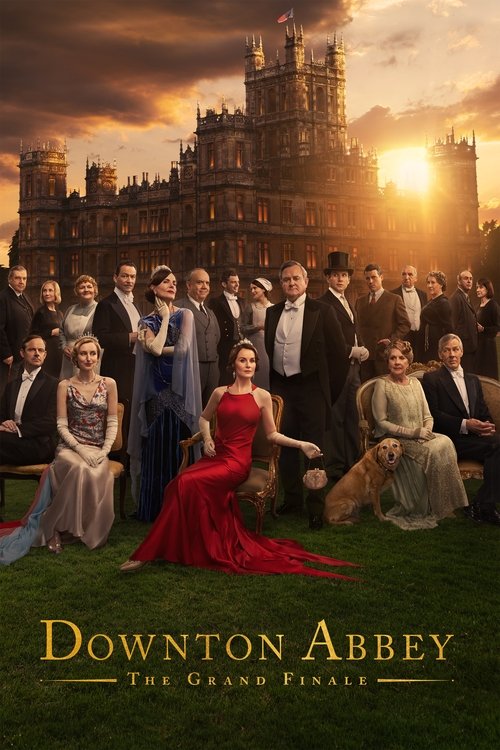
Downton Abbey: The Grand Finale
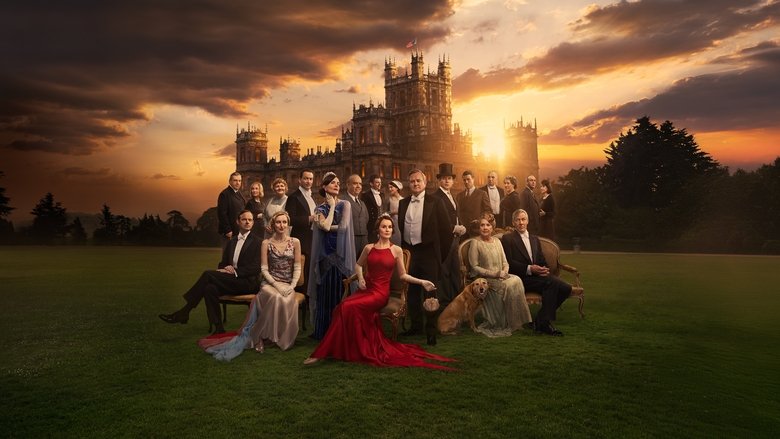
An aristocratic period romance enveloped in twilight nostalgia, tracing an affectionate, bittersweet farewell as golden autumn sunlight gently recedes behind the grand limestone towers of an enduring ancestral haven.
Downton Abbey: The Grand Finale

Downton Abbey: The Grand Finale

"The time has come to say goodbye."

10 September 2025 United Kingdom 123 min 7.1 (293)

Director: Simon Curtis

Cast: Michelle Dockery, Hugh Bonneville, Elizabeth McGovern, Phyllis Logan, Jim Carter

Drama Romance Generational Succession and Handing Over the Reins Modernity versus Aristocratic Tradition Family and Interdependence Across Class Grief, Memory, and Enduring Influence
Budget: $50,000,000
Box Office: $107,929,546

Overview

Set at the dawn of 1930 against the backdrop of an uncertain global economy, Downton Abbey: The Grand Finale returns to the Crawley family and their loyal household staff as modern reality encroaches upon ancestral traditions. Directed by Simon Curtis and scripted by series creator Julian Fellowes, the third feature film serves as the definitive closing chapter to the 15-year saga that began on television in 2010.

The narrative opens with the household reeling from societal fallout after Lady Mary Crawley finds herself at the center of London high society gossip following her formal divorce from Henry Talbot. As whispers threaten the family’s social standing and economic pressures ripple across post-1929 Europe, Lord and Lady Grantham bring Mary back home to shelter from the storm and confront the long-term sustainability of the Downton estate.

Downstairs, the staff faces their own period of profound transition as generational duties shift. With former butler Thomas Barrow thriving in his new life alongside American actor Guy Dexter, and longtime stewards Robert Crawley and Mr. Carson acknowledging the necessity of stepping aside, the household must reconcile decades of duty with the reality of an evolving, democratic modern world.
Core Meaning

The central message delivered by director Simon Curtis and writer Julian Fellowes is that true preservation requires adaptation. Rather than presenting the decline of the Edwardian aristocratic structure as an unmitigated tragedy, the film illustrates that traditions and families survive only when older generations possess the grace to relinquish control and trust the future to their heirs. Dignity is not defined by unyielding social rigidity, but by endurance, mutual loyalty, and the capacity to weather scandal and social transformation with kindness.

Thematic DNA

Generational Succession and Handing Over the Reins 30%
Modernity versus Aristocratic Tradition 25%
Family and Interdependence Across Class 25%
Grief, Memory, and Enduring Influence 20%

Generational Succession and Handing Over the Reins

The central narrative axis depicts the formal transfer of Downton's leadership from Robert and Carson to Lady Mary and the younger generation, underscoring that legacy relies on timely letting go.

Modernity versus Aristocratic Tradition

Confronting the dawn of the 1930s, the film contrasts stubborn social conventions—such as the stigma of divorce—with the inevitable democratization of British society.

Family and Interdependence Across Class

Fellowes reinforces the foundational ethos of Downton: upstairs and downstairs are not hostile castes, but an interdependent, extended family whose shared affection outlasts social boundaries.

Grief, Memory, and Enduring Influence

Navigating life after the loss of the matriarch, Dowager Countess Violet Crawley, the household members discover how to let the spirits of those who built them guide their choices into the future.

Character Analysis

Lady Mary Crawley

Michelle Dockery

Archetype: The Reluctant Sovereign / Matriarch Key Trait: Composed fortitude under pressure

Motivation

Protecting her children’s inheritance and ensuring Downton’s financial viability in the modern era.

Character Arc

Transitions from weathering personal scandal following her public divorce to fully assuming stewardship of the entire Downton estate.

Robert Crawley, 7th Earl of Grantham

Hugh Bonneville

Archetype: The Aging King / Traditionalist Key Trait: Unconditional paternal loyalty

Motivation

Preserving family honor and protecting Mary from society's cruelty.

Character Arc

Moves from defensive frustration over vanishing traditions to peaceful acceptance that his daughters are better equipped for the 1930s.

All 5 characters and cast

Symbols & Motifs

The Portrait of Violet Crawley

Meaning:

Serves as an omnipresent moral compass, reminding characters of the family’s bedrock wit and resilience.

Context:

Dominating the entrance hall, her painted presence observes the family throughout the narrative.

The Running Estate Dog (Teo)

Meaning:

Evoking continuity, life, and the enduring rhythm of Downton regardless of who holds the title.

Context:

Bookending the series with playful scampering across the pristine estate lawns.

The Yorkshire Agricultural Show

Meaning:

Symbolizes the gradual breaking of social barriers and community democratization.

Context:

Highlighted when Isobel Grey pushes to include household staff on its organizing committee.

The Dower House and Country Flat

Meaning:

Represent the physical contraction of aristocratic footprint.

Context:

Used as Robert and Cora contemplate moving away from the main house to let Mary govern.

Automobiles and Open Roadsters

Meaning:

Visual shorthand for rapid technological momentum and external progress.

Context:

Shown sweeping toward the secluded country sanctuary from the external world.

Memorable Quotes

It is not the house that must change to suit the times, Papa; it is the times that must learn we are still here.
— Lady Mary Crawley

Context

Spoken while reassuring an anxious Lord Grantham in the library as they review estate accounts and discuss handing over management.

Meaning

Asserts Mary's determination that Downton will endure through modern changes without losing its fundamental identity.

You cannot preserve history by locking the gates, Carson. The gates must open, or the world simply walks past them.
— Mrs. Hughes (Phyllis Logan)

Context

Spoken while gently counseling Carson over a cup of tea about the changing nature of household service.

Meaning

Highlights the central philosophical premise that unyielding isolation leads to obsolescence rather than preservation.

All 4 quotes

Philosophical Questions

Can an institution founded on inequality modernize without losing its soul?

Examined through Mary's struggle to streamline operations and dismantle aristocratic hierarchies while preserving Downton's historic identity.

Is duty to family paramount over personal self-fulfillment?

Explored via Mary’s choice to prioritize her own happiness through divorce despite intense public censure.

What constitutes the true anchor of a home—the bricks and mortar, or the community dwelling within?

Addressed as Robert and Carson confront stepping down and relinquishing the physical halls they dedicated their lives to maintaining.

Alternative Interpretations

Critics and viewers have highlighted distinct perspectives on the film's narrative resolution:

Full ending explanation

Cultural Impact

When Downton Abbey debuted in 2010, it revived international appetite for high-end British period drama, pioneering the glossy costume drama format that paved the way for series like The Crown. The Grand Finale operates within the cultural context of farewells to traditional broadcast television icons. Positioned squarely in the post-1929 Depression era, the film reflects contemporary anxieties over economic instability, generational wealth, and societal transition, offering comfort cinema that validates community, civility, and mutual accommodation.

Audience Reception

Aggregated reception for the film was largely positive across critical and fan communities:

  • Critical Praise: Reviewers celebrated the film as an affectionate, emotionally satisfying victory lap, highlighting Julian Fellowes’ efficient dialogue, John Lunn’s score, and the ensemble’s lived-in chemistry (Certified Fresh at 90–92% on Rotten Tomatoes).
  • Points of Criticism: Some critics noted low dramatic stakes, formulaic soap-operatic plotting, and minor subplots (such as brief domestic squabbles between Baxter and Molesley) that felt rushed to ensure every character had screen time. Metacritic settled at a solid 66.
  • Audience Verdict: Universally embraced by franchise loyalists as a deeply moving, tearful, and respectful send-off that delivered closure for every major character.

Interesting Facts

  • The film includes a heartfelt in-memoriam dedication to Dame Maggie Smith, who passed away in September 2024 at age 89 shortly after production concluded.
  • Principal photography commenced at Highclere Castle and on location in the UK on May 13, 2024, officially wrapping in August 2024.
  • Following his Oscar-nominated performance in The Holdovers, Paul Giamatti reprised his role as Cora’s playboy brother Harold Levinson for the first time since the 2013 Christmas special.
  • Director Simon Curtis directed back-to-back franchise installments, having previously helmed Downton Abbey: A New Era (2022).
  • The production recruited high-profile British stage and screen talent including Simon Russell Beale, Alessandro Nivola, Joely Richardson, and Arty Froushan in key guest roles.
  • Composer John Lunn returned to write the concluding orchestral score, alongside longtime cinematographer Ben Smithard and editor Adam Recht.
  • The official subtitle The Grand Finale was formally unveiled on March 27, 2025, marketing the project unequivocally as the farewell chapter for the core ensemble.

Easter Eggs

The "What is a Weekend?" Nod

Isobel and the Crawleys playfully reference the iconic seasonal quip originally spoken by Violet, honoring the show’s most enduring pop-culture meme.

Agatha Christie Nursery Joke

Footman Andy humorously searches the nursery rooms for mystery clues, a meta-reference to the golden age of 1930s British detective fiction.

The Pilot Drone Bookend

The concluding camera movements mirror the series pilot from 2010—tracking a motorcar through the Hampshire landscape before swooping across Highclere’s iconic facade.

The Wedding and Servants’ Committee

Baxter and Molesley’s domestic dynamic directly echoes early seasons' debates downstairs over marital balance and upward professional mobility.

Frequently Asked Questions

Explore More About This Movie

Dive deeper into specific aspects of the movie with our detailed analysis pages

Comments (0)

Leave a comment

No comments yet. Be the first to share your thoughts!

Similar Movies