Skip to content
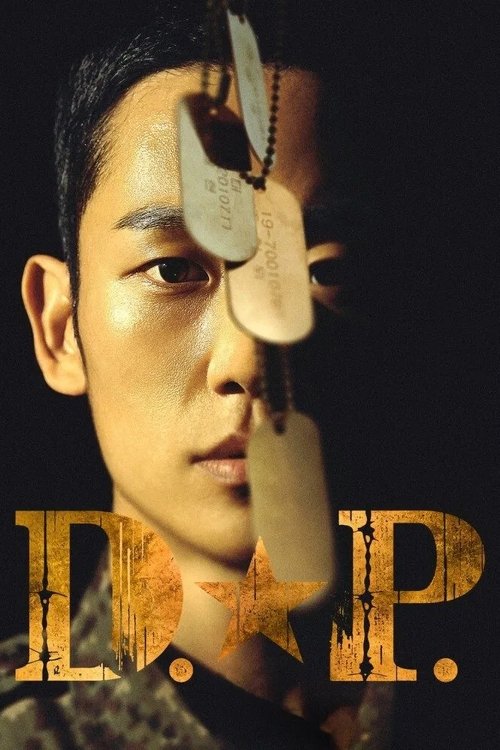
D.P.
A gritty military noir echoing with quiet anguish, where a bruised soldier chases fleeting shadows through neon-lit streets, peeling back layers of institutional violence to find humanity buried beneath rusted iron armor.
D.P.

D.P.

"Bring them back. Deserter pursuit."

27 August 2021 — 28 July 2023 South Korea 2 season 12 episode Ended 8.0 (272)

Cast: Jung Hae-in, Koo Kyo-hwan, Kim Sung-kyun, Son Seok-koo, Park Se-jun

Drama Crime Action & Adventure Systemic Violence and Institutional Complicity Bystander Guilt and Moral Responsibility Dehumanization under Mandatory Conscription Empathy and Brotherhood as Survival The Conflict Between Change and Stagnation

Overview

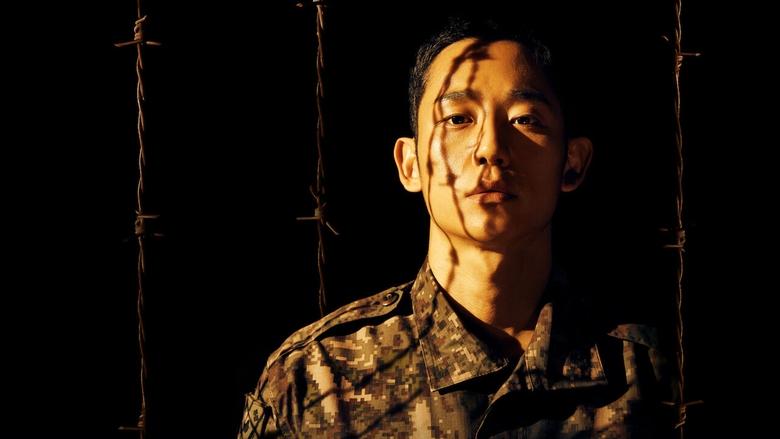
D.P. (short for Deserter Pursuit) is a South Korean military drama series adapted from Kim Bo-tong's popular webtoon D.P. Dog's Day, directed and co-written by Han Jun-hee. The series centers on Private An Jun-ho, a quiet, observant recruit whose sharp instincts earn him a placement in the Deserter Pursuit unit—a specialized squad within the Military Police tasked with tracking down and apprehending soldiers who go AWOL. Paired with the quirky, eccentric Corporal Han Ho-yeol, Jun-ho traverses the civilian world to hunt down deserters. However, each mission reveals that desertion is rarely an act of simple cowardice; rather, it is almost always a desperate attempt to escape horrific physical abuse, psychological torture, and rampant hazing within the ranks.

Across two intense seasons, the narrative expands from individual case-of-the-week pursuits to a sweeping confrontation with systemic institutional corruption. While Season 1 focuses on the personal stories of abused enlistees and the crushing guilt of those who watch in silence, Season 2 elevated the conflict to the highest echelons of military power. As higher-ups try to sweep tragedy after tragedy under the rug to protect the military's reputation, Jun-ho, Ho-yeol, Sergeant Park Beom-gu, and Captain Lim Ji-seop are forced to decide whether to follow orders or challenge an unyielding authority to expose the truth.


Core Meaning

The ultimate message of D.P. is an indictment of systemic bystander apathy and institutional complicity in violence. Through its narrative, the creators assert that when an institution—such as a mandatory military force—prioritizes its reputation and rigid hierarchy over human life, it transforms ordinary young men into perpetrators, victims, or silent accomplices.

The show forcefully refutes the idea that horrific incidents are merely isolated misdeeds by "bad apples". Instead, it argues that the system itself breeds cruelty by normalizing hazing and covering up wrongdoing. Crucially, D.P. asks whether an individual can affect change against a monolithic system. Through the recurring refrain, "Someone has to do something," the series delivers a bittersweet core truth: while individual acts of defiance may not instantly dismantle a corrupt structure, breaking the silence leaves cracks in the wall that ensure victims are not forgotten.

Thematic DNA

Systemic Violence and Institutional Complicity 30%
Bystander Guilt and Moral Responsibility 25%
Dehumanization under Mandatory Conscription 20%
Empathy and Brotherhood as Survival 15%
The Conflict Between Change and Stagnation 10%

Systemic Violence and Institutional Complicity

Throughout both seasons, violence is shown not as an anomaly, but as a structural tradition passed down from senior soldiers to recruits. In Season 1, hazing is brutal and routine—ranging from physical beatings to sexual harassment. In Season 2, this theme expands to show how military command actively covers up suicides, shootings, and landmine accidents, altering official records to protect high-ranking officers and shift blame onto dead or traumatized soldiers.

Bystander Guilt and Moral Responsibility

The show constantly questions the ethics of remaining passive. Private An Jun-ho is plagued by guilt after his first assignment ends in a deserter's suicide because Jun-ho chose to drink with his corrupt partner instead of actively searching. This guilt becomes his primary drive. The series demonstrates that those who stand by, look away, or say "that's just how things are" are fundamental to maintaining the cycle of abuse.

Dehumanization under Mandatory Conscription

D.P. explores how conscription strips young civilian men of their individuality, artistic expressions, and personal values, reducing them to military serial numbers. Deserters are often forced into military service despite severe physical or mental ailments, and those who do not conform to traditional notions of masculinity (such as artists or drag performers) are relentlessly targeted.

Empathy and Brotherhood as Survival

Amidst bleak cruelty, the bond between Jun-ho and Ho-yeol serves as the emotional heart of the series. Their rapport is not merely comic relief; it represents mutual emotional shelter. Furthermore, the evolution of Sergeant Park Beom-gu and Captain Lim Ji-seop from distant superiors into protective figures highlights how solidarity and human empathy can survive inside rigid bureaucratic machines.

The Conflict Between Change and Stagnation

The narrative continually weighs cynical resignation against hopeful action. Characters are told that nothing will ever change in the military, yet Jun-ho and his allies choose to act anyway. Season 2 frames this as "hitting a boulder with an egg"—even if the rock does not break, it gets stained by the attempt.

Character Analysis

An Jun-ho

Jung Hae-in

Archetype: Reluctant Hero / Moral Compass Key Trait: Exceptional observation skills and boxing ability, coupled with a rigid refusal to look away from wrongdoing.

Motivation

Guilt over failing his first deserter and an unyielding desire to protect victims of abuse.

Character Arc

Begins as a silent, detached private who joined the military to escape domestic abuse at home. Over two seasons, his initial passivity transforms into an unwavering commitment to justice. He evolves from a soldier following orders into a whistleblowing rebel who risks imprisonment to leak official secrets.

Han Ho-yeol

Koo Kyo-hwan

Archetype: The Trickster Mentor / Charismatic Partner Key Trait: Quick-witted adaptability, comedic charm, and deep loyalty to his partner.

Motivation

Protecting Jun-ho and ensuring deserters are brought back alive rather than harmed.

Character Arc

Introduced as a lighthearted, street-smart corporal who uses humor and wit to navigate military life. After witnessing tragic violence at the end of Season 1, he develops severe PTSD and loses his voice. In Season 2, he overcomes his trauma to stand by Jun-ho, eventually sacrificing his own reputation and securing an early discharge to help present evidence in court.

All 5 characters and cast

Symbols & Motifs

The 1953 Water Canteen (수통)

Meaning:

Symbolizes the military's resistance to change and an institution stuck in time, expecting modern youth to endure vintage brutality.

Context:

Mentioned in a central dialogue by Private Cho Suk-bong during a standoff, noting the issue canteen is stamped with the year "1953" (the end of Korean War active hostilities).

Civilian Clothes vs. Military Uniform

Meaning:

Visually symbolizes the dual life of conscripts. Stepping into civilian attire lets them regain individuality and human perspective outside the military's rigid power structure, while returning to uniform forces them back into rigid obedience.

Context:

Used when Jun-ho and Ho-yeol put on civilian attire for DP missions versus when they return to military uniform in the barracks.

Chekhov's The Seagull & "Nina"

Meaning:

Symbolizes delicate artistic dreams and free expression crushed by a rigid, unfeeling world.

Context:

In Season 2 Episode 3, deserter Jang Seong-min (a talented theater student and drag performer) identifies with Nina from Anton Chekhov's play The Seagull.

The Protruding Nail on the Barracks Wall

Meaning:

Symbolizes the dangerous, unpredictable violence built directly into the physical architecture of barracks life.

Context:

In the premiere, Jun-ho is repeatedly slammed against a wall inches away from an exposed rusty nail.

Running Footsteps / Running Shoes

Meaning:

Represents the physical and psychological impulse to escape an intolerable reality, alongside the relentless pursuit of duty.

Context:

A constant motif throughout the series featuring both deserters fleeing and DP officers chasing.

Memorable Quotes

저희 부대에 있는 수통 있지 않습니까, 거기 뭐라고 적혀 있는지 아십니까? '1953'. 6·25 때 쓰던 거라고. 수통도 안 바뀌는데 무슨...
— Cho Suk-bong

Context

Season 1, Episode 6. Spoken to Corporal Han Ho-yeol during their standoff.

Meaning

Summarizes the structural stagnation of the military and became the defining quote of the series.

뭐라도 해야지...
— Cho Suk-bong & Kim Ru-ri

Context

Season 1, Episode 6 and Season 2, Episode 1. Spoken right before catastrophic acts of violent retaliation.

Meaning

Highlights how desperate victims feel forced to take radical action when institutions refuse to listen.

All 5 quotes

Episode Highlights

A Man Holding Flowers

S1E1

Establishes Jun-ho's recruitment into the DP squad and introduces the bleak realities of military service. The tragic suicide of his first target due to his partner's negligence deeply traumatizes Jun-ho.

Significance:

Instills the core guilt that propels Jun-ho's character arc throughout the show.

Military Dog

S1E5

Traces Private Cho Suk-bong's complete mental breakdown after endless hazing.

Significance:

Shifts the narrative tone from episodic procedural pursuits to an inescapable psychological tragedy.

Bystanders

S1E6

Features the standoff in a cavern where Suk-bong shoots himself, exposing military attempts to suppress news of the incident. Includes a haunting mid-credits scene showing Private Kim Ru-ri opening fire on his barracks.

Significance:

Serves as the Season 1 finale that sets the stage for Season 2.

The Rains

S2E1

Shows the immediate aftermath of Season 1's tragedy following Kim Ru-ri's mass shooting, including Ho-yeol's selective mutism from PTSD and the high command's immediate attempts to manipulate public perception.

Significance:

Picks up the narrative directly after the Season 1 finale cliffhanger.

Curtain Call

S2E3

Follows deserter Jang Seong-min (Nina), an artistic student bullied for performing drag, showcasing the tragic intersection of homophobia, military uniformity, and crushed dreams.

Significance:

Widely considered one of the most emotionally devastating episodes in the series.

An Jun-ho

S2E6

Features Jun-ho going rogue to bring classified evidence to a civil lawsuit against the government, a high-stakes legal confrontation, self-sacrifice by Sergeant Park, and the emotional discharge and farewell of Ho-yeol.

Significance:

Serves as the series finale concluding the core arc.

Philosophical Questions

Is silence a form of violence?

The show explores whether soldiers and officers who quietly observe abuse without intervening are morally equivalent to the perpetrators.

Can justice exist within a closed authority structure?

It questions if true fairness can ever be achieved when an institution investigates and judges its own internal crimes.

Where does individual responsibility end and structural causality begin?

Through soldiers like Cho Suk-bong and Kim Ru-ri, the series examines whether victims who snap and commit violent acts should be judged purely as criminals or as products of institutional destruction.

Alternative Interpretations

1. The Cynical Reading: Institutional Immortality: This perspective argues that the ending emphasizes the impossibility of real systemic change. Despite court battles, public exposures, and individual sacrifices, the military hierarchy remains intact, high-ranking generals evade long-term consequences, and new conscripts continue entering the same system.

Full ending explanation

Cultural Impact

Historical and Social Context: In South Korea, military service is mandatory for all able-bodied male citizens (typically lasting 18 to 21 months). D.P. is set primarily in 2014—a historically notorious year for the South Korean Armed Forces marked by real-life scandals, including the tragic death of Private Yoon from continuous abuse and the deadly shooting spree by Sergeant Lim.

Critical and Audience Reception: Season 1 achieved massive critical acclaim globally and domestically, sweeping awards including Best Drama at the 58th Baeksang Arts Awards and Blue Dragon Series Awards, and ranking among the New York Times Best International TV Shows of 2021. Season 2 received high praise for its ambitious scale and compelling performances, though some viewers noted its stylistic shift from episodic character dramas into a high-stakes legal and political thriller.

Impact and Legacy: D.P. sparked widespread national conversations regarding conscript rights, military reform, and institutional accountability. It broke traditional Korean drama conventions by avoiding romantic subplots, presenting an unglamorous, visceral look at societal pressure.

Audience Reception

Audience Reception Evolution across seasons rated Season 1 with five stars (visceral, intimate, ground-level realism) and Season 2 with four stars (ambitious, structural, legal-procedural shift).

Praise: Viewers consistently lauded the extraordinary acting (particularly Jung Hae-in, Koo Kyo-hwan, Jo Hyun-chul, and Son Seok-koo), sharp direction, atmospheric soundtrack, and refusal to sugarcoat uncomfortable societal truths.

Criticism: Some fans felt Season 2 leaned heavily into dramatic thriller tropes—such as Jun-ho fighting off dozens of military police on a train—which slightly departed from the grounded, gritty realism of Season 1.

Overall Verdict: D.P. is widely regarded as one of Netflix's most impactful and significant Korean original series, praised for tackling systemic issues with artistic courage.

Interesting Facts

  • Webtoon creator and co-screenwriter Kim Bo-tong based the story directly on his real-life service as a Deserter Pursuit officer in the South Korean military.
  • Actor Jung Hae-in underwent three months of intensive boxing training prior to shooting to perform realistic, unassisted combat scenes.
  • The fan-favorite character Han Ho-yeol (Koo Kyo-hwan) did not exist in the original webtoon; director Han Jun-hee created him specifically for the series to balance the heavy dark tone with human warmth and comic relief.
  • The production team built an exact replica of a 2014-era South Korean military barracks, causing cast members and male crew to report feeling immense anxiety and nostalgic 'PTSD' upon walking onto the set.
  • Following Season 1's release, the South Korean Ministry of National Defense was forced to issue official public statements addressing the show's depiction of hazing, claiming that barracks conditions had vastly improved since the era portrayed.

Easter Eggs

Mid-Credits Stinger Continuity

The Season 1 finale mid-credits scene (Kim Ru-ri shooting his barracks) directly bridges into the opening scene of Season 2 Episode 1, creating a seamless narrative across seasons.

Literary Allusions (Anton Chekhov)

Season 2 Episode 3 explicitly adapts motifs from Anton Chekhov's play The Seagull, paralleling the tragic life of character Jang Seong-min with the character Nina.

Director's Cameo & Universe Connections

Director Han Jun-hee includes subtle stylistic nods and shared character archetypes connecting D.P. with his later acclaimed project Weak Hero Class 1, exploring similar themes of youth violence and bystander guilt.

Frequently Asked Questions

Explore More About This Movie

Dive deeper into specific aspects of the movie with our detailed analysis pages

Comments (0)

Leave a comment

No comments yet. Be the first to share your thoughts!

Similar Movies