Skip to content
Dr. Brain
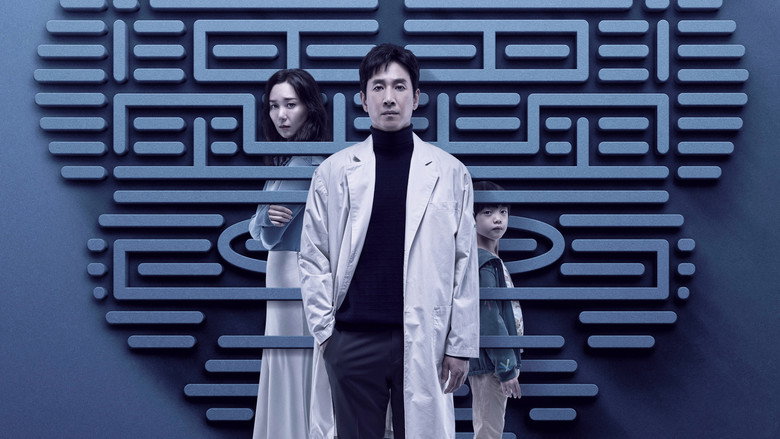
A stylish neo-noir sci-fi thriller immersed in chilly intellectual detachment and raw paternal grief, following a neuroscientist navigating a fractured labyrinth of dead men's memories to reconstruct his family's fate.
Dr. Brain

Dr. Brain

Dr.브레인

"The truth lies in your mind."

04 November 2021 — 10 December 2021 South Korea 1 season 6 episode Canceled 7.2 (168)

Cast: Lee Sun-kyun, Park Hee-soon, Seo Ji-hye, Lee You-young, Lee Jae-won

Drama Sci-Fi & Fantasy Mystery Emotional Awakening and the Journey to Empathy The Nature of Memory and Fragility of Identity Scientific Hubris versus Human Ethics Grief, Guilt, and Familial Redemption Perception, Illusion, and Reality

Overview

Dr. Brain (2021) is a six-episode science-fiction mystery thriller directed and co-written by acclaimed South Korean filmmaker Kim Jee-woon, adapted from the webtoon by Hongjacga. The narrative centers on Koh Sewon, a brilliant neuroscientist with an atypical brain structure that grants him near-eidetic memory alongside severe emotional detachment. When his young son dies in a suspicious explosion and his wife falls into a comatose state following an apparent suicide attempt, Sewon's rigidly orderly life collapses.

Desperate for answers that cold logic cannot provide, Sewon pioneers an experimental neural synchronization technology known as brain syncing. By connecting his own brainwaves to the neural circuitry of recently deceased individuals, he sifts through their lingering memories, sensory traces, and final moments. However, each synaptic connection carries an unexpected psychological price: the dead do not merely impart information; their instincts, sensory reflexes, and emotional imprints gradually begin to overwrite his own psyche.

As Sewon is drawn into a high-stakes conspiracy involving rogue medical researchers, corrupt private entities, and a determined homicide detective, the boundary between his mind and the minds of his subjects blurs. Through this dangerous descent into fragmented consciousness, the narrative evolves from a clinical procedural into a deeply personal odyssey, where the protagonist must navigate phantom memories to uncover the truth and discover the emotional humanity he long suppressed.


Core Meaning

At its core, Dr. Brain explores the paradox of human empathy and consciousness: whether true connection and self-awareness can only be found through sharing the suffering and perspectives of others. Through the premise of neuro-technological synchronization, the series constructs an allegory for emotional awakening. Sewon begins as a man whose biological inability to process emotions isolates him from everyone he loves. By literally walking in the shoes and occupying the minds of the dead—experiencing their panic, affection, physical habits, and sorrow—he gains an emotional mirror that reflects his own shortcomings as a husband and father. The series argues that pure intellect without empathy leads to monstrous commodification of life, and that memory is not merely data to be mined, but the moral architecture of human soul and identity.

Thematic DNA

Emotional Awakening and the Journey to Empathy 30%
The Nature of Memory and Fragility of Identity 25%
Scientific Hubris versus Human Ethics 20%
Grief, Guilt, and Familial Redemption 15%
Perception, Illusion, and Reality 10%

Emotional Awakening and the Journey to Empathy

Sewon starts the series emotionally blank due to a biologically stunted amygdala. As the brain syncs accumulate, the emotional residues of his deceased subjects invade his consciousness, forcing him to experience terror, affection, guilt, and grief for the first time. The technology serves not only as a forensic tool, but as a crucible that transforms an unfeeling savant into a fully empathetic human being.

The Nature of Memory and Fragility of Identity

The series challenges Cartesian certainty by questioning what constitutes the self when memories can be merged, extracted, and transferred. Sewon begins adopting motor ticks, physical traits (such as cat-like reflexes and left-handed shooting), and mental projections of people who have died. His struggle to differentiate between genuine recollection and alien neural artifacts highlights memory as an unstable foundation of human identity.

Scientific Hubris versus Human Ethics

Contrasting Sewon's initial reckless experimentation with the villainous schemes of Dr. Myung, the show delves into the dark consequences of scientific overreach. The desire to conquer mortality by treating the human mind as a software package leads to the exploitation of vulnerable subjects and moral decay.

Grief, Guilt, and Familial Redemption

Every character in the narrative is propelled by the devastation of loss. Sewon's journey is heavily laden with retroactive remorse as he realizes too late the emotional isolation his wife Jaeyi endured. His desperate pursuit of truth becomes a path of atonement to rescue what remains of his broken family.

Perception, Illusion, and Reality

Through subjective visuals, phantom manifestations, and hallucinations, the show keeps the audience anchored in Sewon's destabilized point of view. The visual blurring between objective investigative reality and subjective neural projections emphasizes how much human reality depends on sensory interpretation.

Character Analysis

Koh Sewon

Lee Sun-kyun

Archetype: The Emotionless Savant / Fallen Investigator Key Trait: Hyper-rational brilliance masking unacknowledged trauma

Motivation

To uncover the truth behind his son's supposed death and his wife's coma, evolving into a desperate mission of familial rescue and moral atonement.

Character Arc

Begins as an emotionally detached neuroscientist incapable of empathy due to an atypical brain morphology. Following his family's tragedy and through repeated brain syncs, he assimilates emotional residue from others, transforming from a cold logician into a deeply protective father and grieving husband who risks his sanity to rescue his son.

Jung Jaeyi

Lee You-young

Archetype: The Tragic Anchor / Grieving Mother Key Trait: Uncompromising maternal dedication and deep emotional sensitivity

Motivation

To protect her son Doyoon at any cost and validate the maternal conviction that he is still alive.

Character Arc

Initially depicted through memories and hospital visits as a wife driven to despair by Sewon's emotional coldness and their son's disappearance. When Sewon accesses her comatose mind, her fierce maternal instinct and hidden knowledge become the emotional compass guiding him to the truth.

All 5 characters and cast

Symbols & Motifs

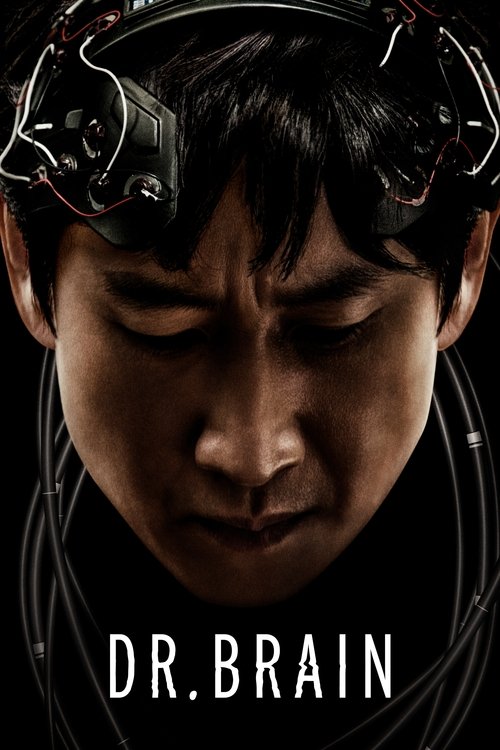
The Brain Sync Apparatus and Synaptic Cables

Meaning:

The glowing neural diodes, helmets, and cables represent the fragile bridge between distinct consciousnesses, symbolizing the convergence of cold technology and warm humanity.

Context:

Used during laboratory and morgue synchronization sequences, visually depicted as a tangle of wires evoking both modern cybernetics and biological neuronal pathways.

The Dissected Cat (and the Feline Perspective)

Meaning:

Serves as a motif for sensory recalibration and the first unmistakable sign that foreign neural patterns physically alter Sewon's physiology.

Context:

Introduced early in Sewon's unauthorized experiments when syncing with a deceased domestic cat, leading to dilated low-light vision, agility, and non-human instincts.

Water and Submersion

Meaning:

Represents the deep ocean of the unconscious mind, drowning in memories, and the suspension between life and brain death.

Context:

Rendered throughout the series during transitions into the subconscious and neural synchronizations through fluid, watery imagery and submerged visuals.

The Rubik's Cube / Mechanical Puzzles

Meaning:

Symbolizes a clinical view of the world: a series of interlocking mechanisms devoid of emotional resonance.

Context:

Appears in Sewon's childhood flashbacks as he effortlessly assembles and deconstructs complex mechanical puzzles.

The Phantom Investigator (Kangmu Lee)

Meaning:

Functions as Sewon's newly externalized conscience, intuition, and street-smart inner dialogue.

Context:

Appears alongside Sewon as a living companion and guide throughout the investigation, later revealed to be an embodied subconscious construct.

Memorable Quotes

어떤 물건이든, 난 항상 그걸 분해해서 그 안에 무엇이 숨겨져 있는지 보고 싶었다.
— Koh Sewon

Context

Spoken in the series premiere (Chapter 1) during reflections on his childhood.

Meaning

Establishes Sewon's lifelong analytical mindset and foreshadows his transition from deconstructing machines to deconstructing human consciousness.

죽은 자의 뇌는 거짓말을 하지 않아.
— Koh Sewon

Context

Uttered in Chapter 1 when Sewon justifies his risky, unauthorized sync with a morgue corpse to the skeptical Namil Hong.

Meaning

Emphasizes Sewon's absolute faith in neurological data over human testimony.

All 5 quotes

Episode Highlights

Chapter 1

S1E1

Introduces Sewon's childhood, his tragic backstory, and his revolutionary neuro-syncing breakthrough. Approached about the death of a man connected to his wife, Sewon tests the sync machine on a human corpse for the first time.

Significance:

Establishes the sci-fi mechanics, neo-noir visual aesthetic, and psychological stakes of the series.

Chapter 2

S1E2

Sewon syncs with a deceased cat and a murder victim, experiencing severe headaches, sensory distortion, and bizarre physical reflexes, while beginning to work closely with private eye Kangmu Lee.

Significance:

Solidifies the side effects of brain syncing and proves that memory extraction is a two-way biological assimilation.

Chapter 3

S1E3

A major turning point where Sewon is pursued by hitmen and discovers that the private investigator he has been speaking with was actually one of the corpses he synced with earlier.

Significance:

Recontextualizes Kangmu as a mental projection, radically reshaping the narrative structure into an unreliable, memory-driven investigation.

Chapter 4

S1E4

Sewon tracks down Heejin, uncovering covert clinics involved in experimental child neuro-surgeries, and connects with his comatose wife Jaeyi's brain.

Significance:

Confirms that Sewon's son Doyoon is still alive and was intentionally abducted for a larger medical conspiracy.

Chapter 5

S1E5

Lieutenant Choi and Sewon uncover the secret facility where Dr. Myung's rogue scientists operate, revealing that Sewon's revered mentor is the architect behind his family's destruction.

Significance:

Builds direct momentum toward the endgame by shifting the narrative from a forensic mystery into an urgent rescue mission.

Chapter 6

S1E6

Sewon initiates a multi-person simultaneous brain sync inside the mental realm to battle Dr. Myung for control of young Doyoon's mind, culminating in Jaeyi sacrificing her residual consciousness to purge Myung.

Significance:

Resolves the core family mystery, saves Doyoon, completes Sewon's emotional journey, and leaves a lingering cliffhanger regarding neural residue.

Philosophical Questions

Can consciousness exist independently of the biological body?

The series examines whether memories, personality, and identity can be digitally or biologically transplanted without destroying the human soul.

Is empathy an innate trait or an acquired skill?

Through Sewon's transformation, the narrative explores whether true understanding of another human being requires directly experiencing their pain and perspective.

Where are the ethical boundaries of post-mortem privacy?

By tapping into the brains of corpses without consent, the series questions whether the right to privacy ceases with brain death or if violating residual memory is a moral transgression.

Does memory define truth, or is subjective memory intrinsically deceptive?

The fragmented recollections of various subjects show how guilt, fear, and desire distort human memory, raising doubts about its validity as objective forensic evidence.

Alternative Interpretations

Several distinct interpretations of the series exist:

Full ending explanation

Cultural Impact

Dr. Brain premiered in late 2021 during an unprecedented global boom for South Korean television following the worldwide sensation of Squid Game. Rather than replicating survival games or traditional K-drama romance, Apple TV+ and Kim Jee-woon chose to showcase Korean auteur-driven prestige sci-fi.

The series was praised internationally for proving that Korean serials could excel at high-concept, cerebral genre storytelling. Although development on a second season began in early 2022, it was halted and remains a standalone miniseries, especially following the tragic passing of lead actor Lee Sun-kyun in December 2023. It stands as a milestone for Apple TV+'s early international catalog and a testament to Lee Sun-kyun's dramatic range.

Audience Reception

Dr. Brain received generally favorable critical reviews, holding a 71/100 on Metacritic with positive coverage in outlets like Collider and Paste Magazine. Critics praised Kim Jee-woon's stylish direction, Mowg's atmospheric score, and Lee Sun-kyun's nuanced performance transitioning from icy detachment to raw vulnerability.

Audiences responded strongly to the inventive neo-noir tone, the mid-series Kangmu twist, and the emotional climax. Minor criticisms centered on pacing imbalances in episodes 2–4 due to procedural investigation before the conspiracy opened up, as well as a simplified depiction of savant syndrome in the opening episode. Overall, it is regarded as an underrated, cerebral gem pairing high-concept sci-fi with family tragedy.

Interesting Facts

  • Dr. Brain was the very first Korean-language original series produced and commissioned by Apple TV+, timed to mark the platform's launch in South Korea in November 2021.
  • This marked the first long-form television series directed by master filmmaker Kim Jee-woon.
  • The original digital comic by Hongjacga was a straightforward noir procedural; the writing team expanded the narrative by creating the character of Jaeyi to emphasize family drama.
  • The production made extensive use of hyper-detailed dummy corpses for the morgue sequences to look realistic under cold studio lighting.
  • Kim Jee-woon re-teamed with frequent collaborators, including composer Mowg and award-winning film editor Yang Jin-mo.

Easter Eggs

Homage to Classic Sci-Fi & Noir Cinema

Features visual and thematic homages to Christopher Nolan's Inception (the layered architecture of the shared mental realm in Episode 6) and Joel Schumacher's Flatliners (the neurological costs of cheating brain death).

Mr. Spock's Mind Meld Reference

Director Kim Jee-woon cited the Vulcan mind meld from Star Trek during press conferences as a pop-culture touchstone for brain syncing.

Director's Self-Reference to Doomsday Book

The series revisits themes of artificial consciousness and the soul previously explored in Kim Jee-woon's philosophical sci-fi short The Heavenly Creature from the 2012 omnibus film Doomsday Book.

Frequently Asked Questions

Explore More About This Movie

Dive deeper into specific aspects of the movie with our detailed analysis pages

Comments (0)

Leave a comment

No comments yet. Be the first to share your thoughts!

Similar Movies