Skip to content
Hellbound
A grim supernatural noir suffocated by existential dread and collective hysteria, where morality fractures under the crushing smoke of sudden damnation and burning human ashes.
Hellbound

Hellbound

지옥

"They were resurrected into a hellbound world."

19 November 2021 — 25 October 2024 South Korea 2 season 12 episode Canceled 7.3 (1,013)

Cast: Kim Hyun-joo, Kim Shin-rock, Yang Ik-june, Lee Dong-hee, Lee Re

Drama Sci-Fi & Fantasy Mystery Weaponization of Faith and Ideological Manipulation Cosmic Nihilism and the Illusion of Divine Justice Mob Hysteria, Cyber-Tribalism, and Cancel Culture Human Dignity, Free Will, and Sacrificial Agency Grief, Guilt, and the Cycle of Vengeance

Overview

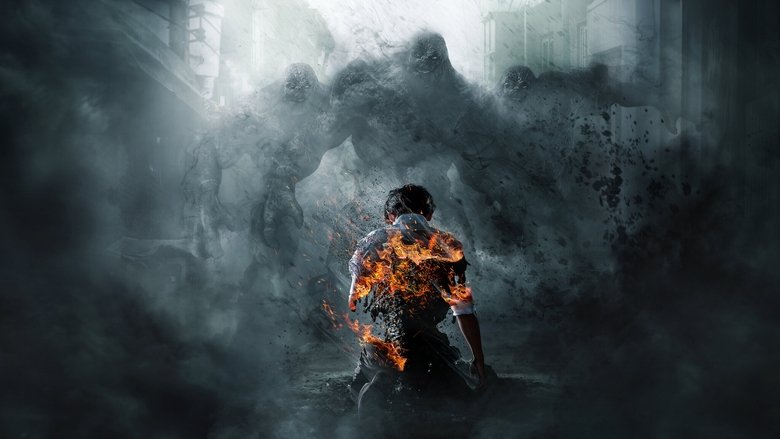
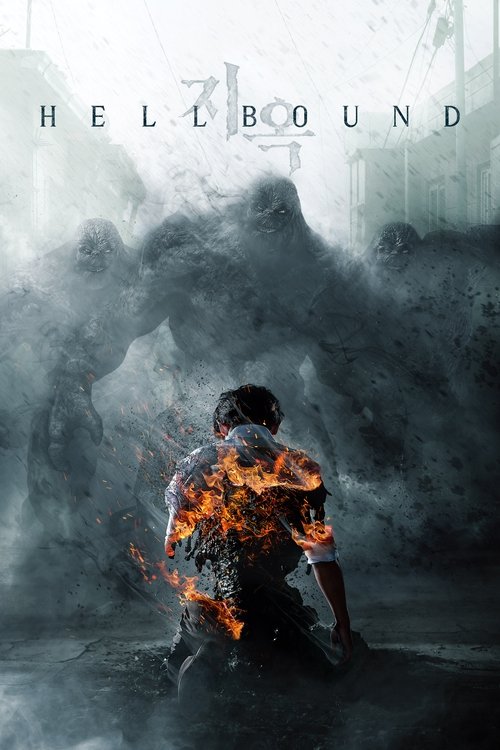
Hellbound (지옥, Jiok) is a dark supernatural thriller created and directed by Yeon Sang-ho, co-written with Choi Gyu-seok and based on their popular webtoon. Set in modern South Korea, the story begins when otherworldly apparitions—dubbed "angels"—materialize out of thin air to deliver ominous "decrees" (goji) to specific individuals, announcing the exact day and time of their death and condemnation to Hell. When the appointed moment arrives, three hulking, demonic beasts called "executors" appear, brutally maul the condemned, and incinerate them into charred remains in a terrifying spectacle termed a "demonstration" (siyeon).

Across its two seasons (12 episodes total), the narrative documents the total unraveling of human society under the weight of unexplainable terror. In Season 1, the sudden supernatural occurrences catalyze the rise of The New Truth Society (Saejinrihoe), an opportunistic religious cult that exploits cosmic horror to establish a theocratic moral order, backed by the violent cyber-vigilante mob known as the Arrowhead (Hwasalchok). As dissenting voices are hunted and the doctrine claiming that only wicked sinners are condemned begins to fracture, underground resistance movements fight to preserve fundamental human agency.

Season 2 expands this dystopian chessboard following an unprecedented development: the physical resurrection of previously condemned individuals. Society fractures into a multi-sided geopolitical and theological civil war between the faltering New Truth leadership, the increasingly fanatical and splintered Arrowhead factions, cynical government officials aiming to engineer societal stability through manipulated doctrine, and the underground sanctuary group Sodo. Rather than offering supernatural clarity, the series tracks humanity’s relentless impulse to manufacture dogmatic narratives in order to control an inherently indifferent universe.
Core Meaning

The core message of Hellbound is that humanity's greatest horror is not supernatural destruction or cosmic divine judgment, but the human impulse to exploit fear, manufacture totalitarian dogma, and self-righteously inflict cruelty upon others. Through both seasons, creator Yeon Sang-ho illustrates that the supernatural decrees are amoral, arbitrary, and indifferent to human concepts of sin and righteousness. The true "hell" is engineered entirely on Earth by institutions, vigilantes, and political opportunists weaponizing cosmic terror to subjugate free will and divide society into self-declared saints and condemned scapegoats. The series ultimately advocates for intrinsic human agency, uncalculated empathy, and love as the sole genuine counters to cosmic nihilism and organized tyranny.

Thematic DNA

Weaponization of Faith and Ideological Manipulation 30%
Cosmic Nihilism and the Illusion of Divine Justice 25%
Mob Hysteria, Cyber-Tribalism, and Cancel Culture 20%
Human Dignity, Free Will, and Sacrificial Agency 15%
Grief, Guilt, and the Cycle of Vengeance 10%

Weaponization of Faith and Ideological Manipulation

Explores how religious institutions, media platforms, and political entities exploit ambiguity and collective existential terror to manufacture dogma, enforce moral policing, and seize socio-political control.

Cosmic Nihilism and the Illusion of Divine Justice

Reveals the confrontation between humanity's desperate need for cosmic purpose/meaning and a universe whose supernatural mechanics are completely random, inexplicable, and indifferent to human concepts of sin.

Mob Hysteria, Cyber-Tribalism, and Cancel Culture

Depicts the rapid degeneration of modern civil society into fanatical vigilantism, fueled by internet livestreaming, algorithmic outrage, and public shaming disguised as virtue.

Human Dignity, Free Will, and Sacrificial Agency

Highlights the resistance of ordinary individuals who reject theological totalitarianism, choosing empathy, self-sacrifice, and mutual aid in an increasingly ruthless world.

Grief, Guilt, and the Cycle of Vengeance

Examines personal traumas driving individuals toward extremist absolutes or restorative justice, showing how unresolved pain makes people vulnerable to cultish radicalization.

Character Analysis

Min Hye-jin

Kim Hyun-joo

Archetype: The Reluctant Hero / Underground Protector Key Trait: Unyielding moral fortitude and fierce resilience

Motivation

Preserving human agency, defending the vulnerable from ideological exploitation, and upholding human dignity.

Character Arc

In Season 1, she begins as an idealistic, procedural attorney seeking legal protections for the decreed. After her mother is murdered and she is left for dead by Arrowheads, she hardens into a battle-hardened insurgent leader heading Sodo. Across Season 2, she resists becoming an authoritarian herself, remaining anchored by her commitment to protecting individual human lives (including Toughie and Park Jung-ja) above all political ideologies.

Jung Jin-su

Yoo Ah-in (Season 1) / Kim Sung-cheol (Season 2)

Archetype: The Charismatic Cult Architect / Tragic Nihilist Key Trait: Hypnotic charisma masking profound, crippling terror

Motivation

Desperately seeking meaning for his own arbitrary condemnation and spreading fear to force order on an indifferent world.

Character Arc

In Season 1, he presents as an austere, soft-spoken spiritual visionary who founds the New Truth. In secret, he received a decree 20 years earlier despite living an upright life. Driven by terror, he constructs an elaborate lie of divine retribution so humanity shares his dread. In Season 2, following his resurrection, he is driven entirely by paralyzing panic and psychological hallucinations of hell, ultimately succumbing to despair and transforming into an Executor himself.

All 4 characters and cast

Symbols & Motifs

The Scorched, Charred Skeletons

Meaning:

Symbolizes both the brutal finality of divine indifference and the morbid commodification of trauma.

Context:

The physical residue left behind after a demonstration, displayed in glass museum cases by the New Truth to enforce obedience through terror.

The Livestream and Smartphone Screen

Meaning:

Symbolizes digital mob rule, sensationalist mass culture, and how online outrage transforms cruelty into collective entertainment.

Context:

Ubiquitous across both seasons—from the neon-lit streaming studio of Arrowhead’s skull-faced streamer to public broadcasts of executions.

The Executors (Three Demonic Beings)

Meaning:

Rather than acting like classical demons tempted by sin, their mechanical, brutally efficient violence represents nature or cosmic forces operating without human morality.

Context:

The hulking, smoke-shrouded creatures that deliver violent death during demonstrations.

The Mirror / Reflection

Meaning:

Symbolizes that guilt, paranoia, and monstrous transformation originate from within the human psyche.

Context:

Prominently featured in Season 2 with the resurrected Jung Jin-su, reflecting his internal hell and the psychological terror of seeing his own inner demonic executor.

Baby Toughie / Bae Jae-hyeon

Meaning:

Symbolizes pure, uncorrupted human love, proving that human solidarity can defy supernatural absolutism and shattering the New Truth’s lie that decrees target conscious sinners.

Context:

The infant decreed to die who survives through parental sacrifice.

Memorable Quotes

신이 어떤 놈인지 난 잘 모르고 관심도 없는데, 한 가지는 확실히 알아. 여긴 인간들의 세상이야. 인간들의 일은 인간들이 알아서 해야지.
— The anonymous getaway taxi driver

Context

Addressed to Min Hye-jin in Season 1, Episode 6, as he helps her escape with the surviving infant Toughie.

Meaning

Translates to: "I don't know what kind of guy God is, and I don't care. But I know one thing for sure: this world belongs to humans. Human affairs should be settled by humans." It serves as the philosophical thesis of the entire series.

공포가 아니면 대체 뭐가 인간을 참회하게 할까요?
— Chairman Jung Jin-su

Context

Spoken to Detective Jin Kyeong-hoon during Season 1, Episode 3.

Meaning

Translates to: "If not for fear, what on earth could make humans repent?" It justifies his calculated decision to invent a divine narrative of moral punishment to enforce ethical behavior on a chaotic society.

All 5 quotes

Episode Highlights

Season 1, Episode 1

S1E1

Introduces the shocking premise with an in-broad-daylight public demonstration in downtown Seoul.

Significance:

Sets up Jung Jin-su's ideological influence and Detective Jin Kyeong-hoon’s procedural investigation.

Season 1, Episode 3

S1E3

A pivotal turning point that marks the culmination of the series' first arc. Jung Jin-su reveals to Detective Jin that he received a decree 20 years earlier, traps Jin in moral silence, and accepts his own brutal demonstration in secret.

Significance:

Fundamentally alters the theological power structure and establishes the core deception behind the New Truth.

Season 1, Episode 4

S1E4

Initiates the four-year time jump, revealing a transformed South Korea fully under the theocratic dominion of the New Truth and Arrowhead mobs. Shifts focus to TV producer Bae Young-jae when his newborn baby receives a decree.

Significance:

Dismantles the New Truth's core claim that decrees punish personal sins by targeting an innocent newborn.

Season 1, Episode 6

S1E6

The climactic Season 1 finale where Bae Young-jae and Song So-hyun sacrifice their lives to shield their baby from the executors, creating the first-ever survival of a decree in front of witnesses.

Significance:

Ends with the shocking cliffhanger resurrection of Park Jung-ja and proves supernatural absolutism can be resisted.

Season 2, Episode 1

S2E1

Re-establishes the world four years later, opening with the resurrection of Jung Jin-su.

Significance:

Demonstrates the collapse of New Truth hegemony into factional civil war with Arrowheads and Sodo.

Season 2, Episode 3

S2E3

Focuses on the deep psychological fracture between the two resurrected figures, contrasting Park Jung-ja's maternal clairvoyance with Jung Jin-su's descent into paranoia and terrifying visions.

Significance:

Deepens the exploration of subjective afterlife experiences and character divergence.

Season 2, Episode 6

S2E6

The explosive series finale. Jung Jin-su discovers his internal corruption and mutates into an Executor creature; mass decrees rain down upon hundreds of ordinary citizens across Seoul simultaneously.

Significance:

Completely upends societal structure and theological institutions while Min Hye-jin secures Park Jung-ja and young Jae-hyeon.

Philosophical Questions

Does the necessity for moral order justify the maintenance of a noble lie?

Explored through Jung Jin-su and Secretary Lee Su-gyeong, who argue society cannot survive without fear-driven moral boundaries.

Can divine justice exist without clear moral criteria?

Examined through the decreeing of a newborn baby and random mass populations, dismantling the idea that cosmic suffering is deserved.

What defines true humanity in the face of absolute cosmic power?

Explored through characters who choose empathy, sacrificial love, and mutual protection over self-preservation and fanatical dogma.

Alternative Interpretations

The series supports multiple viewing frameworks:

Full ending explanation

Cultural Impact

Hellbound was released globally in November 2021, directly in the wake of Squid Game’s historic breakthrough, quickly reaching #1 on Netflix in over 80 countries. Rather than leaning into accessible pop-culture tropes, Hellbound interrogated specific South Korean socio-political anxieties: the pervasive rise of pseudo-Christian cults and neo-religious sects (such as Shincheonji, which gained intense public scrutiny during the COVID-19 pandemic), intense online witch-hunts, algorithm-driven radicalization, and the erosion of institutional trust.

The show cemented Korean television’s reputation for uncompromising, high-concept philosophical genre storytelling. Internationally, it ranked at the top of Rotten Tomatoes' Best Horror Series of 2021 (holding a 97% critical approval rating) and sparked widespread critical debates on morality, theology, and digital mob justice.

Audience Reception

Season 1 Reception: Highly acclaimed by international critics (97% on Rotten Tomatoes) for its sharp social commentary, unpredictable pacing, and intense philosophical depth. Viewers praised Yoo Ah-in's chilling performance and the emotionally devastating sacrifice in Episode 6. Some minor criticism was directed at the CGI of the monster executors.

Season 2 Reception: Received solid, albeit more polarized reception. Critics praised Kim Sung-cheol’s committed performance taking over the lead role and the expanded multi-faction worldbuilding. However, some audiences found the heavy political machinations slower and were divided over the deliberate lack of definitive supernatural answers and the chaotic cliffhanger mass decree ending.

Overall Verdict: Regarded as one of the most audacious, intellectually challenging supernatural dystopian series to emerge from South Korea.

Interesting Facts

  • Hellbound began as Yeon Sang-ho's 11-minute animated short film Hell (2003), later adapted into a 2019–2020 webtoon with cartoonist Choi Gyu-seok before being greenlit by Netflix.
  • Season 1 made history at the 46th Toronto International Film Festival (TIFF) in September 2021 as the first Korean television drama invited to screen in the prestigious "Primetime" program.
  • Following legal controversies surrounding original lead actor Yoo Ah-in in early 2023, the role of Jung Jin-su was completely recast with stage and screen actor Kim Sung-cheol for Season 2.
  • The three demonic executors were meticulously designed using motion capture combined with volumetric smoke physics, avoiding traditional red/horned devil imagery in favor of giant, obsidian, gorilla-like golems to emphasize primordial indifference.
  • Episodes of both Season 1 and Season 2 were selected to premiere at the Busan International Film Festival (BIFF) in the "On Screen" section prior to their worldwide streaming launches.
  • Both Season 1 and Season 2 employ an unconventional structure with radical mid-season shifts and multi-year time jumps rather than following standard 16-episode K-drama formulaic pacing.
  • Actor Kim Sung-cheol revealed he hand-copied the entire script multiple times to dissect Jin-su’s internal psychology of fear, working closely with director Yeon to ensure the character's continuous dread felt seamless despite the actor change.

Easter Eggs

Origin Short Callbacks

The opening scene of Season 1 (a man terrified in a coffee shop before being hunted down) is a shot-for-shot recreation of Yeon Sang-ho’s original 2003 animated short The Hell (Two Lives).

Webtoon Author's Signature Style

The distinct artistic framing and character designs closely match the panels of Choi Gyu-seok's manhwa, notably the grotesque clown-makeup aesthetic of the Arrowhead streamers.

Reversal of Biblical Typology

Baby Toughie's survival in Season 1 reverses the Christian crucifixion motif: instead of a divine parent sacrificing an innocent child to save humanity, human parents sacrifice themselves to protect an innocent child from supernatural wrath.

Cameo and Directorial Universe

Director Yeon's regular cinematic collaborators appear across both seasons, including Yang Ik-june (director of Breathless) and actress Moon Geun-young in an uncharacteristically unhinged performance as Arrowhead leader "Miss Sunshine" (Oh Ji-won).

The Name "Sodo" (소도)

In ancient Korean history (Samhan period), Sodo was a designated sacred territory outside royal jurisdiction where fugitives could seek refuge and could not be arrested, directly matching the underground resistance group's mission to shelter the decreed.

Frequently Asked Questions

Explore More About This Movie

Dive deeper into specific aspects of the movie with our detailed analysis pages

Comments (0)

Leave a comment

No comments yet. Be the first to share your thoughts!

Similar Movies