Skip to content
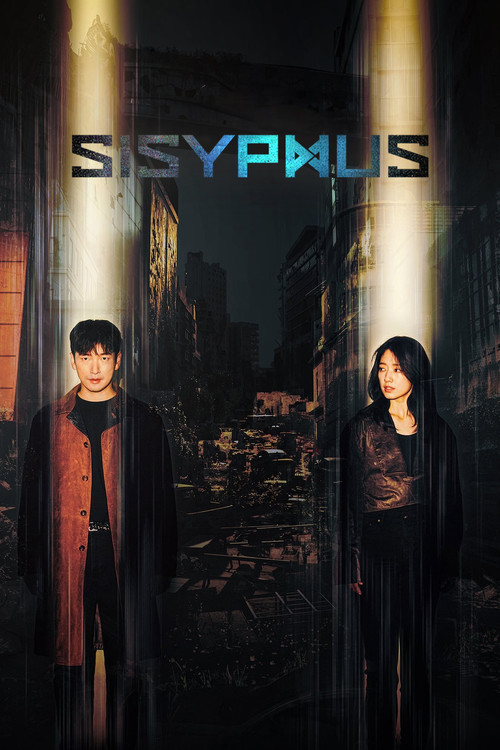
Sisyphus
A pulse-pounding dystopian mystery steeped in lingering grief and desperate hope, where shattered Seoul skylines collide with blinding quantum flashes as two doomed souls push an impossible boulder against the crushing tide of destiny.
Sisyphus

Sisyphus

시지프스 : the myth

17 February 2021 — 08 April 2021 South Korea 1 season 16 episode Ended 7.1 (127)

Cast: Cho Seung-woo, Park Shin-hye, Chae Jong-hyeop, Sung Dong-il, Tae In-ho

Drama Sci-Fi & Fantasy Action & Adventure Mystery Fatalism vs. Free Will The Weight of Regret and Unresolved Grief Technological Hubris and Ethical Responsibility Human Cruelty, Social Alienation, and Retaliation Sacrifice and Devotion

Overview

Sisyphus: The Myth is a 16-episode South Korean science-fiction action drama that centers on Han Tae-sul, an eccentric, world-renowned engineer and co-founder of the tech conglomerate Quantum and Time. Plagued by unresolved guilt and trauma following the sudden, mysterious death of his older brother Han Tae-san a decade prior, Tae-sul uncovers shocking evidence suggesting his brother is still alive—and that humanity has unlocked time travel through a quantum transmission machine known as the "Uploader".

His discovery plunges him into the crosshairs of ruthless adversaries, including the enigmatic Control Bureau—a shadowy state apparatus policing illegal timeline migrants—and black-market brokers operating in the underbelly of modern Seoul. Tae-sul's survival becomes intertwined with Kang Seo-hae, a formidable warrior journeying backward from a war-torn, post-apocalyptic future with an explicit mission: protect Tae-sul at all costs and prevent the invention of the temporal technology that precipitates global nuclear destruction.

As Tae-sul and Seo-hae forge an unbreakable bond under constant pursuit, they race against an ominous, unseen orchestrator named Sigma. The narrative unfolds in a tightly woven, dual-timeline tapestry that explores whether human willpower and sacrificial love can defy predetermined causal loops, or whether humanity is forever condemned to relive its greatest tragedies.

Core Meaning

At its core, Sisyphus: The Myth uses the framework of quantum mechanics and temporal paradoxes to explore the eternal human struggle against fate and remorse. Grounded in the ancient Greek myth of King Sisyphus—condemned for eternity to push a boulder up a mountain only to watch it roll back down—the series questions whether destiny is an inescapable prison built of human resentment or a cycle that can be shattered through conscious self-sacrifice.

The overarching message emphasizes that temporal machines do not create darkness; rather, human regret, unhealed trauma, and unchecked vengeance fuel the destructive cycles of history. True redemption lies not in running to the past to rewrite mistakes, but in confronting the present with empathy, responsibility, and the willingness to surrender self-interest for the preservation of others.

Thematic DNA

Fatalism vs. Free Will 30%
The Weight of Regret and Unresolved Grief 25%
Technological Hubris and Ethical Responsibility 20%
Human Cruelty, Social Alienation, and Retaliation 15%
Sacrifice and Devotion 10%

Fatalism vs. Free Will

The central conflict explores whether temporal loops are unchangeable bootstrap paradoxes or open systems subject to agency. Characters repeatedly discover that their attempts to alter destiny inadvertently set the very events of the apocalypse into motion, examining the heavy cost required to truly break a causal circle.

The Weight of Regret and Unresolved Grief

Every traveler venturing through the Uploader carries a suitcase containing the manifestation of their deepest regret. The driving engine of the series is Tae-sul’s remorse over how he treated his brother before his demise, demonstrating how guilt blinds individuals to present reality and invites catastrophic consequences.

Technological Hubris and Ethical Responsibility

Tae-sul’s brilliant intellect produces a groundbreaking quantum transport system without foresight into human nature, showcasing how scientific progress divorced from moral responsibility can become the catalyst for global annihilation.

Human Cruelty, Social Alienation, and Retaliation

Through the origins of Sigma, the series illustrates how systemic bullying, social ostracization, and emotional isolation fester into apocalyptic malice, posing that the world's destruction begins not with atomic bombs, but with societal cruelty.

Sacrifice and Devotion

The evolving relationship between Tae-sul and Seo-hae proves that profound emotional connection and selflessness represent the sole counterweight powerful enough to defy deterministic loops.

Character Analysis

Han Tae-sul

Cho Seung-woo

Archetype: The Reluctant Genius Hero / Brilliant Architect Key Trait: Polymathic spatial-analytical genius combined with sharp wit.

Motivation

Initially driven to uncover the truth about his brother Han Tae-san's disappearance, which later evolves into breaking the temporal loop to save Kang Seo-hae and avert global nuclear war.

Character Arc

Begins as an arrogant, pill-dependent, self-absorbed tech billionaire consumed by chronic survivor's guilt over his brother. Through his alliance with Seo-hae, he evolves into a deeply empathetic, brave protector willing to sacrifice his legacy, his scientific crowning achievement, and his own life to rescue humanity and the woman he loves.

Kang Seo-hae

Park Shin-hye

Archetype: The Hardened Warrior / Temporal Savior Key Trait: Superb physical combat reflexes, marksman proficiency, and unflinching resolve.

Motivation

To fulfill the survival instructions left in her future diary by protecting Han Tae-sul and preventing the catastrophic launch of nuclear missiles.

Character Arc

Forged in the brutal ruins of a post-nuclear wasteland, she arrives in the past as a relentless, emotionally guarded survivalist. Interacting with 21st-century civilization and Tae-sul rekindles her warmth, vulnerability, and humanity, shifting her from a soldier obeying a survival diary to an autonomous woman choosing love over pure combat instinct.

All 5 characters and cast

Symbols & Motifs

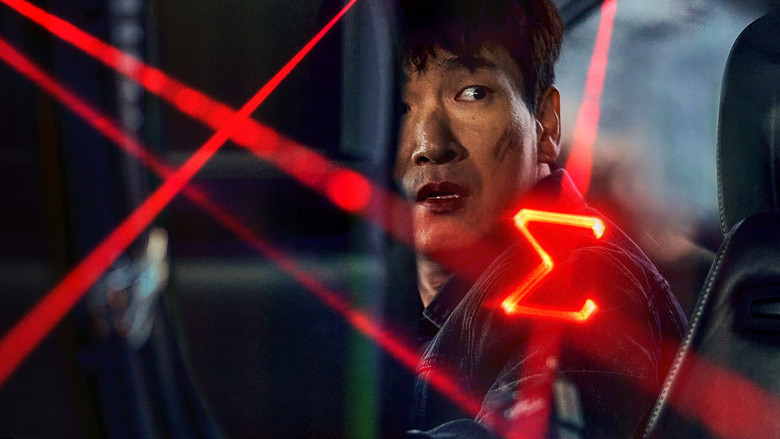
The Greek Letter Sigma (Σ)

Meaning:

Represents summation, inevitable culmination, and the mythic, cyclical entrapment of human history.

Context:

Serves as the personal calling card and identifying mark of the primary antagonist throughout the series.

The Suitcase (Carrier)

Meaning:

Represents physical artifacts of lost memories, unfinished business, and the tangible manifestations of deep personal remorse.

Context:

Carried by every timeline traveler arriving from the future, containing their most precious worldly possessions and remnants of what they regret most.

The Diary

Meaning:

Acts as an anchor of causal memory containing cryptic clues and warnings intended to guide younger iterations past prior failures.

Context:

A recurring, battered journal authored by Seo-hae across multiple loop iterations and found near her mother's grave.

BTS / Music ("Spring Day")

Meaning:

Symbolizes youthful innocence, cultural nostalgia, and an enduring emotional lifeline connecting survivors to a world full of life and color.

Context:

Found in the barren, irradiated wasteland of 2035 through posters, merchandise, and the song "Spring Day" played on a portable player by Seo-hae.

Sugar Cubes and Coffee

Meaning:

A visual metaphor for entropy, irreversibility, and quantum predictability, demonstrating spatial and analytical problem-solving.

Context:

Used by Tae-sul as a thinking habit to map physical trajectories, chaotic vectors, and scientific principles.

The Sisyphus Painting / Myth

Meaning:

Represents the characters' repetitive, agonizing struggles across timelines and eternal recurrence.

Context:

Prominently featured across set designs and debated in dialogue within Quantum and Time offices.

Memorable Quotes

미래는 이미 여기에 와 있어. 단지 널리 퍼져 있지 않을 뿐이지.
— Han Tae-sul

Context

Delivered during key public keynote demonstrations and presentations in Episodes 1 and 4.

Meaning

Establishes the scientific premise of the series, referencing William Gibson to show that temporal technology has quietly permeated present reality long before society comprehends it.

내가 너 지켜줄게. 그러니까 넌 세상을 구해.
— Kang Seo-hae

Context

Spoken to Tae-sul during a high-stakes ambush and pursuit by the Control Bureau in Episode 5.

Meaning

Solidifies the central partnership and dynamic between the leads, assigning Seo-hae the role of the protective shield while tasking Tae-sul with the burden of intellectual salvation.

All 4 quotes

Episode Highlights

The Descent

S1E1

Han Tae-sul performs an emergency mid-air repair on a compromised passenger jet struck by an impossible object—his brother's suitcase and corpse—while Kang Seo-hae arrives battered on railway tracks from the year 2035.

Significance:

Establishes the high-concept sci-fi scope, introduces the primary timeline mystery, and initiates the collision course between Tae-sul and Seo-hae.

The Brokerage

S1E5

Tae-sul and Seo-hae infiltrate Asia Mart, uncovering the underground operations of President Park and the mechanics of illicit quantum downloaders.

Significance:

Lays out the foundational lore regarding timeline migration, temporal luggage, and the manifestation of human regret as a driving force.

The Conference / The Face of Sigma

S1E9

Sigma steps forward into the public sphere during a major Quantum and Time tech conference, demonstrating his pervasive reach over the present world.

Significance:

Acts as the midpoint pivot, revealing that the conspiracy extends into the highest corporate and political echelons of modern Seoul.

Wasteland Memories

S1E11

A visual narrative detour detailing Seo-hae's upbringing inside an underground bunker with her father following the devastating nuclear fallout of Seoul.

Significance:

Provides essential emotional context for Seo-hae's motivations, reveals the reality of the nuclear war, and explains how she discovered her future diary.

The Genesis of Malice

S1E14

Explores the psychological backstory of Seo Won-ju (Sigma) as an abused, ignored child and elementary school classmate of Tae-sul.

Significance:

Exposes the personal roots of the apocalyptic conflict, demonstrating how societal neglect, bullying, and domestic abuse forged a destructive mastermind.

The Endless Loop / The Resolution

S1E16

During a climatic church confrontation, Tae-sul realizes that the Uploader's creation is inevitable as long as he lives, prompting him to shoot himself to break the causal loop.

Significance:

Serves as the series finale, dissolving the dystopian timeline, saving the world from nuclear war, and closing with an ambiguous, transcendental epilogue on an airplane.

Philosophical Questions

Is fate an absolute construct, or can genuine free will override cause-and-effect?

The series investigates whether possessing advance knowledge of future events inevitably creates an inescapable bootstrap trap, or whether conscious, unpredictable agency can alter predetermined loops.

Does technology amplify human virtue or human depravity?

Explored through the Uploader, which merely teleports quantum data, illustrating how human regret, greed, and unresolved hatred transform neutral scientific breakthroughs into tools of global annihilation.

Is individual self-sacrifice the only true moral antidote to cyclic violence?

Demonstrated when Tae-sul realizes that engaging in Sigma's temporal game guarantees perpetual loss, making the ultimate decision to exit the board entirely through self-sacrifice to end the cycle.

How much responsibility does society bear for the monsters it creates?

Examines Sigma's descent into psychopathic nihilism as a direct consequence of everyday childhood abuse, systemic bullying, and social indifference from everyday people.

Alternative Interpretations

Interpretations of the series finale diverge across three primary readings:

Full ending explanation

Cultural Impact

Sisyphus: The Myth debuted during a period when South Korean television was aggressively diversifying beyond standard melodramas and historical period pieces into ambitious, high-concept speculative science fiction (alongside titles like The King: Eternal Monarch, Alice, and Space Sweepers).

While the series premiered with a strong nationwide television rating of 5.6%, domestic viewership gradually waned over its 16-episode run, concluding at 4.36% (Nielsen Korea) due to domestic audience fatigue regarding complex temporal paradoxes. However, it achieved significant global streaming success, maintaining a consistent top-10 ranking on Netflix across multiple territories in Asia, Europe, and Latin America.

Additionally, the narrative reflected deep-seated South Korean peninsular anxieties regarding sudden nuclear war, civil defense preparedness, and the fragile peace across the DMZ.

Audience Reception

Audience and critical reception of Sisyphus: The Myth was polarized across several key components:

  • Lead Performances: Universally praised. Cho Seung-woo earned acclaim for infusing Han Tae-sul with intellectual charisma, quick comic wit, and raw emotional vulnerability, while Park Shin-hye was applauded for her grounded dramatic presence and commitment to intense physical action scenes.
  • Pacing and Plot Logic: Heavily criticized by viewers and critics (including the South China Morning Post), who noted recursive plot paradoxes, logical inconsistencies in time-travel rules, and unresolved narrative threads in the second half.
  • World-Building and Action: Moderately praised for its cinematic realization of post-apocalyptic Seoul, high-stakes shootout choreography, and ambitious set pieces.
  • Series Finale: Highly divisive, leaving many viewers puzzled by the timeline mechanics of the suicide paradox while others found emotional resonance in the leads' romantic closure.

Interesting Facts

  • The drama was specifically developed, financed, and promoted as JTBC's flagship 10th-anniversary celebration blockbuster project.
  • With an estimated budget between ₩20 billion and ₩25 billion (approx. $18–$22 million USD), it was one of the most expensive South Korean television productions in 2021.
  • The series was 100% pre-produced, with filming taking place between May 2020 and December 2020 to allow extensive time for visual effects and dystopian CGI rendering.
  • Director Jin Hyuk previously helmed popular landmark Korean dramas such as City Hunter (2011), Master's Sun (2013), and Legend of the Blue Sea (2016).
  • The screenwriting was handled by the husband-and-wife writing team Lee Je-in and Jeon Chan-ho.
  • Park Shin-hye underwent several months of intensive action school martial arts training to perform major hand-to-hand combat and wire stunt scenes without stunt doubles.

Easter Eggs

Seo-hae's BTS Fandom and 'Spring Day'

Seo-hae is explicitly an 'ARMY' who listens to BTS's 2017 song "Spring Day" on a portable player amidst the ruins of 2035 Seoul, referencing a real-world cultural anthem about grief, longing, and reunions across cold winters.

Sci-Fi Cinematic Homages

Quantum arrival sequences pay visual homage to Terminator 2 (naked arrivals on desolate tracks) and Back to the Future, while Tae-sul's quick analytical deduction shots echo Guy Ritchie's Sherlock Holmes and MacGyver.

King Sisyphus Lore

King Sisyphus' mythological punishment from Hades for defying death is explicitly debated in dialogue and featured in historical literature displayed within the Quantum and Time corporate offices.

Frequently Asked Questions

Explore More About This Movie

Dive deeper into specific aspects of the movie with our detailed analysis pages

Comments (0)

Leave a comment

No comments yet. Be the first to share your thoughts!

Similar Movies