Dragon Ball Super: Super Hero
ドラゴンボール超 スーパーヒーロー
"A super awakening and calamity is born."
Overview
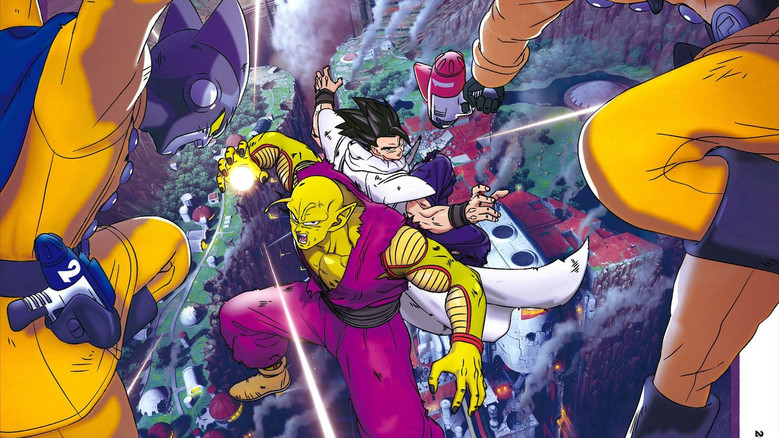
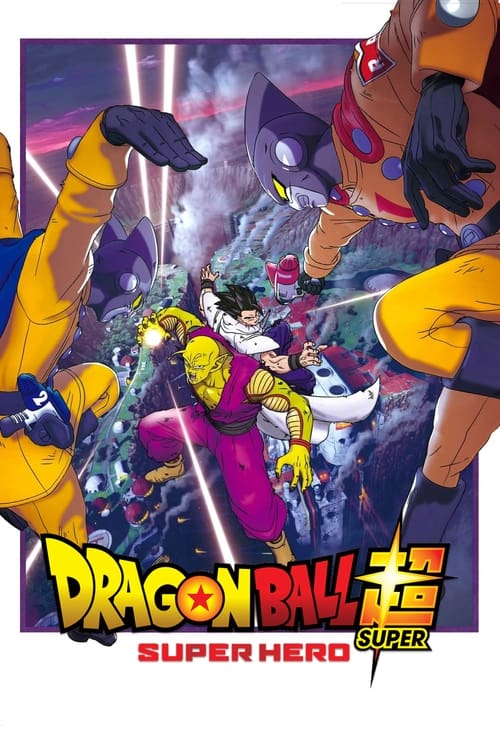
Dragon Ball Super: Super Hero shifts its focus from the usual protagonists, Goku and Vegeta, to shine a spotlight on the master-student duo, Piccolo and Gohan. The Red Ribbon Army, a villainous organization once defeated by a young Goku, has been resurrected under the leadership of Commander Magenta and the brilliant but misguided Dr. Hedo, the grandson of the infamous Dr. Gero. Dr. Hedo creates two powerful androids, Gamma 1 and Gamma 2, who believe they are superheroes fighting for justice.
When the Red Ribbon Army targets Piccolo and his family, the Namekian warrior must devise a plan to awaken the latent power within Gohan, who has been neglecting his training in favor of his scholarly pursuits. This leads to a series of comedic and action-packed encounters as Piccolo orchestrates a fake kidnapping of Gohan's daughter, Pan, to reignite his fighting spirit. The film culminates in an explosive battle against a colossal new threat, forcing Gohan and Piccolo to unlock new levels of power to protect their loved ones and the world.
Core Meaning
The core meaning of Dragon Ball Super: Super Hero revolves around the themes of potential, mentorship, and the true nature of heroism. The film emphasizes that true strength isn't just about raw power, but about having something to protect and the courage to stand up for it. It explores the idea that anyone can be a hero, regardless of their past, and that neglecting one's potential can have dire consequences. The narrative champions the bond between teacher and student, showcasing how guidance and belief in others can help them achieve greatness. Ultimately, the film suggests that heroism is not about flashy poses or grand titles, but about selfless sacrifice and the willingness to fight for what is right.
Thematic DNA
The Nature of Heroism
The film deconstructs and reconstructs the concept of a superhero. Gamma 1 and Gamma 2 are designed with all the superficial trappings of heroes, yet they initially serve a villainous organization. Their journey involves realizing the true meaning of heroism through the actions of Piccolo and Gohan, culminating in an act of self-sacrifice from Gamma 2. This theme is further explored through Gohan's reluctance to embrace his role as a protector, contrasting with Piccolo's unwavering dedication.
Mentorship and Fatherhood
The central relationship of the film is the bond between Piccolo and Gohan, which is portrayed as a strong master-student and surrogate father-son dynamic. Piccolo's unwavering belief in Gohan's potential and his efforts to push him to be his best are the driving force of the narrative. The film also highlights Piccolo's role as a mentor and grandfather figure to Pan, Gohan's daughter, showcasing his nurturing side.
Unleashing Latent Potential
A core theme in the Dragon Ball franchise, this film brings it to the forefront with Gohan as the central focus. Having neglected his training, Gohan's immense power lies dormant. The film's plot is engineered to force him to rediscover and surpass his limits. This theme is also reflected in Piccolo, who, through his own desire to protect others, unlocks a new transformation.
The Legacy of the Past
The film is deeply rooted in the history of the Dragon Ball series, bringing back the Red Ribbon Army and the legacy of Dr. Gero. This theme explores how past conflicts and creations can have lasting repercussions. The creation of Cell Max serves as a literal and figurative resurrection of a past threat, forcing the heroes to confront a new, more monstrous version of an old enemy.
Character Analysis
Piccolo
Toshio Furukawa
Motivation
His primary motivation is the protection of Gohan and his family, particularly Pan. He is frustrated with Gohan's neglect of his training, not out of a desire for battle, but from a genuine concern for the safety of the world and those he cares about.
Character Arc
Piccolo takes center stage in this film, moving from a supporting character to the primary protagonist. He is the driving force of the plot, orchestrating events to reawaken Gohan's fighting spirit and protect his family. Through his resourcefulness and willingness to push his own limits, he achieves a new transformation, 'Orange Piccolo,' solidifying his role as one of Earth's strongest defenders.
Gohan
Masako Nozawa
Motivation
Initially motivated by his academic pursuits, his core motivation shifts to the protection of his daughter, Pan. This fierce paternal instinct is the catalyst for him to finally unleash his full potential.
Character Arc
Gohan's arc is one of reawakening. He has settled into a comfortable life as a scholar and father, letting his immense power lie dormant. The events of the film force him to confront the necessity of his strength and embrace his role as a protector. The perceived threat to his daughter, Pan, ultimately pushes him to unlock a new, powerful form known as 'Beast Gohan.'
Dr. Hedo
Miyu Irino
Motivation
His initial motivation is the funding and resources to create what he believes are the ultimate superheroes. He is driven by a desire for recognition for his genius and a genuine, albeit naive, belief in the ideal of superheroes.
Character Arc
Dr. Hedo is a brilliant scientist with a fascination for superheroes. He is manipulated by the Red Ribbon Army into creating androids for their nefarious purposes. Throughout the film, he comes to realize he's on the wrong side and ultimately aids the heroes in defeating his own monstrous creation, Cell Max. His arc is one of redemption, as he chooses to use his intellect for good.
Gamma 1 & Gamma 2
Hiroshi Kamiya & Mamoru Miyano
Motivation
Their motivation is to be superheroes and serve justice, a belief instilled in them by their creator, Dr. Hedo. They are driven by a strong sense of right and wrong, which ultimately leads them to turn against their creators.
Character Arc
Gamma 1 and Gamma 2 begin as antagonists, believing they are fighting for justice. They are honorable in their own way, which leads them to question the motives of the Red Ribbon Army. Their arc is one of disillusionment and eventual redemption. Gamma 2, in particular, has a heroic sacrifice, giving his life to weaken Cell Max, proving he truly understood what it means to be a hero.
Symbols & Motifs
Gohan's Glasses
Gohan's glasses symbolize his scholarly life and his detachment from his warrior instincts. When he wears them, he is the academic and family man. Their removal often signifies his transition into a fighter, and his inability to catch a Senzu Bean without them highlights his rustiness in combat.
Gohan is frequently shown with his glasses during his research and family life. Piccolo's frustration with Gohan's academic focus is often directed at this aspect of his life. During the final battle, Gohan's glasses are knocked off, symbolizing his full return to his fighting form.
Superhero Poses
The dramatic and stylized poses of Gamma 1 and Gamma 2 represent a superficial and performative understanding of heroism. They mimic the aesthetics of superheroes without initially grasping the substance behind the ideal.
Gamma 1 and Gamma 2 frequently strike heroic poses, complete with on-screen sound effects, which initially bemuses Piccolo. This is later revealed to be a programmed part of their android personas, emphasizing their manufactured nature.
Cell Max
Cell Max symbolizes the uncontrollable and monstrous nature of power without intellect or purpose. Unlike the original Cell, who was cunning and articulate, Cell Max is a mindless engine of destruction, representing the dangers of resurrecting past evils without understanding or control.
Cell Max is unleashed as a last resort by the Red Ribbon Army and immediately goes on a rampage, unable to distinguish friend from foe. Its design is a grotesque and oversized version of Cell's semi-perfect form, emphasizing its unnatural and incomplete nature.
Memorable Quotes
Is your research more important than your family?
— Piccolo
Context:
Piccolo says this to Gohan at his home after Gohan claims to be too busy with his research to pick up his daughter, Pan, from school.
Meaning:
This quote encapsulates Piccolo's frustration with Gohan's negligence of his duties as a protector. It's a direct challenge to Gohan's priorities and serves as a catalyst for his character arc.
In the end, he really was a superhero.
— Piccolo
Context:
This line is spoken after Gamma 2 sacrifices himself in an attempt to destroy Cell Max, acknowledging his redemption.
Meaning:
Piccolo says this in recognition of Gamma 2's heroic sacrifice. It signifies that true heroism is defined by actions and intentions, not by one's origin or initial allegiances.
If worse comes to worst, my dad and Vegeta are around.
— Gohan
Context:
Gohan says this to Piccolo while defending his decision not to train, believing that his father and Vegeta will always be there to handle any major threats.
Meaning:
This quote highlights Gohan's over-reliance on Goku and Vegeta and his reluctance to take responsibility for protecting the Earth himself. It demonstrates his complacency at the beginning of the film.
Philosophical Questions
What is the true measure of a hero?
The film explores this question by contrasting the manufactured heroism of the Gammas with the earned heroism of Piccolo and Gohan. It suggests that being a hero is not about public perception or a cool costume, but about making difficult choices and personal sacrifices for the greater good.
Is it a weakness to neglect one's full potential for a life of peace?
Gohan's character arc directly addresses this question. His desire for a normal life as a scholar is understandable, but the film argues that for individuals with extraordinary abilities, there is a responsibility to maintain their strength to protect others. It explores the conflict between personal desires and the duties that come with great power.
Can good be born from a legacy of evil?
Dr. Hedo, the grandson of the villainous Dr. Gero, ultimately chooses a path of redemption. This suggests that individuals are not defined by their lineage and have the capacity to use their inherited talents for good. The Gammas also overcome their programming to become true heroes, reinforcing the theme of redemption.
Alternative Interpretations
One alternative interpretation of the film is that it serves as a commentary on the oversaturation of superhero media. Dr. Hedo's obsession with the aesthetics of heroism, without understanding its core principles, can be seen as a critique of how superhero tropes are often superficially adopted in popular culture. The film's title, with its redundant 'Super Hero' moniker, could also be a playful jab at this trend.
Another interpretation is that Cell Max represents the dangers of unchecked nostalgia. By bringing back a classic villain in a more monstrous and mindless form, the film could be cautioning against the simple re-creation of past successes without the substance and intelligence that made them compelling in the first place. Some fan theories also speculate that the film sets up future storylines, such as Pan's potential to become a Super Saiyan after witnessing the intense battles, or that the introduction of Dr. Hedo and Gamma 1 into the fold at Capsule Corp could lead to new technological advancements for the Z Fighters.
Cultural Impact
Dragon Ball Super: Super Hero had a significant cultural impact upon its release, particularly for its bold shift in animation style and its narrative focus. The decision to primarily use 3D CGI animation was a major talking point among fans and critics, sparking discussions about the future of the franchise's visual identity. While some viewers were initially hesitant, the film was largely praised for its dynamic and fluid action sequences, which were enhanced by the new animation techniques.
The film was also notable for shifting the spotlight away from Goku and Vegeta and onto the fan-favorite characters of Gohan and Piccolo. This was widely praised by audiences who had been eager to see these characters receive significant development and new power-ups. The film's success demonstrated that the Dragon Ball franchise could still tell compelling stories without relying solely on its two most popular characters. Dragon Ball Super: Super Hero was a box office success, further solidifying the global popularity of the Dragon Ball franchise and its enduring appeal to both long-time fans and a new generation of viewers.
Audience Reception
Dragon Ball Super: Super Hero was generally well-received by audiences, who praised its focus on Gohan and Piccolo, giving them long-awaited character development and powerful new transformations. The film's humor and heartfelt moments, particularly the dynamic between Piccolo and Pan, were also highlighted as strong points. Many viewers enjoyed the nostalgic elements, such as the return of the Red Ribbon Army, while also appreciating the fresh narrative direction. The action sequences, enhanced by the new CGI animation style, were widely considered to be a highlight, offering a dynamic and visually engaging experience.
Criticism of the film was often directed at the 3D animation style, with some long-time fans expressing a preference for the traditional 2D look of the series. Some viewers also found the final villain, Cell Max, to be a less compelling and more one-dimensional threat compared to the original Cell. The relative absence of Goku and Vegeta was a point of contention for some, though many others saw this as a positive and refreshing change of pace for the franchise.
Interesting Facts
- This is the first Dragon Ball film to be animated primarily using 3D CGI.
- The film's original Japanese release was delayed from April 22, 2022, to June 11, 2022, due to a cyberattack on Toei Animation.
- Akira Toriyama, the creator of Dragon Ball, was heavily involved in the film's production, writing the original story, screenplay, and character designs.
- The English voice actor for Magenta, Charles Martinet, is famously known for being the long-time voice of Mario from the Nintendo video game series.
- The film's title, 'Dragon Ball Super: Super Hero,' came about because Akira Toriyama had forgotten that the current series branding was already 'Dragon Ball Super.'
Easter Eggs
Dr. Gero's Family Tree
A diagram of Dr. Gero's family is shown, which reveals that Android 16 was modeled after his son, and introduces his wife, Vomi, who is the basis for the non-canon character Android 21 from the video game Dragon Ball FighterZ.
Vegeta's 'Badman' Shirt
During a scene where the Red Ribbon Army is reviewing data on the Z Fighters, an image of Vegeta wearing his iconic pink 'Badman' shirt from the Android Saga of Dragon Ball Z is shown.
Gamma 1 and 2's Design
The designs of Gamma 1 and Gamma 2 are a deliberate homage to classic Japanese tokusatsu superheroes, particularly Ultraman.
Gohan's Missed Senzu Bean
In a moment of clumsiness, Gohan fails to catch a Senzu Bean thrown to him by Piccolo, a callback to him famously dropping a Potara earring during the Buu Saga in Dragon Ball Z.
Piccolo's Driver's License
There is a humorous reference to a filler episode from Dragon Ball Z where Goku and Piccolo attempt to get their driver's licenses, with Piccolo mentioning in the film that he doesn't have one.
⚠️ Spoiler Analysis
Click to reveal detailed analysis with spoilers
Frequently Asked Questions
Explore More About This Movie
Dive deeper into specific aspects of the movie with our detailed analysis pages
Comments (0)
No comments yet. Be the first to share your thoughts!