Skip to content
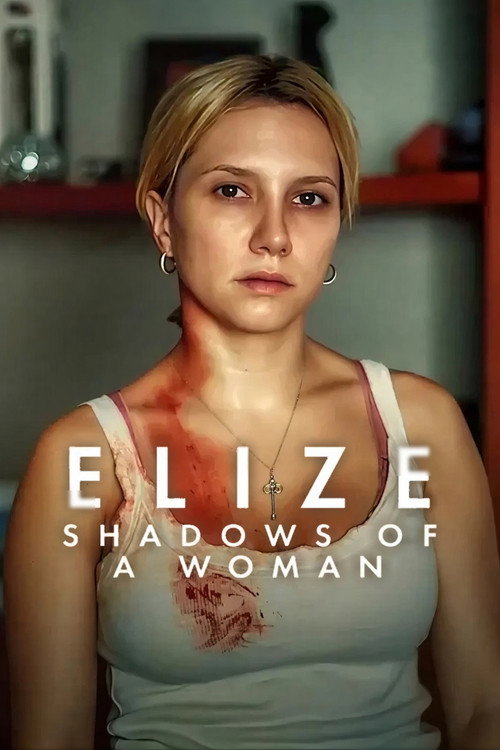
Elize: Shadows of a Woman
A cold, close-quartered Brazilian true-crime drama about a marriage that curdles into a cage — luxury apartment light falling like frost on a woman the world only ever saw in outline.
Elize: Shadows of a Woman

Elize: Shadows of a Woman

Elize: Sombras de uma Mulher

"The truth behind a perfect marriage."

22 July 2026 Brazil 93 min 7.5 (202)

Director: Vellas

Cast: Lorena Comparato, Henrique Kimura, Denise Weinberg, Gustavo Falcão, Julia Shimura

Drama Crime Thriller Domestic violence beyond the visible bruise Class, origin and the price of admission Obsession and mutual entrapment The grey zone of the human mind Truth, fiction and the ethics of true crime

Overview

Elize: Shadows of a Woman (Elize: Sombras de uma Mulher) is a 2026 Brazilian true-crime drama directed by Felipe Vellas, written by Raphael Montes and Mariana Torres, and released on Netflix on 22 July 2026. It dramatizes the events leading up to the 2012 murder of executive Marcos Kitano Matsunaga through a fictionalized account of the life and marriage of his wife, Elize Matsunaga — a case that shocked Brazil and has already been the subject of a Netflix documentary series.

Rather than staging the case as an investigative thriller, the film builds a character study from the inside out. Lorena Comparato plays Elize as a woman who moves from a precarious past into the sealed world of a wealthy São Paulo family, where money, name and lineage set the terms of every conversation. Henrique Kimura plays Marcos, heir to an industrial fortune, and the film tracks their relationship as intimacy hardens into surveillance, humiliation and mutual entrapment.

Running a compact ninety minutes, the film is less interested in what exactly happened than in how a person arrives there. It compresses timelines and invents scenes of childhood and marriage that have no direct documentary counterpart, using them to trace the slow accumulation of class humiliation, emotional abuse and isolation. The result is a psychological drama that deliberately withholds a tidy motive.


Core Meaning

The film's central argument is that a crime that Brazil consumed as a tabloid spectacle was preceded by years of quieter, less legible violence. By taking Elize's perspective — without ever offering it as exoneration — Vellas asks the audience to sit inside a marriage in which cruelty is administered in small doses: through money, through family standing, through the constant reminder of who belongs and who was let in.

Its second, self-aware argument concerns the true-crime genre itself. The film refuses sensationalism and refuses a clean explanation; critics repeatedly noted that the real motive remains speculative and that the film leaves viewers with more questions than answers, so that each person draws their own conclusions about the actions of a woman who killed. That withholding is the statement: a human being is not solved by a verdict, and a life reduced to a headline was always more shadow than portrait — as the title insists.

Thematic DNA

Domestic violence beyond the visible bruise 28%
Class, origin and the price of admission 24%
Obsession and mutual entrapment 20%
The grey zone of the human mind 16%
Truth, fiction and the ethics of true crime 12%

Domestic violence beyond the visible bruise

Critics identified the film's core subject as the deterioration of a marriage marked by social inequality, emotional abuse and constant conflict, showing that domestic violence takes forms far beyond physical aggression. The script accumulates humiliations — a tone of voice, a withheld sum of money, a family dinner where she is discussed rather than addressed — until the atmosphere itself becomes a form of harm.

Class, origin and the price of admission

Elize's movement from a precarious past into an industrial dynasty is the film's engine. Her origin is never allowed to be past tense: it is the permanent condition on which she is tolerated. The Matsunaga world offers her everything material and withholds the one thing she came for — the sense of being an equal — so that every luxury doubles as evidence of her dependence.

Obsession and mutual entrapment

Reviewers framed the film as an opening for discussion of obsession and abusive relationships. Neither spouse can leave: he cannot release a woman he has made into property, she cannot exit a life that has erased her alternatives. The couple's intimacy and their surveillance of each other become indistinguishable, and the marriage tightens rather than breaks.

The grey zone of the human mind

The film was praised for avoiding sensationalism and plunging instead into the grey zones of the human mind, generating discomfort and tension rather than shock. Elize is neither monster nor victim; the film denies the audience the relief of either category and holds them in the ambiguity where both readings stay alive at once.

Truth, fiction and the ethics of true crime

Built from court records, prior documentaries and original research including conversations with detectives and people close to the case, the film openly invents connective tissue — childhood scenes, private marital moments — that no document could supply. It thereby stages its own problem: the limits between reality and fiction when a real case is adapted for streaming.

Character Analysis

Elize Matsunaga

Lorena Comparato

Archetype: Antiheroine / unreliable center of consciousness Key Trait: Watchful containment — everything registers, almost nothing is expressed

Motivation

To be recognized as a person of equal standing rather than tolerated as an outsider; to hold on to a family and a position that are constantly conditional.

Character Arc

She travels from a woman seeking security and belonging to one wholly enclosed by the life she entered, and finally to the author of an irreversible act the film refuses to fully explain. The narrative adopts her perspective throughout, which shapes what the audience is allowed to see — and what it must doubt.

Marcos Kitano Matsunaga

Henrique Kimura

Archetype: Antagonist as intimate — the entitled heir Key Trait: Charm that operates as leverage

Motivation

To retain authority over his household and his inheritance without surrendering the freedoms his position affords him.

Character Arc

Introduced as the man who lifts Elize into his world, he becomes the enforcer of its hierarchy, his affection increasingly indistinguishable from control as the marriage deteriorates into conflict and emotional abuse.

All 3 characters and cast

Symbols & Motifs

The narrow corridor

Meaning:

Constriction and the impossibility of retreat. The domestic space is not shelter but architecture of control — a body of hallways with no room to turn around.

Context:

Cinematography reviewers singled out the film's use of shadows, narrow corridors and cold interiors to reinforce the protagonist's emotional isolation; the apartment is shot as a passage rather than a home.

The shadow of the title

Meaning:

The gap between a woman and the public image of her. A shadow is cast by a person but is not the person — the film's thesis about how the case was consumed.

Context:

The title, Sombras de uma Mulher, is literalized in the lighting scheme of dark, cold tones, in which Comparato is repeatedly framed at the edge of illumination.

The luxury apartment

Meaning:

Wealth as a display case. Everything she gained is visible, valuable and not hers, and the transparency of that life is also its imprisonment.

Context:

The high-end São Paulo interior is the film's principal stage, where affluence is photographed as chill rather than comfort.

The family name

Meaning:

Inheritance as a border. The name confers legitimacy that marriage alone cannot transfer, marking Elize as permanently provisional.

Context:

The dynastic weight of the Matsunaga family presses on every negotiation between the couple and on the supporting characters who orbit them.

Cold light

Meaning:

Emotional temperature made visual — affection drained out of a room before anyone speaks.

Context:

The film's photography was described as excellent, working in darker, colder tones that carry the psychological register more than dialogue does.

Philosophical Questions

Can understanding how someone arrived at a monstrous act ever be separated from excusing it?

The film adopts Elize's perspective without offering absolution, holding explanation and condemnation in the same frame. Critics described this as an unsettling plunge into the grey zones of the human mind — the discomfort arises precisely because comprehension and judgment refuse to resolve into each other.

What counts as violence?

By dramatizing a marriage in which the injuries are financial, social and verbal, the film argues that domestic violence assumes forms that leave no forensic trace, and asks whether a legal system organized around visible harm can register the harm that came first.

Do we have a right to narrate a real person's inner life?

Built from court records and research but filled out with invented childhood and marital scenes, the film performs the very act it interrogates, making the audience complicit in the manufacture of an interiority no document could supply.

Is a person identical to the worst thing they have done?

The title's shadows propose that public knowledge of a person is always a projection. The film's refusal to deliver a definitive motive leaves the protagonist irreducible to the crime that defined her publicly.

Alternative Interpretations

The film as indictment of a marriage. The most common reading treats the accumulation of social inequality, emotional abuse and constant conflict as the sufficient explanation: a woman was ground down until something broke. On this view the film is an argument that domestic violence precedes and shapes the crime that ends it.

Full ending explanation

Cultural Impact

The murder of Marcos Kitano Matsunaga in 2012 was one of the most widely covered crimes in recent Brazilian history, combining wealth, an industrial dynasty and a female perpetrator — a configuration the national press treated as spectacle. Netflix had already revisited the case as a documentary series, so the 2026 fiction film arrived as a second pass at material the public believed it already knew.

Its cultural significance lies in that repositioning. By dramatizing the case from Elize's point of view and refusing sensationalism, the film joined a broader international conversation about the ethics of true crime as entertainment. Comparato addressed this directly in press interviews, defending the genre on the grounds that it generates dialogue, while critics used the release to debate the limits between reality and fiction when a real case — with real surviving family members — is adapted for streaming.

Domestically, the film also functioned as a vehicle for discussion of domestic violence in its non-physical forms and of class as a determinant of who is believed and who is condemned. Reviewers noted that it opens space for conversations about obsession and abusive relationships rather than closing them with a verdict.

Audience Reception

Praised: Near-unanimous acclaim went to Lorena Comparato's lead performance, which critics identified as the film's load-bearing element. The cinematography also drew consistent praise — its dark, cold palette and use of shadows, narrow corridors and chilly interiors to convey the protagonist's isolation — as did the decision to avoid sensationalism in favour of psychological tension and discomfort. Several outlets rated it above the average for Brazilian true crime.

Criticized: The dominant complaint concerns the roughly 90-minute running time, which reviewers felt left most of the storyline unexplored. Greg Wheeler of The Review Geek scored it 6/10, calling it an effective drama that struggles to distinguish itself from Netflix's own documentary series on the case. Karina Adelgaard of Heaven of Horror gave it 3/5 as an efficient psychological thriller.

Contested: The film's deliberate withholding of a definitive motive divided viewers — read by some as intellectual honesty, by others as evasion. Its compression of real chronology and invention of undocumented scenes also raised the recurring true-crime objection about the boundary between reality and fiction, a debate Comparato addressed directly in press interviews.

Verdict: A well-acted, handsomely photographed character study that is more interesting as a moral proposition than as a retelling — worthwhile chiefly for its lead performance, and limited by a runtime too short for its ambitions.

Interesting Facts

  • The film was directed by Felipe Vellas, credited simply as Vellas, and written by Raphael Montes and Mariana Torres — Montes being one of Brazil's best-known crime novelists and screenwriters.
  • It premiered on Netflix on 22 July 2026 as a Brazilian original.
  • The screenplay was built from court records, previously released documentaries and material gathered by a researcher who spoke with detectives and people close to the case, obtaining information beyond what had already been told publicly.
  • Lorena Comparato revealed that she underwent therapy to prepare for the part, saying she did therapy for herself and therapy for the character of Elize in order to be able to prepare.
  • An intimacy coordinator worked with Comparato throughout the production — not only for sex scenes, but to help her navigate the emotional weight of the entire story.
  • Comparato publicly defended the true-crime genre while promoting the film, arguing that such productions generate dialogue about the issues they depict.
  • The film runs approximately 90 minutes, a compression that several critics identified as its main structural limitation.
  • It is based on the 2012 murder of Marcos Kitano Matsunaga, a case Netflix had already covered in documentary form, which led reviewers to compare the two treatments directly.
  • The filmmakers deliberately condensed chronology and invented childhood and marital scenes with no direct documentary counterpart, prioritizing psychological causation over forensic reconstruction.

Frequently Asked Questions

Explore More About This Movie

Dive deeper into specific aspects of the movie with our detailed analysis pages

Comments (0)

Leave a comment

No comments yet. Be the first to share your thoughts!

Similar Movies