
Skip to content
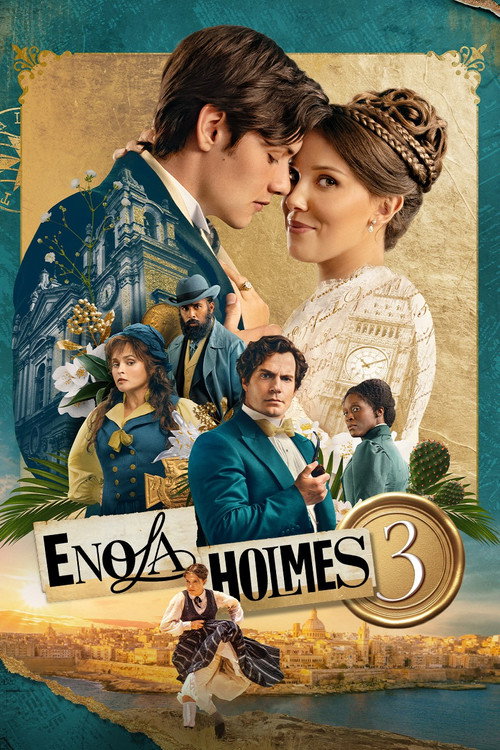
Enola Holmes 3
In sun-drenched Victorian Malta, a kinetic period mystery unravels where independence and intimacy clash like iron and velvet, as dusty colonial alleyways witness a sharp young detective racing to untangle family sins.
Enola Holmes 3
Enola Holmes 3

"Tis I do?"

30 June 2026 United States of America 109 min 6.9 (561)

Director: Philip Barantini

Cast: Millie Bobby Brown, Henry Cavill, Helena Bonham Carter, Louis Partridge, Himesh Patel

Crime Mystery Adventure Autonomy vs. Domestic Conformity Imperial Corruption and Colonial Plunder Family Legacy and Uncomfortable Truths Collaborative Partnership vs. Isolation Justice vs. Retribution

Enola Holmes 3 — Ending Explained

⚠️ Spoiler Analysis

The Kidnapping Scheme: Sherlock Holmes and Lady Tewkesbury are abducted by mercenaries under the command of 'Professor Adeline Rathe'.

Moriarty's Secret Identity: 'Professor Rathe' is revealed to be Professor Moriarty (Sharon Duncan-Brewster), who escaped custody following Enola Holmes 2. Moriarty manipulated Lady Tewkesbury into holding the wedding in Malta to orchestrate her plot.

The Afghan Gold Mystery: Decades earlier, Lord Peter Tewkesbury (Tewkesbury's late father) worked alongside Brigadier Sampson (Jason Watkins) and the British Governor in Malta to hide stolen royal gold taken during the Battle of Khost in Afghanistan.

The Climax: Enola uses childhood stories told by Tewkesbury to locate the treasure in an abandoned Maltese coastal fort. Moriarty corners them, revealing her ultimate goal: not just stealing the gold, but exposing the corrupt British military officers and humiliating the noble families.

Resolution: Enola and Sherlock expose Brigadier Sampson, clearing the conspiracy. Moriarty manages to slip away into the crowd once again.

The Ending: Unwilling to live off colonial plunder, Lord Tewkesbury resigns his seat in the House of Lords. Enola and Tewkesbury choose not to go through with their formal high-society wedding; instead, they agree to remain equal, loving partners on their own terms, with Enola keeping her name and detective agency intact.

Alternative Interpretations

Feminist Subversion of Marriage: Viewers interpret Enola and Tewkesbury's decision to forgo a formal aristocratic wedding as a radical rejection of patriarchal power structures.

Systemic Failure Criticism: Several reviewers argued that having Tewkesbury resign his seat in the House of Lords is politically counterproductive, as it strips him of the official legislative power needed to enact real social change.

Moriarty as Enola’s Mirror: Moriarty can be read not merely as a villain, but as a dark mirror image of Enola—a brilliant woman excluded by patriarchal society who chooses destruction over reform.

Explore More About This Movie

Dive deeper into specific aspects of the movie with our detailed analysis pages

Similar Movies