Skip to content
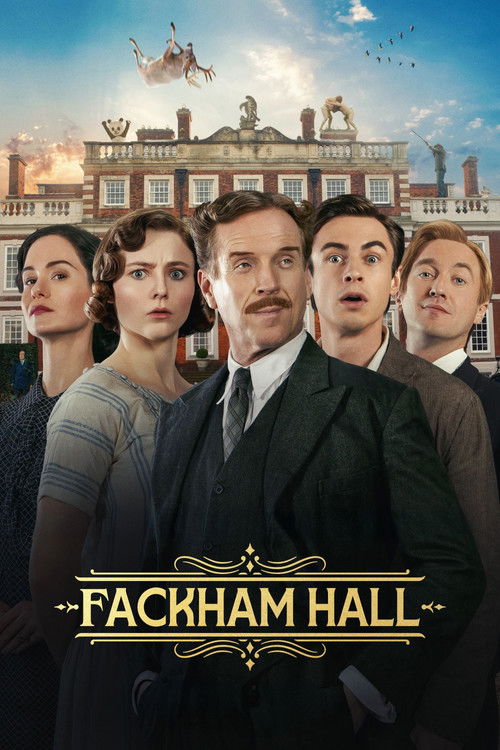
Fackham Hall
A giddy, custard-cream-and-cyanide send-up of the English country house: stately rooms polished to a mirror shine, and every reflection pulling a rude face back at you.
Fackham Hall
Fackham Hall

"Born to aristocracy. Bred for idiocy."

05 December 2025 United Kingdom 97 min 6.7 (206)

Director: Jim O'Hanlon

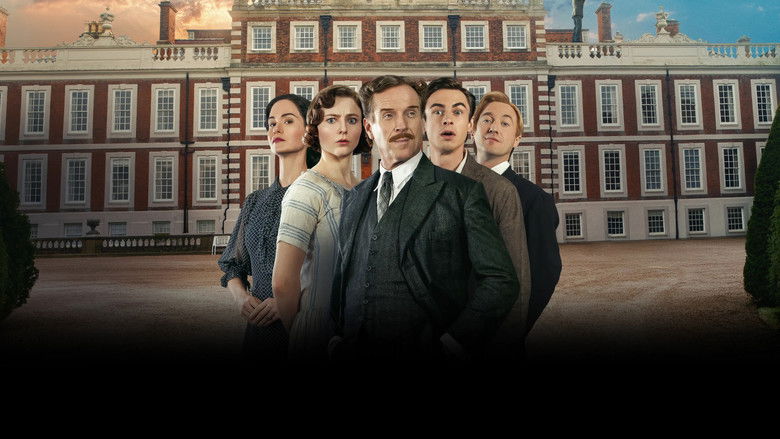
Cast: Damian Lewis, Katherine Waterston, Thomasin McKenzie, Ben Radcliffe, Tom Felton

Comedy Class as performance Parody as affectionate demolition Forbidden romance across the stairs Guilt, innocence and who gets believed Nostalgia and the lie of the good old days
Box Office: $4,862,325

Fackham Hall — Ending Explained

⚠️ Spoiler Analysis

Note: the sources consulted describe the film's structure and outcome in outline rather than shot by shot, so this analysis covers the confirmed turns without inventing specifics of the culprit's identity.

The film's architecture is a deliberate two-act bait-and-switch. The first movement plays as straight heritage romance with jokes: Eric Noone, a pickpocket, secures a position at the manor under false pretences, rises through the servants' ranks at a speed that no genuine heritage drama would tolerate, and begins a forbidden romance with Rose Davenport, daughter of the house. Crucially, his fraud goes undetected — the film's first real punchline is that the great English household cannot tell a thief from a footman.

The turn arrives with the murder. A body appears, and Eric is framed for it. This is where the comedy's underlying argument surfaces: the household's swift willingness to believe in his guilt has nothing to do with evidence and everything to do with what he is. The hierarchy that failed to detect him when he was actually stealing convicts him instantly when he is innocent. That inversion is the film's sharpest piece of writing and the retroactive justification for the entire first act.

The final movement turns the film into a country-house whodunit played entirely as farce, with Eric forced into the role of detective to clear his own name — a thief compelled to prove honesty. It resolves in a comic showdown that owes more to Airplane! and the Monty Python features than to Agatha Christie. The absurdity of that resolution is intentional: the whodunit's promise that a clever explanation restores order is precisely the genre convention the film has spent ninety minutes deflating. What becomes clear only in retrospect is that the murder was never the subject. The subject was always the house — an institution so committed to appearances that it can absorb a con artist without noticing, then collapse into hysteria the moment appearances crack.

Alternative Interpretations

As pure spoof. The simplest reading, and the one most reviewers took: the film has no argument beyond 'these films are funny if you push them slightly,' and should be judged purely on gag-strike rate. On this view its restraint is a flaw — a spoof that stayed too polite to draw blood.

As affectionate homage. A competing reading takes the same restraint as intention. O'Hanlon's stated goal was a film that genuinely looked like a $50 million period drama, and the loving costumes, houses and performances suggest a filmmaker who likes the genre. Under this interpretation the film is not attacking heritage cinema but joining it while giggling — closer to a fond family roast than a demolition.

As class satire with teeth. A third reading foregrounds the premise's logic: a thief infiltrates the aristocracy and is only punished when a real crime occurs elsewhere. That structure carries a genuinely acid claim about who is presumed innocent in England and why — a claim the comedy both delivers and defuses.

On the ending. Because the resolution is staged as broad farce, viewers divide over whether the whodunit's answer is meant to be satisfying detective plotting or a deliberate mockery of the whodunit's insistence on tidy answers. The film's tradition — Airplane!, Python — suggests the latter: the absurdity of the solution is the point, and taking it seriously is the joke on the viewer.

Explore More About This Movie

Dive deeper into specific aspects of the movie with our detailed analysis pages

Similar Movies