Skip to content
Fate/stay night
An austere urban dark fantasy wrapped in bittersweet moonlight, Fate/stay night captures the tragic collision of unyielding ideals and phantom regrets, where fractured souls clash like unsheathed blades beneath a crimson sky.
Fate/stay night

Fate/stay night

"The Holy Grail War Begins!"

07 January 2006 — 17 June 2006 Japan 1 season 24 episode Ended 7.2 (248)

Cast: Noriaki Sugiyama, Ayako Kawasumi, Kana Ueda, Mai Kadowaki, Junichi Suwabe

Animation Sci-Fi & Fantasy Action & Adventure The Cost and Illusion of Heroism (Ideals vs. Reality) Duty, Regret, and Acceptance of Destiny The Burden of Inherited Wishes & Survivor’s Guilt Mutual Understanding and Love Across Eras Corruption of Ambition & False Miracles

Overview

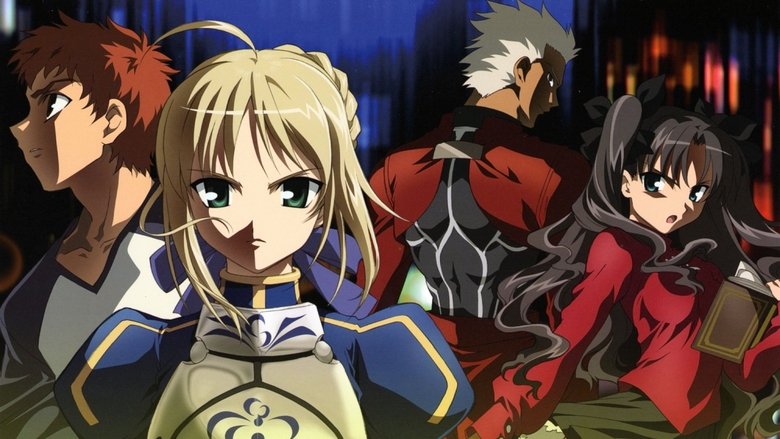
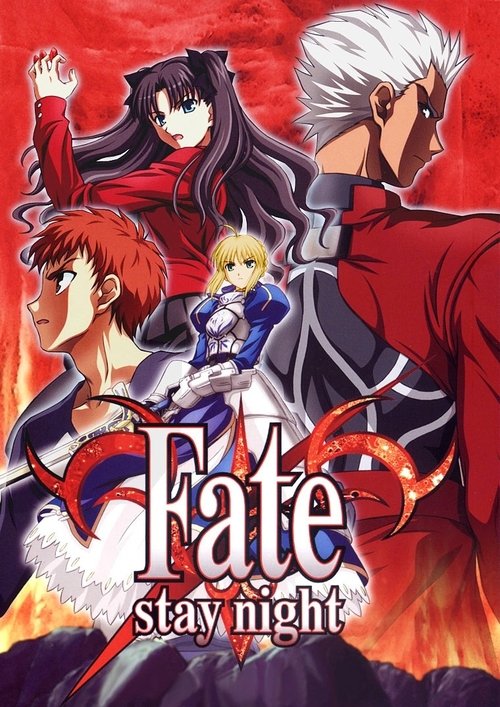
Fate/stay night (2006), produced by Studio Deen and directed by Yūji Yamaguchi, is a 24-episode television adaptation of Type-Moon’s seminal 2004 visual novel written by Kinoko Nasu. Set in the fictional Japanese city of Fuyuki, the story follows high school student and amateur mage Shirou Emiya, the sole survivor of a catastrophic fire that razed his neighborhood a decade prior. Bound by a promise to his late adoptive father, Kiritsugu, Shirou strives relentlessly to become a "Hero of Justice" (正義の味方, Seigi no Mikata), placing the safety and welfare of others unconditionally above his own.

Shirou’s peaceful life is shattered when he accidentally witnesses a nocturnal duel between two supernatural warriors and is fatally targeted. Saved by classmate Rin Tohsaka and subsequently backed into a corner at home, Shirou inadvertently summons the elite swordswoman Servant, Saber. He discovers he has been chosen as a Master in the Fifth Holy Grail War—a secret battle royale among seven mages and their reincarnated legendary heroes, all competing for the omnipotent wish-granting Holy Grail.

Forming a reluctant alliance with fellow competitor Rin Tohsaka and her Servant Archer, Shirou and Saber confront rival Masters and Servants across Fuyuki. As the war deepens, the series primarily adapts the Fate storyline—focusing on Shirou’s dynamic with Saber—while weaving in secondary narrative threads from the Unlimited Blade Works and Heaven's Feel routes. Across its single-season arc, Shirou and Saber’s shared trauma, ideological stubbornness, and blooming romantic bond force them to confront the brutal truth behind the Grail War and find peace within their intertwined destinies.
Core Meaning

The central message of Fate/stay night explores the redemption found in accepting one's past rather than attempting to rewrite it, and the moral complexity of self-sacrificial heroism.

Through the dual journeys of Shirou Emiya and Artoria Pendragon (Saber), the series examines whether an ideal of absolute selflessness is fundamentally broken or spiritually worthy. Saber entered the Grail War obsessed with an impossible wish: to undo her coronation and reverse the fall of Camelot. Shirou, suffering from crippling survivor's guilt, attempts to throw away his personal humanity to save everyone in front of him. By observing each other’s self-destructive nature, both learn that true honor does not come from erasing one's trials or relying on an easy miracle (the Grail), but from taking pride in the life one has lived and bearing the consequences of one's choices with dignity.

Thematic DNA

The Cost and Illusion of Heroism (Ideals vs. Reality) 30%
Duty, Regret, and Acceptance of Destiny 25%
The Burden of Inherited Wishes & Survivor’s Guilt 20%
Mutual Understanding and Love Across Eras 15%
Corruption of Ambition & False Miracles 10%

The Cost and Illusion of Heroism (Ideals vs. Reality)

Examines what it truly means to be a "Hero of Justice." Shirou's naive desire to save everyone is repeatedly tested by the lethal reality of the Holy Grail War, showing that ideals borrowed from others demand severe personal sacrifice.

Duty, Regret, and Acceptance of Destiny

Explores Saber's tragic burden as the King of Britain. Her desire to undo her reign is gradually replaced by acceptance that her devotion and history were not meaningless mistakes, climaxing in her decision to destroy the Grail rather than rewrite history.

The Burden of Inherited Wishes & Survivor’s Guilt

Traces Shirou's psychological origin in the Great Fire. Surviving while hundreds died left him with an empty sense of self-worth; his quest for heroism begins as a trauma coping mechanism before evolving into genuine personal conviction.

Mutual Understanding and Love Across Eras

Highlights the emotional and romantic bond between Shirou and Saber. Two disparate figures from different historical eras act as mirrors to one another's flaws, healing each other through quiet intimacy and shared purpose.

Corruption of Ambition & False Miracles

Shows how unchecked desires corrode humanity. The Holy Grail War is revealed to be a flawed, tainted slaughter orchestrated by sinister figures like Kotomine and Gilgamesh, proving shortcuts to desire bring ruin.

Character Analysis

Shirou Emiya

Noriaki Sugiyama

Archetype: The Reluctant Chosen Hero / Traumatized Idealist Key Trait: Pathological selflessness and projection craftmanship

Motivation

Inherit Kiritsugu’s dream to save everyone and prevent another Fuyuki tragedy.

Character Arc

Begins as a naive, self-sacrificing teenager willing to throw himself in harm's way to protect even his supernatural Servant. By confronting rival Servants, mastering projection magic, and understanding Saber's emotional pain, he transitions from an empty martyr to a determined protector who values life and chooses genuine resolve.

Saber / Artoria Pendragon

Ayako Kawasumi

Archetype: The Tragic Fallen King / Honorable Knight Key Trait: Fierce chivalric honor and martial prowess

Motivation

Claim the Holy Grail to wish for another ruler to take the throne in her place.

Character Arc

Summons with a cold, strictly professional demeanor, driven by regret over Camelot's destruction. As Shirou treats her as a human woman rather than a disposable weapon, she rediscovers her own emotional vulnerability and lets go of her obsession to undo the past.

All 5 characters and cast

Symbols & Motifs

Excalibur and Avalon (The Distant Utopia)

Meaning:

Saber’s sacred sword represents righteous sovereign duty, while Avalon (the scabbard implanted within Shirou) symbolizes inner protection, miraculous healing, and an unreachable paradise of spiritual peace.

Context:

Wielded by Saber and held internally by Shirou as a healing relic until he returns it to her in the final conflict.

Command Seals (令呪, Reishō)

Meaning:

The three-stroke red tattoos etched onto a Master’s hand symbolize absolute authority and binding contracts.

Context:

Their gradual depletion throughout the Holy Grail War marks the erosion of control and the shift from transactional servitude to mutual trust.

The Holy Grail (聖杯, Seihai)

Meaning:

Functions as a metaphor for the deceit of panaceas; beneath its golden exterior lies a black, toxic mud born of accumulated human malice.

Context:

The central prize sought by Masters and Servants, revealed in the climax to be corrupted by Angra Mainyu.

The Great Fuyuki Fire

Meaning:

Represents the ashes of Shirou's discarded childhood and the emotional void from which his single-minded hero complex was born.

Context:

Appears repeatedly as a visual trauma in Shirou's nightmares and psychological reflections.

The Fuyuki Bridge & Sunsets

Meaning:

Marks the fragile boundary between peaceful high school life and violent mythological bloodshed.

Context:

Serves as the recurring physical setting for contemplative conversations between Shirou, Saber, and Rin.

Memorable Quotes

問おう、貴方が私のマスターか
— Saber

Context

Season 1, Episode 2 ("Fateful Night"). Spoken immediately after Shirou accidentally summons Saber in his burning shed.

Meaning

The defining signature line of the entire Fate franchise, marking the fateful meeting between Shirou and Artoria.

人は死ねば、生き返らない…それが普通なんだ。人は死ねば死ぬんだ。
— Shirou Emiya

Context

Season 1, Episode 23 ("The Holy Grail"). Spoken as Shirou hands Avalon back to Saber before the final battle.

Meaning

Often translated colloquially as "People die when they are killed" and popularized as an internet meme, this line is profoundly thematic in context: Shirou willingly returns Avalon to Saber, accepting his own mortal vulnerability because humans are meant to value their single life rather than cheat death with magical relics.

All 5 quotes

Episode Highlights

Fateful Night

S1E2

Shirou is targeted by Lancer, fatally wounded, revived by Rin's jewel, and cornered at his storehouse, where he accidentally summons Saber.

Significance:

Establishes the fundamental rules of the Fifth Holy Grail War and the central Master-Servant dynamic.

The Strongest Enemy

S1E4

First encounter with Illyasviel von Einzbern and her monstrous Servant Berserker (Heracles). Saber suffers grievous injuries protecting Shirou.

Significance:

Highlights the lethal power gap between Shirou and high-ranking magi, triggering Shirou's desperate need to find a way to fight.

Fortress of Blood

S1E11

Rider activates her Bloodfort Andromeda field over Homurahara High School to drain students of life force. Shirou traces the ancient sword Caliburn.

Significance:

Shirou awakens his projection craft under dire pressure, neutralizing Rider and saving the civilian student body.

The End of an Ideal

S1E14

Archer holds off Berserker inside the Einzbern castle to let Shirou, Rin, and Saber escape. Archer reveals his Reality Marble, Unlimited Blade Works, taking five of Berserker’s twelve lives before falling.

Significance:

A major thematic pivot, revealing Archer's depth and setting up the climactic rematch against Berserker.

The Golden King

S1E19

The mysterious Eighth Servant, Gilgamesh (The King of Heroes), enters the conflict, overwhelming Caster and revealing the true horror of the previous Fourth Holy Grail War.

Significance:

Shatters the fundamental rules of the 7-Servant ritual and exposes the broader conspiracy led by Kotomine.

The Holy Grail

S1E23

The final confrontation at Ryudou Temple begins. Shirou discovers the corrupted nature of the Grail and hands the scabbard Avalon back to Saber.

Significance:

Sets up the ideological showdown between Shirou/Kotomine and Saber/Gilgamesh.

The All Too Distant Utopia

S1E24

Shirou defeats Kotomine using the Azoth Sword while Saber unleashes Avalon and Excalibur to vanquish Gilgamesh and destroy the Holy Grail. Saber bids Shirou farewell, returning to Camlann Hill to die peacefully under a tree.

Significance:

Delivers the series finale, resolving the narrative arc with bittersweet emotional catharsis.

Philosophical Questions

Can an ideal retain beauty and value if it is practically unattainable?

Explored through Shirou’s endless pursuit to save everyone and Gilgamesh’s critique of mortal vanity.

Is it ethical to erase past suffering if doing so invalidates the lived experiences and growth born from it?

Explored through Saber’s regret over Camelot and Shirou’s refusal to erase the Fuyuki fire.

Does genuine self-worth require prioritizing personal happiness over the welfare of others?

Explored through Shirou’s destructive willingness to act as a human shield.

Alternative Interpretations

Different critical and audience interpretations of the series include:

Full ending explanation

Cultural Impact

When Fate/stay night aired in 2006, the visual novel adaptation genre was undergoing a transition from niche PC fanbases to mainstream anime broadcasts. Studio Deen’s adaptation served as the commercial springboard that catapulted Type-Moon’s urban fantasy universe into the global zeitgeist.

The success of the 2006 anime paved the way for Gen Urobuchi's prequel light novel series Fate/Zero (2006–2007), subsequent high-budget adaptations by Studio Ufotable (Fate/Zero, Unlimited Blade Works, and the Heaven's Feel film trilogy), and the global mobile phenomenon Fate/Grand Order. The series established Saber (Artoria) as one of the most recognizable female heroines in Japanese animation history and helped popularize the modern "historical figure battle royale" genre across pop culture.

Audience Reception

Initial Reception (2006–2010): Highly praised upon release for its gripping urban-fantasy premise, memorable cast, dark mystery elements, and Kenji Kawai’s atmospheric musical score. It was widely credited with introducing Western and Japanese television audiences to the Nasuverse.

Points of Criticism: Over time, critics and purists noted uneven animation quality during secondary action scenes, clumsy integration of plot threads spliced from alternate routes (the Caster arc insertion), and the infamous CGI dragon used for censorship.

Evolution of Opinion: Following Ufotable's visually groundbreaking adaptations of Fate/Zero (2011) and Unlimited Blade Works (2014), retrospective reception grew polarized. While some modern viewers dismiss it due to dated 2006 visuals, many fans and critics re-evaluate it positively for its somber atmosphere, emotional characterization of Saber, and definitive musical identity.

Interesting Facts

  • It was the very first television anime adaptation of the Fate franchise, transforming Type-Moon from a doujin/visual novel circle into a mainstream multimedia powerhouse.
  • While primarily an adaptation of the "Fate" (Saber) route, director Yūji Yamaguchi and writer Takuya Satō incorporated elements from the "Unlimited Blade Works" (Archer) and "Heaven's Feel" (Sakura) routes to present a comprehensive snapshot of the game.
  • Acclaimed composer Kenji Kawai composed both original tracks (such as "Night of Fate" / Unmei no Yoru and "Kodoku na Junrei") and reimagined tracks originally arranged by KATE and James Harris.
  • To adapt an adult (18+) visual novel for midnight broadcast television, intimate mana-transfer rituals were replaced with surreal metaphysical imagery, most notoriously a 3D computer-generated dragon representing Saber's inner magic circuits.
  • Visual novel creator Kinoko Nasu and character designer Takashi Takeuchi served as production supervisors and character concept consultants throughout the series' 24-episode run.

Easter Eggs

The Azoth Sword Foreshadowing

The dagger Rin gives Shirou (which Shirou later uses to strike down Kotomine) was originally given to Kirei Kotomine by Tokiomi Tohsaka (Rin’s father) before Kotomine used that very blade to betray and murder Tokiomi.

Archer’s Gaze at the Emiya Shed

Early in the series, Archer lingers in Shirou's backyard workshop with a knowing, melancholic expression—a subtle visual clue indicating his true identity as Shirou Emiya’s future self.

Tiger Dojo References

The humorous post-credits and title cards give subtle nods to the visual novel’s famous "Taiga Dojo" bad-end advice sequences.

Arthurian & Mesopotamian Lore Inscriptions

The design of Noble Phantasms, such as the runes inscribed upon Gilgamesh's Ea and the Celtic symbols on Lancer's Gáe Bolg, follow real historical and mythological scripts.

Frequently Asked Questions

Explore More About This Movie

Dive deeper into specific aspects of the movie with our detailed analysis pages

Comments (0)

Leave a comment

No comments yet. Be the first to share your thoughts!

Similar Movies