Skip to content
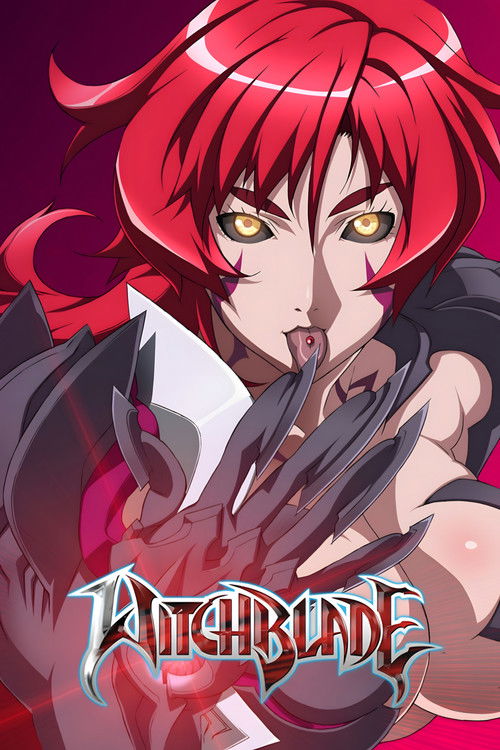
Witchblade
Amidst the cold cybernetic ruins of near-future Tokyo, an amnesiac single mother burns like a fierce, dying crimson ember against corporate predators, sacrificing her physical humanity to shield her daughter's innocent dawn.
Witchblade

Witchblade

ウィッチブレイド

"And she must discover the answers for herself. As she stands on the brink of destiny, she is forced to seek the balance between ecstasy and ruin."

05 April 2006 — 20 September 2006 Japan 1 season 24 episode Ended 7.8 (145)

Cast: Mamiko Noto, Akemi Kanda, Masaya Matsukaze, Mie Sonozaki, Shizuka Itoh

Drama Animation Sci-Fi & Fantasy Action & Adventure Comedy Mystery Maternal Devotion and Chosen Family The Parasitic Cost of Power Corporate Hubris and Genetic Exploitation Self-Determination vs. Predestined Fate

Overview

Set in a dystopian post-earthquake Tokyo, Witchblade (2006) follows Masane Amaha, a scatterbrained, unemployed young woman afflicted with total amnesia who was found six years earlier at ground zero of a massive catastrophe cradling an abandoned infant. Striving against poverty and the constant harassment of the Child Welfare Division, Masane's only goal is to build a peaceful, dignified life with her remarkably self-reliant young daughter, Rihoko. However, their fragile world is shattered when state authorities intervene and monstrous, biomechanical creatures known as Ex-cons begin attacking urban centers.

When attacked during an encounter with one of these rogue bio-weapons, an ornate, mysterious bracelet fused to Masane's wrist reawakens. It reveals itself as the Witchblade—an ancient, sentient mystic symbiote that transforms her into an armor-clad, superhuman battle goddess driven by lethal bloodlust. Masane's uncanny awakening immediately plunges her into the epicenter of a shadowy war between two ruthless mega-corporations: Douji Heavy Industries, overseen by the pragmatic Reiji Takayama, and the National Superiority and Welfare Foundation (NSWF), which engineers genetically enhanced women dubbed Neogenes to wield weaponized Cloneblades.

Hired by Takayama to eliminate rogue bio-weapons in exchange for steady wages and guaranteed custody of Rihoko, Masane balances dangerous night battles with domestic duties at home. Over the course of the twenty-four episodes, the corporate power struggle turns intimately personal as secrets surrounding the Tokyo disaster, Rihoko's true genetic lineage, and the fatal, parasitic nature of the Witchblade itself are dragged into the light, forcing Masane into an agonizing fight not for power, but for the life of the daughter she adores.
Core Meaning

The core message of Witchblade is that motherhood and family are defined by unconditional love and selfless devotion rather than biological ties. While the corporate and military factions view human beings as test subjects and instruments of destruction, Masane's fierce maternal instinct stands as the antithesis of technocratic exploitation. The series illustrates that immense power pursued for conquest or prestige brings only physical decay and spiritual ruin; true power finds meaning solely in the willingness to sacrifice oneself so that the next generation may inherit a world free from fear.

Thematic DNA

Maternal Devotion and Chosen Family 35%
The Parasitic Cost of Power 25%
Corporate Hubris and Genetic Exploitation 20%
Self-Determination vs. Predestined Fate 20%

Maternal Devotion and Chosen Family

Throughout the series, Masane and Rihoko invert conventional parent-child dynamics: Rihoko is domestic, organized, and mature, while Masane is clumsy and impulsive. Despite learning they share no genetic connection, their emotional bond proves far stronger than biology. Masane's identity as a mother becomes her sole guiding star against corporations that seek to dissect and commercialize her existence.

The Parasitic Cost of Power

Unlike traditional superhero artifacts, the Witchblade is fundamentally parasitic. Every transformation drains Masane's vitality, calcifying her body into crystalline stone. The series deconstructs power fantasies by framing superhuman violence as a slow terminal illness, demonstrating that weaponized dominance invariably destroys the wielder from within.

Corporate Hubris and Genetic Exploitation

The rivalry between Douji Heavy Industries and NSWF embodies modern industrial hubris. Both factions treat women's bodies as testbeds for bio-weaponry, creating Cloneblades and breeding Neogenes under paternalistic rhetoric. The narrative critiques patriarchal and corporate structures that exploit life for military supremacy.

Self-Determination vs. Predestined Fate

Masane begins the story devoid of memories, essentially an empty vessel chosen at random by an ancient mystical artifact. Her journey is about refusing to let either corporate overlords or the artifact's ancient bloodlust define her humanity. She chooses her own identity as Rihoko's protector, asserting free will against seemingly inescapable doom.

Character Analysis

Masane Amaha

Mamiko Noto

Archetype: Protective Mother / Tragic Heroine Key Trait: Fiercely loving, unpretentious, and unshakeably resilient.

Motivation

Initially motivated by finding steady employment and keeping legal custody of Rihoko, her purpose matures into shielding Rihoko from both corporate exploitation and the parasitic curse of the Witchblade.

Character Arc

Starting as an impoverished, amnesiac mother struggling to navigate day-to-day survival, Masane becomes an indispensable combatant for Douji Industries. As she realizes the Witchblade is consuming her life and that Rihoko is not her biological daughter, her resolve does not waver; instead, she deepens her love, culminating in an act of absolute self-sacrifice to preserve Rihoko's future.

Rihoko Amaha

Akemi Kanda

Archetype: Wise Child / Innocent Anchor Key Trait: Remarkably sensible, gentle, and emotionally perceptive.

Motivation

Driven by the simple wish to live peacefully with Masane and ensure her mother eats well, avoids trouble, and smiles.

Character Arc

Functioning as the practical, nurturing core of the Amaha household, Rihoko shops, cooks, and cares for her scatterbrained mother. When she discovers her true heritage as the biological daughter of Reina Soho and Reiji Takayama, she affirms her eternal loyalty to Masane as her real mother, carrying Masane's memory into adulthood.

All 4 characters and cast

Symbols & Motifs

The Witchblade Bracelet

Meaning:

Symbolizes primal, destructive power and cosmic tragedy. While it bestows supernatural combat prowess, it acts as a predatory parasite that consumes its bearer's lifespan, embodying the fatal burden thrust upon chosen women throughout history.

Context:

Fused to Masane's wrist following the Tokyo disaster, the dormant bracelet activates when danger threatens, morphing into biomechanical crimson armor and wrist blades during combat.

Crystalline Blood and Calcification

Meaning:

Represents the dehumanizing toll of battle and creeping mortality. As the human host is drained by the blade, organic flesh turns to hard, brittle crystal, signifying the host's approaching expiration.

Context:

Transformed combatants bleed clear, shimmering crystalline fluids rather than red blood. Masane's body progressively stiffens and crystallizes as her cellular structure breaks down in the show's final act.

The Maternal Health Handbook (Boshi Techo)

Meaning:

Symbolizes legitimacy, emotional belonging, and unconditional maternal duty that transcends clinical science or government bureaucracy.

Context:

Found alongside baby Rihoko when Masane awoke with amnesia at ground zero, the handbook is Masane's most prized earthly possession, brandished repeatedly against child services as her proof of motherhood.

Tokyo Tower and the Rebuilt Cityscape

Meaning:

Serves as a monument to civilizational fragility and corporate concealment, where futuristic luxury masks underground testing labs and urban ruins.

Context:

Looming over the rebuilt districts of Tokyo, the skyline serves as a constant backdrop for nocturnal skirmishes between Ex-cons, Neogenes, and corporate retrieval teams.

Memorable Quotes

Long sought by the greed of men since the dawn of humankind, but only bestowed upon the women whose fate it forever scars... The Witchblade.
— Narrator

Context

Spoken during the introductory prologue sequence of Episode 1, The Beginning.

Meaning

Establishes the cosmic tragedy and thematic framework of the entire narrative, juxtaposing male political avarice against the agonizing physical burden endured by female hosts.

Power is a means, not a goal... in the end, what do you want?
— Asagi

Context

Delivered in the latter half of the series during a heated ideological confrontation regarding the true objective behind developing the Cloneblades.

Meaning

Cuts straight to the philosophical heart of the show, dismantling the blind ambition of the corporate factions and Neogene warriors who chase absolute dominance without human purpose.

All 3 quotes

Episode Highlights

The Beginning

S1E1

Masane and Rihoko arrive in Tokyo fleeing Child Welfare agents. When Masane is apprehended and confronted by an escaped biomechanical Ex-con, the bracelet on her wrist manifests its fearsome armored form for the first time, incinerating her foe.

Significance:

Sets up the central premise, contrasting Masane's tender relationship with Rihoko against the explosive, violent world of corporate bio-weapons.

Movement

S1E4

Masane accepts an employment contract with Reiji Takayama at Douji Heavy Industries, securing high-paying Ex-con hunting work that allows her to afford a luxury apartment and retain custody of Rihoko.

Significance:

Establishes Masane's precarious double life as a suburban mother by day and corporate monster-hunter by night, entangling her in the corporate rivalry with NSWF.

Search

S1E5

NSWF escalates its efforts to reclaim the Witchblade, deploying Cloneblade-wielding Neogenes to test Masane's capabilities while freelance photographer Yusuke Tozawa begins unearthing the conspiracy.

Significance:

Broadens the narrative scope from isolated monster battles into an expansive corporate intelligence conspiracy involving engineered humans.

Request

S1E20

A quiet, emotionally devastating breath before the storm. Masane's body is failing due to advanced crystallization, yet she spends an ordinary day cooking, laughing, and confirming that Takayama will protect Rihoko when she is gone.

Significance:

Represents the emotional apex of the series, shifting the stakes completely from action spectacle to tragic, unconditional maternal sacrifice.

Light

S1E24

Masane stands alone against the berserk Ultimate Blade and a military blockade. Refusing to allow the parasitic Witchblade to jump to Rihoko, she unleashes its total energy in an all-consuming blast of light, obliterating the threat and dying with a peaceful smile.

Significance:

Brings the entire saga to an unforgettable, bittersweet conclusion, breaking the tragic cycle of the weapon and leaving Rihoko safe in the care of loving guardians.

Philosophical Questions

What defines the legitimacy of a parent?

The series consistently deconstructs biological determinism. While NSWF relies on laboratory genetics and Douji uses corporate custody contracts, Masane and Rihoko prove that true parenthood is constructed daily through mutual trust, vulnerability, emotional nourishment, and self-sacrifice.

Can absolute power exist without self-destruction?

Every entity that seeks or wields the Witchblade—whether corporate executives, Neogenes, or Masane herself—encounters an inevitable physical or moral degradation. The show posits that supreme destructive power is fundamentally incompatible with organic life and human happiness.

How It Ends

Alternative Interpretations

While generally received as a poignant melodrama about maternal devotion, critics and audiences have offered alternative feminist readings of the series. Some view the Witchblade as a visceral metaphor for patriarchal exploitation and female bodily commodification, where Masane's body is simultaneously fetishized by the camera, weaponized by corporate executives, and physically devoured by a malevolent parasite. Conversely, other interpretations view the climax as an ultimate reclamation of bodily autonomy: Masane knowingly accepts her mortality, reclaiming her life from both the weapon and corporate overlords to make an intentional choice purely out of love.

Full ending explanation

Cultural Impact

Airing in 2006, Witchblade represents an important historical milestone in cross-border comic-to-anime co-productions. During the mid-2000s, Studio Gonzo and American comic publisher Top Cow forged new territory by greenlighting a high-budget Japanese television series derived from an American comic book property, pre-dating later Marvel anime collaborations with Madhouse. While initial marketing leaned heavily into provocative character art, the series earned enduring respect in anime fandom for defying expectations with a deeply emotional, tear-jerking narrative centered around an adult single mother—a rarity in mainstream anime.

Audience Reception

Upon release in 2006, Witchblade experienced divided initial reactions: comic purists were startled by the departure from Sara Pezzini's detective storyline, and general viewers were skeptical of Makoto Uno's provocative, ecchi-heavy character aesthetics. However, as the 24-episode narrative progressed, critical consensus shifted dramatically. Reviewers praised Yasuko Kobayashi's tightly structured writing, the emotional authenticity of the mother-daughter dynamic between Masane and Rihoko, and the tragic, tear-jerking series finale. Today, the anime is widely regarded as an underrated 2000s cult classic that hid a profoundly moving emotional core beneath an action-heavy, fanservice-laden exterior.

Interesting Facts

  • The anime is an official cross-pacific collaboration between American comic book publisher Top Cow Productions and Japanese animation studio Gonzo, set in the same broad fictional continuity as the comics but featuring a completely original Japanese cast and futuristic setting.
  • The series composition and scripts were helmed by acclaimed screenwriter Yasuko Kobayashi, known for her seminal work on Attack on Titan, JoJo's Bizarre Adventure, and numerous Kamen Rider installments.
  • Character designs were created by animator Makoto Uno, whose exaggerated feminine anatomy and ecchi visual style created significant discussion among Western comic purists upon initial release.
  • The evocative musical score was composed by Masanori Takumi alongside Kazunori Miyake; Takumi subsequently composed the acclaimed soundtrack for Studio Gonzo's dark fantasy anime Claymore in 2007.
  • Funimation produced and released a high-profile English dub of the anime across 2007 and 2008, featuring Jamie Marchi as Masane and Cherami Leigh as Rihoko, which aired on North American television networks including IFC.

Easter Eggs

Prologue references to historical Witchblade bearers

The opening narration visually and textually respects the Top Cow comic book lore, acknowledging the ancient lineage of female warriors across human history who wore the gauntlet long before Masane obtained it.

Reimagining the gauntlet as a sleek bracelet

Instead of the heavy armored gauntlet seen on NYPD detective Sara Pezzini in the original American comics, Gonzo redesigned the weapon into an unassuming gemstone bracelet to complement modern Japanese minimalist aesthetics.

Frequently Asked Questions

Explore More About This Movie

Dive deeper into specific aspects of the movie with our detailed analysis pages

Comments (0)

Leave a comment

No comments yet. Be the first to share your thoughts!

Similar Movies