Skip to content
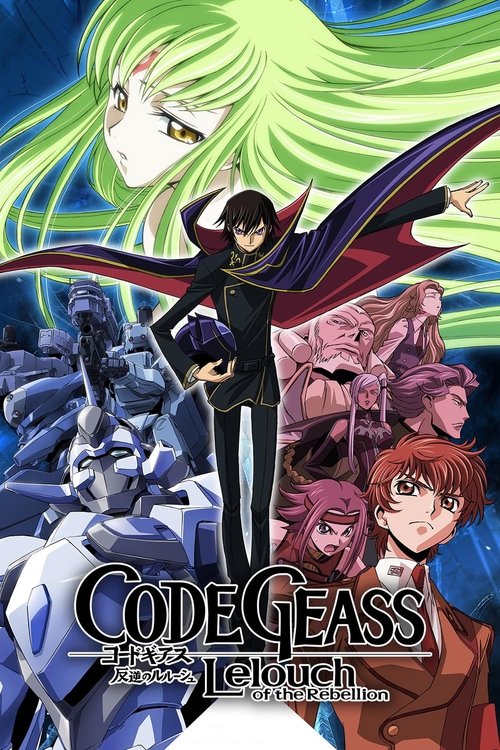
Code Geass: Lelouch of the Rebellion
An operatic, high-stakes political thriller vibrating with exhilarating intellectual tension, unyielding grief, and theatrical fury; a solitary black chess king burning with crimson embers as it brings down a colossal, gilded empire.
Code Geass: Lelouch of the Rebellion

Code Geass: Lelouch of the Rebellion

コードギアス 反逆のルルーシュ

05 October 2006 — 28 September 2008 Japan 2 season 50 episode Ended 8.3 (918)

Cast: Jun Fukuyama, Takahiro Sakurai, Yukana, Ami Koshimizu, Fumiko Orikasa

Drama Animation Sci-Fi & Fantasy Action & Adventure The Conflict of Means vs. Ends Self-Sacrifice, Guilt, and Atonement Identity, Masks, and Deception Temporal Ideologies: Past vs. Present vs. Future The Burden of Power and Isolation

Overview

Code Geass: Lelouch of the Rebellion is set in an alternate history where the Holy Britannian Empire conquered Japan using advanced humanoid combat vehicles known as Knightmare Frames, stripping the nation of its sovereignty and renaming it "Area 11". The Japanese population, subjugated and derisively labeled "Elevens," live in dilapidated ghettos under harsh imperial rule. The story follows Lelouch Lamperouge, a seemingly ordinary Ashford Academy student who is secretly an exiled Britannian prince harboring intense hatred toward his father, the Emperor. After inadvertently getting caught in a clash between Britannian forces and rebel guerrillas, Lelouch meets a mysterious immortal woman named C.C., who grants him the "Geass"—the supernatural power of absolute obedience.

Armed with this power and an extraordinary strategic mind, Lelouch dons the masked identity of "Zero" and establishes the Black Knights to overthrow Britannian supremacy. However, his path to revolution is complicated when he discovers that his childhood best friend, Suzaku Kururugi, has enlisted in the Britannian military, seeking to reform the system peacefully from within. Across two seasons, the narrative unfolds as a dynamic clash of tactical warfare, ideological conflict, and personal betrayal, drawing schoolmates, royal half-siblings, and global superpowers into a conflict where personal desires collide with the fate of humanity.
Core Meaning

The core thesis of Code Geass centers on the moral cost of societal transformation and the illusion of absolute righteous authority. The series argues that pure idealism without pragmatism is impotent, yet ruthless utilitarianism without genuine accountability breeds monstrous tyranny. True progress cannot be achieved by freezing time in the past or imposing a manufactured consensus; instead, humanity must embrace an uncertain future where individuals accept the consequences of their actions and break cyclical chains of collective hatred.

Thematic DNA

The Conflict of Means vs. Ends 30%
Self-Sacrifice, Guilt, and Atonement 25%
Identity, Masks, and Deception 20%
Temporal Ideologies: Past vs. Present vs. Future 15%
The Burden of Power and Isolation 10%

The Conflict of Means vs. Ends

Exemplified by the ideological duel between Lelouch (who believes the ends justify extreme, subversive means) and Suzaku (who insists that wrongful methods invalidate noble results), questioning whether justice can exist when stained by deceit.

Self-Sacrifice, Guilt, and Atonement

Explores how guilt shapes human resolve. Characters bear the moral weight of their sins, culminating in the ultimate self-sacrifice where personal pride and life itself are surrendered to create a better tomorrow.

Identity, Masks, and Deception

Examines how societal, political, and psychological personas govern reality. The mask of Zero transforms from a convenient disguise into an immortal ideal that transcends individual identity.

Temporal Ideologies: Past vs. Present vs. Future

Seen in the clash of worldviews: Charles's desire to erase individuality and merge with the dead (Past), Schneizel's attempt to freeze human behavior through fear of deterrence (Present), and Lelouch's defense of human struggle, hope, and evolution (Future).

The Burden of Power and Isolation

The Geass is framed as "the power of kings," isolating its wielders by detaching them from authentic human connections and corrupting their desires.

Character Analysis

Lelouch Lamperouge / Lelouch vi Britannia

Jun Fukuyama

Archetype: Antihero / Tragic Mastermind / Byronic Revolutionary Key Trait: Grandmaster tactical intellect paired with melodramatic resolve.

Motivation

Initially vengeance against his father and building a safe world for Nunnally; broadens into liberating humanity from stagnation and totalitarian oppression.

Character Arc

Evolves from a vengeful, arrogant exile manipulating entire armies into a repentant visionary willing to make himself the target of global hatred to achieve true peace.

Suzaku Kururugi

Takahiro Sakurai

Archetype: Fallen Paladin / Tragic Hero / Foil Key Trait: Superhuman physical reflexes and deep, self-destructive moral martyrdom.

Motivation

Reforming the Britannian system from within to prevent bloodshed, which transforms into atonement and enforcing Lelouch's final peace.

Character Arc

Starts as an earnest idealist seeking an honorable death to atone for parricide; falls into bitter pragmatism after Euphemia's death, ultimately accepting the eternal burden of living as "Zero" to protect the world.

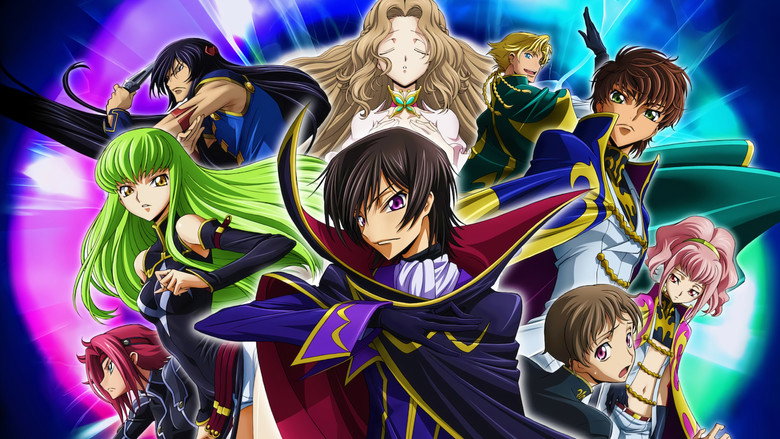
All 4 characters and cast

Symbols & Motifs

The Chess King (Ousho / White & Black Kings)

Meaning:

Represents strategic vision and leadership philosophy, embodying Lelouch's core principle that a leader must advance first if they expect followers to advance.

Context:

Utilized throughout the series during tactical planning, psychological duels, and visual metaphors for political maneuvering.

The Zero Mask

Meaning:

Symbolizes the separation of personal ego from a collective symbol of liberation, ceasing to be merely a disguise and becoming an enduring beacon of justice.

Context:

Worn by Lelouch to lead the Black Knights, and later donned by Suzaku to execute the final act of the Zero Requiem.

The Geass Sigil (The Crimson Bird)

Meaning:

Resembles a spreading bird, symbolizing both liberation/will to power and a predatory curse that gradually entraps its user.

Context:

Manifests in the wielder's eyes upon activating their supernatural commands and expands as the power permanently grows out of control.

The Broken Pocket Watch

Meaning:

Symbolizes the desire to undo the past, frozen grief, and the quest to unmask hidden truths.

Context:

Directly associated with Lelouch's childhood trauma and the unsolved murder of his mother, Marianne.

F.L.E.I.J.A. (Field Limitary Effective Implosion Armament)

Meaning:

Serves as the series' nuclear allegory, embodying the catastrophic horror of unchecked technological escalation and mutual deterrence.

Context:

Deployed in battle with devastating humanitarian consequences, altering the balance of global warfare.

Memorable Quotes

撃っていいのは、撃たれる覚悟のある奴だけだ。
— Lelouch Lamperouge

Context

Spoken during the Shinjuku massacre when executing Clovis in Season 1, Episode 1, and echoed by Suzaku in the series finale.

Meaning

Establishes the iron law of Lelouch's moral universe and foreshadows his ultimate fate: those who inflict violence must accept being targets themselves.

結果のために手段を選ばないのは、間違っている。
— Suzaku Kururugi

Context

Spoken by Suzaku to Zero during his rescue in Season 1, Episode 4.

Meaning

Outlines Suzaku's deontological opposition to Zero's consequentialism, laying the philosophical foundation for their recurring conflict.

All 5 quotes

Episode Highlights

The Day a New Demon Was Born

S1E1

Lelouch inadvertently gets involved in a rebel clash, receives the Geass from C.C., commands the Shinjuku resistance, and executes Prince Clovis.

Significance:

Establishes the core premise, high-stakes tactical dynamics, and moral ambiguity of Lelouch's quest.

The Black Knights

S1E8

Zero intervenes during the Lake Kawaguchi hotel hostage crisis, rescuing hostages and making a broadcast declaration to the world.

Significance:

Transforms a disorganized band of guerrillas into a legitimate, globally recognized ideological organization.

Bloodstained Euphy

S1E22

Lelouch's Geass permanently runs out of control during negotiations with Princess Euphemia, triggering a horrific civilian massacre.

Significance:

Irrevocably shatters the possibility of peaceful reform and seals Lelouch's path as a tragic revolutionary.

Zero

S1E25

The First Tokyo Settlement offensive falls apart when Lelouch abandons the front line to rescue Nunnally, ending in a standoff with Suzaku at Kamine Island.

Significance:

Serves as the catastrophic climax of Season 1, fragmenting the Black Knights and exposing Zero's personal vulnerabilities.

Betrayal

S2E19

Schneizel turns the Black Knights against Zero by revealing his identity and Geass, leading to Rolo's sacrificial rescue of Lelouch.

Significance:

Destroys Lelouch's original rebellion, driving him to the depths of despair and setting up his final transformation.

The Ragnarök Connection

S2E21

Within C's World, Lelouch confronts Charles and Marianne, rejecting their utopian plan to erase individuality.

Significance:

Resolves the mysteries of Lelouch's past and establishes his defense of humanity's right to an uncertain future.

Re;

S2E25

Lelouch stages his own public assassination as the world's tyrant, allowing Suzaku disguised as Zero to end his life.

Significance:

Concludes the Zero Requiem, bringing emotional resolution, uniting humanity, and completing the series arc.

Philosophical Questions

Does the nobility of the outcome ever justify inherently deceitful and destructive actions?

Explored through Lelouch's consequentialist crusade versus Suzaku's deontological belief that immoral means corrupt even the most noble ends.

Can a society genuinely be reformed from within an unjust power structure, or is violent revolution the only true mechanism for systemic overhaul?

Examined through Suzaku's struggle within the Britannian military hierarchy compared to Lelouch's armed insurrection as Zero.

Is human freedom, with all its suffering and conflict, inherently superior to an engineered state of enforced harmony and total mutual understanding?

Addressed during the climax in C's World, where Lelouch rejects Charles and Marianne's plan to eliminate individual consciousness and deceit.

Is lasting peace more effectively cultivated through shared love or through shared hatred directed at a common scapegoat?

Tested by the Zero Requiem, in which Lelouch intentionally consolidates all global animosity onto himself to allow humanity to unite upon his demise.

Alternative Interpretations

Interpretations of the series include:

Full ending explanation

Cultural Impact

Debuting in October 2006 alongside other defining psychological anime like Death Note, Code Geass capitalized on global interest in charismatic antiheroes and intellectual rivalries. It subverted traditional real-robot mecha conventions by fusing high-stakes action with political melodrama, high-school comedy, and supernatural intrigue.

The series earned major accolades, including Tokyo Anime Awards and Animation Kobe honors, demonstrating that an original anime project without pre-existing manga or light novel material could achieve immense commercial and critical success. It continues to serve as a benchmark for anime plot twists, serialized political warfare, and decisive series finales.

Audience Reception

Code Geass is celebrated for its fast-paced cliffhangers, charismatic lead protagonist, dynamic vocal performances (particularly Jun Fukuyama's delivery), and a finale widely praised as one of the best in anime history.

Criticisms focus on occasional tonal whiplash between grim atrocities and Ashford Academy school comedy. Mid-Season 2 (R2) faced scrutiny for its breakneck pacing, sudden escalation of supernatural lore, and convenient memory resets. The accidental Geass command given to Princess Euphemia remains a subject of debate, viewed by some as an artificial contrivance and by others as an effective stroke of cruel dramatic irony. Overall, it remains regarded as an essential modern classic of serialized anime.

Interesting Facts

  • The series was conceived by director Gorō Taniguchi and series writer Ichirō Ōkouchi, who previously worked together at Sunrise on the sci-fi series Planetes.
  • Gorō Taniguchi revealed that the structural foundation of Code Geass was inspired not by Mobile Suit Gundam, but by Kamen Rider, where the hero uses the villains' dark power to protect humanity.
  • The all-female mangaka group CLAMP created the original character designs, which Takahiro Kimura then adapted for animation.
  • Season 1 suffered broadcast interruptions due to production crunches, forcing episodes 24 and 25 to be delayed and aired as a special summer double-feature in July 2007.
  • Director Gorō Taniguchi personally took charge of sound recording and voice-over sessions on-site, pushing voice actors toward theatrical, emotionally raw performances.

Easter Eggs

Prominent Pizza Hut Product Placement

Due to a commercial sponsorship with Pizza Hut Japan, Pizza Hut boxes, logos, and the Cheese-kun mascot appear regularly throughout Ashford Academy and in C.C.'s hands.

Arthurian Legend Nomenclature

Knightmare Frames (Lancelot, Guren, Gawain, Tristan, Mordred), the Knights of the Round, and the capital Pendragon directly reference Arthurian myth to frame Britannia as an imperialist continuation of feudal chivalry.

Historical Imperial Allusions

Britannian royal names and court uniforms mirror historical European dynasties such as the British Empire and Napoleon's court, while the Damocles sky fortress references the Greek "Sword of Damocles" parable.

World War II Analogies

The name "Zero," the subjugation of Area 11, and the "Orange Plan" military references allude to Pacific War terminology and Japanese historical contexts.

Frequently Asked Questions

Explore More About This Movie

Dive deeper into specific aspects of the movie with our detailed analysis pages

Comments (0)

Leave a comment

No comments yet. Be the first to share your thoughts!

Similar Movies