Skip to content
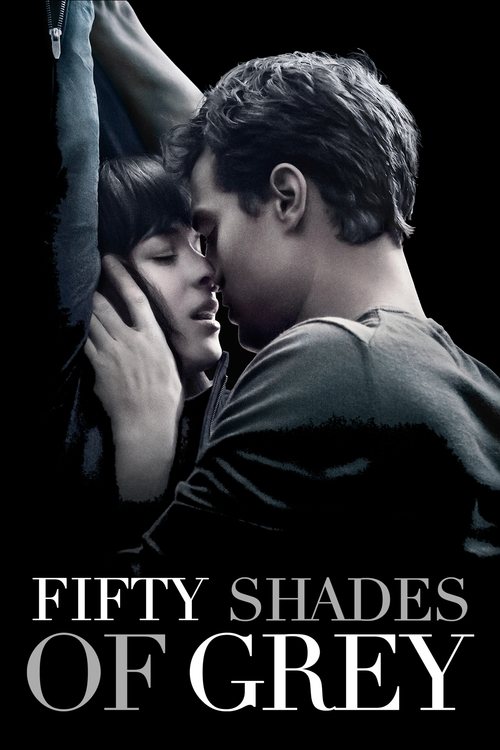
Fifty Shades of Grey
A glossy erotic drama of cool surfaces and guarded hearts, where desire feels like a glass tower in Seattle's rain: dazzling, seductive and quietly claustrophobic, with a young woman testing how far longing can reach.
Fifty Shades of Grey

Fifty Shades of Grey

"Mr. Grey will see you now."

11 February 2015 United States of America 125 min 5.9 (12,614)

Director: Sam Taylor-Johnson

Cast: Dakota Johnson, Jamie Dornan, Jennifer Ehle, Eloise Mumford, Victor Rasuk

Drama Thriller Romance Power and Control Consent and boundaries Trauma and emotional damage Innocence and self-discovery Love versus intimacy
Budget: $40,000,000
Box Office: $569,651,467

Overview

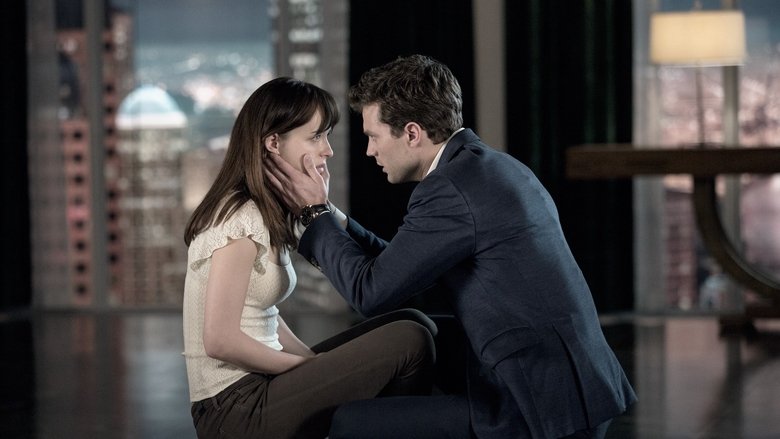
Anastasia "Ana" Steele is a shy literature student at Washington State University's Vancouver campus. When her roommate Kate Kavanagh falls ill, Ana steps in to interview Christian Grey, a young billionaire, at his Seattle headquarters for the college paper. The meeting is awkward but charged, and Christian takes a clear interest in her.

He starts to pursue her. He turns up at the hardware store where she works, sends her first-edition Thomas Hardy novels, and keeps appearing in her life. Christian has no interest in an ordinary romance. He wants a contractual arrangement built on control and BDSM, and he sets out the terms in a formal agreement.

Ana is both drawn to him and frightened. The film follows the negotiation of that contract, which is as much emotional as physical. Ana tries to find the person behind Christian's wealth and rules, while he keeps his past and his boundaries closed to her.
Core Meaning

The film is a story about wanting intimacy from someone who has built his whole life around control. Christian can offer rules, gifts and ritual but not tenderness. Ana wants affection and emotional reciprocity, which he cannot give. Her real journey is learning where her own limits are.

Her decision to leave, instead of being absorbed into his world, is the film's central statement. Love and attraction do not outweigh consent, self-respect and emotional safety. Whether that message lands as a romance or as a warning is something audiences have argued over.

Thematic DNA

Power and control 30%
Consent and boundaries 25%
Trauma and emotional damage 20%
Innocence and self-discovery 15%
Love versus intimacy 10%

Power and control

Christian runs his life through contracts, schedules and rules. His wealth, his helicopter and his gifts all pull Ana into his orbit. The film keeps asking how much of the relationship is truly negotiated and how much is imposed.

Consent and boundaries

The contract, the negotiation over limits and the safe word put consent at the centre. Ana's final "no" at the elevator shows her reclaiming her own boundaries.

Trauma and emotional damage

Christian is shaped by a painful early life, including a birth mother who was a crack addict and died when he was four. He refuses to be touched and says he is damaged, so his need for control reads as a defence.

Innocence and self-discovery

Ana begins as a naive, bookish student. She explores desire, tests how far she will go and learns what she will not accept.

Love versus intimacy

Ana wants a conventional emotional bond. Christian can only say that hearts and flowers are not something he knows. The gap between what each can give drives the ending.

Character Analysis

Anastasia Steele

Dakota Johnson

Archetype: Innocent turned heroine Key Trait: Curious and resilient

Motivation

To understand Christian and reach the man behind the control, and to find a love that is not on his terms alone.

Character Arc

She starts as a shy student who stands in for a sick friend. She becomes more confident, tests Christian's limits, asks to see his worst, and then walks away.

Christian Grey

Jamie Dornan

Archetype: Tormented antihero Key Trait: Controlling and guarded

Motivation

To keep control and emotional distance, shaped by a damaged past.

Character Arc

He starts as a controlling, wealthy man who sets the rules. Ana's presence unsettles him: he says she is changing him, but he cannot go beyond his limits and loses her.

All 3 characters and cast

Symbols & Motifs

The Red Room of Pain

Meaning:

Christian's controlled, compartmentalised inner world, and the limit of what he can give.

Context:

Ana first sees the playroom when Christian reveals his desires. She returns to it at the end, when she asks him to show her the worst.

The contract

Meaning:

Intimacy turned into business, with emotion replaced by terms and clauses.

Context:

Ana reviews and bargains over the paperwork. She asks for a business-style meeting to discuss it, and Christian agrees to wear a suit.

Tess of the d'Urbervilles

Meaning:

A warning about doomed, destructive love, delivered through Ana's literary world.

Context:

Christian gives Ana first editions of Thomas Hardy novels, with a card quoting Tess about the dangers of relationships.

The elevator

Meaning:

Thresholds, and the power to enter or leave his world.

Context:

Ana and Christian part at the elevator doors when they first meet. She leaves the same way at the end, stopping him with "No!" as the doors close.

Christian's scars

Meaning:

The hidden damage behind his control.

Context:

When Ana asks to touch him, he removes her hands. She asks whether the marks on his chest are burns, and he says only that he had a rough start in life.

Memorable Quotes

Because I am fifty shades of f*cked up.
— Christian Grey

Context

Ana presses him on why he needs to punish her.

Meaning

Christian admits his damage, and it is the line that gives the film its title.

Hearts and flowers? That's not something I know.
— Christian Grey

Context

Ana tells him she needs more than he has offered.

Meaning

He cannot offer conventional romance, which is the core conflict between them.

All 6 quotes

Philosophical Questions

Can consent be truly free when one party holds all the power?

Ana negotiates a contract, but Christian's wealth, experience and persistence tilt the field. The film shows her gradually asserting her own limits.

Can love survive when one person cannot give emotional intimacy?

Ana says she loves Christian, and he tells her she cannot. The gap between her emotional need and his limits leads her to leave.

Do past wounds excuse harmful behaviour?

Christian's history explains his need for control, but the ending implies it does not make his behaviour acceptable to those close to him.

How It Ends

Alternative Interpretations

One reading sees the ending as empowerment: Ana refuses a coercive relationship and asserts her boundaries. Another sees the ending as a cliffhanger, set up for the sequels, that leaves the romance unresolved. Some critics read the story as a romanticisation of controlling behaviour, while others see it as a story about a damaged man whose trauma blocks intimacy. The film's version of BDSM is also read by many as a poor representation of the real practice.

Full ending explanation

Cultural Impact

The film adapted a phenomenally popular novel that began as fan fiction with roots in Twilight. It arrived as a major mainstream event, and its Valentine's Day release turned it into a date-night draw as well as a girls'-night phenomenon.

Critics were largely unfavorable. Metacritic gave it 46 out of 100, and audiences gave it a C+ CinemaScore. It still broke box-office records and earned about $570 million worldwide. Two sequels followed in 2017 and 2018, and the parody Fifty Shades of Black came out in 2016. The film also sparked wide debate about how BDSM is portrayed, including criticism from a professional dominatrix who praised the production design's technical details but faulted nearly everything else.

Audience Reception

Reception was divided. Reviews were mostly unfavorable or mixed, and opening-night audiences gave a C+ CinemaScore. Some praised the production's glossy look and the chemistry of the leads, while many criticised the dialogue, the lack of heat compared with the book, and the portrayal of power dynamics. Some viewers were confused by the abrupt ending, which differs from the novel. The film was a huge commercial success despite the lukewarm verdict.

Interesting Facts

  • The film is based on E. L. James's 2011 novel and is the first of three films.
  • Development began in March 2012, when Universal and Focus Features won the rights to the trilogy after a bidding war.
  • Kelly Marcel wrote the screenplay, and Mark Bomback was brought in by Universal for script doctoring.
  • Sam Taylor-Johnson directed the first film. James Foley directed the two sequels.
  • Danny Elfman composed the score.
  • The film premiered at the 65th Berlin International Film Festival on February 11, 2015, and opened wide on February 13.
  • It earned about $569.7 million worldwide on a roughly $40 million budget.
  • Universal moved the release from August to the day before Valentine's Day, and the opening weekend earned $81.7 million in North America, a Valentine's weekend record.
  • Taylor-Johnson reportedly wanted the film's last word to be 'red' (the safe word), but E. L. James insisted on 'stop'.
  • Anne V. Coates was one of the film's editors.

Easter Eggs

The mirrored elevator exchange of 'Anastasia' and 'Christian' at the start and end.

The film closes by echoing how the two first parted, so the story ends on the same threshold with reversed power.

The Thomas Hardy first editions, including Tess of the d'Urbervilles.

The literary gift foreshadows a doomed relationship and ties into Ana's literature background.

Frequently Asked Questions

Explore More About This Movie

Dive deeper into specific aspects of the movie with our detailed analysis pages

Comments (0)

Leave a comment

No comments yet. Be the first to share your thoughts!

Similar Movies