
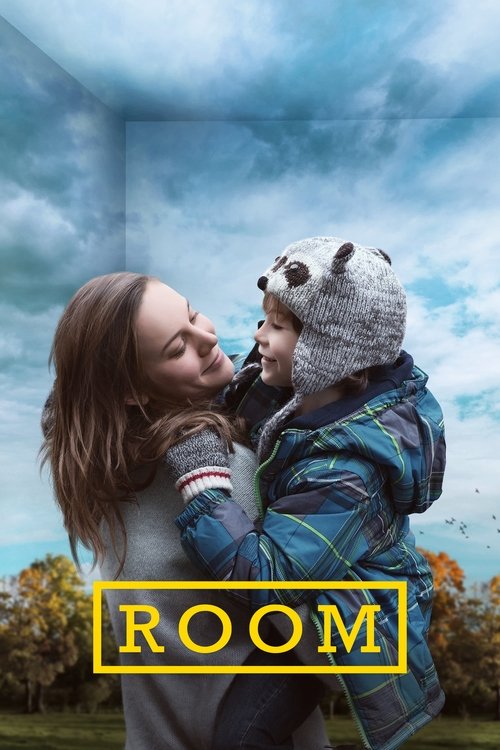
Room
"Love knows no boundaries"
Overview
"Room" tells the extraordinary story of Jack, a spirited 5-year-old, and his devoted mother, Ma. To Jack, their 11-by-11-foot space, which Ma has named "Room," is the entire world. It's where he was born, plays, and learns. Ma has created a loving and imaginative universe for her son within these confines, shielding him from the grim reality that to her, "Room" is a prison where she has been held captive for seven years by a man they call Old Nick.
As Jack's curiosity about the world grows, Ma's desperation intensifies. She knows they cannot stay in Room forever. Together, they devise a risky escape plan. Their success brings them face-to-face with a reality that is both liberating and terrifyingly vast. The second half of the film explores their difficult adjustment to the outside world, the psychological toll of their ordeal, and the unbreakable bond that helps them navigate their newfound freedom.

Core Meaning
At its heart, "Room" is a profound exploration of the boundless power of maternal love and the resilience of the human spirit in the face of unimaginable trauma. The film examines the nature of reality and perception, contrasting Jack's contained, magical worldview with Ma's painful awareness of their captivity. Director Lenny Abrahamson and author Emma Donoghue sought to tell not just a crime story, but a story about love, freedom, and the arduous process of healing and rediscovering the world. It poses deep questions about what defines a fulfilling life and illustrates that survival is merely the beginning of a much more complex journey toward recovery and adaptation.
Thematic DNA
Captivity and Freedom
The film presents a stark duality between physical and psychological confinement. In the first half, captivity is literal—the locked 11x11 foot shed. For Jack, however, this space is his entire universe, and he doesn't feel imprisoned. Freedom, when achieved, is overwhelming and disorienting. Jack desires to return to the familiarity of Room, while Ma struggles with the psychological prisons of trauma, depression, and public scrutiny, realizing that physical escape doesn't guarantee immediate mental liberation.
The Power of Maternal Love
Ma's love for Jack is the film's emotional core. She transforms a horrific prison into a world of imagination and learning for her son. She creates routines, games, and personifies objects to give him a sense of normalcy and protect his innocence. This bond is what fuels their survival and escape. After they are free, this dynamic shifts; Jack's resilience and love, symbolized by him sending her his cut hair for strength, become crucial for Ma's own recovery from a suicide attempt.
Trauma and Recovery
"Room" provides a nuanced portrayal of the aftermath of trauma. The film dedicates its entire second half to the difficult process of healing, which is nonlinear and fraught with challenges. Joy (Ma) battles depression, anger, and guilt, culminating in a suicide attempt. Jack struggles to adapt to a world he never knew existed, finding it loud, vast, and frightening. Their final visit to Room symbolizes their ability to confront their past and move forward, acknowledging its role in their story without letting it define them.
Perception vs. Reality
The narrative is largely filtered through Jack's perspective, highlighting the subjectivity of reality. To him, Room is a complete world where objects like Lamp and Wardrobe are friends, and everything on television is imaginary. Ma's decision to tell him the truth shatters his entire cosmology. Upon entering the real world, Jack must reconcile his understood reality with an infinitely more complex one. His observation that Room has shrunk when they revisit it underscores how perception is shaped by experience and context.
Character Analysis
Joy 'Ma' Newsome
Brie Larson
Motivation
Initially, her sole motivation is to keep Jack safe and happy, creating a magical world for him within Room. This evolves into a desperate need to escape for his sake, realizing he is growing too old for their confined existence. After escaping, her motivation becomes the struggle to heal, reconnect with the world she lost, and redefine her identity beyond being a victim or just "Ma."
Character Arc
Joy begins as a fiercely protective mother, dedicating her entire existence to shielding her son from the horrors of their reality. Her arc is one of enduring immense trauma and then confronting it. After their escape, the strength she showed in captivity crumbles under the weight of her past, leading to depression and a suicide attempt. Her recovery is catalyzed by Jack's love and her own painful acceptance of her trauma. She moves from being Jack's sole protector to someone who must learn to be vulnerable and accept help, ultimately finding a new, more fragile but authentic strength.
Jack Newsome
Jacob Tremblay
Motivation
Jack's primary motivation is his love for and connection with Ma. He follows her lead, trusts her implicitly, and his world revolves around their shared routines. His curiosity is what prompts Ma to reveal the truth, and his love for her is what makes him brave enough to execute the escape plan. His ultimate motivation becomes helping Ma heal, just as she helped him survive.
Character Arc
Jack's arc is a dramatic journey from a state of pure innocence and ignorance to a sudden, overwhelming awareness of the world. Born in captivity, he believes Room is the entire universe. The escape forces him to confront a reality that is vast, loud, and terrifying. He initially regresses, wanting to return to the safety of Room. However, he gradually adapts, forming new relationships and understanding. His journey culminates in an act of profound empathy when he cuts his hair to give his mother strength, transitioning from the one being protected to a protector himself.
Old Nick
Sean Bridgers
Motivation
His motivations are rooted in power, control, and sexual violence. He maintains his prisoners' dependence on him for food and electricity, using these necessities as tools of manipulation. He shows little to no empathy for Joy or Jack, viewing them as possessions rather than human beings.
Character Arc
Old Nick is a static character who serves as the catalyst for the film's events. He is the kidnapper, rapist, and jailer of Joy and the biological father of Jack. His arc is minimal and external; he loses his job, which creates the instability that forces Ma to act. His story concludes with his capture and arrest, removing him as a physical threat but leaving behind a lifetime of trauma for his victims to process.
Nancy Newsome
Joan Allen
Motivation
Her motivation is her deep love for her daughter and her desire to repair their family. She wants to provide the safety and support that Joy and Jack desperately need, helping them to adjust to a world that is completely new to one and painfully changed for the other.
Character Arc
Nancy's arc is one of reconnection and patience. Having lost her daughter for seven years, she must navigate the immense challenge of helping both Joy and her new grandson heal. She provides a stable, loving environment and acts as a bridge between Joy's traumatic past and a possible future. She learns to understand Jack's unique perspective and supports Joy through her darkest moments, representing the healing power of family.
Symbols & Motifs
Room
"Room" symbolizes both a prison and a sanctuary. For Ma, it is a place of horrific abuse and confinement. For Jack, it is the entire universe, a place of safety, routine, and maternal love. After their escape, its meaning evolves. When they revisit it, Jack sees it as a small, insignificant space, signifying his growth and expanded worldview.
The 11x11 foot shed is the primary setting for the film's first half. The characters' relationship with it changes dramatically. Initially, they personify its contents. In the end, they say goodbye to it, object by object, severing their connection to the place that both created and confined them.
Jack's Long Hair
Jack's long hair symbolizes his connection to his life in Room and his perceived source of strength, akin to the biblical story of Samson. He believes it contains his power and vitality. By choosing to cut it and send it to Ma while she is hospitalized, he performs a profound act of love, transferring his strength to her when she needs it most, which aids in her recovery.
Jack's hair is a defining physical feature throughout the film. After their escape, his grandmother suggests cutting it, but he refuses. The turning point is when Ma is in the hospital after her suicide attempt. Jack decides to have his hair cut, telling his grandma, "She needs my strong more than me."
The Skylight
The skylight represents a limited connection to the outside world, a glimpse of something more beyond their confinement. It's their only source of natural light and their view of the sky, leaf, and squirrel. It symbolizes hope and the possibility of a world beyond their immediate reality, a concept Jack struggles to grasp until their escape.
The skylight is a constant visual presence in the first half of the film. It's how Jack imagines he "zoomed down from Heaven" into Room. It's the one part of Room that directly interfaces with the "real" world, making it a powerful symbol of their isolation and their hope for freedom.
Eggsnake
Made from the shells of their weekly eggs, Eggsnake is a toy that symbolizes creativity and the passage of time in captivity. It is described by Jack as their "longest friend." It represents Ma's ability to create a childhood for Jack out of the most meager resources, transforming remnants of their subsistence into an object of play and companionship.
Eggsnake is a prominent toy within Room. It is one of the many homemade objects that populate Jack's world, showcasing the imaginative environment Ma fosters despite their grim circumstances.
Memorable Quotes
There's Room, then outer space, with all the TV planets, then Heaven. ... But me and you are real.
— Jack Newsome
Context:
This is part of Jack's voice-over at the beginning of the film as he goes through his morning routine, saying good morning to the objects in Room. It sets the stage for the audience to understand the story through his unique and innocent perspective.
Meaning:
This quote, from the opening narration, establishes Jack's entire cosmology. It perfectly encapsulates his limited but complete understanding of the universe, centered on the tangible reality of himself and his mother, and illustrates the imaginative world Ma has constructed to protect him.
Scared is what you're feeling. Brave is what you're doing.
— Joy 'Ma' Newsome
Context:
This line is spoken during a tense rehearsal for the escape plan. Jack is frightened and struggling to understand the plan to play dead inside a rug. Ma's words give him the framework to process his fear and find his courage.
Meaning:
Ma says this to Jack while preparing him for the escape. It is a powerful lesson that distinguishes feelings from actions, teaching him that courage isn't the absence of fear, but acting in spite of it. This idea empowers Jack to perform the terrifying feat that will save them.
It can't really be Room if the door's open.
— Jack Newsome
Context:
Jack says this when he and Ma visit Room for the last time near the end of the film. He is struck by how small and different it feels. This line is his way of processing that the place that was once his whole world is now just a shed.
Meaning:
This profound observation from a child highlights how context defines a space. Room was defined by its sealed nature; being a prison was its core identity. With the door open, it is no longer the same entity. It has lost its power and its former meaning, allowing Jack and Ma to finally leave it behind emotionally.
Say bye to Room, Ma.
— Jack Newsome
Context:
This is said during their final visit to Room. After Jack observes that it's a different place with the door open, he says goodbye to the individual objects before turning to his mother and prompting her to do the same, which she does silently. They then walk out for the last time.
Meaning:
As the film's final line, this quote signifies closure. It is Jack, the one who initially wanted to return to Room, who leads his mother in the final act of letting go. It shows his growth and acceptance of their new life, and he in turn helps his mother achieve the same peace.
Philosophical Questions
What is the nature of reality?
The film fundamentally questions whether reality is objective or subjective. For the first five years of his life, Jack's reality is Room. It is a complete, functioning universe. His mother's 'truth' about the outside world is, to him, a fantastical story. The film forces the audience to consider that our own realities are constructed from our experiences and perceptions. Jack's struggle to adapt to the 'real' world demonstrates how jarring and disorienting it can be when a person's foundational understanding of existence is shattered.
How does extreme adversity shape human identity and relationships?
"Room" is a case study in how identity is forged under duress. Ma's identity is stripped down to its most essential element: being a mother. In the outside world, she is forced to confront the person she was before and the traumatized person she has become. The film explores how the parent-child bond, forged in such an intense, codependent environment, must be completely renegotiated in the context of a larger world with other people and influences.
What does it truly mean to be 'free'?
The film posits that freedom is more than just the absence of physical restraint. After the escape, Ma and Jack are physically free, but they remain prisoners of their trauma. Ma feels trapped by guilt, public scrutiny, and her own psychological wounds, while Jack feels lost and overwhelmed without the familiar confines of Room. Their journey suggests that true freedom is an internal state that must be achieved through a difficult process of healing, acceptance, and confronting one's past.
Alternative Interpretations
While the film's narrative is quite direct, some alternative readings focus on its allegorical layers. One interpretation views "Room" as a metaphor for the universal experience of childhood and the subsequent, often traumatic, entry into the complexities of the adult world. In this light, Room represents the sheltered, imaginative, and sometimes confining world created by a parent, and the escape is the painful but necessary process of growing up and forming an independent identity. Jack's confusion and fear of the outside world mirror the anxieties of leaving a familiar home environment.
Another interpretation frames the film as a philosophical exploration of Plato's Allegory of the Cave. Jack is the prisoner who has only ever known the shadows on the wall (the objects in Room and the images on TV). His escape is a painful journey into the light of the real world, a truth so overwhelming that he initially rejects it. His gradual adjustment and eventual return to the 'cave' (Room) to see it for what it truly is—a small, dark space—completes the allegory. He has achieved enlightenment and can no longer return to his former state of ignorance.
Cultural Impact
"Room" was met with widespread critical acclaim upon its release, culminating in numerous awards, including the Academy Award for Best Actress for Brie Larson. The film had a significant cultural impact for its sensitive and psychologically nuanced depiction of trauma and survival, moving beyond the sensationalism often associated with true-crime stories. It brought mainstream attention to the long-term psychological effects of captivity, not just for the immediate victim but for the entire family unit.
The film was widely praised for its unique narrative perspective, telling the story through the eyes of a 5-year-old. This choice allowed audiences to engage with a horrific subject matter in a way that was both accessible and deeply emotional, focusing on themes of love and resilience rather than just the grim details of the crime. The story, while fictional, was inspired by real-life cases like that of Elisabeth Fritzl, and it prompted renewed public discussion about the psychology of survival and the ethics of media coverage surrounding such traumatic events. The film's success cemented A24's reputation as a distributor of powerful, character-driven independent cinema and highlighted Lenny Abrahamson as a director with a unique ability to handle delicate subject matter with profound empathy.
Audience Reception
Audience reception for "Room" was overwhelmingly positive, with many viewers finding it to be a profoundly moving and emotionally powerful experience. The performances of Brie Larson and Jacob Tremblay were universally praised as captivating and incredibly authentic. Audiences were particularly struck by the film's unique perspective, telling a harrowing story through the innocent and imaginative eyes of a child, which made the difficult subject matter more poignant and bearable.
The primary point of praise was the film's handling of the mother-son relationship, which viewers described as the heart of the movie, celebrating its portrayal of love and resilience. Some viewers found the first half in the claustrophobic Room to be intense and anxiety-inducing, while the second half, dealing with the aftermath of their escape, was seen as a realistic and heart-wrenching depiction of trauma and recovery. While there was little criticism, a few viewers found the second act to be less compelling than the taut, suspenseful first act. Overall, the verdict was that "Room" is a beautifully crafted, unforgettable, and deeply human film.
Interesting Facts
- Author Emma Donoghue, who wrote the novel, also wrote the screenplay for the film.
- To prepare for her Oscar-winning role, Brie Larson isolated herself for a month, followed a restrictive diet, and consulted with a trauma specialist to understand the psychological state of her character.
- The set for "Room" was an 11x11 foot box, and to create an authentic, claustrophobic feel, the walls were designed to be removable to fit the crew and camera equipment. Director Lenny Abrahamson would often sit in the bathtub to stay out of the shot.
- The film was shot in sequential order for the scenes inside Room to help child actor Jacob Tremblay understand his character's emotional journey.
- Jacob Tremblay was only seven years old during filming and wore a wig for the role. Because of his age, the plot was explained to him scene by scene rather than having him read the entire script.
- The story was partly inspired by the real-life case of Elisabeth Fritzl, who was imprisoned by her father in Austria for 24 years. However, author Emma Donoghue has stated it was the idea of a child emerging into the world for the first time that was the primary creative "trigger."
- Brie Larson's character is named Joy, which was one of three Oscar-nominated films from 2015 with a lead character named Joy, the others being "Joy" and "Inside Out."
- William H. Macy and Joan Allen, who play Joy's parents, also played a couple in the 1998 film "Pleasantville."
⚠️ Spoiler Analysis
Click to reveal detailed analysis with spoilers
Frequently Asked Questions
Explore More About This Movie
Dive deeper into specific aspects of the movie with our detailed analysis pages
Comments (0)
No comments yet. Be the first to share your thoughts!