Skip to content
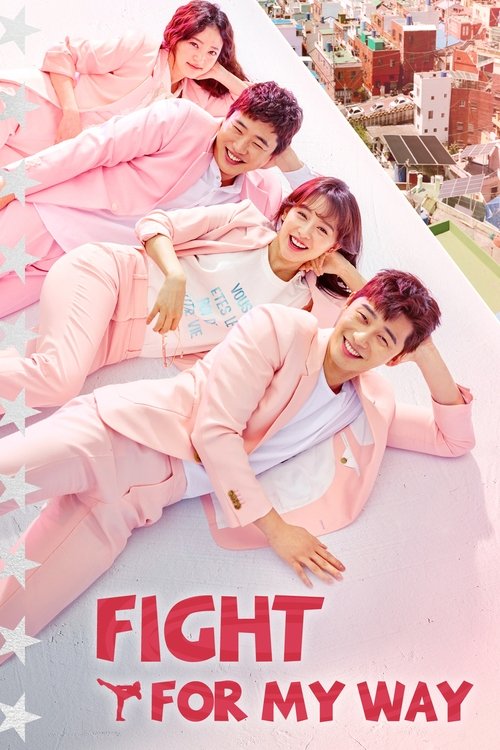
Fight for My Way
A vibrant slice-of-life romantic comedy pulsing with youthful grit and tender longing, where bruised dreamers ignite the Seoul night sky like fireworks rising stubbornly from a cracked concrete rooftop.
Fight for My Way

Fight for My Way

쌈 마이웨이

"It's youth to live!"

22 May 2017 — 11 July 2017 South Korea 1 season 16 episode Ended 8.0 (157)

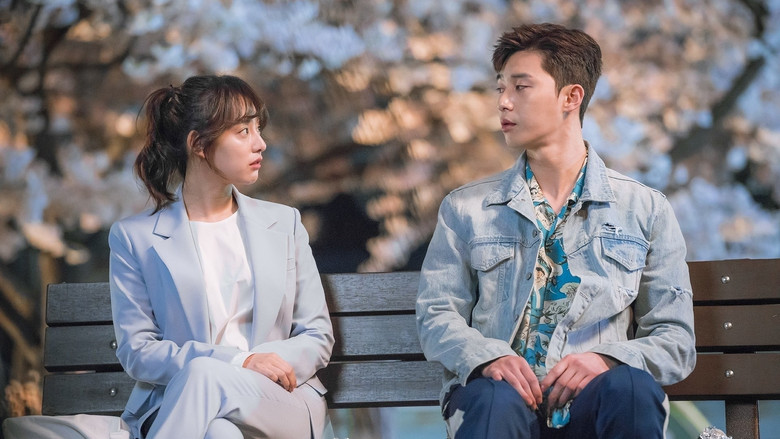
Cast: Park Seo-jun, Kim Ji-won, Ahn Jae-hong, Song Ha-yoon, Kim Seung-o

Drama Comedy The Pursuit of Dreams vs. Socioeconomic "Third-Rate" Reality Friends-to-Lovers & the Architecture of Intimacy Class Divide, Complacency, & Relationship Attrition Everyday Heroism & Reclaiming Dignity

Overview

Fight for My Way is a realistic coming-of-age romantic comedy centered on the "Crazy Fantastic Four"—a quartet of childhood best friends who have entered their late twenties burdened by "third-rate specs" (formal resume credentials in South Korea). Having shelved their grandiose adolescent ambitions due to harsh economic realities, socioeconomic marginalization, and traumatic setbacks, the four protagonists navigate mundane, unglamorous day jobs in Seoul while confronting societal dismissiveness.

The series traces their gradual rebellion against social expectations as they band together to reclaim their long-abandoned aspirations. Former national taekwondo prodigy Ko Dong-man resolves to restart his athletic career inside the mixed martial arts (MMA) octagon, while department store information clerk Choi Ae-ra battles deep-seated credentialism to pursue her lifelong dream of holding a broadcasting microphone. Simultaneously, their close friends—home shopping network assistant manager Kim Joo-man and customer service representative Baek Seol-hee—confront systemic class disparities, unfulfilling corporate ladders, and interpersonal fatigue within their six-year relationship.

Rather than relying on conventional K-drama tropes of chaebol heirs and serendipitous fairy-tale rescues, the series crafts a grounded, emotionally resonant portrait of ordinary underdogs. Across its 16-episode journey, the drama examines the tender transition from lifelong platonic friendship into romantic intimacy, the cost of emotional compromises in long-term relationships, and the quiet dignity of defying conventional definitions of social status.


Core Meaning

The core thesis of Fight for My Way is that an ordinary life lived with authenticity, passion, and personal agency is fundamentally worthy and victorious, regardless of whether society validates it with wealth or elite status. The title itself (Ssam, Maiwei, blending Korean slang for a brawl or grit with the English phrase "My Way") underscores the premise that young adults without privilege must wage a daily fight simply to walk their chosen path.

Through the narrative, the series argues against South Korea's hyper-competitive credentialist hierarchy and the societal fixation on elite academic pedigree and background. It asserts that personal fulfillment is not measured by winning social prestige, but by having the courage to step into the arena, risk failure, and author one's own identity alongside those who genuinely love and support you.

Thematic DNA

The Pursuit of Dreams vs. Socioeconomic "Third-Rate" Reality 35%
Friends-to-Lovers & the Architecture of Intimacy 25%
Class Divide, Complacency, & Relationship Attrition 20%
Everyday Heroism & Reclaiming Dignity 20%

The Pursuit of Dreams vs. Socioeconomic "Third-Rate" Reality

The central dramatic engine is the friction between high aspirations and lack of formal resume credentials (specs). Dong-man and Ae-ra are repeatedly rejected by institutions because they lack foreign study abroad experiences or wealthy connections. The show develops this theme by demonstrating that persistence, specialized talent, and finding non-traditional avenues—such as Ae-ra becoming an MMA ring announcer rather than a mainstream network anchor—can redefine professional success on one's own terms.

Friends-to-Lovers & the Architecture of Intimacy

Dong-man and Ae-ra's relationship explores the precarious boundary between twenty years of platonic camaraderie and emerging romantic attraction. The theme evolves from mutual protective instincts and casual physical comfort into heightened vulnerability, fear of losing their foundational friendship, and ultimately passionate romantic partnership.

Class Divide, Complacency, & Relationship Attrition

Explored primarily through Joo-man and Seol-hee, this theme investigates how financial strain, class insecurity, and familiarity can erode long-term devotion. While Joo-man seeks upward corporate mobility to provide a comfortable life, Seol-hee finds fulfillment in small domestic joys. The narrative demonstrates that taking a partner for granted and projecting one's insecurities leads to painful estrangement, requiring personal growth and independent self-worth before reconciliation is possible.

Everyday Heroism & Reclaiming Dignity

The series celebrates the micro-triumphs of ordinary working-class individuals facing daily indignities from entitled bosses, rude customers, and affluent peers. Dignity is reclaimed not by achieving sudden billionaire status, but by confronting abusers, refusing to be treated as disposable "extras" in someone else's life, and standing up for loved ones.

Character Analysis

Ko Dong-man

Park Seo-joon

Archetype: Reluctant Champion / Hero Key Trait: Fierce loyalty, goofy sincerity, physical resilience

Motivation

Initially driven by a desire to repay familial guilt and escape embarrassment; later driven by the pure joy of fighting and the desire to build an honest life with Ae-ra.

Character Arc

Once a rising high-school taekwondo star who threw an Olympic qualifying match in 2007 to secure medical funds for his disabled sister, Dong-man spends a decade drifting as an unmotivated pest exterminator. Re-entering the fight world via MMA under Coach Hwang, he overcomes PTSD, past disgrace, and physical peril to become a bona fide champion while acknowledging his profound romantic love for Ae-ra.

Choi Ae-ra

Kim Ji-won

Archetype: Fiery Underdog / Heroine Key Trait: Unyielding pride, expressive confidence, directness

Motivation

To be heard, respected, and self-sufficient on her own merits without apologizing for her unpolished background.

Character Arc

Working behind a department store information desk, Ae-ra endures romantic betrayal and repeated employment discrimination because she lacks an elite academic pedigree. Refusing to remain timid, she auditions tenaciously and carves out a niche as Korea's first female MMA ring announcer. Along the way, she confronts her vulnerability, coming to terms with maternal abandonment and embracing her feelings for Dong-man.

All 5 characters and cast

Symbols & Motifs

The Microphone (Ma-i-keu)

Meaning:

The ultimate symbol of Choi Ae-ra's identity, voice, and suppressed ambitions. Grasping the microphone represents her taking control of her narrative and commanding the world's attention.

Context:

Appears throughout her life journey—from childhood toy microphones to the department store PA system and eventually the MMA cage announcer microphone.

Namil Bar (Rooftop Hideout)

Meaning:

Serves as a sanctuary and liminal space separating the harsh outside world from the characters' private camaraderie and emotional security.

Context:

The communal rooftop space decorated with string lights atop their modest apartment building, hosting their drinking sessions, heart-to-heart confessions, and emotional breakthroughs.

Tracksuits vs. Business Suits

Meaning:

Contrasts unpretentious authenticity with corporate conformity and societal hierarchy.

Context:

The characters' casual, brightly colored athleisure and tracksuits visually represent their natural, unpretentious selves, contrasting sharply with the stiff corporate uniforms and tailored suits worn by societal elites who look down on them.

The Fighting Ring / Octagon

Meaning:

Symbolizes Ko Dong-man's internal arena of unresolved trauma and catharsis, transforming physical combat into emotional liberation.

Context:

The physical space where Dong-man confronts his past match-fixing manipulation, physical pain, and fear of failure.

Plum Wine (Maesil-ju)

Meaning:

Represents personal growth, transition from domestic self-sacrifice to independent self-worth, and female agency.

Context:

Handcrafted by Baek Seol-hee, it begins as a modest hobby reflecting her domestic care for Joo-man and transforms into an independent entrepreneurial business that establishes her financial autonomy.

Memorable Quotes

예쁜 척하는 게 아니라 그냥 예쁘게 태어난 곤데.
— Choi Ae-ra

Context

Episodes 2 / 3. Ae-ra unleashes exaggerated aegyo (cute vocal inflections and pouty expressions) to tease Dong-man and shut down rivals.

Meaning

Captures Ae-ra's unapologetic confidence and playful personality. This line became one of the most viral pop culture quotes in contemporary K-drama history, widely parodied across Korean variety shows and social media platforms.

남들이 뭐라든 넌 될 놈이야.
— Choi Ae-ra

Context

Episode 2. Spoken after a dejected Dong-man bails her out of trouble following an altercation at a wedding.

Meaning

Reaffirms Ae-ra's deep, unwavering faith in Dong-man's inherent talent, sparking the psychological shift that encourages him to fight again.

All 5 quotes

Episode Highlights

The Knuckleheads of Gangnam / Taking the First Punch

S1E1

Establishes the contrasting backstory of 2007's high school glory versus 2017's unglamorous reality, introducing the Fantastic Four's dead-end jobs and comedic yet vulnerable dynamic.

Significance:

Sets up the primary conflict between youthful aspirations and the crushing socioeconomic realities of modern adult life.

Whatever They Say, We Go Our Way

S1E2

Ae-ra temporarily steps in as the department store's in-house announcer, rekindling her broadcasting passion, while Dong-man confronts his past rival Kim Tak-soo.

Significance:

Features the pivotal moment where Dong-man and Ae-ra protect each other from public humiliation, solidifying their fierce mutual defense mechanism.

My Dream Was to Be Ong Bak

S1E4

Dong-man formally steps back into the gym after watching an MMA broadcast that reduces him to tears, while Ae-ra lands a coveted announcer interview.

Significance:

Officially marks the Fantastic Four's active rebellion against their dormant lives and the restart of their abandoned dreams.

The Golden Glove / The Night in Daecheon

S1E8

Dong-man travels for an amateur bout, followed anxiously by Ae-ra. Sleeping in separate rooms at a motel heightens romantic tension, ending in Dong-man's knockout victory and an emotional public embrace.

Significance:

Brings their underlying romantic tension to the forefront in front of a live audience, breaking through years of platonic comfort.

Kissing on the Beach / No Turning Back

S1E10

Dong-man and Ae-ra share a passionate seaside kiss, shedding twenty years of platonic ambiguity.

Significance:

Dong-man declares that they can never go back to being "just friends," permanently transforming their dynamic into explicit lovers.

The Midnight Call / Letting Go

S1E12

Seol-hee discovers Joo-man lying about an overnight incident involving intern Jang Ye-jin and breaks off their six-year relationship with heartbreaking dignity.

Significance:

Serves as the emotional climax of the secondary romance, shifting the balance of power and initiating Seol-hee's journey toward independent self-worth.

The Headbutt / The Sound of Silence

S1E14

Dong-man faces Kim Tak-soo in a professional rematch, but Tak-soo initiates an illegal headbutt that tears Dong-man's eye and causes internal ear trauma resulting in temporary deafness.

Significance:

Presents the central catastrophic crisis of the series, forcing Dong-man and Ae-ra to confront the physical and emotional costs of his combat career.

The Ultimatums and Partings

S1E15

Ae-ra delivers an ultimatum that she cannot stay with Dong-man if he fights again, because watching him get destroyed physically breaks her heart.

Significance:

Dong-man chooses to resolve his unfinished business in the octagon, leading to a painful and mature breakup that tests their devotion.

Neverending My Way

S1E16

Dong-man cleanly defeats Tak-soo with a signature spinning roundhouse kick and proposes to Ae-ra on the microphone inside the cage, while Seol-hee forgives a repentant Joo-man and the landlady's secret is revealed.

Significance:

Provides full catharsis and resolution for all four protagonists, celebrating their hard-won self-actualization atop Namil Bar.

Philosophical Questions

Does the sacrifice of a dream guarantee security, or merely defer misery?

The drama illustrates through Dong-man and Ae-ra that settling for a "safe" job out of fear or compromise only breeds quiet resentment, whereas pursuing one's genuine calling—even with the risk of public failure—restores vitality and personal purpose.

Can a relationship survive when personal growth is asymmetrical?

Explored through Joo-man and Seol-hee, showing that when one partner progresses in corporate status while the other stagnates in domestic self-sacrifice, resentment festers unless both individuals cultivate independent identities and mutual respect.

What constitutes a "first-rate" life?

The series interrogates whether human worth should be measured by executive titles and elite credentials or by living with authenticity, loyalty, resilience, and dignity on one's own terms.

Alternative Interpretations

Critics and scholars have evaluated Fight for My Way through several distinct lenses:

Full ending explanation

Cultural Impact

Broadcast during a peak in South Korean public discourse surrounding the N-po sedae ("N-giving-up generation") and structural inequality, Fight for My Way resonated as a cathartic antidote to traditional escapist chaebol romances. It reflected the genuine anxieties of young Koreans who felt excluded from corporate success due to lack of elite credentials.

The series also reshaped Korean pop culture through Kim Ji-won's viral aegyo line ("I'm not acting pretty..."), which was parodied and replicated by K-pop idols and celebrities across major variety shows such as Weekly Idol and Running Man.

After debuting with modest 5.4% ratings, the series climbed steadily to a peak of 13.8% (TNMS) / 14.4% (Nielsen Korea), winning multiple major honors at the 2017 KBS Drama Awards for its lead and supporting cast.

Audience Reception

Fight for My Way was universally praised for its grounded realism, breezy comedic pacing, and avoidance of toxic melodramatic clichés. Critics and viewers widely praised the naturalistic, electrifying chemistry between Park Seo-joon and Kim Ji-won, hailing them as one of the definitive romantic comedy duos of the 2010s. The secondary romance featuring Ahn Jae-hong and Song Ha-yoon earned substantial acclaim for its raw, painful authenticity.

Minor criticisms focused on the late-stage mystery surrounding landlady Hwang Bok-hee's maternal identity, which some felt leaned into conventional soap opera tropes. Some viewers also debated the quick reconciliation between Seol-hee and Joo-man in the finale, feeling their long-standing issues warranted a longer path to forgiveness.

Overall, the drama is regarded as a modern K-drama classic in the slice-of-life romantic comedy genre, sustaining strong international streaming popularity and high re-watch value.

Interesting Facts

  • Writer Im Sang-choon was inspired to create the drama after watching professional MMA fighter Choo Sung-hoon (Yoshihiro Akiyama) and seeing his wife, Japanese model Shiho Yano, weep while watching his brutal fights.
  • Park Seo-joon trained rigorously in Brazilian jiu-jitsu, boxing, and taekwondo for several hours a day for months before and during filming, while maintaining a strict athlete diet.
  • Although set in Seoul, the hillside neighborhood and iconic Namil Bar rooftop were filmed primarily in Busan (specifically Hansung Apartment and the rooftop deck at Hocheon Village in Beomcheon-dong).
  • The drama marked Kim Ji-won's first top-billed lead role in a prime-time weekday terrestrial miniseries on KBS2.
  • The natural banter between Park Seo-joon and Kim Ji-won featured extensive improvisation, including their comedic bickering, tactile play-fighting, and affectionate head-locks.

Easter Eggs

Choi Woo-shik's special guest appearance as Dr. Park Moo-bin in episodes 1–7.

Choi Woo-shik is a close real-life friend of Park Seo-joon and a fellow "Wooga Squad" member. His character subverted romantic tropes when revealed to be a deceitful snob. Park Seo-joon later made a reciprocating cameo in Choi Woo-shik's Oscar-winning film Parasite (2019).

Repeated dialogue references comparing Dong-man to Tony Jaa and the movie Ong Bak.

Pays homage to the iconic 2003 Thai martial arts film Ong Bak, highlighting Dong-man's high school reputation in Boryeong for explosive flying kicks.

Vintage pop culture posters and memorabilia in landlady Hwang Bok-hee's apartment.

Subtly foreshadows her secret backstory as a former 1980s and 1990s actress who had to leave the entertainment industry and give up her child due to strict social taboos.

Casting continuity with writer Im Sang-choon's previous work Becky's Back.

Reunited writer Im Sang-choon with supporting actors Kim Sung-oh and Choi Dae-chul from the acclaimed 2016 KBS miniseries Becky's Back (Baek-hee Has Returned).

Frequently Asked Questions

Explore More About This Movie

Dive deeper into specific aspects of the movie with our detailed analysis pages

Comments (0)

Leave a comment

No comments yet. Be the first to share your thoughts!

Similar Movies