Skip to content
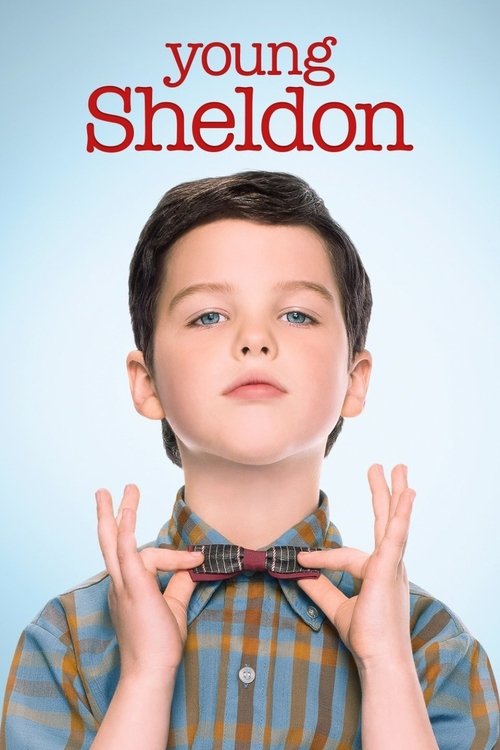
Young Sheldon
A tender, sun-drenched period dramedy wrapped in nostalgic warmth, capturing the fragile wonder of childhood through a boy whose extraordinary mind alienates him from the world, anchored by a loving family.
Young Sheldon

Young Sheldon

"It all started with a big bang—or rather, in East Texas."

25 September 2017 — 16 May 2024 United States of America 7 season 141 episode Ended 8.0 (3,063)

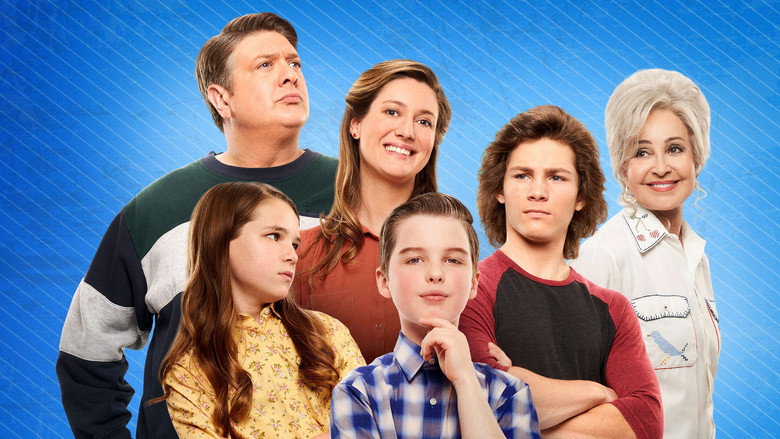
Cast: Iain Armitage, Zoe Perry, Lance Barber, Montana Jordan, Raegan Revord

Drama Family Comedy Family and Sacrificial Love Intellect vs. Emotional and Social Wisdom Faith, Religion, and Empirical Science Grief, Memory, and the Passage of Time

Overview

Young Sheldon is a coming-of-age family comedy-drama created by Chuck Lorre and Steven Molaro, serving as a prequel to The Big Bang Theory. Set in the late 1980s and 1990s in the fictional suburban town of Medford in East Texas, the series chronicles the early life of child prodigy Sheldon Cooper. Entering high school at age nine and later attending East Texas Tech while still an adolescent, Sheldon navigates an educational and social environment ill-equipped for his intellect.

Rather than relying solely on the quirks of its central genius, the narrative encompasses the entire Cooper household: Sheldon's devoutly Baptist mother Mary, his blue-collar football coach father George Sr., his rebellious older brother Georgie, his emotionally astute twin sister Missy, and his feisty grandmother Connie "Meemaw" Tucker. The overarching story explores how a conventional, working-class Texas family balances the financial, emotional, and social demands of raising a once-in-a-generation genius without leaving the other children behind.

Across seven seasons and 141 episodes, the series transitions from an episodic sitcom about a precocious fish-out-of-water into an ensemble family drama tracing the children growing up, marital and career tensions between the parents, and the inevitable milestones that push Sheldon toward his destiny at Caltech.

Core Meaning

The core thesis of Young Sheldon is that extraordinary intellect is neither a substitute for human connection nor a shield against life's emotional realities. Through Sheldon's childhood and the retrospective narration of his adult self, the show re-evaluates the sacrifices, flaws, and silent endurance of ordinary parents and siblings. It conveys that unconditional familial love does not require complete mutual comprehension—only patience, empathy, and presence—acting as an act of retrospective reconciliation that transforms childhood grievances into gratitude.

Thematic DNA

Family and Sacrificial Love 35%
Intellect vs. Emotional and Social Wisdom 25%
Faith, Religion, and Empirical Science 20%
Grief, Memory, and the Passage of Time 20%

Family and Sacrificial Love

The central pillar of the narrative explores how love manifests through daily compromises. Mary constantly shields Sheldon from hostility, George Sr. suppresses personal career ambitions for household stability, and Georgie and Missy learn to navigate emotional neglect as the dynamic deepens into an exploration of duty and mutual protection.

Intellect vs. Emotional and Social Wisdom

The series contrasts Sheldon's massive IQ and lack of emotional intelligence with his twin sister Missy's innate understanding of social codes and empathy. It repeatedly demonstrates that academic brilliance alone cannot navigate human relationships, grief, or personal crises.

Faith, Religion, and Empirical Science

Set in the American Bible Belt, the show stages an ongoing dialogue between Mary's devout Christian faith and Sheldon's empirical rationalism, framing science and faith as complementary avenues for finding comfort and order in an unpredictable universe.

Grief, Memory, and the Passage of Time

Operating through a memory framing device, the series reveals how childhood impressions of parents are often incomplete, maturing over time to confront aging grandparents, broken marriages, sudden mortality, and the painful transition into adulthood.

Character Analysis

Sheldon Cooper

Iain Armitage

Archetype: The Boy Prodigy / Misunderstood Genius Key Trait: Rigid, analytical mind coupled with innocence and eidetic memory.

Motivation

Starts with a desire for pure intellectual validation; matures into a deeper understanding of human emotional duty.

Character Arc

Begins as an arrogant, hyper-sensitive nine-year-old unable to cope with social norms. Over seven seasons, through college and academic rivalries, he slowly learns empathy, humility, and the emotional weight of family sacrifices before departing for Caltech.

George Cooper Sr.

Lance Barber

Archetype: The Weary Blue-Collar Patriarch / Flawed Protector Key Trait: Pragmatic, unpretentious warmth and patience beneath a gruff exterior.

Motivation

Strives to keep his family financially afloat and maintain his marriage; gradually seeks personal respect and peace before his untimely death.

Character Arc

Initially introduced as a stressed football coach struggling with health and finances, he develops into a compassionate, deeply dedicated father whose perceived shortcomings masked profound love and quiet self-sacrifice.

All 5 characters and cast

Symbols & Motifs

The Bow Tie and Formal Attire

Meaning:

Represents Sheldon's stubborn refusal to conform to social expectations and his desire for professional adult respect, while highlighting his distinctness from his East Texas peers.

Context:

Worn by Sheldon to public school and formal settings despite peer ridicule and social discomfort.

The Family Dinner Table and Hand-Holding

Meaning:

Serves as the emotional barometer of the Cooper home, charting shifting unity, tensions, and collective fractures.

Context:

Featured during pre-meal prayers, where Sheldon often insists on wearing gloves or holding hands through paper napkins.

Model Trains and Locomotives

Meaning:

Symbolizes Sheldon's yearning for predictable systems, precision, and adherence to rigid rules in an erratic, emotionally turbulent world.

Context:

Used as Sheldon's primary hobby and safe haven when dealing with stress or emotional uncertainty.

Meemaw's Brisket Recipe

Meaning:

A motif for guarded vulnerability, heritage, and unspoken affection within Southern domestic life.

Context:

Contrasts Connie's tough exterior with her underlying devotion to her family and George Sr.'s desire for familial acceptance.

The Shortwave Radio / Nobel Prize Broadcast

Meaning:

Symbolizes Sheldon's cosmic loneliness and yearning for intellectual kindred spirits, illustrating the isolation of being far ahead of one's environment.

Context:

Used during the 5:00 AM Nobel Prize announcement listening party where Sheldon sits alone in the dark.

The Football Playbook and Coach's Whistle

Meaning:

Represents George Sr.'s blue-collar identity and traditional athletic world, functioning as a bridge where Sheldon's computational logic intersects with his father's passion.

Context:

Appears throughout George Sr.'s coaching career and strategy discussions with Sheldon.

Memorable Quotes

I don't [believe in God], but the precision of the universe at least makes it logical to conclude there's a creator.
— Sheldon Cooper

Context

Spoken to Mary in Season 1, Episode 3 ("Poker, Faith, and Eggs") while George Sr. is hospitalized for a minor heart issue.

Meaning

Establishes the series' foundational dialogue between faith and science, showing Sheldon building an intellectual bridge to comfort his devout mother.

I'm not crazy. My mother had me tested.
— Sheldon Cooper

Context

Spoken to bewildered high school teachers and administrators in Season 1, Episode 1 ("Pilot").

Meaning

Mirrors his famous catchphrase from The Big Bang Theory, showing its origins in childhood defensive self-validation.

All 4 quotes

Episode Highlights

Pilot

S1E1

Directed by Jon Favreau, introducing nine-year-old Sheldon entering high school and setting the Cooper family dynamics.

Significance:

Establishes the warm, single-camera cinematic aesthetic and the core character dynamics that anchor the entire series.

A Brisket, Voodoo, and Cannonball Run

S1E7

Explores the combative yet affectionate relationship between George Sr. and Meemaw over a secret family brisket recipe.

Significance:

Reveals George Sr.'s underlying insecurities about never feeling fully respected or accepted by Mary's family.

A Swedish Science Thing and the Equation for Toast

S2E22

Sheldon hosts a 5:00 AM radio listening party for the Nobel Prize announcements alone in the dark.

Significance:

Features a montage of young versions of his future adult friends, underscoring that his childhood solitude is temporary.

Graduation

S4E1

Sheldon graduates as high school valedictorian at age eleven and overcomes his fear of college with Missy's support.

Significance:

Marks a major milestone in Sheldon's academic trajectory and highlights the emotional bond between the twins.

A Solo Peanut, a Social Butterfly and the Truth

S5E17

Re-introduces fellow child prodigy Paige Swanson as she struggles with her parents' divorce.

Significance:

Contrasts Sheldon's stable family support system with Paige's emotional unraveling, exploring the psychological fragility of gifted children.

A Tornado, 10-Hour Flight and a Darn Fine Ring

S6E22

A destructive tornado levels Connie's house and Medford landmarks as Sheldon and Mary prepare for Germany.

Significance:

Shatters the family's physical safety and serves as the catalyst for Sheldon and Mary's departure for summer studies abroad.

Ants on a Log and a Cheating Winker

S7E4

Reveals the true context of Sheldon walking in on his father with another woman.

Significance:

Resolves a decade-long canon mystery from The Big Bang Theory by revealing the woman was Mary in a blonde wig roleplaying with George Sr.

Funeral

S7E13

Depicts the Cooper family confronting the sudden loss of George Sr. following a fatal heart attack.

Significance:

Allows Sheldon to process his grief through imagined alternative conversations, confronting his regret of not saying a proper goodbye.

Memoir

S7E14

Reveals the entire series as adult Sheldon's memoir, shows his baptism for Mary's sake, and follows his arrival at Caltech.

Significance:

Serves as the series finale, featuring on-screen appearances by Jim Parsons and Mayim Bialik while bringing emotional closure to the prequel arc.

Philosophical Questions

Does exceptional intellect excuse social and moral obligations to others?

Explored through Sheldon's belief that intellectual superiority exempts him from social courtesy, continuously countered by mentors and family who reinforce that basic human decency outweighs raw intelligence.

How does retrospective memory reshape moral judgment and grief?

Examined through adult Sheldon's autobiographical framing, questioning whether we remember our parents accurately or through the distorted prism of childhood grievances.

Can scientific empiricism and spiritual faith peacefully coexist within human emotion?

Investigated through Mary and Sheldon's recurring debates, illustrating how both science and religion function as frameworks created by humans to bring order to chaos.

Alternative Interpretations

Critical and narrative interpretations include:

  • The Unreliable Narrator & Reconstructive Memory: Discrepancies between the flawed father described in The Big Bang Theory and the loving patriarch in Young Sheldon stem from Sheldon re-evaluating his childhood with adult maturity and grace.
  • The Cost of Genius on the Family: A socio-emotional reading examining how family dynamics warp around a prodigy, leaving siblings Georgie and Missy to cope with emotional neglect.
  • Bridging Southern Tradition and Intellectual Modernism: A cultural reading that views the show as a sympathetic bridge between the traditional, faith-based American South and secular intellectualism.

Full ending explanation

Cultural Impact

Premiering in 2017 amid the height of The Big Bang Theory, Young Sheldon evolved beyond initial skepticism to become the most-watched comedy on American broadcast television. By adopting a single-camera, grounded dramedy format reminiscent of The Wonder Years, it demonstrated that network television could still produce widely acclaimed, character-driven family storytelling. Its subsequent success on streaming platforms introduced the show to younger global audiences, generating hundreds of millions of viewing hours and leading to the spinoff Georgie & Mandy's First Marriage.

Audience Reception

Audience and critical reception evolved significantly over the series' run:

  • Seasons 1–2 (75% Positive): Critics appreciated the nostalgic warmth and strong lead performances, though some questioned whether the prequel premise could sustain long-term interest.
  • Seasons 3–5 (85% Positive): Reception rose substantially as the focus widened into an ensemble drama exploring Georgie's entrepreneurial ventures, Missy's adolescence, and George and Mary's marital strains.
  • Seasons 6–7 (92% Positive): Earned critical acclaim for handling mature themes, unexpected teen pregnancy, and George Sr.'s death with restraint, culminating in a series finale lauded as one of the best in modern sitcom history.

Interesting Facts

  • Zoe Perry, who plays Mary Cooper, is the real-life daughter of Laurie Metcalf, who played adult Mary Cooper in The Big Bang Theory.
  • Lance Barber previously appeared on The Big Bang Theory in Season 5 as Jimmy Speckerman, Leonard Hofstadter's high school bully.
  • Iain Armitage was discovered through his YouTube channel IainLovesTheatre, where he reviewed Broadway musicals as a young child.
  • Chuck Lorre moved away from the multi-camera live-audience format of The Big Bang Theory to a single-camera setup without a laugh track.
  • Film director Jon Favreau directed the pilot episode and served as executive producer, establishing the visual tone and pacing.

Easter Eggs

Kaley Cuoco's Uncredited Voice Cameo

In Season 3, Episode 16 ("Pasadena"), Kaley Cuoco (Penny from The Big Bang Theory) provided the uncredited voice of the talking swimming pool water in Sheldon's nightmare.

The Future Friends Montage

In the Season 2 finale, child versions of Leonard, Penny, Raj, Howard, Bernadette, and Amy are shown in their childhood bedrooms while "Someday We'll Be Together" plays.

Amy Farrah Fowler Voiceovers and Appearance

Mayim Bialik provided voice-over commentary in Seasons 4 and 5 (revealing she and Sheldon have a son named Leonard) before appearing physically in the series finale.

Professor Proton Appearances

Bob Newhart reprised his role as Arthur Jeffries (Professor Proton), Sheldon's childhood television science idol.

Sci-Fi and Science Icon Appearances

Features cameos and guest roles from icons such as Brent Spiner, Wallace Shawn (Dr. John Sturgis), and Ed Begley Jr., alongside references to Richard Feynman and Stephen Hawking.

Frequently Asked Questions

Explore More About This Movie

Dive deeper into specific aspects of the movie with our detailed analysis pages

Comments (0)

Leave a comment

No comments yet. Be the first to share your thoughts!

Similar Movies