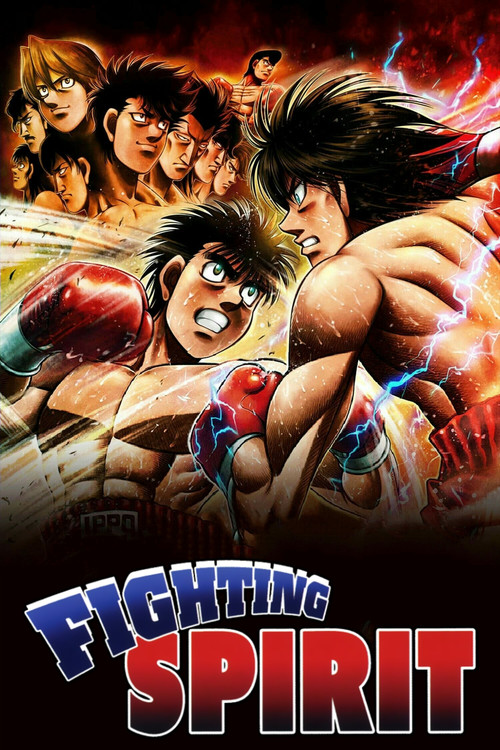
Fighting Spirit
A heart-pounding underdog saga where the sweat and grit of the boxing ring forge a timid boy's spirit into hardened steel, illuminating the relentless pursuit of strength.
Fighting Spirit

Fighting Spirit

はじめの一歩

"The moment you back down is the moment you lose!"

03 October 2000 — 29 March 2014 Japan 3 season 126 episode Ended ⭐ 8.6 (1,140)
Cast: Kohei Kiyasu, Rikiya Koyama, Wataru Takagi, Keiji Fujiwara, Tomokazu Seki
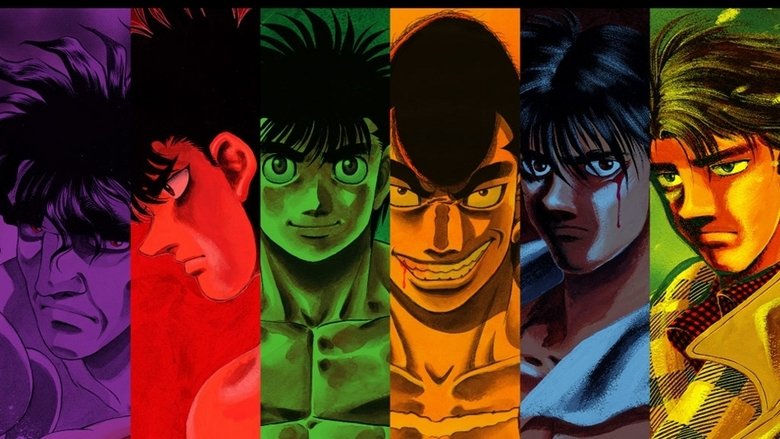
Drama Animation Action & Adventure Comedy
The Nature of Strength Perseverance and Hard Work The Underdog's Journey Mentorship and Camaraderie

Overview

"Fighting Spirit" (originally "Hajime no Ippo") chronicles the journey of Ippo Makunouchi, a shy high school student who is constantly bullied. His life takes a dramatic turn when he is saved from bullies by Mamoru Takamura, a professional boxer. Intrigued by Takamura's strength, Ippo embarks on a quest to answer a single question: "What does it mean to be strong?" This question propels him into the grueling world of professional boxing under the tutelage of the stern but caring Coach Genji Kamogawa.

The series follows Ippo's step-by-step evolution from a complete novice to a formidable national champion. Across its seasons, the narrative meticulously details his training, the development of his signature techniques like the Dempsey Roll, and his fierce rivalries with a host of unique and well-developed opponents. More than just a sports anime, the story is a deep character study, not only of Ippo but also of his gym mates and rivals, exploring their motivations, sacrifices, and the profound bonds forged through the shared hardship of the sport. The journey is as much about Ippo's personal growth—gaining confidence and finding his place in the world—as it is about winning belts.

Core Meaning

The core meaning of "Fighting Spirit" revolves around the perpetual and multifaceted quest to understand the nature of true strength. Initially, Ippo seeks physical strength to protect himself, but his journey reveals that strength is not merely about physical power or winning matches. It's about resilience, the courage to face one's fears, the tenacity to persevere through grueling hardship, and the mental fortitude to push beyond perceived limits. The series posits that strength is found in the process and the dedication itself, not just the outcome. It's about having the heart of a champion, the loyalty to those who support you, and the constant desire for self-improvement, even in the face of defeat. The ultimate message is that the path to strength is a lifelong journey of self-discovery and willpower.

Thematic DNA

The Nature of Strength 35%
Perseverance and Hard Work 30%
The Underdog's Journey 20%
Mentorship and Camaraderie 15%

The Nature of Strength

The central theme that drives the entire narrative. Ippo's initial query, "What does it mean to be strong?", evolves from a desire for physical prowess to a deeper philosophical exploration. The series dissects this concept through its characters: Ippo's strength is his courage and resilience; Takamura's is his overwhelming natural talent and self-belief; Coach Kamogawa's is his experience and ability to nurture potential. The opponents Ippo faces each embody a different aspect of strength, whether it's technical genius, raw power, or sheer willpower. Ultimately, the series suggests that true strength is not a destination but a continuous process of challenging oneself, overcoming adversity, and having the mental fortitude to keep getting back up.

Perseverance and Hard Work

"Fighting Spirit" is an ode to the power of relentless effort. A recurring quote from Coach Kamogawa states, "Not everyone who works hard is rewarded. But! All those who succeed have worked hard!" This philosophy is the bedrock of the Kamogawa Gym. Ippo, who is not the most naturally gifted boxer, achieves his success through sheer determination and grueling training. The show meticulously details his training regimens, emphasizing that talent is nothing without the discipline to hone it. This theme is universal among the characters, showing that every victory in the ring is earned through countless hours of sweat, pain, and sacrifice outside of it.

The Underdog's Journey

Ippo Makunouchi is the quintessential underdog. Starting as a timid, bullied teenager with no athletic background, his rise in the hyper-competitive world of boxing is both inspiring and deeply compelling. The series masterfully portrays his struggles, his self-doubt, and his incremental victories. This theme resonates not just with Ippo but with many of his gym mates, who often fight against opponents with more natural talent or better resources. The narrative celebrates the spirit of fighting against the odds and proves that heart and determination can bridge the gap between perceived limitations and extraordinary achievement.

Mentorship and Camaraderie

The relationship between Ippo and his coach, Genji Kamogawa, is the emotional core of the series. Kamogawa is more than a trainer; he's a father figure who guides Ippo's growth both as a boxer and as a man. This dynamic is mirrored in the strong bonds of friendship and rivalry within the Kamogawa Gym. Despite their constant pranks and bickering, characters like Takamura, Aoki, and Kimura form a loyal and supportive family. They push each other to be better, celebrate each other's victories, and provide solace in defeat, highlighting the idea that no one achieves success alone.

Character Analysis

Ippo Makunouchi

Kohei Kiyasu

Archetype: The Hero / The Underdog
Key Trait: Indomitable Spirit

Motivation

Ippo's primary motivation is his quest to answer the question, "What does it mean to be strong?" This abstract goal is what separates him from many of his rivals. He isn't driven by money or fame, but by a desire for self-discovery and to see how far the boxing style taught by Coach Kamogawa can take him on the world stage. He is also deeply motivated by his desire to make his coach proud and to repay the faith his friends and family have in him.

Character Arc

Ippo's arc is a transformative journey from a timid, insecure boy into a confident and powerful champion. Initially, he starts boxing simply to understand strength after a lifetime of being bullied. His early career is defined by overcoming his fear and relying on his raw power and endurance. As he climbs the ranks, he develops from a pure brawler into a more technical fighter, mastering the Dempsey Roll. His arc is not a simple linear progression; he faces crushing defeats that force him to re-evaluate his boxing and his motivations. Across the series, his goal shifts from proving himself to shouldering the responsibility of being a champion and carrying the dreams of his coach, ultimately achieving a quiet but profound self-assurance.

Mamoru Takamura

Rikiya Koyama

Archetype: The Mentor / The Natural Genius
Key Trait: Overwhelming Power

Motivation

Takamura's overt motivation is to prove he is the strongest man in the world and to satisfy his massive ego. However, his deeper motivation is a profound sense of gratitude and loyalty to Coach Kamogawa, who found him as a street brawler and gave his life purpose. His quest to win world championship belts in multiple weight classes is his way of repaying the coach and proving the effectiveness of his training on the world stage.

Character Arc

Takamura begins as the arrogant, immensely powerful mentor figure who introduces Ippo to boxing. His arc is one of channeling his prodigious, almost superhuman, natural talent towards a concrete goal: conquering six weight classes, a promise he made to Coach Kamogawa. Despite his vulgar, lazy, and bullying exterior, his journey reveals a deep loyalty and a surprising capacity for insight. As he fights tougher, world-class opponents, he is forced to rely on more than just his raw strength, showing moments of vulnerability and immense discipline. His arc is about proving that his genius is not just a gift but something he is willing to work and sacrifice for, carrying the hopes of his entire gym on his shoulders.

Genji Kamogawa

Kenji Utsumi (original), Shozo Iizuka (Rising)

Archetype: The Mentor / The Old Master
Key Trait: Unwavering Dedication

Motivation

Kamogawa's motivation is to nurture a world champion. He sees in Takamura the natural genius he never was, and in Ippo the indomitable spirit and work ethic that can make the impossible possible. He is driven by a deep-seated love for the sport of boxing and a desire to see his ideals and training methods validated at the highest level. His entire life becomes dedicated to helping his 'sons', Ippo and Takamura, achieve the glory that eluded him.

Character Arc

Coach Kamogawa starts as a gruff, demanding, and seemingly cantankerous old boxing trainer. His arc reveals the deep passion and fatherly love he holds for his boxers, particularly Ippo and Takamura. Through flashbacks, we see his own past as a brilliant, war-hardened boxer, which informs his tough training methods. His journey throughout the series is one of vicarious fulfillment. Having been unable to achieve his own dreams on the world stage, he channels all his knowledge and hopes into his students. His arc is about finding a new purpose in his old age, molding raw talent into champions and building a family within the walls of his gym.

Masaru Aoki

Wataru Takagi

Archetype: The Comic Relief / The Unorthodox Fighter
Key Trait: Unpredictability

Motivation

Aoki is primarily motivated by a desire for recognition and to prove his own worth, both in and out of the ring. He is often driven by comical and petty rivalries, particularly with his boxing counterpart, Kimura, and a desperate desire to be popular with women. Underlying the humor, however, is a genuine love for boxing and a fierce loyalty to his friends at the Kamogawa Gym.

Character Arc

Aoki is introduced as part of the comic relief trio alongside Kimura and Takamura. His character arc, while less dramatic than Ippo's or Takamura's, is one of tenacity and embracing one's own unique, if bizarre, style. He is not a boxing genius and lacks Ippo's power, but he never gives up. He develops unorthodox techniques like the "Frog Punch" and "Look Away." His arc is about finding a way to compete and win using his own peculiar strengths and intelligence, demonstrating that there is more than one way to be a successful boxer. Despite his constant failures in his personal life and frequent comedic moments, he shows moments of incredible grit in the ring.

Symbols & Motifs

The Line in the Sand

Meaning:

This symbolizes the crossing of a threshold, a commitment to go beyond one's limits and to not retreat. It represents the decision to become a "monster" in the ring—to abandon fear and hesitation and fully commit to the fight.

Context:

Before his Japanese Title match against Sendo, Coach Kamogawa draws a line on the ground and asks Ippo if he is prepared to cross it, signifying his readiness to enter the brutal world of champions. This motif reappears in critical moments when a fighter must dig deeper and find a new level of resolve to win.

The Dempsey Roll

Meaning:

The Dempsey Roll is Ippo's signature technique, a devastating flurry of hooks thrown while weaving in a figure-eight pattern. It symbolizes Ippo's culmination of hard work, his physical power, and his fighting spirit. It represents his evolution as a boxer, as he continuously has to adapt and evolve the technique to overcome opponents who learn how to counter it.

Context:

Ippo develops the Dempsey Roll during his preparation for the Japanese Featherweight Championship. It becomes his ultimate weapon, used to turn the tide in his most difficult fights. Later seasons show him refining it, adding stops, starts, and even an uppercut, symbolizing his ongoing growth and refusal to stagnate.

Boxing Gloves

Meaning:

More than just equipment, the boxing gloves symbolize the weight of a boxer's dreams, responsibilities, and the connections to others they carry into the ring. For Ippo, they represent the strength he seeks and the hopes of his coach and friends.

Context:

The act of putting on the gloves is a recurring ritual throughout the series. It's a moment of transformation where the gentle Ippo becomes a focused fighter. The condition of the gloves, the way they are cared for, and how they are passed on often reflect a boxer's journey and legacy.

Memorable Quotes

Not everyone who works hard is rewarded. But! All those who succeed have worked hard!

— Genji Kamogawa

Context:

Coach Kamogawa says this to Takamura before a major title fight, reminding him that his natural talent alone is not enough. It's a line he repeats and embodies throughout the series, constantly pushing his boxers to train harder than anyone else.

Meaning:

This quote encapsulates the core philosophy of the series. It's a realistic acknowledgment that effort doesn't guarantee success, but it also asserts that success is impossible without effort. It highlights the necessity of perseverance and dedication as the foundation for any great achievement.

I want to know what it means to be strong.

— Ippo Makunouchi

Context:

Ippo says this to Takamura in the very first episode when asked why he wants to start boxing. After being saved from bullies and seeing Takamura's power, this question becomes the driving force behind his decision to step into the ring.

Meaning:

This is the inciting question of the entire series. It defines Ippo's motivation and sets him on his path. The quote's significance lies in its philosophical nature; Ippo isn't just seeking to win, but to understand a deeper concept, which frames his entire journey as one of self-discovery.

Run until you can't run anymore, and then run again. Constant effort is life's greatest shortcut.

— Genji Kamogawa

Context:

This is a piece of training advice given by Coach Kamogawa, reflecting his old-school, no-nonsense approach to boxing. It's a mantra that Ippo and the others take to heart in their relentless pursuit of strength.

Meaning:

This quote illustrates the grueling nature of the training at the Kamogawa gym and the belief that there are no easy paths to success. The only "shortcut" is to put in an overwhelming amount of work that surpasses the competition. It emphasizes the theme of perseverance through sheer force of will.

Episode Highlights

The First Step

S1E1

The inaugural episode introduces Ippo Makunouchi, a bullied high school student, and his fateful encounter with boxer Mamoru Takamura. It establishes Ippo's timid nature, his desire to change, and the central question that will drive the series: "What does it mean to be strong?".

Significance:

This episode lays the entire foundation for Ippo's journey. His first punch on the sandbag, filled with pent-up frustration and a glimmer of hope, is the literal and metaphorical "first step" into a new world that will redefine his life.

Promise to Return

S1E25

This episode features the brutal and emotional climax of Ippo's first major rivalry against Ichiro Miyata. The fight is a strategic and thrilling match between Ippo's power and Miyata's genius counters. Miyata ultimately wins, but the match forges a deep mutual respect and a promise to meet again in the professional ring.

Significance:

This loss is a crucial moment in Ippo's development. It teaches him humility and gives him a concrete goal: to climb the professional ladder to one day face Miyata again. It establishes the central rivalry that fuels much of Ippo's early career.

Lollapalooza

S1E75

The finale of the first season, this episode showcases the epic conclusion to the Japanese Featherweight Title match between Ippo and Takeshi Sendo. The fight is a brutal slugfest between two of Japan's hardest hitters. Ippo, pushed to his absolute limit, unleashes a perfected Dempsey Roll to claim victory and become the new champion.

Significance:

This episode marks the culmination of Ippo's journey from a bullied kid to the champion of Japan. It's the fulfillment of his initial goal and a testament to his growth, hard work, and fighting spirit. It provides a satisfying climax to the first major arc of the series.

The World-Level Match

S2E21

This episode (part of the larger arc) focuses on Mamoru Takamura's first world title challenge against the formidable Bryan Hawk. The fight is incredibly intense, with Takamura enduring a brutal beating and near-certain defeat. He digs deeper than ever before, fueled by his promise to his coach, to win the WBC Junior Middleweight belt.

Significance:

Takamura vs. Hawk is often cited as one of the best fights in the entire series. It's a pivotal moment that shows the true depth of Takamura's character beyond his arrogant facade and demonstrates the world-class level the Kamogawa gym is striving for. His victory elevates the entire gym and inspires Ippo immensely.

A Fist That Could Reach

S3E25

The final episode of "Hajime no Ippo: Rising." It concludes the brutal war between Ippo and Ryuuhei Sawamura for the Japanese title. Ippo is forced to evolve his Dempsey Roll to overcome Sawamura's counters and dark, foul-ridden fighting style. The match pushes Ippo to his moral and physical breaking point, culminating in a dramatic and hard-won victory.

Significance:

This episode showcases a more mature and hardened Ippo. He not only wins a difficult title defense but also confronts a darker side of boxing. His victory solidifies his reign as champion and serves as a powerful conclusion to the third season, leaving the audience to anticipate his next steps toward the world stage.

Philosophical Questions

What is the true definition of strength?

This is the central question of the entire series, posed by Ippo in the first episode. The show explores this question by presenting a wide array of characters who embody different kinds of strength. There is the physical strength of a punch, the mental strength to endure pain, the strategic strength of a technical boxer, and the emotional strength to face fear and defeat. Ippo's journey suggests that the answer is not a single definition but a combination of resilience, courage, and the will to constantly improve oneself. The series argues that strength isn't a final state to be achieved, but a continuous, lifelong process of becoming.

Where is the line between determination and self-destruction?

"Fighting Spirit" constantly explores the brutal reality of boxing. The series doesn't shy away from the physical toll the sport takes on its fighters. Characters, including Ippo, often push their bodies past their limits, fighting through severe injuries. This raises the question of when admirable determination crosses the line into dangerous self-destruction. The manga's later arcs, which deal with the concept of being "punch-drunk," explore this theme directly, forcing Ippo and the reader to confront the long-term consequences of a career built on enduring punishment.

Can talent be overcome by hard work alone?

The series presents a classic nature vs. nurture debate within the context of sports. Takamura is a natural genius, gifted with physical attributes and instincts that others lack. Ippo, on the other hand, is a product of relentless hard work. The show explores the dynamic between these two paths. While it champions the value of hard work, it also realistically portrays the immense challenge of facing a truly gifted opponent. The conclusion it often reaches is that while hard work can elevate a person to incredible heights, it is the combination of immense effort and some degree of innate potential that creates a true legend. However, it strongly argues that the spirit forged through hard work is a formidable power in its own right.

Alternative Interpretations

One significant alternative interpretation of the series, particularly in light of the ongoing manga, revolves around the true meaning of Ippo's retirement. After suffering losses that suggest he may be "punch-drunk" (developing chronic traumatic encephalopathy), Ippo retires from boxing. While on the surface this is a tragic end to his career, one interpretation is that this is the ultimate answer to his question about strength. In this view, true strength isn't about becoming a champion, but about having the wisdom and courage to stop, to protect one's health, and to find a new way to be involved in the sport he loves (as a trainer/second). It suggests strength is the ability to let go of a dream for the sake of one's well-being and the peace of mind of loved ones.

Another interpretation views Takamura not as a hero, but as a tragic figure. Despite his immense talent and success, he is fundamentally lonely. His crass behavior pushes people away, and his singular focus on boxing isolates him. His journey, from this perspective, is not one of glorious conquest but of a man sacrificing normal human connection for the solitary pursuit of greatness, unsure of what he will have left once he achieves his goal. His bravado is seen as a mask for this profound isolation.

Cultural Impact

"Fighting Spirit" is widely regarded as a cornerstone of the sports anime genre and one of the most influential series of its kind. First airing in 2000, it arrived at a time when the genre was well-established, but it set a new standard for character depth, technical realism, and emotional storytelling. Its meticulous depiction of boxing, from training techniques to the physical and psychological toll of fighting, earned it praise from both anime fans and boxing enthusiasts. The series has been credited with sparking an interest in boxing for many viewers worldwide.

Critically, the series was praised for its compelling character development, not just for the protagonist Ippo, but for his entire supporting cast and even his opponents. This focus on the 'why' behind each fighter's journey elevated it beyond a simple action show. The audience reception has been overwhelmingly positive across all its seasons, celebrated for its intense fight choreography, humor, and inspirational underdog story. Its legacy is its masterful blend of brutal action and heartfelt human drama, influencing countless subsequent sports anime that seek to explore the character and motivation behind the athlete. The series' central theme—the quest to understand what it means to be strong—has resonated deeply with audiences, becoming a philosophical touchstone for fans.

Audience Reception

Audience reception for "Fighting Spirit" has been overwhelmingly positive since its debut, and it is consistently ranked as one of the greatest sports anime of all time. Viewers across all seasons have praised its thrilling and well-animated fight sequences, which are often highlighted for their strategic depth and emotional weight. A major point of praise is the series' exceptional character development, with fans forming deep connections not only with Ippo but also with the extensive supporting cast, including rivals.

The blend of high-stakes drama with genuinely hilarious comedy, mostly centered around the antics of Takamura, Aoki, and Kimura, is frequently cited as a key strength that keeps the long series engaging. While some criticism has been directed at the formulaic nature of some fights (Ippo taking a beating before making a miraculous comeback) and the slow pacing at times, the overall consensus is that these are minor flaws in an otherwise masterfully executed story. The series is beloved for its inspirational message, its realistic portrayal of the sport's brutality, and its emotionally resonant storytelling.

Interesting Facts

  • The creator of the manga, George Morikawa, is a passionate boxing fan and owns a boxing gym in Japan called JB Sports Gym, which is modeled after the Kamogawa Gym from the series.
  • Many characters and fighting styles in the series are inspired by real-life boxers. Ippo's peek-a-boo style and explosive power are reminiscent of Mike Tyson, while his Dempsey Roll is named after the technique used by world champion Jack Dempsey.
  • The manga has been continuously serialized in Weekly Shōnen Magazine since October 1989 and is one of the longest-running manga series of all time, with over 140 volumes published.
  • In the original manga, Takamura explicitly gives Ippo tapes of Mike Tyson to watch, which directly inspires him to start boxing. This was made more generic in the anime adaptation.
  • The anime series only covers a fraction of the manga's story. The first season of 76 episodes adapts roughly the first 33 volumes of the manga.
  • The character Takeshi Sendo is based on a real-life Japanese boxer from Osaka named Hidekazu Akai, who was also known by the nickname "The Naniwa Rocky."

Easter Eggs

In episode 72 of the first season, at approximately the 16:10 mark, the character Kogoro Mouri from the popular detective anime series "Case Closed" (Detective Conan) makes a brief cameo appearance in the crowd cheering during a match.

This is a fun nod to another long-running and famous manga/anime series that was also being produced around the same time. It serves as a small inside joke for eagle-eyed fans of both franchises.

⚠️ Spoiler Analysis

Click to reveal detailed analysis with spoilers

Frequently Asked Questions

Explore More About This Movie

Dive deeper into specific aspects of the movie with our detailed analysis pages

Comments (0)

Leave a comment

No comments yet. Be the first to share your thoughts!