Demon Slayer: Kimetsu no Yaiba
A heart-rending action epic where fierce compassion clashes with demonic cruelty, painted in strokes of breathtaking animation and visceral sorrow.
Demon Slayer: Kimetsu no Yaiba

Demon Slayer: Kimetsu no Yaiba

鬼滅の刃

"The love of a brother transcends everything."

06 April 2019 — 30 June 2024 Japan 5 season 63 episode Ended ⭐ 8.6 (6,901)
Cast: Natsuki Hanae, Akari Kito, Hiro Shimono, Yoshitsugu Matsuoka, Shinya Takahashi
Animation Sci-Fi & Fantasy Action & Adventure
The Perseverance of the Human Spirit The Unbreakable Bond of Family Empathy and Compassion for All The Weight of Legacy and Inherited Will

Overview

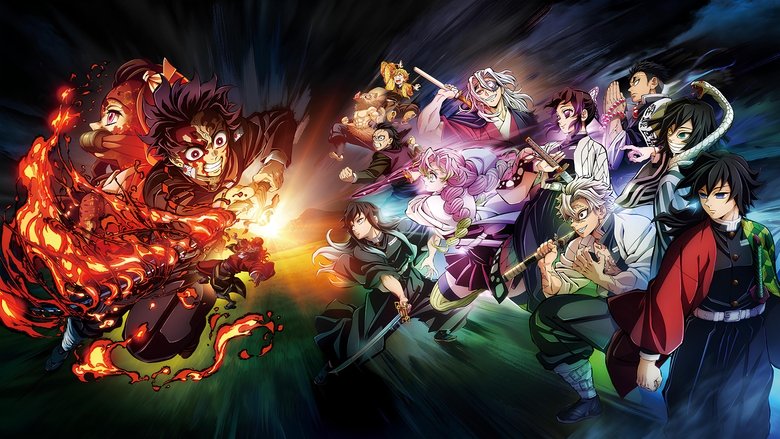
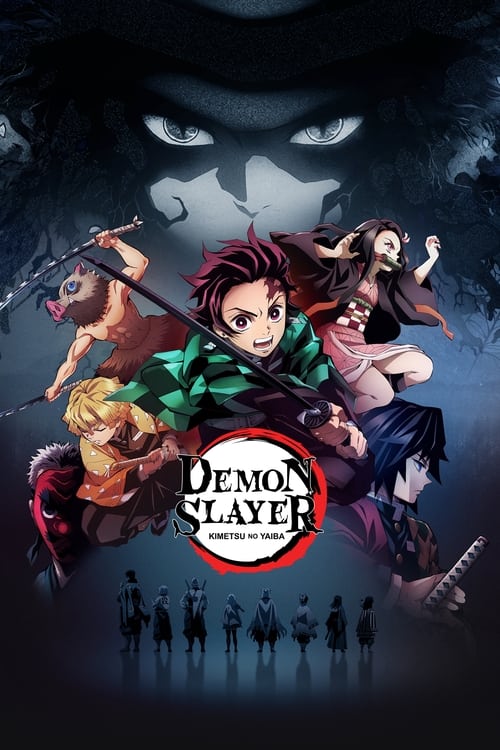
Set in Taisho-era Japan, "Demon Slayer: Kimetsu no Yaiba" follows the tragic journey of Tanjiro Kamado, a kind young man whose life is shattered when a demon slaughters his entire family and turns his younger sister, Nezuko, into a demon. Miraculously, Nezuko retains a fragment of her humanity, refusing to harm humans. This glimmer of hope fuels Tanjiro's resolve to join the Demon Slayer Corps, a secret organization dedicated to protecting humanity from demons.

Tanjiro's quest is twofold: to find a cure to turn Nezuko back into a human and to hunt down the demon responsible for his family's massacre, the progenitor Muzan Kibutsuji. Along his perilous journey, he undergoes rigorous training, mastering the art of "Breathing Styles" to enhance his swordsmanship. He is joined by a memorable cast of allies: the cowardly yet powerful Zenitsu Agatsuma and the boar-headed, wild Inosuke Hashibira. Together, they face increasingly powerful demons, including the formidable Twelve Kizuki, Muzan's strongest subordinates, leading to spectacular and emotionally charged battles that test their strength, bonds, and resolve.
Core Meaning

At its heart, "Demon Slayer" is a profound exploration of empathy and the enduring strength of familial bonds in the face of unspeakable tragedy. The series posits that true strength is not just physical prowess but the capacity for compassion, even towards one's enemies. Tanjiro consistently sees the humanity that was lost in the demons he fights, often mourning them as he defeats them. The central narrative of protecting Nezuko is a testament to the unbreakable bond between siblings. Ultimately, the series delivers a powerful message about perseverance, the importance of carrying the hopes and memories of those who have fallen, and the idea that human feelings and connections are the true form of eternity.

Thematic DNA

The Perseverance of the Human Spirit 35%
The Unbreakable Bond of Family 30%
Empathy and Compassion for All 25%
The Weight of Legacy and Inherited Will 10%

The Perseverance of the Human Spirit

The series is built on the foundation of pushing forward against overwhelming odds. Tanjiro's relentless training, his refusal to give up on his sister, and the Demon Slayers' centuries-long war against an immortal foe all exemplify this theme. Quotes like Kyojuro Rengoku's final words, "Set your heart ablaze," encapsulate the series' message of finding strength in the face of despair and continuing to fight despite weakness or loss.

The Unbreakable Bond of Family

The core emotional anchor of the series is the relationship between Tanjiro and Nezuko. Tanjiro's entire journey is motivated by his love for his sister, and their bond is so powerful it can overcome demonic influence and inspire those around them. This theme extends to the found family Tanjiro builds with Zenitsu and Inosuke, and is even reflected tragically in the backstories of many demons who were twisted by broken or lost family ties.

Empathy and Compassion for All

A defining characteristic of Tanjiro is his ability to empathize with the demons he slays. He recognizes that they were once humans who suffered, and he often shows them a moment of grace in their final moments. This theme challenges the simple good vs. evil narrative, suggesting that humanity and monstrosity are not always black and white and that compassion is a strength that can break cycles of hatred.

The Weight of Legacy and Inherited Will

Throughout the series, characters carry the burdens and hopes of their predecessors. Tanjiro inherits the Hinokami Kagura and the hopes of figures like Kyojuro Rengoku. The Hashira, the elite of the Demon Slayer Corps, fight to honor the memories of countless fallen comrades. The story emphasizes that individuals are part of a long chain of humanity, and their strength comes from the collective will and sacrifices of those who came before them.

Character Analysis

Tanjiro Kamado

Natsuki Hanae

Archetype: The Hero
Key Trait: Unwavering Empathy

Motivation

His primary motivation is to find a cure for Nezuko and turn her back into a human. This expands to avenging his family and protecting all innocent people from the threat of demons. His motivation is rooted in love and a profound sense of responsibility to prevent others from experiencing the same tragedy he did.

Character Arc

Tanjiro begins as a kind-hearted boy living a simple life. After the massacre of his family, he is thrust into a world of violence and despair. His arc is one of relentless growth, driven by the singular goal of saving his sister. He evolves from a novice struggling to survive into one of the most powerful Demon Slayers, mastering both Water Breathing and the legendary Sun Breathing (Hinokami Kagura). His core trait of empathy never wavers; in fact, it deepens as he understands the sorrow of both humans and demons, making him a unique and compassionate warrior who fights not just to kill, but to end suffering.

Nezuko Kamado

Akari Kito

Archetype: The Innocent/Guardian
Key Trait: Resilient Humanity

Motivation

Her core motivation is the fierce, instinctual desire to protect her brother, Tanjiro, and those she perceives as her family. This love is the anchor for her humanity and the source of her incredible willpower to resist her demonic urges.

Character Arc

Nezuko starts as a gentle and caring older sister. After being turned into a demon, her journey is an internal battle against her new instincts. Her arc is about retaining her humanity and will. Initially needing Tanjiro's protection, she grows into a formidable fighter in her own right, developing powerful demon abilities while still refusing to harm humans. Through hypnotic conditioning and her own willpower, she comes to see all humans as her family. Her evolution culminates in conquering the ultimate demonic weakness—the sun—which shifts the entire focus of the war against Muzan.

Zenitsu Agatsuma

Hiro Shimono

Archetype: The Cowardly Lion
Key Trait: Hidden Strength

Motivation

Initially, his motivation is simply to survive and not die a lonely, meaningless death. This evolves into a powerful desire to live up to the expectations of his late master and to protect his friends, particularly his love for Nezuko, which gives him a concrete reason to be brave.

Character Arc

Zenitsu is introduced as an outwardly cowardly and anxious boy, seemingly unfit to be a Demon Slayer. His character arc is a journey of overcoming his deep-seated fears to become a hero. He possesses immense talent but can only access it when he is unconscious or asleep, where his subconscious takes over and executes the powerful Thunder Breathing style flawlessly. Throughout the series, his experiences and desire to protect his friends, especially Nezuko, slowly build his conscious courage. He learns to face his fears while awake, culminating in the creation of his own unique Thunder Breathing form and becoming a crucial pillar of strength for his allies.

Inosuke Hashibira

Yoshitsugu Matsuoka

Archetype: The Wild Man
Key Trait: Untamed Instinct

Motivation

His primary motivation is to be the strongest fighter and to defeat anyone more powerful than him. This aggressive drive is later tempered by a desire to fight alongside his friends and protect them, channeling his combat instincts towards a more noble purpose.

Character Arc

Raised by boars in the mountains, Inosuke is introduced as a wild, aggressive, and arrogant fighter who only values strength and battle. His arc is one of socialization and learning the value of friendship and human connection. Initially viewing Tanjiro and Zenitsu as rivals or stepping stones, he gradually learns to care for them as comrades. He struggles with concepts like kindness and teamwork but slowly embraces them. His tough exterior hides a sensitive and surprisingly fragile ego, and through his bond with his friends, he discovers a sense of belonging and a purpose beyond just being the strongest.

Symbols & Motifs

Hanafuda Earrings

Meaning:

Symbolizing Tanjiro's connection to the powerful Sun Breathing technique, the original and most powerful of all Breathing Styles. They represent his inheritance, destiny, and the legacy of a long line of powerful swordsmen who stood against Muzan Kibutsuji.

Context:

Worn by Tanjiro throughout the series, these earrings are a family heirloom passed down from his father. They immediately mark him as a target for Muzan, who recognizes the design from his near-fatal encounter with the first Sun Breathing user, Yoriichi Tsugikuni. They serve as a constant visual reminder of Tanjiro's hidden potential and the path he is destined to walk.

Nezuko's Bamboo Muzzle

Meaning:

Represents Nezuko's powerful restraint and her unwavering refusal to consume human blood, a testament to her immense willpower and the strength of her human spirit despite her demonic transformation. It is a symbol of her vow to protect humanity.

Context:

Placed on Nezuko by Giyu Tomioka early in the series, the bamboo muzzle is her most defining visual feature. While it physically prevents her from biting, it primarily serves as a symbolic promise that she is not a threat to humans, which is crucial for her acceptance by the Demon Slayer Corps.

Kasugai Crows

Meaning:

Symbolizing the communication network and the guiding hand of the Demon Slayer Corps. These crows represent the missions, orders, and the ever-present duty that binds the Slayers together in their fight against demons.

Context:

Each Demon Slayer is assigned a Kasugai Crow (though Zenitsu has a sparrow) upon passing the Final Selection. These birds are used to deliver mission details and communicate information across the organization, frequently appearing to set the characters on their next path or deliver critical news.

Memorable Quotes

Go ahead and live with your head held high. No matter how devastated you may be by your own weakness or uselessness, set your heart ablaze. Grit your teeth and look straight ahead.

— Kyojuro Rengoku

Context:

Spoken to Tanjiro after the mortal battle with the Upper Rank demon Akaza in the Mugen Train Arc (Season 2, Episode 7, "Set Your Heart Ablaze").

Meaning:

These are Rengoku's final words, serving as a powerful and inspirational creed for Tanjiro and the others. It's a message about perseverance, resilience, and the duty to keep fighting and living for the sake of those who have fallen. It becomes a cornerstone of Tanjiro's resolve.

The bond between Nezuko and me... can't be severed by anyone!

— Tanjiro Kamado

Context:

Shouted defiantly during his desperate battle against the Lower Rank demon Rui on Mount Natagumo (Season 1, Episode 19, "Hinokami").

Meaning:

This quote is the definitive statement of the series' central theme: the unbreakable connection between the Kamado siblings. It encapsulates Tanjiro's unwavering determination to protect his sister, which fuels his strength and allows him to perform incredible feats.

Demons were once human, too! Just like me, they were human, too!

— Tanjiro Kamado

Context:

Spoken during a battle, this sentiment is a recurring thought for Tanjiro whenever he confronts a demon who expresses regret or sorrow in their final moments.

Meaning:

This line perfectly illustrates Tanjiro's profound empathy. It shows his refusal to see demons as mere monsters, acknowledging their tragic pasts and lost humanity. This compassion is what separates him from many other slayers and is a key part of his character.

Don't ever give up. Even if it's painful, even if it's agonizing, don't try to take the easy way out.

— Zenitsu Agatsuma

Context:

Zenitsu says this during a moment of reflection, showing a flash of the wisdom and strength that lies beneath his fearful exterior.

Meaning:

A surprisingly profound and inspirational line from the typically cowardly Zenitsu. It reveals the core of his true character: despite his constant fear, he understands the importance of enduring hardship and fighting on. It reflects his own internal struggle and eventual growth.

Episode Highlights

Cruelty

S1E1

The series premiere establishes the tragic foundation of the entire story. Tanjiro Kamado returns home to find his family slaughtered and his sister Nezuko turned into a demon. His desperate struggle to save her and their fateful encounter with the Hashira Giyu Tomioka sets the entire plot in motion.

Significance:

This episode is the emotional crucible that forges Tanjiro's resolve. It masterfully introduces the core conflict, the central character motivations, and the deep, unbreakable bond between the Kamado siblings that will drive the narrative for its entire run.

Hinokami

S1E19

Facing certain death against the powerful demon Rui, Tanjiro recalls a memory of his father performing a ceremonial dance, the Hinokami Kagura, which he adapts into a new, powerful breathing style. Combined with Nezuko's Blood Demon Art, "Exploding Blood," they unleash a spectacular attack that severs Rui's head. The episode is renowned for its breathtaking animation by Ufotable and emotional score.

Significance:

This episode was a cultural touchstone that propelled the series into global popularity. It marked the first major power-up for Tanjiro, introducing the mystery of Sun Breathing, and showcased the incredible synergistic power of his bond with Nezuko, solidifying the series' reputation for phenomenal action sequences.

Set Your Heart Ablaze

S2E7

This episode depicts the climax and heart-wrenching aftermath of the battle between the Flame Hashira, Kyojuro Rengoku, and the Upper-Rank Three demon, Akaza. Rengoku fights with incredible spirit and power to protect everyone on the Mugen Train but is ultimately fatally wounded.

Significance:

Rengoku's death is a pivotal moment in the series. It's the first time the main characters witness the immense power gap between the Hashira and the Upper Ranks. His final words of encouragement become a lasting inspiration for Tanjiro, shaping his resolve for the rest of his journey.

No Matter How Many Lives

S2E18

The stunning conclusion to the Entertainment District Arc, this episode features the coordinated, all-out effort of Tanjiro, Zenitsu, Inosuke, and the Sound Hashira Tengen Uzui to decapitate the Upper-Rank Six demons, Gyutaro and Daki, simultaneously. The episode also delves into the tragic human past of the demon siblings.

Significance:

This episode marks the first time in over a century that an Upper-Rank demon has been defeated, proving that Muzan's strongest minions are not invincible. It's a massive victory for the Demon Slayer Corps and a huge step forward in the development of the main trio, showcasing their ability to fight alongside a Hashira.

A Connected Bond: Daybreak and First Light

S3E11

In the finale of the Swordsmith Village Arc, Tanjiro is faced with an impossible choice: save his sister Nezuko from the rising sun or kill the final body of the Upper-Rank Four demon, Hantengu. As he hesitates, Nezuko sacrifices herself, kicking him towards the demon. After defeating Hantengu, Tanjiro grieves, only to discover that Nezuko has miraculously survived and conquered the sun.

Significance:

Nezuko conquering the sun is arguably the most significant plot development in the entire series. It fundamentally changes the stakes of the war, as Muzan, who has sought a way to become immune to sunlight for centuries, now has a new primary objective: to consume Nezuko and gain her ability.

Philosophical Questions

What is the nature of humanity, and can it be retained in the face of monstrous transformation?

The series explores this question primarily through Nezuko. Despite being turned into a demon and subjected to its biological urges, she retains her core humanity through her love for Tanjiro and her sheer force of will. The series constantly questions the line between human and demon by revealing the tragic human backstories of its antagonists. It suggests that humanity is not a biological state but a matter of will, memory, and emotion. Even characters who are fully human can act monstrously, while Nezuko, a demon, often displays more humanity than anyone.

Does empathy have a place in a brutal war?

Tanjiro's unwavering compassion is central to this exploration. He slays demons without mercy to protect others, but he also grieves for the suffering that led them to become demons. The series argues that empathy is not a weakness but a profound strength. It allows Tanjiro to understand his enemies, connect with his allies on a deeper level, and maintain his own spirit in a world filled with hatred. His approach contrasts with other Slayers who are driven purely by vengeance, suggesting that how one fights is just as important as the victory itself.

Alternative Interpretations

One alternative reading of "Demon Slayer" frames it as an allegory for dealing with grief and trauma. Tanjiro's journey is not just a physical quest but a psychological one, where the "demons" he fights can be seen as manifestations of his own and others' despair, rage, and sorrow. His unique ability to empathize with them is not just kindness, but a form of therapy—acknowledging the pain behind the monstrosity to bring it to peace. In this view, turning Nezuko "human" again is symbolic of helping a loved one recover from a deep, transformative trauma.

Another interpretation focuses on the series' commentary on tradition versus modernity. Set in the Taishō era, a period of rapid change in Japan, the Demon Slayer Corps represents the old, traditional ways (swords, spiritual techniques) fighting against demons, which could symbolize the anxieties and corrupting forces of a changing world. The eventual disbanding of the Corps in a peaceful, modern Japan in the epilogue can be seen as the successful passing of an old era, its violent duties no longer necessary in a new world.

Cultural Impact

"Demon Slayer: Kimetsu no Yaiba" transcended its medium to become a massive cultural phenomenon, not just in Japan but globally. Its success is attributed to a perfect storm of compelling storytelling, breathtaking animation by studio Ufotable, and themes that resonate deeply with a broad audience. The anime's release, particularly Season 1 Episode 19, caused an explosion in the manga's popularity, making it one of the best-selling manga series of all time.

The film "Demon Slayer: Kimetsu no Yaiba – The Movie: Mugen Train" shattered box office records, becoming the highest-grossing film in Japanese history, surpassing even Studio Ghibli's "Spirited Away". This unprecedented success had a significant economic impact in Japan, with collaborations and merchandise becoming ubiquitous. The series celebrates traditional Japanese culture, featuring elements from the Taishō era, swordsmanship (bushido), and religious folklore, which has been credited with sparking renewed interest in these areas. Its themes of family, resilience, and compassion provided a sense of comfort and inspiration during the COVID-19 pandemic, further cementing its place in the cultural zeitgeist. The series' legacy is its demonstration of how a traditional shonen narrative, when executed with exceptional artistry and emotional depth, can achieve universal appeal and monumental success.

Audience Reception

"Demon Slayer: Kimetsu no Yaiba" has received near-universal acclaim from both audiences and critics. The anime is overwhelmingly praised for its phenomenal, feature-film quality animation by Ufotable, with the fluid and visually spectacular action sequences often cited as some of the best in the medium. The emotional depth of the story, particularly the heartfelt bond between Tanjiro and Nezuko, and the series' compelling characters have resonated deeply with viewers worldwide. The first season holds a 100% approval rating on Rotten Tomatoes.

While overwhelmingly positive, some minor criticisms have been pointed out. A few critics and viewers have mentioned occasional pacing issues, particularly in the early parts of the first season, and find the comic relief from characters like Zenitsu to be jarring at times. However, these points are largely overshadowed by the widespread praise. Each new season and film release has been met with massive anticipation and record-breaking viewership and box office numbers, with audience reception remaining exceptionally strong throughout its run.

Interesting Facts

  • The manga's creator, Koyoharu Gotouge, is the first mangaka to be included in Time magazine's annual list of 100 most influential people.
  • Gotouge uses a self-portrait of a crocodile wearing glasses and prefers to remain anonymous.
  • The original concept for the series, seen in Gotouge's one-shot manga "Kagarigari," featured similar themes of demon hunting but had a more modern, urban fantasy setting.
  • The series is set in the Taishō period (1912-1926), a time of significant modernization and Western influence in Japan, which is reflected in the blend of traditional clothing and settings with modern technology like trains.
  • The Demon Slayer movie, "Mugen Train," became the highest-grossing film of all time in Japan and the highest-grossing anime film worldwide.
  • The franchise generated an estimated annual sales revenue of ¥1 trillion (approximately $8.75 billion) in 2020.

⚠️ Spoiler Analysis

Click to reveal detailed analysis with spoilers

Frequently Asked Questions

Explore More About This Movie

Dive deeper into specific aspects of the movie with our detailed analysis pages

Comments (0)

Leave a comment

No comments yet. Be the first to share your thoughts!