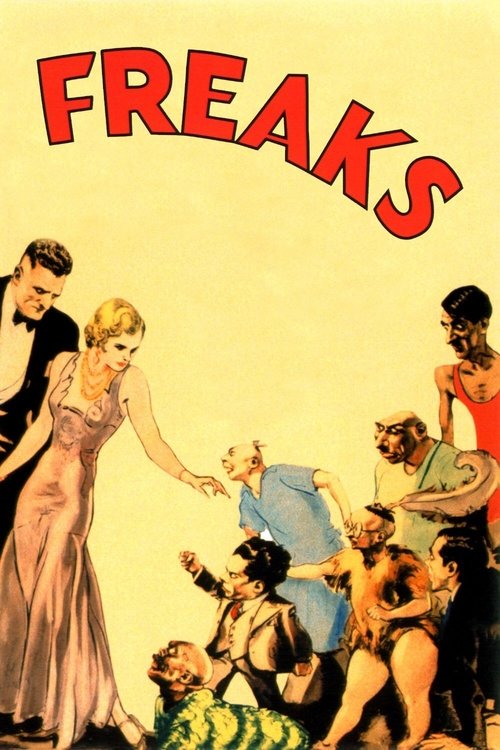
Freaks
"Can a full grown woman truly love a midget?"
Overview
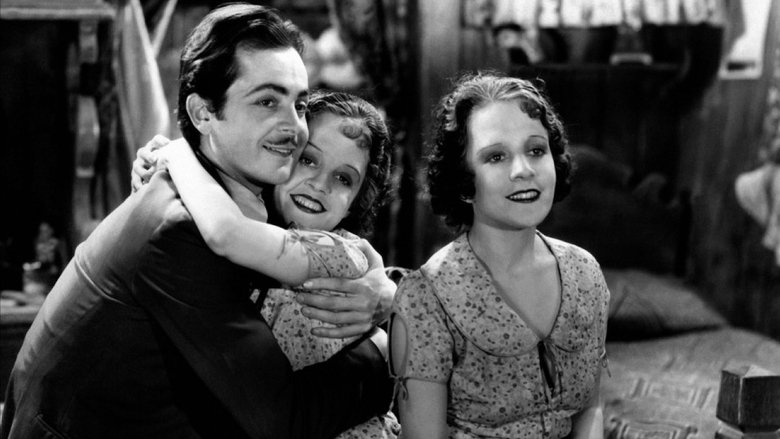
Directed by Tod Browning, Freaks is a landmark of early horror cinema set within the insular world of a French traveling circus. The story revolves around Hans, a wealthy sideshow performer with dwarfism, who becomes the target of a predatory scheme by the beautiful but cruel trapeze artist Cleopatra. Believing her affections are genuine, Hans marries Cleopatra, unaware that she and her lover, the circus strongman Hercules, are plotting to poison him to secure his inheritance.
nWhile the film initially presents as a melodrama of betrayal, it shifts into a chilling tale of communal retribution. As Cleopatra mocks the performers during their wedding feast, she unknowingly triggers the sacred code of the sideshow: "Offend one, and you offend them all." The narrative's strength lies in its refusal to use makeup, instead casting real-life sideshow performers whose humanity provides a stark contrast to the ethical rot of the "normal" antagonists.
Core Meaning
The core meaning of Freaks is a radical inversion of traditional beauty standards and the definition of a "monster." Browning aimed to humanize those marginalized by society, showing that the true freaks are not those with physical differences, but those who lack empathy, compassion, and moral integrity. By depicting the daily lives, romances, and communal bonds of the performers, the film argues that "normalcy" is a social construct frequently used to mask cruelty.
Thematic DNA
Inner vs. Outer Beauty
The film consistently subverts the Beauty Equals Goodness trope. Cleopatra and Hercules possess conventionally attractive physiques but are depicted as treacherous and predatory. Conversely, the performers, though physically atypical, exhibit loyalty, love, and a strong moral code, suggesting that monstrosity is an internal state.
The Ethics of Community and Loyalty
The performers live by a strict, self-imposed law of solidarity. Their collective identity is their only defense against a world that views them as spectacles. This theme is most famously revealed during the wedding banquet, where their attempt at inclusion is met with the villains' revulsion, ultimately leading to a collective act of justice.
Class and Economic Exploitation
Often interpreted through the lens of the Great Depression, the film highlights the exploitation of the "little people" by the powerful. Cleopatra's plan is fundamentally an act of class warfare—an attempt by a member of the circus hierarchy to steal from a vulnerable peer she considers sub-human.
Retribution and Vigilante Justice
The final act explores the terrifying nature of communal revenge. The performers do not seek legal recourse but instead use their collective power to transform their tormentor into the very thing she despises, raising questions about whether their justice is righteous or merely a descent into the horror others expect of them.
Otherness and Social Ostracization
Browning uses the camera to normalize the performers—often shooting from their eye level—to force the audience to confront their own prejudices. The film explores how society creates "monsters" through the act of gawking and exclusion.
Character Analysis
Hans
Harry Earles
Motivation
To find genuine love and respect from someone he perceives as "normal," only to later seek the restoration of his dignity through justice.
Character Arc
Initially a naive and romantic figure who is blinded by Cleopatra's beauty, Hans suffers a crushing betrayal that strips him of his innocence. He transitions from a victim to a leader of a vengeful cabal, ending the film as a wealthy but emotionally scarred recluse.
Cleopatra
Olga Baclanova
Motivation
Greed and social superiority. She views the performers as playthings and a means to financial gain.
Character Arc
A static character whose vanity and greed remain consistent. Her development is physical rather than moral, as she falls from the heights of the trapeze to the depths of the sideshow pit.
Hercules
Henry Victor
Motivation
Lust and wealth. He is driven by a desire to exploit Hans' inheritance alongside Cleopatra.
Character Arc
The physical antithesis of the performers, he uses his strength to intimidate and conspire. His arc ends in a violent confrontation where his physical prowess fails to protect him from the sheer numbers and determination of the performers.
Frieda
Daisy Earles
Motivation
Unconditional love for Hans and the protection of her community's emotional wellbeing.
Character Arc
The emotional anchor of the film. She maintains her love for Hans despite his rejection of her. In the alternate ending, she is the one who facilitates his emotional healing.
Phroso
Wallace Ford
Motivation
Survival and the defense of his friends, particularly Venus and the performers he respects.
Character Arc
A "normal" circus clown who treats the performers with genuine respect. He serves as the audience's moral compass, demonstrating that integration and kindness are possible.
Symbols & Motifs
The Loving Cup
Symbolizes acceptance, initiation, and communal bond. It represents the performers' willingness to share their identity and secrets with an outsider.
Passed around during the wedding banquet while the performers chant "One of us!". Cleopatra's rejection of the cup marks her definitive refusal to see the performers as human equals.
The Rainstorm
Symbolizes chaos, primal justice, and the breakdown of social order. It provides a literal and metaphorical cover for the performers to act on their hidden, darker instincts of survival.
The climax of the film occurs during a torrential downpour, where the performers crawl through the mud to hunt Cleopatra and Hercules, turning the circus landscape into a primitive battlefield.
The Human Duck
Symbolizes karmic transformation and the loss of ego. It is the ultimate punishment: being forced to live as the very thing one mocked.
Cleopatra is revealed at the end of the film as a mutilated sideshow attraction, her beauty stripped away and replaced by a grotesque, squawking form.
Memorable Quotes
Gooble-gobble, gooble-gobble. We accept her. One of us, one of us!
— The Performers
Context:
Chanted during the wedding banquet as the performers attempt to welcome Cleopatra into their "family."
Meaning:
A chant of radical inclusion that is paradoxically heard as a threat by those who consider themselves superior. It defines the central conflict of the film.
Offend one, and you offend them all.
— Carnival Barker
Context:
Spoken during the prologue/epilogue to frame the story's morality.
Meaning:
Establishes the code of the sideshow, warning the audience of the collective power held by the marginalized.
Most big people don't realize that I'm a man with the same feelings they have.
— Hans
Context:
Hans speaking to Cleopatra early in the film, highlighting his vulnerability.
Meaning:
The film's most direct plea for empathy and humanization.
Philosophical Questions
What defines a monster: physical form or moral action?
The film forces a direct comparison between the symmetrical beauty of the villains and the atypical bodies of the heroes, concluding that the only true monstrosity is a lack of humanity.
Is revenge ever truly just if it involves debasing the enemy?
The performers' decision to mutilate Cleopatra rather than kill her suggests a 'poetic' justice that mirrors their own suffering, yet the horror of the 'Human Duck' ending leaves the audience questioning the morality of their vengeance.
Alternative Interpretations
Critics are divided on the film's ultimate message. One Progressive Interpretation argues that Browning was a visionary who forced audiences to confront their prejudices by giving disabled actors agency and complex lives. An Exploitative Interpretation suggests that by turning the performers into terrifying monsters in the final act, Browning ultimately reinforced the very stereotypes he claimed to subvert. A third Aesthetic Reading views the film as a piece of surrealist art, focusing on the nightmare imagery of the rainstorm climax as a descent into the subconscious rather than a social commentary.
Cultural Impact
Freaks is arguably the most controversial film of the Pre-Code era. Upon its 1932 release, it was met with such visceral disgust that it was pulled from theaters and buried by MGM for decades. It wasn't until the 1960s, particularly after a screening at the Venice Film Festival, that it was rediscovered as a cult classic. Its influence is pervasive in modern pop culture: the "One of Us" chant has been parodied in The Simpsons, South Park, and The Wolf of Wall Street. Most significantly, it served as the primary blueprint for American Horror Story: Freak Show, which borrowed its aesthetic and specific character types. It remains a foundational text for Disability Studies in film, constantly sparking debate over whether it is a sympathetic masterpiece or an exploitative 'freak show' in its own right.
Audience Reception
In 1932, the reception was catastrophic. Test audiences reportedly fled the theaters in horror, and one woman even attempted to sue the studio, claiming the film caused her to miscarry. Modern audiences, however, view it with a mix of fascination and respect, praising its bravery and the genuine performances of its cast. It currently holds a high critical rating on platforms like Rotten Tomatoes, regarded as a unique and essential piece of cinema history that could never be made in the same way today.
Interesting Facts
- The film was originally 90 minutes long, but about 30 minutes of footage (including a more graphic revenge sequence) was cut and is now considered lost forever.
- MGM executives were so horrified by the cast that they were forced to eat in a separate tent so other actors wouldn't have to look at them.
- Director Tod Browning's career was effectively destroyed by the film's negative reception; he only directed a few more movies before retiring.
- Many of the cast members were actual stars of the Barnum & Bailey Circus, including the conjoined Hilton sisters and the 'Living Torso' Prince Randian.
- The film was banned in the United Kingdom for over 30 years due to its 'grotesque' nature.
Easter Eggs
The 'Master' Connection
Angelo Rossitto, who plays the performer who dances on the table during the 'One of Us' scene, went on to play Master in Mad Max Beyond Thunderdome (1985) over 50 years later.
Lost Castration Scene
In the original uncut ending, the performers did not just attack Hercules; they castrated him. A subsequent scene (now lost) showed him singing in a high-pitched soprano in the sideshow.
Real-Life Siblings
Harry and Daisy Earles, who play the romantic couple Hans and Frieda, were actually brother and sister in real life, a fact that adds an unintended layer of discomfort for modern viewers.
⚠️ Spoiler Analysis
Click to reveal detailed analysis with spoilers
Frequently Asked Questions
Explore More About This Movie
Dive deeper into specific aspects of the movie with our detailed analysis pages
Comments (0)
No comments yet. Be the first to share your thoughts!