Go Ahead
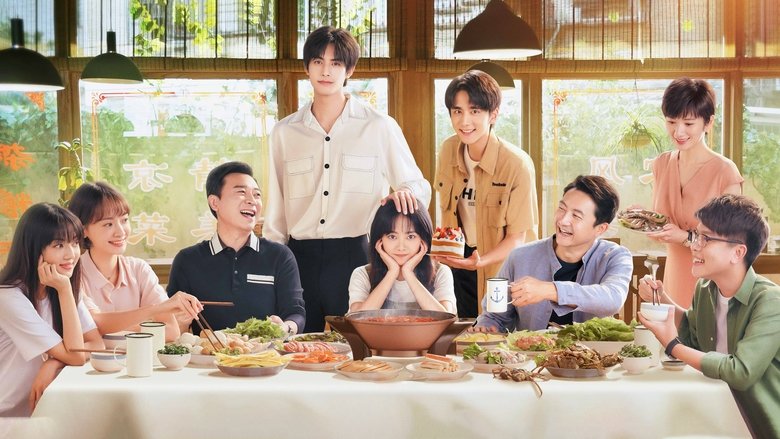
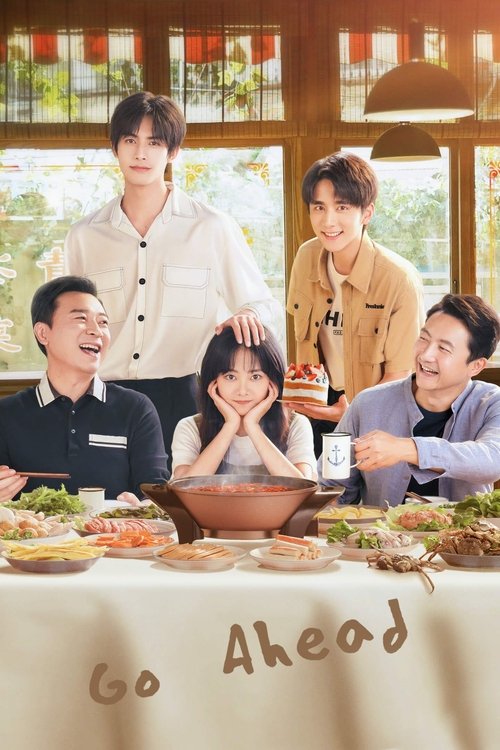
A heartwarming urban tapestry where three wounded souls weave a chosen kinship. Warm noodle steam and bittersweet wood shavings illustrate the delicate, poetic journey of healing through love rather than blood.
Go Ahead

Go Ahead

以家人之名

10 August 2020 — 06 September 2020 China 1 season 46 episode Ended ⭐ 8.4 (204)
Cast: Tan Songyun, Song Weilong, Zhang Xincheng, Tu Songyan, Zhang Xilin
Drama Family Comedy
Found Family vs. Biological Kinship Healing from Parental Abandonment The Burden of Moral Obligation The Transition to Adulthood

Overview

Go Ahead (2020) is a poignant exploration of the definition of family, centering on three individuals who are not related by blood but become each other’s closest kin. After experiencing various traumas in their original households, Li Jianjian, Ling Xiao, and He Ziqiu are raised under one roof by two unconventional fathers: the nurturing noodle shop owner Li Haichao and the hardworking police officer Ling Heping. The series spans several decades, beginning with their shared childhood and high school years, where they find solace in their makeshift brotherhood.

As the trio reaches adulthood, the narrative shifts into more complex territory when Ling Xiao and He Ziqiu are forced to return to their biological families due to unforeseen crises and moral obligations. After a nine-year separation, they reunite in their hometown, facing the challenges of rekindling their bond while navigating unresolved trauma, adult responsibilities, and shifting romantic feelings. The show balances slice-of-life comedy with heavy melodrama, ultimately examining whether the family we choose can withstand the test of time and the intrusion of the past.
Core Meaning

The core message of Go Ahead is that family is defined by companionship and care rather than DNA. The creators use the Chinese title 以家人之名 (In the Name of Family) as a double-edged sword: it represents the selfless love of the found family, but also the toxic manipulation used by biological relatives to exert control. The series argues that the act of 'staying' and 'showing up' every day is what truly constitutes a parental or sibling bond, emphasizing that healing is a communal process that requires the courage to let go of biological burdens in favor of emotional health.

Thematic DNA

Found Family vs. Biological Kinship 40%
Healing from Parental Abandonment 25%
The Burden of Moral Obligation 20%
The Transition to Adulthood 15%

Found Family vs. Biological Kinship

The series continuously contrasts the warmth of the Li household with the cold, demanding nature of the protagonists' biological mothers. It reveals that blood ties can sometimes be the most destructive forces in one's life, while chosen bonds provide the necessary soil for growth.

Healing from Parental Abandonment

Both Ling Xiao and He Ziqiu carry deep scars from their mothers' departures. The show explores how abandonment manifests as a constant need to prove one's worth (Ziqiu) or an obsessive fear of loss (Ling Xiao), and how consistent love can slowly mend these fractures.

The Burden of Moral Obligation

The characters struggle with xiao (filial piety), particularly when it conflicts with their own happiness. The middle arc highlights the 'nine-year gap' as a period where the brothers sacrifice their youth to fulfill duties to the very parents who once failed them.

The Transition to Adulthood

The show posits that growing up isn't a gradual process but happens in 'moments' of profound realization. It follows the characters as they transition from the protected bubble of childhood to the harsh realities of professional and emotional independence.

Character Analysis

Li Jianjian

Tan Songyun

Archetype: The Heart/Optimist
Key Trait: Relentless Optimism

Motivation

Initially motivated by a simple desire for her 'brothers' to stay by her side forever, her motivation evolves into a more mature need to see them find peace with their pasts, even if it changes their relationship dynamic.

Character Arc

Jianjian begins as a spunky, tomboyish child who provides the emotional glue for the group. Her development involves transitioning from a girl who relies on her 'brothers' to a professional artist who must learn to support them through their deepest psychological crises. Her growth is defined by her unwavering empathy and her ability to confront her brothers' hidden pains.

Ling Xiao

Song Weilong

Archetype: The Silent Protector
Key Trait: Obsessive Resilience

Motivation

Driven by a deep-seated need for salvation; he views Jianjian as his only 'light' and source of mental stability in a world darkened by his mother's manipulation.

Character Arc

Ling Xiao moves from a withdrawn, traumatized child to a high-achieving dentist who hides a crumbling mental state. His arc is the most harrowing, involving years of psychological 'imprisonment' by his mother in Singapore. His return to Xiamen represents his attempt to reclaim his life and sanity through his love for Jianjian.

He Ziqiu

Zhang Xincheng

Archetype: The Self-Sacrificing Martyr
Key Trait: Selfless Loyalty

Motivation

His primary motivation is to protect the family that took him in. He becomes a pastry chef (specializing in sweets for Jianjian) and constantly tries to shoulder financial burdens to relieve his foster father, Li Haichao.

Character Arc

Ziqiu’s path is defined by a sense of 'debt' to the Li family. He works tirelessly to prove he is worthy of being kept. His development involves letting go of the fear of being abandoned again and realizing that his place in the family is secure not because of his utility, but because of love.

Li Haichao

Tu Songyan

Archetype: The Nurturer/Father Figure
Key Trait: Inexhaustible Empathy

Motivation

To provide a safe, warm environment for children who have been discarded by society or their biological parents.

Character Arc

The emotional anchor of the series. While he remains consistent in his kindness, his arc involves the challenge of letting his children go and eventually finding his own happiness through a late-life romance with Ziqiu's mother, He Mei.

Symbols & Motifs

Li Haichao's Noodle Soup

Meaning: The ultimate symbol of unconditional love and nurturing.
Context: Throughout the series, the noodle shop serves as the family's anchor. Haichao's cooking is his primary language of affection, especially toward He Ziqiu, ensuring the boy never feels like an 'outsider' through the simple act of a full bowl.

The Walnut

Meaning: Trauma, guilt, and the catalyst for family collapse.
Context: The accidental death of Ling Xiao's younger sister, who choked on a walnut, is the core trauma that haunts him and destroys his mother’s mental health. It represents the fragility of life and the weight of unearned guilt.

Wood Carvings

Meaning: Self-expression and the shaping of one's own destiny.
Context: Li Jianjian’s career as a wood sculptor symbolizes her ability to take raw, often damaged materials and craft them into something beautiful and permanent, much like her role in holding her fragmented family together.

The Family Photo

Meaning: Acceptance and the legalization of chosen bonds.
Context: The series begins and ends with family portraits. The final photo, which includes the fathers and the children alongside newly accepted members, serves as a visual confirmation that their unconventional family is complete.

Memorable Quotes

People grow up in a moment. You're an adult in a legal sense on your 18th birthday, but the true growing up happens in a flash.

— Ling Xiao

Context:

Spoken during a heart-to-heart early in the series as the characters face the looming separation of university.

Meaning:

The quote defines the series' philosophy on maturity—it is not a matter of age, but the moment one feels the full weight of life's responsibilities.
There's no such thing as worth, only if the heart is willing.

— Li Haichao

Context:

Haichao says this to Ziqiu to reassure him that he is truly his son, regardless of biological ties.

Meaning:

Emphasizes that love shouldn't be transactional; one doesn't have to 'earn' their place in a family.
We are your best friends, not your garbage dumps. Your enemy is yourself!

— Li Jianjian

Context:

Said to Tang Can during a heated argument about Tang Can's career failures and self-pity.

Meaning:

A harsh but necessary truth about self-worth and taking responsibility for one's own healing.

Episode Highlights

The Arrival of the Brothers

S1E1
The foundational episode where the three children first meet. It establishes the contrasting household dynamics and the early, prickly bond between Jianjian and the boys.
Significance: Sets the 'found family' premise and introduces the core traumas that drive the plot for the next 45 episodes.

The Forced Departure

S1E10
A devastating turning point where external family crises force Ling Xiao and Ziqiu to leave the Li household for nine years.
Significance: Splits the narrative into two distinct eras (childhood and adulthood) and introduces the theme of sacrifice for the sake of biological duty.

The Confessions

S1E22
After years apart, the 'brotherly' feelings shift as both Ling Xiao and Ziqiu confess their romantic interests to a bewildered Jianjian.
Significance: Transitions the show from a pure family drama to a romantic melodrama, causing significant tension within the trio.

Ziqiu's Confrontation

S1E30
He Ziqiu finally confronts his mother, He Mei, about why she truly left him, leading to an emotional breakdown on his motorcycle.
Significance: A masterpiece of acting by Zhang Xincheng that provides catharsis for one of the show's longest-running mysteries.

In the Name of Family (Finale)

S1E46
The final resolution where Ling Xiao's mother finally releases him, He Mei and Li Haichao marry, and the family takes a new portrait.
Significance: Provides a definitive answer to the show's central question: family is what you make of it. All characters find their 'place' in the new, expanded family.

Philosophical Questions

Is blood thicker than water, or is love thicker than blood?

The series systematically deconstructs this proverb by showing that those with the same blood often cause the most harm, while those with no biological connection provide the most sustenance.

Does one owe their life to the parents who gave it to them?

Through Ling Xiao's struggle, the show asks if a child is forever indebted to a parent who was negligent or abusive, ultimately suggesting that one's primary duty is to their own mental health.

Alternative Interpretations

While many view the show as a celebration of love, some critics interpret it as a tragedy of sacrifice. From this perspective, Ling Xiao and Ziqiu never truly 'go ahead'; they are permanently tethered to their traumas, and their return to Jianjian is less about romance and more about a desperate need to return to the only time they felt safe. Another interpretation suggests the show is a critique of the 'absent father' trope in Chinese society, using Ling Heping as a foil to Li Haichao to show that providing financially is not the same as parenting.

Cultural Impact

Go Ahead had a massive cultural impact in China and throughout Southeast Asia, sparking a national conversation about the 'toxic mother' archetype and the pressure of filial piety. It challenged the traditional Confucian value that biological lineage is the only valid form of family. The show also significantly boosted the 'slice-of-life' genre in Chinese television, moving away from high-fantasy or corporate tropes. However, its shift from family-centric storytelling to a love triangle in the second half remains a point of intense critical debate in C-drama circles.

Audience Reception

Initial reception was overwhelmingly positive, with the childhood and high school segments receiving high praise for their warmth and realistic acting (earning an initial 8.6 on Douban). However, as the plot shifted toward a romance between the 'siblings,' the score dropped to 6.9. Fans were divided: many felt the transition to a love triangle 'cheapened' the profound family bond, while others argued that the romance was a natural extension of the deep intimacy the characters shared as children. The performance of Tu Songyan as Li Haichao was universally lauded as one of the best portrayals of fatherhood in C-drama history.

Interesting Facts

  • Despite playing the youngest sibling, Seven Tan (Tan Songyun) was actually the oldest of the three lead actors in real life, being 30 during filming.
  • Song Weilong, who played the eldest brother Ling Xiao, was only 21 years old at the time of filming, making him the youngest of the trio.
  • The series was primarily filmed in Xiamen, Fujian Province, which contributed to its breezy, coastal aesthetic.
  • The show's original Chinese title, 'In the Name of Family,' is considered a critique of how people use family ties to justify selfish behavior.
  • The director, Ding Ziguang, and the screenwriting team previously worked together on the hit drama 'Find Yourself' (2020).

Easter Eggs

The 'Noodle Shop' Meta-Reference

The noodle shop owned by Li Haichao became a real-life tourist attraction in Xiamen after the show's success, with fans visiting to eat 'Dad's noodles.' This blurred the lines between the fictional warmth of the show and real-world cultural impact.

⚠️ Spoiler Analysis

Click to reveal detailed analysis with spoilers

Frequently Asked Questions

Explore More About This Movie

Dive deeper into specific aspects of the movie with our detailed analysis pages

Comments (0)

Leave a comment

No comments yet. Be the first to share your thoughts!