Dark
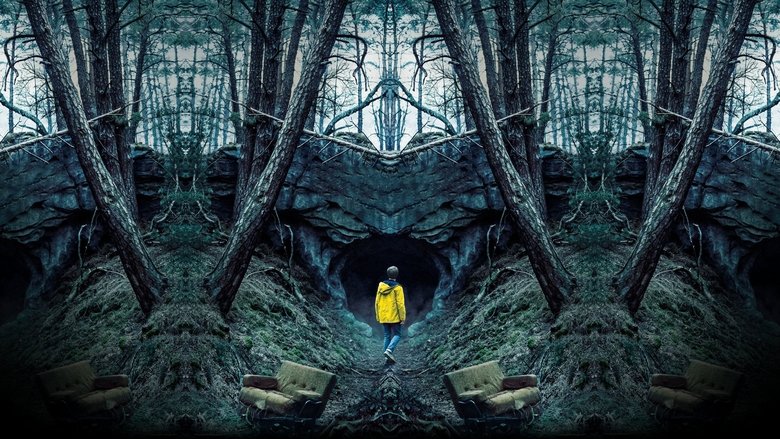
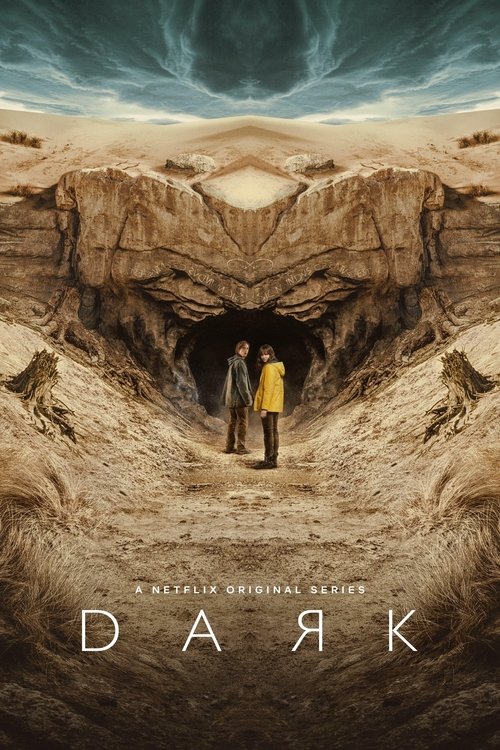
A haunting sci-fi labyrinth where rain-soaked dread meets ancestral tragedy. It is a visual Möbius strip of shadows and light, capturing the crushing weight of an inescapable, ticking eternity.
Dark

Dark

"Everything is connected."

01 December 2017 — 27 June 2020 Germany 3 season 26 episode Ended ⭐ 8.4 (7,254)
Cast: Louis Hofmann, Lisa Vicari, Andreas Pietschmann, Maja Schöne, Stephan Kampwirth
Drama Crime Sci-Fi & Fantasy Mystery
Determinism vs. Free Will Intergenerational Trauma Love as a Destructive Force Dualism and Symmetry

Overview

Set in the fictional, atmospheric German town of Winden, Dark begins with the mysterious disappearance of a young child, Mikkel Nielsen. This event triggers a desperate search that gradually uncovers the fractured relationships and double lives of four central families: the Kahnwalds, Nielsens, Dopplers, and Tiedemanns. As the investigation deepens, the series shifts from a traditional crime drama into a complex science fiction epic involving time travel, secret societies, and a generational conspiracy that spans over a century.

Across three meticulously planned seasons, the show explores how every action in Winden is part of a never-ending cycle. The narrative expands from 2019 to include the years 1986, 1953, 1921, and a post-apocalyptic future, eventually introducing parallel realities. Rather than focusing on changing the past, the story emphasizes the agony of being unable to escape it, as characters encounter past and future versions of themselves in a desperate struggle to break the knot of time that binds them all together.
Core Meaning

The core message of Dark is an exploration of determinism and the limits of human agency against the relentless tide of time. The creators, Baran bo Odar and Jantje Friese, suggest that our desires and traumas are inherited loops from which we rarely escape, as expressed by the recurring Schopenhauer quote: 'A man can do what he wills, but he cannot will what he wills.' Ultimately, the series posits that the only way to truly solve a cycle of suffering is through a selfless sacrifice that erases the self, prioritizing the 'Origin' over the preservation of one's own existence.

Thematic DNA

Determinism vs. Free Will 35%
Intergenerational Trauma 25%
Love as a Destructive Force 20%
Dualism and Symmetry 20%

Determinism vs. Free Will

The series repeatedly questions whether individuals can change their fate or if every action is already written in time. This is explored through the Bootstrap Paradox, where objects and information exist without a clear origin, suggesting a closed loop where the future influences the past just as much as the past shapes the future.

Intergenerational Trauma

The sins and secrets of the parents are literally visited upon the children through time travel. Characters find themselves trapped in the same mistakes and tragedies as their ancestors, illustrating how family cycles of grief and betrayal can become an inescapable prison.

Love as a Destructive Force

The show subverts the trope of 'love saves all' by showing how the desire to save a loved one is the very thing that creates the time loops and causes the apocalypse. Both Adam and Eva are driven by a distorted form of love that perpetuates suffering for an eternity.

Dualism and Symmetry

Reflected in the show's visual language and its 'Two Worlds' structure, this theme explores the balance of light and shadow, beginning and end, and the 'Mirror World.' It suggests that for every action, there is an equal and opposite reaction in the fabric of existence.

Character Analysis

Jonas Kahnwald

Louis Hofmann

Archetype: The Tragic Hero
Key Trait: Resilience

Motivation

Initially motivated by a desire to bring Mikkel back and stop the suffering, his motivation evolves into a cosmic obsession with destroying the 'knot' of time itself.

Character Arc

Jonas begins as a grieving teenager searching for answers about his father's suicide. He transforms from an innocent seeker into The Stranger, and finally into the scarred, nihilistic antagonist Adam, before eventually seeking to erase his own existence to fix the timeline.

Martha Nielsen

Lisa Vicari

Archetype: The Mirror Protagonist
Key Trait: Passion

Motivation

Her primary drive is the preservation of the life created by the knot, specifically her son, setting her in direct opposition to Jonas's goal of annihilation.

Character Arc

Martha evolves from Jonas's love interest into a pivotal player in the time war. In the alternate world, she becomes Eva, the counterpart to Adam, who fights to preserve the cycle to ensure the survival of her unborn child.

The Stranger

Andreas Pietschmann

Archetype: The Fallen Mentor
Key Trait: Regret

Motivation

He is driven by the hope that he can change the past, making him the bridge between the idealism of young Jonas and the despair of Adam.

Character Arc

This is the middle-aged version of Jonas. He spends his life trying to fix the mistakes of his younger self, only to realize that every 'fix' he attempts is actually a prerequisite for the loop to continue.

Hannah Kahnwald

Maja Schöne

Archetype: The Manipulator
Key Trait: Self-preservation

Motivation

Her evolution is driven by a deep-seated need for love and revenge, leading her to make choices that often sabotage those around her.

Character Arc

Starting as a lonely widow having an affair, Hannah's path takes her back to the 1950s where she attempts to build a new life through manipulation. She remains one of the few characters whose motivations are consistently self-serving, even across time.

Peter Doppler

Stephan Kampwirth

Archetype: The Secret Keeper
Key Trait: Internal Conflict

Motivation

He is motivated by a desperate attempt to maintain the stability of his family despite the overwhelming chaos of time travel.

Character Arc

Peter struggles with his identity and his family's secrets. He moves from a man hiding his true self to a guardian of the bunkers during the apocalypse, eventually dying while trying to protect his daughter.

Symbols & Motifs

The Triquetra

Meaning:

Symbolizes the trinity of time (past, present, future) and the 33-year cycle that governs the wormhole's opening.

Context:

Seen on the metal door in the caves, on the Emerald Tablet, and used as the logo for the secret society Sic Mundus.

The Yellow Raincoat

Meaning:

Represents the burden of the protagonist and the cyclical nature of the 'hero' figure across timelines.

Context:

Originally worn by Jonas Kahnwald, it becomes a visual anchor that passes through various characters and worlds, marking the person caught in the center of the storm.

St. Christopher Pendant

Meaning:

Symbolizes protection for travelers and the tragic, overlapping love stories that span decades.

Context:

Found in the sand at the lake, it is passed between Jonas and Martha across different years, acting as a physical tether to their connection.

Ariadne's Thread

Meaning:

A reference to the Greek myth of the labyrinth, symbolizing the search for a way out of the time loop.

Context:

Martha performs in a play called Ariadne, and red threads are used in the caves to guide characters through the tunnels.

Memorable Quotes

Was wir wissen, ist ein Tropfen. Was wir nicht wissen, ein Ozean.

— Adam / Various

Context:

A recurring quote, most notably used by Adam in Season 2 when explaining the scope of the conspiracy to young Jonas.

Meaning:

Highlights the vast complexity of the universe and the hubris of characters who think they understand the full picture of the time loop.

Der Anfang ist das Ende und das Ende ist der Anfang.

— Various

Context:

Spoken by several characters across all three seasons, acting as the show's unofficial mantra.

Meaning:

Summarizes the show's cyclical philosophy where causality is a closed loop and there is no true point of origin within the knot.

Der Mensch kann tun was er will, aber er kann nicht wollen, was er will.

— The Stranger / Adam

Context:

Crucial to the philosophical discussions in Seasons 2 and 3 regarding why characters keep making the same choices.

Meaning:

A quote from Arthur Schopenhauer that defines the show's stance on free will: we have the power to act, but our desires are predetermined by our nature and the loop.

Alles ist verbunden.

— The Stranger / Various

Context:

Used throughout the series to explain the impossible family trees and the 'knot' binding Winden.

Meaning:

The literal translation of 'Everything is connected,' reinforcing the idea that every family and every time period is inextricably linked.

Episode Highlights

Secrets

S1E1

The pilot episode establishes the eerie atmosphere of Winden and the central mystery of Mikkel's disappearance near the caves.

Significance:

Sets the stakes and introduces the four core families, laying the foundation for every subsequent reveal.

Alpha and Omega

S1E10

The Season 1 finale reveals that Jonas's father Michael is actually Mikkel Nielsen, and Jonas is sent to a post-apocalyptic future.

Significance:

Confirms the 33-year loop and the inescapable nature of the character's fates, while expanding the world beyond 2019.

An Endless Cycle

S2E6

Jonas travels back to the day before his father's suicide to prevent it, only to realize his intervention is the very thing that triggers the death.

Significance:

One of the show's most heartbreaking examples of the predestination paradox.

Endings and Beginnings

S2E8

The apocalypse occurs in 2020. Adam kills Martha, and just as the blast hits, an alternate version of Martha appears to save Jonas.

Significance:

Introduces the concept of parallel worlds, fundamentally shifting the series' scale from time travel to the multiverse.

The Paradise

S3E8

The series finale reveals the 'Origin World' and H.G. Tannhaus's role in creating the split timelines. Jonas and Martha travel to the real world to prevent the car crash that started it all.

Significance:

Provides a definitive, emotionally resonant conclusion that resolves the complex puzzle while providing a bittersweet sacrifice.

Philosophical Questions

Can we ever truly act of our own free will?

The series explores this through characters who desperately want to change things but find themselves fulfilling their own history. It asks if our desires are just chemicals and memories that force us into predictable patterns.

Is Time the only true God?

Adam frequently refers to time as a deity—blind, merciless, and all-powerful. The show investigates whether humanity's struggle is not against evil, but against the sheer entropy and inevitability of the passage of time.

Alternative Interpretations

While the ending is generally seen as a definitive 'fix,' some critics and fans suggest that the final dinner party in the Origin World hints at a new, different kind of loop. Hannah's sense of déjà vu and her decision to name her son 'Jonas' lead some to believe that the characters are echoes that might eventually re-manifest the knot. Another interpretation is that Claudia Tiedemann is the true protagonist and 'god' of the series, as she is the only one who truly operates outside the manipulations of Adam and Eva, ultimately finding the loophole through her own intellectual labor rather than predetermined fate.

Cultural Impact

Dark is widely regarded as the series that put German television on the global map for the prestige TV era. It shattered the international perception that German content was limited to procedurals and crime dramas. Culturally, it became a benchmark for 'hard sci-fi' on television, praised for its refusal to dumb down its complex narrative for audiences. It fostered a global community of amateur sleuths who shared intricate family tree diagrams and theories online. Its legacy lies in proving that a non-English, high-concept philosophical drama could achieve massive worldwide success while maintaining an uncompromising, somber aesthetic and a deeply intellectual core.

Audience Reception

Audience reception for Dark was overwhelmingly positive, with the series currently holding a high rating on platforms like IMDb and Rotten Tomatoes. Season 1 was initially compared to Stranger Things, but viewers quickly realized it was a much darker, more philosophical beast. Season 2 is often cited as the peak of the show's tension and pacing. While Season 3 was praised for its ambitious conclusion, some audience members found the introduction of the 'Mirror World' and the 'Origin' plotline slightly rushed compared to the slow-burn buildup of the first two seasons. However, the finale is widely considered one of the most satisfying endings in sci-fi history.

Interesting Facts

  • The iconic yellow raincoat was inspired by an intern who was wearing one during a camera test in the forest; the director liked the contrast against the dark trees.
  • The 33-year cycle in the show is based on the lunar-solar cycle, where the sun and moon positions align roughly every 33 years.
  • Many actors playing the same character at different ages were cast not just for their talent, but for their striking physical resemblances, which became a hallmark of the show's production value.
  • The theme song 'Goodbye' by Apparat was previously used in the 'Face Off' episode of Breaking Bad.
  • The series was Netflix's first German-language original production, paving the way for international hits like 'Squid Game' and 'Money Heist.'
  • The final scene of the series featuring Jonas and Martha was the very last scene filmed on the final day of shooting for Season 3.

Easter Eggs

The 'Eva' Wallpaper

The floral wallpaper in the Kahnwald house is a design by William Morris actually titled 'Eva,' foreshadowing Martha's role in the alternate world years before she is revealed as Eva.

Sonja and Marek

The names of H.G. Tannhaus's son and daughter-in-law, Sonja and Marek, are an anagram (Sonja) and a partial reflection (Marek) of Jonas and Martha.

The Play 'Ariadne'

The monologue Martha delivers in the school play mirrors the exact struggle of the characters trying to find their way through the labyrinth of time without losing the thread of their identity.

⚠️ Spoiler Analysis

Click to reveal detailed analysis with spoilers

Frequently Asked Questions

Explore More About This Movie

Dive deeper into specific aspects of the movie with our detailed analysis pages

Comments (0)

Leave a comment

No comments yet. Be the first to share your thoughts!