Skip to content
Good Boy
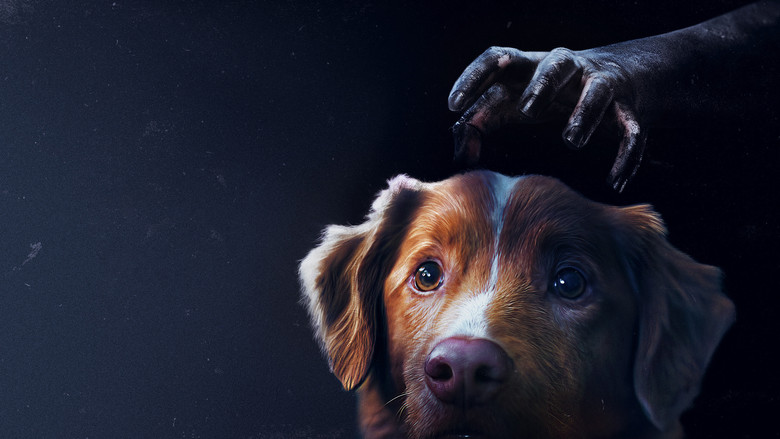
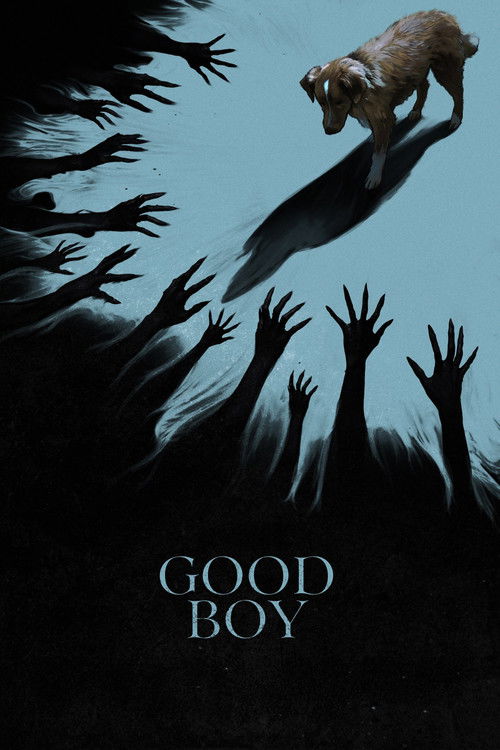
A suffocating sensory haunted-house horror that plunges into canine dread, capturing the ache of unconditional devotion through the low-angled gaze of a loyal retriever watching his failing master slip into the shadows.
Good Boy

Good Boy

"Trust his instincts."

01 October 2025 United States of America 73 min 6.6 (712)

Director: Ben Leonberg

Cast: Shane Jensen, Arielle Friedman, Larry Fessenden, Stuart Rudin, Anya Krawcheck

Horror Unconditional Loyalty & The Caregiver Dilemma Terminal Illness & Generational Mortality Sensory Isolation & Animal Perception The Inevitability of Letting Go
Budget: $70,000
Box Office: $8,844,724

Overview

Good Boy marks the feature directorial debut of Ben Leonberg, co-written with Alex Cannon. The story follows Todd (Shane Jensen), a young man suffering from a debilitating chronic lung illness, who abruptly departs New York alongside his devoted Nova Scotia Duck Tolling Retriever, Indy. Todd decides to isolate himself in a remote woodland home inherited from his deceased grandfather, brushing off the distressed phone calls of his sister Vera (Arielle Friedman).

The retreat offers neither rest nor recovery. From the moment they arrive, Indy’s heightened canine senses detect an unnatural presence lurking in the corners, shadows, and surrounding woods. As Todd watches old family tapes on a CRT television and physically deteriorates, the unseen entity grows increasingly aggressive, while a spectral guardian—the grandfather’s deceased dog, Bandit—lingers at the periphery to signal impending doom.

Shot from canine eye level without dialogue voiceovers or supernatural animal gimmicks, the film tracks Indy's desperate efforts to understand and defend his companion against an ethereal menace that human eyes cannot comprehend.
Core Meaning

The core thesis of Good Boy is an examination of loyalty, terminal decline, and the tragic limitation of love in the face of inevitable mortality. By centering the story entirely on a dog’s perspective, the film subverts traditional haunted house conventions to articulate how domestic pets experience the gradual illness and passing of their caregivers. The supernatural entity acts as an externalization of death and degenerative illness—an inescapable force that an animal companion can sense and fight against instinctively, but cannot stop.

Thematic DNA

Unconditional Loyalty & The Caregiver Dilemma 35%
Terminal Illness & Generational Mortality 30%
Sensory Isolation & Animal Perception 20%
The Inevitability of Letting Go 15%

Unconditional Loyalty & The Caregiver Dilemma

Indy’s motivation is grounded entirely in his drive to guard Todd. The narrative illustrates the emotional toll of companionship when one party is entirely helpless to alter the physical fate of the other.

Terminal Illness & Generational Mortality

Todd’s failing lungs mirror the fate of his late grandfather. The woodland homestead is not merely haunted by ghosts, but by a family history of physical decay and sudden abandonment.

Sensory Isolation & Animal Perception

The film explores the gap between what humans comprehend rationally and what animals perceive instinctively. Indy detects threats through smell, low-frequency creaks, and sudden shifts in room temperature long before Todd realizes his peril.

The Inevitability of Letting Go

Often described as a structural 'reverse Old Yeller,' the film shifts the burden of surviving grief from the human owner onto the faithful dog left behind.

Character Analysis

Indy

Indy the Dog

Archetype: The Loyal Guardian / Unreliable Witness Key Trait: Hyper-perceptive and unwaveringly faithful

Motivation

Keep Todd safe and maintain their pack bond.

Character Arc

Begins as a sheltered companion accustomed to domestic comfort; is forced into the role of sole protector against an intangible specter, ultimately surviving the harrowing loss of his master.

Todd

Shane Jensen

Archetype: The Tragic / Failing Master Key Trait: Resigned, coughing, increasingly detached

Motivation

Isolation, autonomy, and quiet peace away from intrusive hospital care.

Character Arc

Seeks refuge from the medicalized world to die on his own terms in his grandfather's cabin, descending into physical weakness and supernatural vulnerability.

All 5 characters and cast

Symbols & Motifs

The Low Framing / Obscured Faces

Meaning:

Represents the canine perceptual reality, reflecting how dogs identify people by posture, voice timbre, and scent rather than facial aesthetics.

Context:

Humans are framed predominantly from the waist down or depicted with their faces shrouded in deep shadow throughout the film.

The CRT Television & Grainy Camcorder Tapes

Meaning:

Serves as a temporal bridge showing that history and physical decline are repeating themselves across generations within the cursed house.

Context:

Displays archival home video footage of the late grandfather and his loyal dog Bandit.

The Mud-Dark Silhouette

Meaning:

Represents encroaching death, supernatural malice, and bodily deterioration.

Context:

The entity lurks in shadows and seeps into rooms progressively as blood seeps from Todd's failing lungs.

Canine Dream Sequences

Meaning:

Symbolizes the dog's internal processing of mortal fear, heightened dread, and primal survival instinct.

Context:

Depicted as surreal, nightmarish glimpses into Indy’s subconscious while he sleeps.

Fox Traps

Meaning:

Symbolizes the hostile, predatory, and treacherous nature of the external natural world beyond the domestic threshold.

Context:

Hidden throughout the surrounding forest by the neighbor Richard as a hazard to unwary animals.

Memorable Quotes

Good boy, Indy... you're a good boy.
— Todd

Context

Spoken by Todd across various intimate domestic scenes and echoed during his final physical decline.

Meaning

Repeated as a mantra of comfort throughout the film; transforms from casual affectionate praise into a heartbreaking farewell during Todd’s final moments.

You can't just run off out there, Todd. That house took Grandpa, and it won't give you back either.
— Vera

Context

Delivered via a distressed telephone call trying to persuade Todd to abandon his isolation.

Meaning

Establishes the generational dread and foreshadows that Todd’s retreat to the secluded farmhouse is a journey of no return.

All 3 quotes

Philosophical Questions

Can love exist without comprehension?

The film examines how Indy's devotion to Todd remains absolute despite having zero cognitive understanding of human pathology, mortality, or medical science.

How does grief manifest in the non-human world?

Explores how an animal companion experiences and processes the sudden, permanent absence of a caregiver when left isolated in an empty environment.

What is the boundary between natural decay and malevolence?

Questions whether the terror of dying represents an antagonistic external force or simply the most agonizing biological reality of natural life.

Alternative Interpretations

The film supports multiple analytical readings:

Full ending explanation

Cultural Impact

Premiering at the SXSW Film Festival in March 2025, Good Boy was acquired by IFC Films and Shudder for theatrical and streaming distribution. Made for just $70,000, it became a breakout indie horror hit, grossing over $8.7 million at the box office. Alongside films like In a Violent Nature (2024), it contributed to the mid-2020s trend of minimalist, non-traditional point-of-view horror films that challenge conventional narrative perspectives.

Audience Reception

Good Boy received strong critical acclaim, holding a 90–91% Fresh score on Rotten Tomatoes and a 70/100 on Metacritic.

Critics widely lauded Indy's natural performance, the crisp 73-minute runtime, inventive camera positioning, and the surprisingly poignant emotional climax. Minor criticisms noted that the minimalist premise occasionally strained feature-length boundaries and relied on familiar haunted house tropes. Overall, it was celebrated as an imaginative and moving indie grief study.

Interesting Facts

  • Indy is the real-life personal pet of director Ben Leonberg and producer Kari Fischer, with no prior commercial acting or stunt training.
  • The film was produced on a microbudget of approximately $70,000 and filmed over a sporadic 3-year period spanning more than 400 shooting days in Harding Township, New Jersey.
  • To stage camera angles and blocking without exhausting the dog, the crew used a stuffed stand-in dubbed 'Fake Indy' or 'Findy'.
  • Real behavioral cues—including head tilts, ear twitches, and whimpers—were captured using sound prompts and natural stimuli off-camera without digital VFX manipulation.
  • Director Ben Leonberg strictly avoided dialogue voiceovers and anthropomorphized CGI facial expressions to maintain an authentic canine perspective.

Easter Eggs

Poltergeist (1982) Inversion

Leonberg cited the famous moment in Poltergeist where the family dog barks at empty staircases as the core inspiration for expanding that single trope into an entire feature film.

Larry Fessenden Cameo

Indie horror filmmaker and icon Larry Fessenden portrays the late grandfather on video tapes, serving as an homage to independent horror cinema.

Bandit the Ghost Dog

Played by a dog named Max, the spectral retriever represents the grandfather's deceased pet, echoing Indy’s journey across generations.

The Shining Influences

The slow psychological and physical unraveling within an isolated dwelling mirrors Jack Torrance's descent in The Shining, translated into canine sensory cues.

Frequently Asked Questions

Explore More About This Movie

Dive deeper into specific aspects of the movie with our detailed analysis pages

Comments (0)

Leave a comment

No comments yet. Be the first to share your thoughts!

Similar Movies