Skip to content
Weapons
A suburban nightmare told in fragments: seventeen children run into the dark at 2:17 a.m., arms trailing like wings, leaving a town to claw at its own throat looking for someone to blame.
Weapons

Weapons

"Last night at 2:17 AM, every child from Mrs. Gandy's class woke up, got out of bed, went downstairs, opened the front door, walked into the dark ...and they never came back."

04 August 2025 United States of America 129 min 7.3 (3,886)

Director: Zach Cregger

Cast: Julia Garner, Josh Brolin, Alden Ehrenreich, Austin Abrams, Benedict Wong

Mystery Horror Grief and the search for someone to blame Adults failing children Parasitism and the theft of vitality Fractured perspective and the impossibility of a full picture Control, obedience and the violated body
Budget: $38,000,000
Box Office: $269,972,492

Overview

In the ordinary town of Maybrook, seventeen third-graders from the same classroom wake at exactly 2:17 in the morning, walk out of their homes and vanish into the night. Only one child from the class, Alex Lilly, is left behind. Zach Cregger's second feature opens on that impossible image and then refuses to move on from it, settling instead into the month of rot that follows.

The film is built as six interlocking chapters, each named for a person orbiting the disappearance: the children's teacher Justine Gandy (Julia Garner), who becomes the town's default suspect; Archer Graff (Josh Brolin), a father whose grief hardens into a private investigation; a compromised local cop (Alden Ehrenreich); a drifting addict (Austin Abrams); the school principal (Benedict Wong); and finally the boy who stayed. Each chapter rewinds, overlaps and quietly hands the next one a piece of information the previous narrator never had.

What begins as a missing-children procedural curdles into something stranger and funnier and far more cruel, as Cregger lets suspicion, alcohol, surveillance footage and small-town rumour do most of the damage long before anything supernatural shows its face. It is a mystery that keeps promising an explanation and keeps handing you another frightened human being instead.
Core Meaning

Cregger has said the film grew out of processing the death of a close friend, and that grief is the engine under the genre machinery. Weapons is about what a loss does to the people left standing around the hole. The town of Maybrook does not respond to the disappearance by grieving; it responds by looking for a target, and the film watches that target-seeking behaviour spread from parent to teacher to cop to principal like a contagion.

The title works on at least two levels. There are literal weapons in the film, and there is a literal predator using children as instruments. But the more sustained argument is that people are weaponised — by fear, by addiction, by institutional cowardice, and above all by someone else's hunger. A child is made into a tool against his own classmates; a community is made into a mob against its most vulnerable member.

And the film's final gesture is deliberately anticlimactic in the way real grief is: the monster can be destroyed, and it changes almost nothing. The damage was never contained inside the monster. That is the message — you can survive the horror and still not get your life back.

Thematic DNA

Grief and the search for someone to blame 28%
Adults failing children 24%
Parasitism and the theft of vitality 20%
Fractured perspective and the impossibility of a full picture 16%
Control, obedience and the violated body 12%

Grief and the search for someone to blame

Maybrook's parents cannot metabolise seventeen simultaneous losses, so they convert mourning into accusation. Archer's chapter is the purest version: a father whose love has nowhere to go turns into an amateur investigator, then a trespasser, then something closer to a threat. Justine, guilty of nothing except being the last adult in the room, absorbs the town's need for a culprit — vandalism, harassment, suspension. Cregger structures the film so that we watch grief mutate into cruelty in real time, chapter by chapter.

Adults failing children

Every institution built to protect the kids collapses quietly. The school principal manages optics rather than danger; the police force is represented by an officer whose own compromised behaviour matters more to him than the case; parents are drunk, absent, or too consumed by their own pain to see. The one child left behind spends the film unable to make a single adult hear what he knows. The supernatural predator only succeeds because the ordinary safety net was already rotted through.

Parasitism and the theft of vitality

The film's central appetite is a literalised metaphor: an old, depleted thing feeding on the energy of the young to keep itself going. It is played as witchcraft, but it reads as something more familiar — the elderly relative who moves in and hollows out a household, the adult who uses a child as an instrument of their own survival. Alex's home becomes the model of the whole town: everyone's needs served by draining someone smaller.

Fractured perspective and the impossibility of a full picture

The six-chapter, overlapping structure is thematic, not decorative. Each character possesses one fragment and misreads it because they cannot see the others. Justine looks guilty from outside her own chapter; Archer looks unhinged from inside someone else's; the addict's chapter recontextualises an image we had already filed away. The film argues that communities go wrong precisely because no one ever holds the whole account at once.

Control, obedience and the violated body

The horror set pieces are almost all about bodies moving without consent — running, self-harming, obeying. Cregger stages possession less as demonic spectacle than as the ultimate loss of autonomy, and pointedly gives it to the least powerful people on screen: children and the adults who love them. The terror is not what the body does; it is that its owner is still awake inside it.

Character Analysis

Justine Gandy

Julia Garner

Archetype: Wrongly accused protagonist / reluctant investigator Key Trait: Stubborn moral clarity under total social pressure

Motivation

Initially self-preservation and the need to clear her name; increasingly a genuine, unshared responsibility toward children who were hers to protect.

Character Arc

Begins as a competent, well-liked third-grade teacher and is instantly recast by her town as the only plausible villain. Her chapter tracks the erosion — suspension, vandalism, harassment, self-medication — until isolation paradoxically frees her to pursue the truth no one else will touch. She moves from defending her innocence to actively hunting an answer.

Archer Graff

Josh Brolin

Archetype: Grieving father / obsessive antihero Key Trait: Grief that has hardened into relentless forward momentum

Motivation

To bring his son home, and failing that, to convert unbearable helplessness into action of any kind.

Character Arc

A father of one of the missing boys who refuses the passivity of official channels. His chapter escalates from frustrated parent to surveillance, confrontation and trespass, and the film is careful to make his conviction both sympathetic and dangerous — he is right about the existence of a secret and wrong about almost everyone he suspects.

All 5 characters and cast

Symbols & Motifs

2:17 a.m.

Meaning:

An exact, unexplained timestamp that stands in for the arbitrariness of catastrophe. It offers the form of an explanation — a precise number, a pattern — while explaining nothing, which is exactly how the film treats every clue it hands the audience.

Context:

Established in the opening and repeated obsessively by the town, the police and the parents; it becomes the thing everyone can agree on and the thing that helps no one.

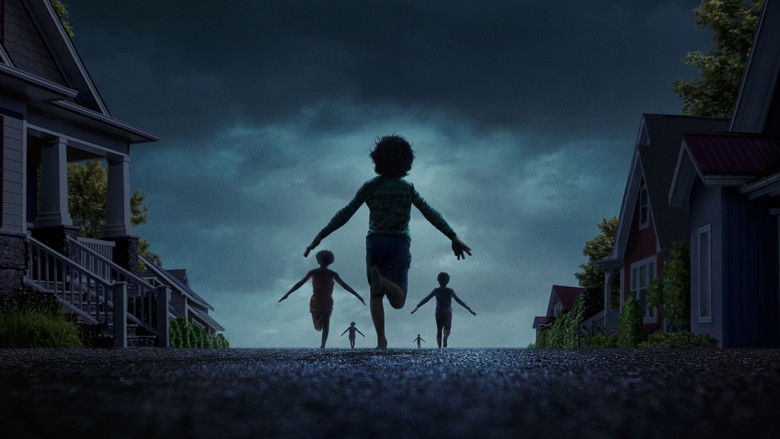
The children's outstretched arms

Meaning:

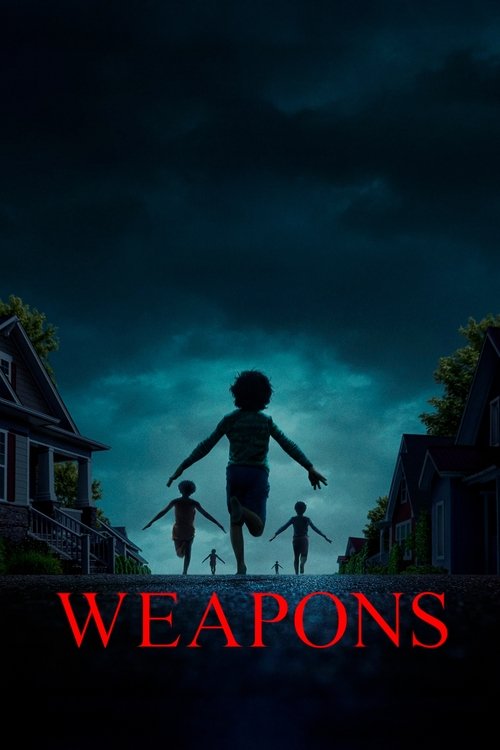
The film's signature image reads as childlike play — arms out like aeroplane wings — grafted onto something mechanical and summoned. Innocence rendered as an instrument in motion: the exact meaning of the title compressed into one silhouette.

Context:

Introduced in the surveillance-camera opening and returned to at the climax, where the same posture recurs at a completely different scale and reverses who is being hunted.

The house on the hill / the ordinary suburban home

Meaning:

Maybrook's horror does not live in a castle or a forest. It lives in a family home with a basement, on a street like every other street, which localises the threat inside domesticity itself — the place children are supposed to be safest.

Context:

The Lilly house is filmed as unremarkable for most of the running time, so that its interior geography becomes retroactively unbearable once we understand what has been happening inside it.

The basement

Meaning:

The classic repository of what a household refuses to look at. Here it is not repression as metaphor but as floor plan: the missing thing is directly beneath the family, and no one goes down.

Context:

Its contents are withheld until late in the film, so that the audience's own reluctance to imagine what's down there mirrors the town's.

Alcohol and self-medication

Meaning:

A recurring image of adults blunting themselves. Drink and drugs function as the town's other form of possession — a voluntary surrender of control that rhymes with the involuntary kind imposed by the villain.

Context:

Threaded through Justine's nights, Archer's grief and the addict's entire chapter, so that by the end 'not being in control of yourself' has been shown in three different registers.

Surveillance and doorbell footage

Meaning:

Modern proof that proves nothing. The town has video of the event itself and is no closer to understanding it — a symbol of a culture that mistakes documentation for comprehension.

Context:

The film opens in this register and keeps returning to screens, recordings and secondhand accounts as the community's failed attempt to make the inexplicable legible.

Philosophical Questions

Does understanding a catastrophe actually help you survive it?

The entire film is a machine for producing explanation — six investigators, six chapters, a precise timestamp, a solvable-looking puzzle — and it ends by demonstrating that the explanation, once obtained, repairs almost nothing. The children come home and remain distant; the adults who learned the truth are institutionalised or displaced. Cregger structures the narrative as a mystery precisely so he can withdraw the consolation mysteries normally provide.

What is a person when their body is no longer theirs?

Possession here is not spectacle but violation of autonomy, applied to those with the least of it to begin with. The film keeps its victims present and aware inside bodies that obey someone else, and it rhymes this involuntary state with the voluntary self-erasures of its adults — drinking, using, looking away. The question it leaves open is whether there is a meaningful difference in outcome.

Why does a frightened community reach for a scapegoat before it reaches for the truth?

Justine is guilty of nothing, and Maybrook's certainty about her grows in direct proportion to its helplessness. The film shows blame functioning as an emotional technology: it converts unbearable formlessness into a shape with a name and an address. The chapter structure lets us watch the same woman look guilty from outside and innocent from within, which is the film's argument about how such convictions are manufactured.

What do the strong owe the small, and what happens when that debt is defaulted on?

Every protective structure in the film — school, police, family — fails before the supernatural threat ever needs to exert itself. The villain's method is only viable because a boy has no adult who will listen. The film treats the predator as almost incidental to the real failure, which is a community that had already stopped looking after its children.

Can violence against a monster ever be restorative?

The climax delivers the retribution the genre promises, and then the epilogue refuses to let it mean anything. By separating the satisfying act from any restored order, the film questions whether vengeance is a resolution at all or simply the last event before the permanent aftermath begins.

Alternative Interpretations

The supernatural reading versus the allegorical one. Taken literally, the film is a witch story: an old woman uses folk magic to summon and drain children. But a substantial strand of criticism treats the witchcraft as the delivery vehicle for something else entirely — Cregger has said the real weapons are fear, grief and denial, and the film supports a reading in which Gladys is simply the shape a town's dysfunction assumes once it finally becomes visible.

Full ending explanation

Cultural Impact

Weapons arrived in August 2025 as the confirmation of Zach Cregger's transition from sketch comedian (The Whitest Kids U' Know) to a major horror voice, following Barbarian (2022). Its spec script had already become an industry event, provoking a studio bidding war that New Line won — a rare instance of an original, non-IP horror screenplay being treated as a blue-chip asset.

Commercially it validated that bet emphatically: a $42.5 million opening weekend at number one, and roughly $270 million worldwide against a $38 million budget. Critically it performed at the top of the genre's range, with a Rotten Tomatoes score around 95% and a critical consensus calling it an "expertly crafted yarn of terrifying mystery and thrilling intrigue" and a "sophomore triumph," alongside a Metacritic score of 81. Its A− CinemaScore is notably high for horror, a genre that routinely posts B− or worse from opening-weekend crowds.

Its most durable cultural footprint may be Amy Madigan's Gladys, which converted a veteran character actor into an instant horror icon and carried the film into awards territory rarely reached by the genre: Best Supporting Actress at the Academy Awards and the Screen Actors Guild Awards, plus a Golden Globe nomination. The image of children running with their arms outstretched became the film's shorthand, endlessly reproduced online.

Aesthetically, the film pushed the post-Hereditary "elevated horror" conversation somewhere less solemn — grafting Paul Thomas Anderson's mosaic architecture and Denis Villeneuve's Prisoners-style civic dread onto a movie that is also, frequently, very funny. Cregger has confirmed a Gladys-centred prequel, explicitly framed as expansion rather than explanation.

Audience Reception

Overall verdict: exceptionally strong. Weapons earned roughly 95% on Rotten Tomatoes, 81 on Metacritic and an A− CinemaScore — an unusually high exit grade for horror, where opening-night audiences typically punish ambiguity. Audience scores online settled around 87% positive, and IMDb ratings have hovered in the mid-to-high 7s. Its $42.5 million opening and ~$270 million global gross on a $38 million budget confirmed the enthusiasm commercially.

Most praised: Amy Madigan's Gladys, singled out almost universally and ultimately rewarded with Academy Award and SAG wins for Best Supporting Actress plus a Golden Globe nomination. Also widely admired: the six-chapter mosaic structure, the sustained dread of the opening, Larkin Seiple's cinematography, the commitment to practical effects, and the film's unusual tonal balance — genuinely frightening while frequently and deliberately funny. Julia Garner and Josh Brolin drew consistent praise for grounding the escalating strangeness in recognisable grief.

Main criticisms and points of contention: the film's central divide is over its final act. Viewers who wanted the mystery to resolve into a coherent system of rules found the supernatural explanation abrupt, under-specified or tonally jarring against the grounded first two-thirds — the question of why this class, this night, this hour is never answered. The added closing voiceover, which Cregger has confirmed was not in his original cut, is itself divisive: some found it a necessary release valve, others a softening of a harsher, more open ending. A smaller strand of criticism argued the chapter structure spends time on characters whose payoff doesn't justify the detour.

Consensus: a landmark modern horror film whose ambition and craft are broadly agreed upon, and whose refusal to fully explain itself is the thing viewers either love it or argue with it for.

Interesting Facts

  • Zach Cregger has said Weapons was, in part, his attempt at processing the death of a close friend, which shaped the film's focus on grief rather than on explanation.
  • After the success of Barbarian (2022), Cregger's spec script for Weapons triggered a bidding war between multiple studios; New Line Cinema won the rights.
  • Paul Thomas Anderson's Magnolia was the primary structural and stylistic reference. Cregger and cinematographer Larkin Seiple talked about Magnolia constantly while designing the film's cold open, which is an explicit homage to that film's energetic montage of dolly zooms and camera moves.
  • Cregger has also cited Prisoners as being 'all over' the movie, along with Hereditary, Picnic at Hanging Rock and The Virgin Suicides.
  • The film is structured as six chapters named for its principal characters: Justine, Archer, Paul, James, Marcus and Alex, with each section overlapping and recontextualising the others.
  • Filming took place in and around Atlanta, wrapping in July 2024, with Cregger publicly crediting the local Atlanta crews and the film's emphasis on practical effects.
  • Larkin Seiple shot roughly 250 scenes in about 50 days — a punishing schedule for a film of this scope.
  • The film was shot on the ARRI Alexa 35 using Master Anamorphics, vintage Canon K35s and Laowa probe lenses.
  • The closing voiceover was not in the original cut. Cregger wanted to end the film on a child's face, but audiences reportedly weren't receptive, so the narration was added.
  • A darker alternate ending exists and has been described publicly by Cregger.
  • Weapons opened at number one over the August 8–10, 2025 weekend with about $42.5 million, well above expectations, and went on to gross roughly $270 million worldwide against a $38 million budget.
  • Cregger has confirmed a prequel centred on Gladys's origins, stating that it is intended to expand the mystery rather than explain it away.

Easter Eggs

Alden Ehrenreich's mustache

A deliberate visual nod to John C. Reilly's look in Magnolia — fitting, since Reilly also played the film's well-meaning, out-of-his-depth cop. It quietly signals which movie Cregger is in conversation with.

The cold open's dolly zooms and montage rhythm

Explicitly modelled on the opening of Magnolia. Cregger and Seiple discussed that sequence repeatedly while building their own, making the film's first minutes a stated homage.

The six-name chapter structure

Another inheritance from the ensemble-mosaic tradition of Magnolia, filtered through the multi-perspective mystery of Prisoners — a way of building a town-sized narrative out of individually incomplete testimonies.

Children vanishing en masse into the landscape

Echoes Picnic at Hanging Rock and The Virgin Suicides, both named by Cregger as influences: films about disappearances that the surrounding community narrates endlessly and never solves.

The precise 2:17 a.m. timestamp

Functions as the film's recurring signature — a false clue with the texture of a real one, and the detail the marketing campaign built itself around.

Frequently Asked Questions

Explore More About This Movie

Dive deeper into specific aspects of the movie with our detailed analysis pages

Comments (0)

Leave a comment

No comments yet. Be the first to share your thoughts!

Similar Movies