Gran Turismo
"From gamer to racer."
Overview
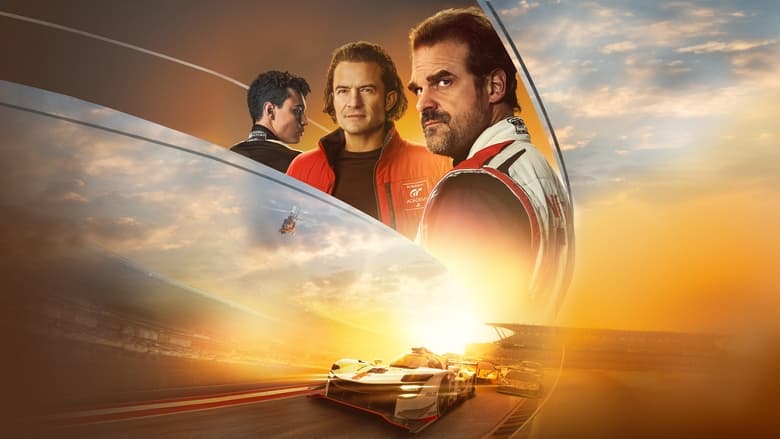
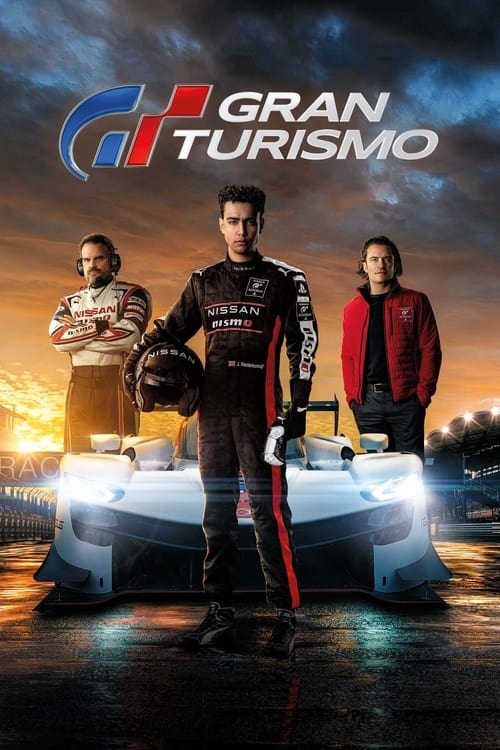
Gran Turismo is a biographical sports drama that chronicles the improbable journey of Jann Mardenborough, a working-class British teenager whose obsession with the racing simulator Gran Turismo becomes his ticket to professional motorsport. When Nissan marketing executive Danny Moore launches the GT Academy, a competition designed to turn top gamers into real race car drivers, Jann seizes the opportunity to prove that his virtual skills can translate to the track.
Under the skepticism of Jack Salter, a washed-up former driver turned trainer, Jann battles physical exhaustion, emotional doubt, and the elitism of the racing world. The narrative follows his grueling training, his fight for a racing license, and his entry into the high-stakes world of competitive racing, culminating in a test of endurance and spirit at the legendary 24 Hours of Le Mans.
Core Meaning
At its heart, the film explores the democratization of opportunity through technology. It challenges the established gatekeeping of elite sports, asking whether talent and dedication, honed in a virtual space, can overcome the financial and social barriers of the physical world. It posits that simulation is not just escapism, but a valid form of preparation for reality.
Thematic DNA
Simulation vs. Reality
The central conflict contrasts the consequence-free environment of gaming with the lethal stakes of real racing. This is highlighted when Jack Salter brutally reminds the gamers that they cannot "reset" after a crash in real life, a lesson Jann learns through traumatic experience.
Class Struggle and Gatekeeping
Motorsport is depicted as a playground for the wealthy. Jann's struggle isn't just about driving; it's about invading a space where he doesn't "belong" financially or socially, facing prejudice from rival drivers and teams who view the "sim racers" as unworthy interlopers.
Father-Son Relationships
Parallel arcs explore the need for paternal approval. Jann seeks the respect of his father, Steve, who views his gaming as a waste of time. Conversely, Jack Salter becomes a surrogate father figure to Jann, finding his own redemption through mentoring the boy.
Redemption through Mentorship
Jack Salter is a man haunted by his past failures and a fatal accident. By believing in Jann, he moves from a cynical defeatist to a passionate mentor, finding a second chance at glory not behind the wheel, but in the pit lane.
Character Analysis
Jann Mardenborough
Archie Madekwe
Motivation
To prove that his passion for gaming is a legitimate skill and to earn the respect of his father and the racing world.
Character Arc
Starts as a shy, misunderstood gamer in his bedroom. He evolves into a physically hardened athlete who must overcome not just rivals, but his own trauma after a fatal accident, ultimately proving he belongs on the podium.
Jack Salter
David Harbour
Motivation
To protect the kids from the danger he knows too well, and later, to vindicate Jann's talent against the elitist establishment.
Character Arc
Begins as a cynical, washed-up mechanic who views the GT Academy as a dangerous joke. He softens as he sees Jann's potential, eventually confronting his own past trauma to guide Jann to victory.
Danny Moore
Orlando Bloom
Motivation
To revolutionize motorsport marketing and tap into a new demographic for Nissan.
Character Arc
He remains largely static as the driving force behind the academy. His arc wavers between genuine belief in the project and corporate pragmatism, nearly cutting Jann for not being "marketable" enough.
Symbols & Motifs
The Reset Button
Symbolizes the lack of consequence in the virtual world and the naive mindset of the gamers before they face real danger.
Jack Salter uses this concept verbally to berate the trainees, and its absence is felt viscerally during the film's crash sequences.
The Projected Racing Line
Represents Jann's unique "gamer vision" and intuition, bridging the gap between the code of the game and the physics of the track.
Visualized via CGI overlays during races, showing how Jann deconstructs the real world into the familiar data of the simulator.
Kenny G / "Songbird"
Irony and calm amidst chaos. It represents Jack Salter's idiosyncrasies and later becomes a shared bond of focus between him and Jann.
Jack listens to it to relax; later, Jann uses it (or similar soft rock) to find his flow state before a critical race, mirroring his mentor.
Memorable Quotes
If you miss a line in the game, you reset. You miss it on the track, you could die.
— Jack Salter
Context:
Jack addressing the GT Academy hopefuls on the tarmac before their training begins.
Meaning:
The film's thesis statement, brutally distinguishing the low stakes of gaming from the mortal stakes of motorsport.
I know this track. I've raced it a thousand times.
— Jann Mardenborough
Context:
Jann speaking to his team before a race on a track he has never physically visited but mastered in the game.
Meaning:
Asserts the validity of his virtual experience; to him, the digital memory is as valuable as physical practice.
You mad, bro?
— Jack Salter
Context:
Jack shouting over the radio to Jann during a race to snap him out of his hesitation.
Meaning:
A call back to an earlier insult, now used to ignite Jann's competitive fire and aggression.
This isn't a game! This is reality!
— Jack Salter
Context:
During a heated training moment when the trainees fail to grasp the danger.
Meaning:
A reminder of the gravity of their situation, emphasizing the physical danger involved.
Philosophical Questions
Can virtual experience ever truly replace physical experience?
The film argues 'yes' regarding skill and reflex, but 'no' regarding physical stamina and fear. It explores the Cartesian split between mind (the gamer's knowledge) and body (the racer's G-force endurance).
What is the ethical cost of turning dreams into marketing stunts?
Danny Moore's character represents the commodification of human ambition. The film questions if it's moral to put amateurs in life-threatening situations to sell cars, even if it fulfills their dreams.
Alternative Interpretations
The Corporate Propaganda Machine:
While ostensibly an underdog story, the film can be interpreted as a meta-narrative about the power of corporate branding. The true "hero" is the Nissan/PlayStation partnership, which successfully bends reality to prove a marketing point. In this reading, Jann is merely a vessel for corporate validation.
The Gamification of Warfare/Danger:
The film subtly touches on the ethics of using simulation to train people for dangerous tasks (similar to Ender's Game). It asks uncomfortable questions about desensitization: do the gamers understand the value of life when they are trained on screens where death is just a "reset"? Jack Salter's character embodies this moral resistance.
Cultural Impact
Gran Turismo arrived during a wave of "corporate biopics" (alongside Barbie, Air, and Tetris) that blurred the line between entertainment and brand management. While it received mixed reviews for its formulaic script, it was praised for its visceral racing cinematography and for validating the skills of the gaming community.
Culturally, it contributed to the ongoing debate about the legitimacy of esports and simulation as training for real-world skills. However, it also faced significant controversy and backlash for its decision to dramatize a real-life fatal accident involving Mardenborough, which some critics and audiences found tasteless and exploitative for the sake of narrative stakes.
Audience Reception
Audiences generally reacted more positively than critics, praising the adrenaline-pumping race sequences and the emotional payoff of the underdog narrative. The sound design and visual effects were highlighted as standout elements that demanded a theatrical viewing.
However, criticism focused on the clichéd dialogue and the formulaic "sports movie" beats. The Nürburgring crash scene was a major point of contention; while some found it a powerful dramatic pivot, many viewers and commentators felt it was disrespectful to the real victim to use the death as a "character building" moment for the protagonist.
Interesting Facts
- The real Jann Mardenborough served as the stunt driver for his own character (Archie Madekwe) in the film.
- Kazunori Yamauchi, the creator of the Gran Turismo game series, makes a cameo appearance as a sushi chef in Tokyo.
- The film was the first major production to use the Sony Venice 2 Rialto camera system, allowing for high-quality IMAX-certified shots inside the tight cockpits of the race cars.
- The scene involving the crash at Nürburgring is based on a real accident involving Jann Mardenborough in 2015, though the film controversially shifted the timeline to make it a motivating event before Le Mans.
- Director Neill Blomkamp is best known for sci-fi films like 'District 9', making this his first biographical sports drama.
- Archie Madekwe had to learn to drive a real race car for the film and vomited frequently during the initial training sessions.
- The character of Jack Salter is fictional, though he is an amalgamation of several real-life mentors and engineers Jann worked with.
Easter Eggs
PlayStation Startup Sound
The iconic PlayStation startup chime plays during the opening logos and at key transition moments, signaling the start of the "game" or a new chapter.
Real-time Game HUD
During race sequences, the film overlays graphics identical to the Gran Turismo video game interface (position, lap number, racing line) to put the audience in the gamer's perspective.
Lucas Ordóñez reference
The film mentions the first winner of GT Academy (though not by name in some cuts, the legacy is implied), acknowledging that Jann was not actually the first, but the third winner in reality.
⚠️ Spoiler Analysis
Click to reveal detailed analysis with spoilers
Frequently Asked Questions
Explore More About This Movie
Dive deeper into specific aspects of the movie with our detailed analysis pages
Comments (0)
No comments yet. Be the first to share your thoughts!