Annie Hall
A bittersweet, neurotic symphony of urban romance and existential dread. Like a relationship that's like a shark—it must move forward or die—this film captures the beautiful, absurd fragmentation of love through a lens of intellectual wit and melancholy nostalgia.
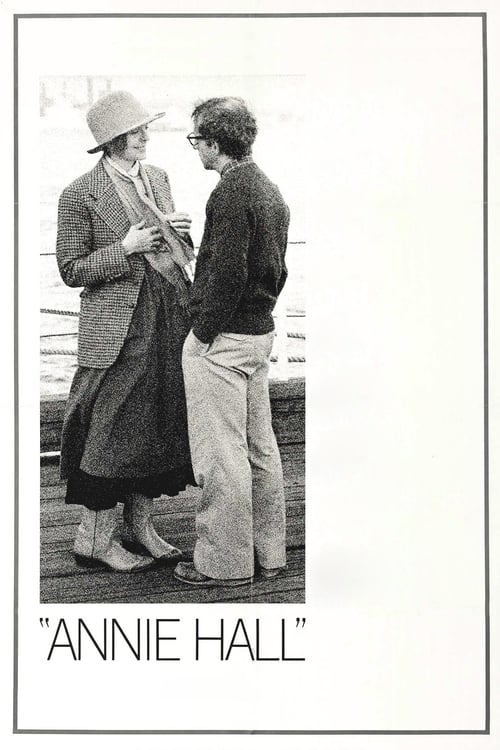
Annie Hall

Annie Hall

"A nervous romance."

19 April 1977 United States of America 93 min ⭐ 7.7 (4,143)
Director: Woody Allen
Cast: Woody Allen, Diane Keaton, Tony Roberts, Carol Kane, Paul Simon
Drama Comedy Romance
The Absurdity and Necessity of Love Memory and Subjectivity New York vs. Los Angeles Jewish Identity and Outsider Status
Budget: $4,000,000
Box Office: $43,989,445

Overview

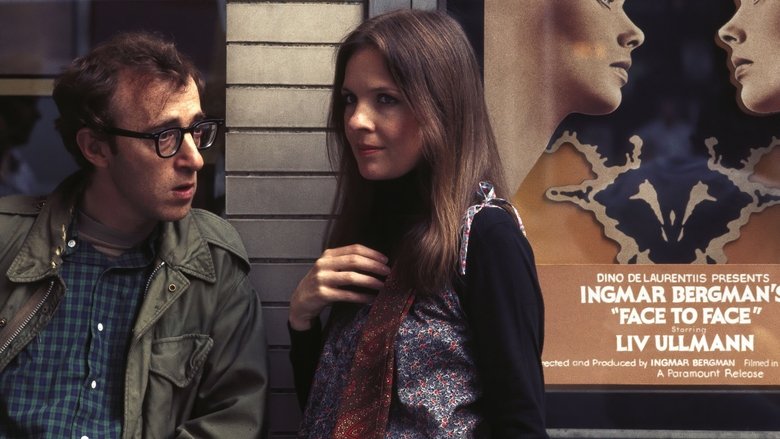
Alvy Singer, a neurotic Jewish comedian in New York City, reflects on the demise of his relationship with the free-spirited, WASPy aspiring singer Annie Hall. Through a non-linear narrative, Alvy examines his past marriages, childhood trauma, and the highs and lows of his time with Annie. The film breaks the fourth wall, utilizes flashbacks, and employs fantasy sequences to explore the complexities of modern love.

As their romance blossoms, Alvy encourages Annie to pursue her singing and intellectual interests, but their differences eventually create friction. Alvy's obsession with death and his disdain for Los Angeles clash with Annie's growing independence and curiosity. The story follows their eventual breakup, a brief reconciliation, and final separation as they realize they have outgrown each other.

Ultimately, the film is a character study that deconstructs the romantic comedy genre. It ends not with a traditional happy union, but with a poignant realization about the necessity of relationships, however flawed and fleeting they may be, leaving Alvy to continue his search for meaning in an absurd world.
Core Meaning

The central message of Annie Hall is that love is fundamentally irrational, absurd, and often painful, yet it remains an essential part of the human experience. Woody Allen suggests that while relationships may not last forever ('love fades'), the memories and personal growth they provide are invaluable.

Through the metaphor of the 'old joke' about the man who thinks he's a chicken, Allen posits that we endure the irrationality of romance because 'we need the eggs.' The film validates the idea that a relationship doesn't need to be permanent to be successful or meaningful.

Thematic DNA

The Absurdity and Necessity of Love 35%
Memory and Subjectivity 25%
New York vs. Los Angeles 20%
Jewish Identity and Outsider Status 20%

The Absurdity and Necessity of Love

The film argues that romantic relationships are often illogical and fraught with pain, yet humans act as if they are essential for survival. This is encapsulated in the closing monologue where Alvy equates love to a crazy man thinking he's a chicken—we tolerate the madness because we need the emotional nourishment ('the eggs').

Memory and Subjectivity

The narrative structure mirrors the way memory works: non-linear, fragmented, and subjective. Alvy frequently rewrites history (literally casting actors to change an ending in his play) or revisits the past to insert his adult self, highlighting how we curate our past to make sense of our present.

New York vs. Los Angeles

Allen juxtaposes the two cities as opposing cultural forces. New York represents intellect, neurosis, art, and depth (Alvy), while Los Angeles is depicted as superficial, hedonistic, and culturally vacuous (Tony Lacey), symbolizing the growing distance between Alvy and Annie as she drifts toward the West Coast lifestyle.

Jewish Identity and Outsider Status

Alvy's identity is deeply rooted in his Jewish heritage, which he views as a source of alienation, particularly when visiting Annie's WASP family. This cultural clash emphasizes his feelings of being an outsider and fuels his paranoia about anti-Semitism.

Character Analysis

Alvy Singer

Woody Allen

Archetype: The Neurotic Antihero
Key Trait: Neurotic intellectualism

Motivation

To understand the failure of his relationship with Annie and to find a way to cope with the absurdity of existence and death.

Character Arc

Alvy begins as a cynical, death-obsessed comedian trying to understand why his relationship failed. Through introspection and memory, he moves from confusion to a bittersweet acceptance of the breakup, realizing that love is a necessary form of insanity.

Annie Hall

Diane Keaton

Archetype: The Free Spirit / Manic Pixie Dream Girl (Proto-type)
Key Trait: Charming idiosyncrasy

Motivation

To find her own voice, overcome her insecurities, and explore the world beyond her sheltered upbringing.

Character Arc

Annie starts as a shy, insecure woman who says 'la-dee-da' and lacks confidence. Under Alvy's initial mentorship, she blossoms intellectually and artistically, eventually outgrowing him to become an independent, self-assured woman who moves to LA.

Rob

Tony Roberts

Archetype: The Confidant
Key Trait: Pragmatic hedonism

Motivation

To enjoy life and success, often serving as a foil to Alvy's misery.

Character Arc

Alvy's best friend who serves as a sounding board. He embraces the Hollywood lifestyle that Alvy despises, highlighting Alvy's stubborn refusal to adapt or sell out.

Symbols & Motifs

Lobsters

Meaning:

Lobsters represent the chaotic, joyful, and messy spontaneity of love.

Context:

In the first lobster scene, Alvy and Annie laugh together as the creatures escape in the kitchen, marking a peak of their intimacy. Later, when Alvy tries to recreate this with another woman, the magic is gone, symbolizing that specific romantic chemistry cannot be forced or replicated.

The Dead Shark

Meaning:

A metaphor for a relationship that has stopped growing and is therefore doomed.

Context:

Alvy tells Annie, 'A relationship, I think, is like a shark. It has to constantly move forward or it dies. And I think what we got on our hands is a dead shark,' acknowledging the stagnation of their romance.

Tennis

Meaning:

Tennis serves as a ritual of courtship and the game of love itself—back and forth, requiring a partner.

Context:

Alvy and Annie first meet and connect during a doubles tennis match. The sport recurs as a setting for social interaction and relationship dynamics.

Cars and Driving

Meaning:

Driving symbolizes control (or lack thereof) in life and relationships.

Context:

Annie is a terrible driver, representing her chaotic but liberated spirit. Alvy's anxiety in her car reflects his fear of losing control. In the bumper car scene, Alvy joyfully crashes, venting his frustration with the world.

The Black Soap

Meaning:

Symbolizes the cultural gap and Alvy's paranoia about anti-Semitism.

Context:

When visiting Annie's family, Alvy imagines her grandmother sees him as a Hasidic Jew. The 'Grammy Hall' sequence highlights his deep-seated insecurity about not belonging in her world.

Memorable Quotes

I thought of that old joke, you know, this... this guy goes to a psychiatrist and says, 'Doc, uh, my brother's crazy. He thinks he's a chicken.' And the doctor says, 'Well, why don't you turn him in?' And the guy says, 'I would, but I need the eggs.'

— Alvy Singer

Context:

Alvy's final voiceover monologue as he watches Annie walk away after their last friendly meeting.

Meaning:

This closing line encapsulates the film's thesis: relationships are irrational, absurd, and crazy, but we endure them because we need the emotional payoff (the eggs).

Don't knock masturbation. It's sex with someone I love.

— Alvy Singer

Context:

Alvy defends his habits during a conversation about their diminishing sex life.

Meaning:

Highlights Alvy's narcissism and his difficulty in connecting deeply with others, preferring the safety of the self.

La-dee-da, la-dee-da.

— Annie Hall

Context:

Used by Annie throughout the film, particularly in moments of awkward silence or when she is unsure what to say.

Meaning:

Annie's catchphrase, initially a nervous tic that represents her flustered, awkward charm. Later, it becomes a nostalgic reminder of her unique personality.

I don't want to move to a city where the only cultural advantage is being able to make a right turn on a red light.

— Alvy Singer

Context:

Alvy arguing with Annie about the prospect of moving to California.

Meaning:

A sharp critique of Los Angeles culture (or lack thereof) compared to New York, showcasing Alvy's intellectual elitism.

Boy, if life were only like this!

— Alvy Singer

Context:

After pulling Marshall McLuhan out from behind a movie poster to shut up a pretentious man in a cinema line.

Meaning:

Expresses the desire to control reality and win arguments perfectly, contrasting the messiness of real life with the perfection of art/fantasy.

Philosophical Questions

Is love rational?

The film posits that love is inherently irrational and absurd. Through Alvy's analysis, it suggests that human emotion defies logic, yet we pursue it out of biological and emotional necessity ('we need the eggs').

Does art imitate life, or do we use art to fix life?

Alvy uses his comedy and his play to rewrite the painful ending of his relationship. The film asks whether art is a tool for truth or a mechanism for denial and comforting lies.

Can we ever truly know another person?

Through the use of subtitles showing inner thoughts versus spoken dialogue, the film explores the gap between what we say and what we think, questioning if true communication is ever fully possible.

Alternative Interpretations

The Unreliable Narrator: Some critics view the entire film not as an objective retelling, but as Alvy's biased attempt to rationalize his rejection. The play he writes at the end, where he gets the girl, proves he is willing to manipulate reality to soothe his ego.

Annie as the Protagonist: While Alvy narrates, the true arc belongs to Annie. She is the one who grows, changes, and succeeds, while Alvy remains stagnant in his neuroses. In this reading, the film is the story of a woman escaping a controlling mentor figure.

The 'Anhedonia' Reading: Focusing on the original title, the film can be seen not as a romance, but as a study of Alvy's inability to feel joy, with the failed relationship being just one symptom of his chronic existential condition.

Cultural Impact

Annie Hall is widely considered a turning point in cinema, effectively inventing the modern, intellectual romantic comedy. Released in 1977, it captured the zeitgeist of the 'Me Decade,' moving away from classic screwball comedies to a more neurotic, introspective, and realistic portrayal of relationships.

Fashion: Diane Keaton's wardrobe—menswear, ties, vests, and bowler hats—created the 'Annie Hall look,' a massive fashion trend that empowered women to embrace androgynous style.

Cinema: The film's innovative techniques, such as breaking the fourth wall, subtitles revealing inner thoughts, and non-linear storytelling, influenced generations of filmmakers, from When Harry Met Sally to 500 Days of Summer.

Reception: It won four Academy Awards (Best Picture, Director, Original Screenplay, Actress), famously beating the blockbuster Star Wars. Critics praised it as Woody Allen's maturation from a slapstick comedian to a serious filmmaker.

Audience Reception

Praised: Audiences and critics alike celebrated the film's sharp wit, the chemistry between Allen and Keaton, and its emotional honesty. The 'subtitles' scene and the 'Marshall McLuhan' scene are frequently cited as some of the funniest moments in film history.

Criticism: Some contemporary viewers criticize Alvy's controlling behavior and intellectual snobbery as toxic. The age gap and power dynamic between Alvy and his partners are occasionally viewed with more scrutiny in modern times.

Verdict: It remains one of the most beloved and critically acclaimed comedies of all time, holding a top spot on numerous 'Best of' lists including the AFI 100.

Interesting Facts

  • The film was originally titled 'Anhedonia', a medical term for the inability to experience pleasure.
  • The role of Annie Hall was written specifically for Diane Keaton, whose birth name is Diane Hall, and 'Annie' was her nickname.
  • The famous scene where Alvy sneezes into the cocaine was an unscripted accident during rehearsal that was kept because it got a huge laugh.
  • The film beat 'Star Wars' to win the Academy Award for Best Picture in 1978.
  • Sigourney Weaver makes her film debut in a blink-and-you'll-miss-it non-speaking role as Alvy's date at the end of the film.
  • Director Woody Allen's original cut was over 2 hours long and included a murder mystery subplot, which was later removed and eventually became the basis for his 1993 film 'Manhattan Murder Mystery'.
  • Marshall McLuhan was not the first choice for the cameo in the movie theater line; Allen originally wanted Federico Fellini or Luis Buñuel.
  • Cinematographer Gordon Willis was known as the 'Prince of Darkness,' but for this film, he used complex lighting to allow for long takes, including the split-screen therapy scene which was actually filmed on one set with a wall divider.
  • Truman Capote has a cameo as the 'winner of the Truman Capote look-alike contest'.
  • Woody Allen refused to attend the Oscars ceremony where the film won, choosing instead to play clarinet at a jazz club in New York.

Easter Eggs

Marshall McLuhan Cameo

A famous media theorist appears as himself to settle an argument in a movie line. It breaks the fourth wall and fulfills the fantasy of instantly silencing intellectual phonies.

Truman Capote Cameo

Alvy points out a passerby as the 'winner of the Truman Capote look-alike contest,' and it is actually the real Truman Capote. This plays with the film's theme of reality vs. perception.

Jeff Goldblum's Early Role

A young Jeff Goldblum appears as a party guest in LA who frantically says into the phone, 'I forgot my mantra.' It satirizes the superficial spirituality of 1970s California culture.

Beverly D'Angelo's Appearance

Beverly D'Angelo appears briefly as an actress in a TV sitcom scene, showcasing another future star in a minor role.

⚠️ Spoiler Analysis

Click to reveal detailed analysis with spoilers

Frequently Asked Questions

Explore More About This Movie

Dive deeper into specific aspects of the movie with our detailed analysis pages

Comments (0)

Leave a comment

No comments yet. Be the first to share your thoughts!